P.G. Wodehouse Reading Order: Where to Start
P.G. Wodehouse is one of English literature's great comic writers, and the best way to fall in love with his work is to start with his most celebrated short stories before moving into his novels. This curriculum moves from the sparkling, self-contained Jeeves short stories through the full Jeeves novel arc, then into the parallel world of Blandings Castle — building familiarity with Wodehouse's style, recurring characters, and comic universe at each step.
The Perfect Entry Point: Jeeves Short Stories
BeginnerGet hooked on Wodehouse's voice, comic timing, and the Jeeves-Wooster dynamic through short, self-contained masterpieces — no prior knowledge needed.
▸ Study plan for this stage
Pace: 4–5 weeks total; ~2–3 short stories per sitting, 3–4 sittings per week. "The Inimitable Jeeves" (18 linked stories) in weeks 1–3 (~3 stories every 2 days); "Carry On, Jeeves" (11 stories, including origin tales) in weeks 4–5 (~2 stories per day). Each story averages 20–30 pages, so expect 45–60 minu
- Wodehouse's comic voice: the hallmarks of his prose style — elaborate Edwardian similes, perfectly timed anticlimax, and the musicality of his sentences
- The Jeeves–Wooster dynamic: Bertie's cheerful incompetence as the essential straight-man foil to Jeeves's omniscient, unflappable competence
- The 'tangle-and-rescue' plot engine: how nearly every story follows the same satisfying arc — Bertie (or a pal) gets into a social or romantic scrape, schemes make it worse, Jeeves engineers an exit
- Bertie Wooster as narrator: his unreliable self-assessment, his genuine warmth, and how his voice creates dramatic irony the reader enjoys at his expense
- The supporting ensemble: recurring characters (Aunt Agatha, Aunt Dahlia, Bingo Little, Madeleine Bassett, Tuppy Glossop) and how Wodehouse uses type-characters for comic escalation
- The Jeeves 'veto' motif: Jeeves's subtle disapproval of Bertie's clothing or schemes as a running power-play that humanises both characters
- Origins of the partnership: 'Carry On, Jeeves' contains 'Jeeves Takes Charge' and 'Bertie Changes His Mind', which show how the duo met and establish the mythology retroactively
- Self-contained vs. serialised comedy: how Wodehouse makes each story satisfying alone while rewarding readers who track continuity across the collection
- How does Wodehouse use Bertie's first-person narration to generate dramatic irony — what does the reader understand that Bertie does not, and can you cite a specific moment from either collection?
- Trace the 'tangle-and-rescue' structure in one story from 'The Inimitable Jeeves': what is the initial problem, how does Bertie's intervention make it worse, and what is Jeeves's solution?
- What does the recurring 'Jeeves disapproves of the clothing/scheme' motif reveal about the true power dynamic between employer and manservant?
- How does 'Carry On, Jeeves' function differently from 'The Inimitable Jeeves' — what does reading the origin stories ('Jeeves Takes Charge', 'Bertie Changes His Mind') add to your understanding of the duo?
- Choose one of Wodehouse's extended similes from either book and explain, in your own words, why it is funny — what incongruous worlds is he colliding?
- How does Aunt Agatha differ from Aunt Dahlia in her function within the stories, and what does each aunt reveal about Bertie's character under pressure?
- 'Voice imitation' journal: After every third story, write one paragraph — in Bertie Wooster's voice — describing something mundane from your own day (a commute, a meal, a minor inconvenience). Focus on his breezy optimism, his classical allusions gone wrong, and his habit of self-interruption.
- Structural mapping: Pick any two stories, one from each book, and draw a simple flowchart of the 'tangle-and-rescue' arc — label the Inciting Scrape, the Bertie Intervention, the Escalation, and the Jeeves Solution. Compare the two charts: how formulaic is the structure, and where does Wodehouse surprise you?
- Simile collection: Keep a running list of your ten favourite Wodehouse similes across both books. After finishing, rank them and write one sentence explaining what makes the top three work — what two unlike things are being compared, and why is the gap between them funny?
- Character relationship web: Draw a diagram of the recurring characters introduced across both collections (Bertie, Jeeves, Aunt Agatha, Aunt Dahlia, Bingo Little, Madeleine Bassett, etc.). For each character, note their 'want' and the comic obstacle they represent to Bertie.
- Re-read one story aloud: Choose a favourite story from either collection and read it aloud, alone or to someone else. Pay attention to where you naturally pause for comic effect — this trains your ear for Wodehouse's rhythm and timing.
- Origin-story reflection: After reading 'Jeeves Takes Charge' in 'Carry On, Jeeves', write a short paragraph (150–200 words) on how knowing the origin changes (or doesn't change) your reading of the stories you already encountered in 'The Inimitable Jeeves'.
Next up: Mastering the short-story format — its tight 'tangle-and-rescue' structure and the core cast — gives you the perfect foundation to follow Wodehouse as he stretches the same voice, the same characters, and the same comic engine across the longer, more elaborately plotted Jeeves novels, where the scrapes grow grander and the rescues more ingenious.
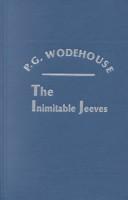
The ideal starting point: a linked collection of short stories introducing Bertie Wooster and his genius valet Jeeves. The episodic format means you can dip in and out while immediately absorbing Wodehouse's style and recurring cast.
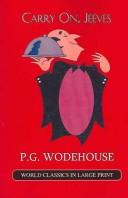
A companion short-story collection that deepens your feel for the Jeeves-Wooster relationship and introduces more of the beloved recurring characters like Aunt Agatha. Read second to solidify the vocabulary and rhythms of Wodehouse's world.
Into the Jeeves Novels: The Classic Arc
BeginnerExperience Wodehouse's full comic architecture across novel-length plots, following Bertie and Jeeves through their most celebrated full-length adventures.
▸ Study plan for this stage
Pace: 6–8 weeks total; roughly 20–25 pages per sitting, 4–5 sittings per week. Suggested pacing: Week 1–2 for "Right Ho, Jeeves" (~300 pages), Week 3–4 for "The Code of the Woosters" (~280 pages), Week 5–6 for "Jeeves in the Offing" (~220 pages), with Week 7–8 reserved for review, re-reading favourite pas
- The three-act comic architecture: Wodehouse structures each novel around an escalating tangle of misunderstandings and schemes that collapse before Jeeves engineers a clean resolution — study how each of the three books builds, complicates, and resolves its central crisis.
- Bertie as unreliable comic narrator: Bertie's breezy first-person voice is simultaneously the source of chaos and the lens through which we enjoy it; notice how his confident wrongness drives every plot in all three novels.
- The Jeeves–Bertie power dynamic: Jeeves withholds his plan until Bertie has exhausted every wrong option — track this rhythm in 'Right Ho, Jeeves' (where Bertie explicitly sidelines Jeeves) and how it reasserts itself by the finale.
- The ensemble cast and the 'tangled web' plot: Wodehouse juggles multiple romantic sub-plots simultaneously; in 'Right Ho, Jeeves' (Gussie/Madeleine/Tuppy/Angela) and 'The Code of the Woosters' (Madeline/Spode/Bassett/Aunt Dahlia) map how each thread is knotted and then unpicked.
- Social codes and their comic subversion: 'The Code of the Woosters' makes explicit the unwritten rules of the English upper class — honour, duty to aunts, the Drones Club ethos — and then systematically ridicules them through Spode and the Black Shorts.
- Language as comedy: Wodehouse's similes, Bertie's malapropisms, and the contrast between Jeeves's formal diction and Bertie's slang are primary comic tools; collect examples across all three books.
- The country-house setting as comic pressure cooker: All three novels confine characters in close quarters (Brinkley Court, Totleigh Towers, Brinkley Court again) — analyse how physical proximity and social obligation amplify every misunderstanding.
- Repetition and variation as a series device: 'Jeeves in the Offing' revisits familiar character types and settings; notice what Wodehouse repeats for comfort and what he varies to keep the formula fresh.
- In 'Right Ho, Jeeves,' why does Bertie decide to handle the romantic crises himself rather than consult Jeeves, and how does this decision generate the novel's central comic engine?
- How does Wodehouse use Gussie Fink-Nottle's prize-giving speech at Market Snodsbury Grammar School as a structural set-piece — what has been built up beforehand, and what does it release?
- What is 'the Code of the Woosters' as Bertie articulates it in the novel of that name, and how does Wodehouse use it both to trap Bertie in impossible situations and to reveal his underlying decency?
- Roderick Spode is one of Wodehouse's most pointed satirical creations — what real-world phenomenon does he parody, and how does the secret of Eulalie function as a comic weapon against him?
- Across all three novels, what is the consistent pattern by which Jeeves's final solution arrives — what conditions must be met before he reveals his plan, and how does Wodehouse signal to the reader that the resolution is near?
- In 'Jeeves in the Offing,' how does the introduction of Bobbie Wickham and Aubrey Upjohn create complications that echo but differ from those in the two earlier novels, and what does this tell you about Wodehouse's method of refreshing a familiar formula?
- Plot-mapping exercise: After finishing each novel, draw a simple diagram (a 'tangle chart') showing every character, their romantic or social goal, and the obstacle standing in their way. Draw arrows where one character's scheme accidentally worsens another's situation. Compare all three charts side by side to see Wodehouse's architectural consistency.
- Voice imitation: Write one short paragraph (150–200 words) describing an everyday mishap — missing a bus, burning toast — entirely in Bertie Wooster's first-person voice, using at least two Wodehousian similes ('like a X who has just Y') and one piece of Bertie's characteristic slang. Then rewrite the same event in Jeeves's formal register.
- Simile collection: Keep a running list as you read, noting every extended simile or metaphor Bertie uses across all three books. At the end of the stage, categorise them by source domain (nature, sport, mythology, food, etc.) and identify which category Wodehouse favours most.
- Satirical target analysis: Re-read the Spode scenes in 'The Code of the Woosters' and write a one-page (300–400 word) informal essay explaining what Wodehouse is satirising, how he avoids heavy-handedness, and why the comedy remains effective decades later.
- Scene comparison: Find the moment in each of the three novels where the situation appears most irretrievably lost for Bertie. Write a brief paragraph for each explaining what has gone wrong and then trace, step by step, exactly how Jeeves unravels it — noting any information Jeeves had that Bertie (and the reader) did not.
- Re-reading for craft: Choose any single chapter from 'Right Ho, Jeeves' that you found especially funny on first read. Re-read it slowly, annotating in the margins (or in a notebook) every specific technique — comic timing, word choice, delayed revelation, bathos — that produces the humour. This trains close-reading skills essential for the next stage.
Next up: Mastering the full Jeeves novel arc — its escalating tangles, Bertie's voice, and Jeeves's deus-ex-machina resolutions — gives you the structural and stylistic fluency needed to explore Wodehouse's other comic universes, such as Blandings Castle or the Psmith stories, where the same architectural principles operate without the safety net of the Jeeves–Bertie formula.

Widely considered the greatest Jeeves novel and a perfect step up from the short stories — the plot is a masterwork of comic escalation. Having met the characters in the collections, you'll appreciate every twist far more.

Often ranked as Wodehouse's single finest novel, introducing the magnificent villain Roderick Spode. It rewards the reader who already knows Bertie's aunts and Jeeves's methods, making it the perfect second novel.
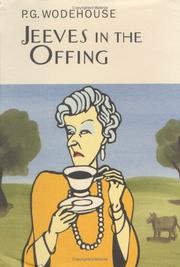
A later, brilliantly constructed Jeeves novel that shows Wodehouse's craft at full maturity. Reading it here lets you see how the formula deepens and never grows stale.
A New Castle: The Blandings World
IntermediateDiscover Wodehouse's second great comic universe — Blandings Castle, the Emsworth family, and the prize pig the Empress of Blandings — and appreciate how it differs from and echoes the Jeeves series.
▸ Study plan for this stage
Pace: 6–8 weeks total: Week 1–2 — "Something Fresh" (~25–30 pages/day); Week 3–4 — "Leave It to Psmith" (~25–30 pages/day); Week 5–6 — "Summer Lightning" (~25–30 pages/day); Week 7–8 — review, comparison essays, and exercises. All three novels are roughly 250–300 pages, so a relaxed daily pace keeps the c
- The Blandings Castle ecosystem: how the castle, its grounds, and its rotating cast of guests function as a self-contained comic world distinct from the London-centric Jeeves stories
- Lord Emsworth as the archetypal Wodehousian innocent — a benevolent, absent-minded aristocrat whose only passion (the Empress of Blandings) drives every plot in 'Summer Lightning' and anchors the whole series
- The role of the schemer-outsider: Ashe Marson and Joan Valentine in 'Something Fresh', Psmith in 'Leave It to Psmith', and the competing thieves/conspirators in 'Summer Lightning' all enter Blandings under false pretenses, a recurring structural device
- Psmith as a proto-Jeeves figure: his unflappable wit, elaborate verbal style, and talent for improvised deception anticipate Jeeves, yet he is a peer rather than a servant — exploring what that shift in social register means for the comedy
- The scarab/necklace/pig MacGuffin pattern: each novel is propelled by a stolen or contested object (Aline Peters' scarab in 'Something Fresh', the diamond necklace in 'Leave It to Psmith', the Empress herself in 'Summer Lightning'), showing Wodehouse's mastery of farce mechanics
- Class, imposture, and social mobility: all three books feature characters pretending to be someone they are not inside an aristocratic house, allowing Wodehouse to satirize Edwardian and inter-war class structures from the inside
- Romantic subplot architecture: how Wodehouse pairs his leads (Ashe/Joan, Psmith/Eve, Ronnie/Sue) and uses the main comic plot to create and resolve romantic obstacles simultaneously
- Evolution of the Blandings formula across the three books: comparing the relatively straightforward heist comedy of 'Something Fresh' (1915) with the more intricate ensemble farce of 'Summer Lightning' (1929) reveals Wodehouse's growing confidence with the setting
- How does Blandings Castle function differently from the London club-and-flat world of the Jeeves stories? Use specific scenes from 'Something Fresh' or 'Summer Lightning' to support your answer.
- Psmith is often called Wodehouse's most Jeeves-like character before Jeeves existed. In what specific ways does Psmith's behavior in 'Leave It to Psmith' resemble Jeeves's methods, and in what crucial ways does his being a gentleman-equal rather than a manservant change the dynamic?
- Each of the three novels uses a contested physical object as its central plot engine. Identify each MacGuffin, explain who wants it and why, and discuss what this recurring device reveals about Wodehouse's approach to farce construction.
- Lord Emsworth is present in all three books but plays very different roles. How does his characterization develop from his relatively minor presence in 'Something Fresh' to his central, pig-obsessed role in 'Summer Lightning'?
- How does Wodehouse use imposture and false identity in all three novels, and what does the repeated motif suggest about his view of the British class system?
- Compare the romantic couples in the three novels (Ashe and Joan; Psmith and Eve; Ronnie and Sue). What obstacles does each couple face, and how does the resolution of the main comic plot clear the path to their happy ending?
- Character map exercise: After finishing each novel, draw a diagram of Blandings Castle's social hierarchy for that book — family, guests, servants, and intruders — and annotate each character's secret agenda. Compare the three diagrams side by side to see how the ensemble grows in complexity from 'Something Fresh' to 'Summer Lightning'.
- MacGuffin tracking log: Keep a running journal entry for each novel documenting (a) what the contested object is, (b) every character who pursues or possesses it, and (c) each hand-off or near-miss. At the end of 'Summer Lightning', write a one-page reflection on how Wodehouse varies and escalates this device across the three books.
- Psmith voice imitation: Select any moment of crisis in 'Leave It to Psmith' where Psmith talks his way out of trouble. Rewrite the same scene replacing Psmith with a panicking, non-eloquent character. Then write a short paragraph analyzing what Psmith's verbal style specifically contributes to the comedy that a normal reaction could not.
- Comparative opening analysis: Read the opening three chapters of 'Something Fresh' and the opening three chapters of 'Summer Lightning' back to back. Write a 300-word comparison noting differences in pacing, the number of characters introduced, the complexity of the setup, and Wodehouse's prose style — using this as evidence for how his craft evolved over fourteen years.
- Lord Emsworth character study: Compile every scene in 'Summer Lightning' in which Lord Emsworth thinks about, visits, or defends the Empress of Blandings. Write a brief character sketch arguing whether his devotion to the pig is purely comic or whether Wodehouse invests it with any genuine pathos.
- Blandings vs. Jeeves world essay: Drawing only on the three books in this stage (not the Jeeves stories), write a 400–500 word essay identifying at least three structural or thematic features that seem unique to the Blandings world. This will prepare you to make sharper comparisons when you encounter other Wodehouse series.
Next up: By mastering the Blandings formula — the country-house setting, the ensemble of schemers, and the MacGuffin-driven farce — the reader has the comparative framework needed to explore Wodehouse's other comic universes and standalone works, appreciating both what he carried forward from Blandings and what he deliberately reinvented.
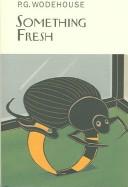
The very first Blandings novel and the natural gateway into that world — start here to meet Lord Emsworth and the castle. After two stages of Jeeves, you'll immediately notice the different comic register and enjoy the contrast.
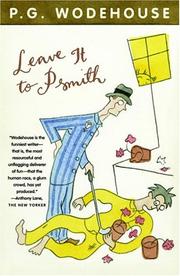
Brings the irrepressible Psmith to Blandings in one of Wodehouse's most plot-driven and purely fun novels. It bridges the Blandings and Psmith strands of his work and is a fan favourite for good reason.
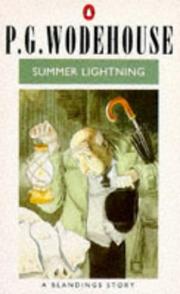
The Blandings series hits its full stride here, with the Empress of Blandings at the centre of the chaos. Reading it after the earlier Blandings books lets you fully savour the recurring characters and running jokes.
Deeper Cuts: Standalone Gems & Broader Wodehouse
ExpertExplore the full range of Wodehouse's comic imagination beyond Jeeves and Blandings, and read the critical and biographical work that illuminates his entire career.
▸ Study plan for this stage
Pace: 6–8 weeks total: Weeks 1–4 for The Golf Omnibus (~20–25 stories, read 4–5 stories per sitting, 3 sittings per week, pausing after every 5–6 stories to reflect); Weeks 5–8 for Wodehouse: A Life (roughly 400+ pages, ~15–20 pages/day, reading thematically by era rather than rushing through).
- Wodehouse's comic architecture beyond series fiction: how standalone stories and non-Jeeves, non-Blandings work sustains the same structural precision without recurring scaffolding
- Golf as comic metaphor: the game's inherent absurdity, its rituals, its capacity for humiliation, and how Wodehouse uses it to expose character vanity, romantic folly, and class anxiety
- The Oldest Member as narrative device: the frame-story technique, the unreliable-yet-authoritative club raconteur, and how this persona controls tone and pacing
- Wodehouse's relationship with America: McCrum's biography reveals how transatlantic life shaped his idiom, his markets, his finances, and ultimately his wartime vulnerability
- The Berlin broadcasts and their biographical consequences: McCrum's nuanced account of the wartime episode, the question of naivety vs. culpability, and how the scandal permanently altered Wodehouse's public standing and inner life
- Craft as vocation: McCrum documents Wodehouse's almost industrial work ethic — the notebooks, the plotting charts, the daily word counts — illuminating the labour behind the effortless surface
- The evolution of Wodehouse's comic voice across six decades: tracing through McCrum how the early school stories, the golf tales, the Ukridge pieces, and the late novels all share a continuous aesthetic DNA
- Biography as critical lens: how McCrum's Life reframes individual texts (including the golf stories) by situating them within the pressures of Wodehouse's actual circumstances — financial, emotional, political
- In The Golf Omnibus, what specific functions does the Oldest Member serve that a conventional third-person narrator could not, and how does the frame story alter the reader's relationship to each embedded tale?
- Wodehouse uses golf's rules, rituals, and vocabulary as comic machinery. Choose three stories from The Golf Omnibus and explain precisely how the game's mechanics generate the central comic situation in each.
- McCrum argues that Wodehouse's American years were formative rather than merely commercial. What specific aspects of Wodehouse's craft, subject matter, or worldview does McCrum trace to his transatlantic experience?
- How does McCrum characterise Wodehouse's inner life and self-awareness? Does the biography present him as emotionally intelligent, emotionally stunted, or something more complicated — and what textual evidence does McCrum offer?
- Using both books together: do the golf stories, read in light of McCrum's biographical account of Wodehouse's working methods and personal obsessions, feel different than they did before? What specific biographical details illuminate specific comic choices in the stories?
- McCrum's treatment of the Berlin broadcasts is one of the most contested aspects of any Wodehouse biography. What is McCrum's ultimate verdict, and how persuasively does he support it with evidence?
- Story surgery: After reading each cluster of 5–6 golf stories, write a one-paragraph structural breakdown of your favourite — identify the setup, the complication, the escalation, and the resolution. Note how Wodehouse plants and pays off every comic beat, then compare structures across stories to find his recurring templates.
- Voice imitation: Write a 300–500 word original Oldest Member anecdote. You must use the frame device (a young man at the club triggers the story), a golf situation as the comic engine, and at least one Wodehouse-style simile. This forces active internalisation of his syntax and rhythm.
- Biographical timeline: As you read McCrum, build a running two-column timeline — left column: life events (moves, marriages, financial pressures, the broadcasts); right column: works being written at that moment. By the end, you will have a visual map of how biography and bibliography interlock.
- The broadcast dossier: McCrum presents the wartime episode through multiple perspectives. Compile your own 1–2 page summary of the key facts, the competing interpretations McCrum cites, and your own reasoned verdict. Practice the historian's skill of weighing evidence rather than accepting a single narrative.
- Cross-book annotation: Choose five passages in The Golf Omnibus where Wodehouse's craft is especially visible (a perfect simile, a plot mechanism, a tonal shift). Then find the corresponding moment in McCrum's Life — a notebook entry, a comment on his working method, a biographical pressure — that sheds light on that passage. Write a short note connecting each pair.
- Reading journal — the 'effortless surface' question: After finishing both books, write a 500-word reflection on the central paradox McCrum exposes: Wodehouse's prose feels weightless, yet McCrum documents enormous, disciplined labour. How does knowing about the labour change (or not change) your experience of reading the golf stories?
Next up: By mastering Wodehouse's standalone comic structures in The Golf Omnibus and gaining the full biographical and critical framework from McCrum's Life, the reader now possesses both the aesthetic vocabulary and the historical context needed to engage with any Wodehouse text — or with scholarly and comparative literature — at the highest level of critical sophistication.
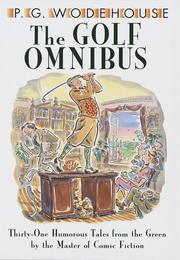
A collection of Wodehouse's hilarious golf stories, showing a completely different comic mode from Jeeves or Blandings. By this stage you have the ear for his style and can fully enjoy these standalone comic gems.

The definitive, critically acclaimed biography of Wodehouse — reading it last means you can map McCrum's account of Wodehouse's life and controversies directly onto the books you have already loved.
Discussion
Keep reading
Paths that share books, cover the same subject, or open a related topic.