Start with The Code of the Woosters. Published in 1938, it is the point at which everything Wodehouse had been building for two decades comes together in a single perfectly engineered novel: a silver cow-creamer, a fascist demagogue called Spode, an engagement Bertie must prevent, a policeman's helmet, and a plot in which every one of those elements eventually collides with all the others.
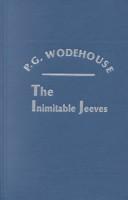
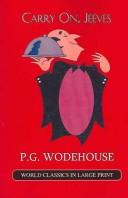
The instinct is to start with the earliest Jeeves book instead, and it is the wrong instinct. The early Jeeves works are short-story collections rather than novels — The Inimitable Jeeves and Carry On, Jeeves — and while both are funny, Bertie's narrating voice is not yet fully formed and the pieces do not build. Wodehouse is a plot writer as much as a joke writer, and the novels are where you see the plotting.
Almost no order required
Here is the practical fact that makes this whole question easier than it looks. Wodehouse novels have essentially no continuity. Characters get engaged and disengaged, aunts issue and rescind ultimatums, and the state of the world resets between books. You can read them in any sequence.
The one mild exception is Right Ho, Jeeves, which sets up the Gussie Fink-Nottle and Madeline Bassett situation that The Code of the Woosters then exploits. Reading Right Ho, Jeeves first makes a handful of jokes land harder. It is a small gain, and it is not worth reorganising your reading around.
The Jeeves sequence
A sensible run: The Code of the Woosters first, then Right Ho, Jeeves, then back to the story collections The Inimitable Jeeves and Carry On, Jeeves, then Jeeves in the Offing, which is a late novel and better than late novels usually are.
If you want the peak in two books: The Code of the Woosters and Right Ho, Jeeves. The prize-giving scene in the latter, in which a nervous character delivers a speech in an unfortunate condition, is the single most quoted comic set piece in English fiction, and it earns it.
Blandings, which some people prefer
The other great sequence is set at Blandings Castle, around an absent-minded earl, his prize pig and a permanent supply of impostors.
Something Fresh is the first Blandings novel and a genuinely good place to start if country-house farce appeals more than the Bertie-and-Jeeves dynamic. Leave it to Psmith brings in Psmith, an unflappable monocled young man from Wodehouse's earlier school stories, and is the best of the early Blandings books. Summer lightning is the one many devotees name as the finest thing he ever wrote, and its plot — an unpublishable memoir, a stolen pig, several fake identities — is a masterpiece of interlocking machinery.
The golf omnibus collects the golf stories, narrated by the Oldest Member. They are formulaic on purpose and remarkably good in small doses; do not read them straight through.
The honest warning
Wodehouse wrote about ninety books, and the returns diminish. The style is deliberately unvarying, the plots reuse the same components, and after ten or twelve the machinery becomes visible. This is not a failing so much as a consequence of an extremely refined formula, but it means Wodehouse rewards rationing more than most writers. Two or three a year, indefinitely, is the right dose.
The biography
Wodehouse: A Life by Robert McCrum is the standard modern account, and it deals at length with the episode that still shapes his reputation: after being interned in occupied France, Wodehouse made a series of broadcasts from Berlin in 1941 that were widely condemned in Britain at the time. Whether they amounted to naivety or something worse has been argued over ever since, and McCrum lays out the evidence without pretending the argument is closed. Read the biography after several novels, not before.
More comic fiction reading paths are on Discover.
Follow the full ordered path here: P.G. Wodehouse Reading Order: Where to Start.