Olga Tokarczuk Reading Order: Where to Start
Only a handful of Tokarczuk's books exist in English, and they are wildly unalike — a murder mystery, a book with no plot at all, a village chronicle and a 900-page historical novel — so the order matters more than the count. This path starts with the one that reads like a novel in the ordinary sense, moves to the two that won her the international prizes, then goes back to the strange early work before taking on The Books of Jacob, which is where most people stall if they start there.
Start With the Thriller
BeginnerGet Tokarczuk's voice — dry, furious, funny — inside a shape you already know how to read.
▸ Study plan for this stage
Pace: Give it a week. Drive Your Plow Over the Bones of the Dead runs 274 pages and moves like a crime novel, so forty pages an evening is comfortable and most readers go faster than they meant to. One thing to settle before page one: the translator is Antonia Lloyd-Jones, and the English you are about to
- Janina Duszejko as an unreliable narrator you are made to like first and doubt second — the novel gives you her voice for two hundred pages before it gives you a reason to distrust it
- Her naming habit: she refuses people's given names and invents her own, so Oddball, Big Foot, Dizzy and Good News enter the book already reshaped by her judgement of them
- Capitalised common nouns — Animals, Ailments, Night — a tic Lloyd-Jones preserves, which is the fastest signal that Janina's private cosmology is running underneath the plot
- Astrology used as an investigative method rather than as colour: she casts charts to work out who dies and when, and the novel neither endorses nor mocks her for it
- The Blake apparatus — epigraphs, the translation scenes with Dizzy, the title — as the argument the book is actually making about vengeance and innocence
- Anger as a formal engine. This is a novel written from the point of view of someone nobody in the book listens to, and its shape is determined by that
- The border-village setting on the Polish-Czech plateau: emptied in winter, hunted in by men with local power, which is what makes Janina's isolation structural rather than merely sad
- At what point did you stop taking Janina's account of events at face value, and what specifically tipped you off?
- Pick any three chapter epigraphs from Blake and say what each one is doing to the chapter it heads — is it commentary, prophecy, or irony?
- Does the novel think Janina's astrology works? Find the passages that let you argue either way.
- What does the naming habit tell you about Janina that her own self-description never admits?
- Having finished, does the book read as a mystery with a solution or as a moral argument wearing a mystery's clothes?
- Keep a running two-column list as you read: Janina's name for each character in one column, their actual name in the other. It takes a minute and it makes the last fifty pages land much harder.
- After the final chapter, go back and reread the first fifteen pages. Everything Janina withholds is already sitting there in plain sight, and this is the single best demonstration in the path of how she narrates.
- Write down, in one sentence, your verdict on whether Janina is right. Keep it. Nothing else in Tokarczuk asks a question this answerable, and you will want the contrast.
- Look at the copyright page and note the translator's name. You are going to be comparing translators for the rest of this path, and the habit starts here.
- If you want a companion, Agnieszka Holland filmed this novel as Spoor in 2017. Watch it after, never before — it makes a choice about Janina that the book deliberately refuses to make.
Next up: Having watched Tokarczuk build one continuous story and then quietly undermine it, you are ready for the two books where she skips the continuous story altogether and asks you to assemble the pattern yourself.
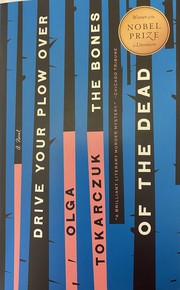
An elderly woman in a Polish border village decides the local hunters are being killed by animals. It is a genuine mystery with a real ending, and the only Tokarczuk that will not feel like an experiment on a first reading. Start here without exception.
The Two That Won the Prizes
IntermediateMove into her real form — the constellation novel, assembled from fragments that only cohere at a distance.
▸ Study plan for this stage
Pace: Three to four weeks for the pair, and the two books want opposite reading habits. Flights is 424 pages made of well over a hundred fragments, some a paragraph long, some a novella — read it in short sittings, two or three fragments at a time, and resist the urge to find the plot. There is no plot. R
- The constellation novel: fragments placed so that the relations between them, rather than any sequence, carry the meaning — Flights is the pure case and the rest of her work is a variation on it
- The anatomy strand in Flights — preserved bodies, plastination, Ruysch's specimens, a famous composer's heart carried across a border in a jar — running against the travel strand rather than beside it
- Movement as an ethic rather than a subject: the book's argument is that the moving thing is the living thing, and it makes that argument formally by never settling
- The handful of long recurring stories in Flights that do behave like fiction, planted among the essayistic fragments so that returning to one feels like coming home
- Primeval's section headings, all of the form The Time of something, handed out to people, to a place, to a mycelium and to God — a whole village told as a set of parallel clocks
- Primeval as the method demonstrated on a single square of land, which is why it makes Flights retroactively legible
- Croft's English against Lloyd-Jones's: Croft runs longer, cooler, more essayistic; Lloyd-Jones is plainer and closer to speech. Same author, two Englishes
- Name three fragments in Flights that recur, and say what changes on each return.
- What does the anatomy material have to do with the travel material? Argue it from specific fragments rather than in general terms.
- Where in Flights does Tokarczuk come closest to writing a conventional short story, and why do you think she lets herself do it there?
- In Primeval, what is gained by giving a section of time to something that is not a person?
- Read a page of Flights and a page of Primeval side by side. What can you actually hear that is different, and how much of it do you attribute to the translator rather than the author?
- Which of the two books did you find easier, and does the path's ordering — hard one first — hold up?
- Keep an index card for Flights listing each fragment that runs longer than five pages. By the end you will have the book's real skeleton on one card, and it is not the skeleton you expected.
- Read Flights strictly in small doses, at most twenty minutes at a time, for a fortnight. Bingeing it is the commonest way to decide you dislike it.
- Read the two books back to back rather than putting something else between them. The point of the pairing is the contrast in temperature, and it evaporates if you break the sequence.
- Write a paragraph naming what you can hear of each translator. You now have three books and two translators, which is enough evidence to have an opinion.
- Look up one fact: what the Nobel citation in 2019 actually said about crossing boundaries as a form of life. Then decide whether Flights or Primeval fits it better.
Next up: You now know what the constellation method feels like when it is working, which is the only useful preparation for the earlier novel where she was still assembling the tools.

Over a hundred fragments about travel, anatomy and preserved bodies, with no continuous plot. Won the International Booker. Read it second: after Drive Your Plow you will trust her enough to let the pattern assemble itself.

A mythical Polish village told in short numbered sections, one per character — including the ones that are not people. Shorter and warmer than Flights, and it makes the constellation method obvious by using it on a single place.
The Earlier Strange One
BeginnerRead the early novel that shows how long she has been writing this way.
▸ Study plan for this stage
Pace: Two weeks for 384 pages, and slower than the page count implies. House of Day, House of Night is the strangest thing she has written structurally: dreams, local legends, biographies of the dead, a hagiography, an unfinished monastic manuscript and a run of mushroom recipes, all interleaved with no s
- Nowa Ruda and its valley as a place where the population was removed and replaced after 1945, so every house in the book has two sets of former occupants and none of the memories match
- Kummernis, the invented-but-legend-shaped saint whose face becomes a bearded man's, given a full hagiography inside a contemporary novel — the book's central set piece and its argument about the body
- Marek Marek, whose story is the closest thing to a plot and is deliberately interrupted rather than resolved
- Marta, the neighbour who anchors the narration by refusing to explain herself, and who may not be entirely a person
- The mushroom recipes as structural punctuation — instructions for preparing things that can nourish or kill, dropped between chapters about people who did both
- Dreams as public rather than private material: the narrator collects other people's dreams, which turns interiority into a shared civic archive
- The absence of a hierarchy between kinds of text — a saint's life, a recipe, a rumour and a dream all get the same authority, which is the earliest and most naked version of what Flights does
- What does the Kummernis legend give the novel that a realist chapter about the same idea could not?
- Why recipes, and why mushrooms specifically? Answer using at least two of them.
- Marek Marek's story is broken up and left unfinished. What would be lost if Tokarczuk had told it straight through in one place?
- How does the postwar replacement of the valley's population show up in the form of the book, not just in its content?
- Having read Flights first, what can you now see here that a reader coming to this book cold would miss?
- Mark every dream as you meet it and note who dreams it. By the end you will have a list that behaves like a character in its own right.
- Read the mushroom recipes properly, at the speed you would read a recipe you intended to cook. Then ask why a novel is teaching you this.
- Look up one fact before you start: the redrawing of the Polish-German border in 1945 and the expulsions from Lower Silesia. Ten minutes of reading turns half this novel from atmosphere into history.
- When you finish, go back to the shortest fragments in Flights. They are the same instrument, twenty years apart, and the comparison is the cleanest evidence in this path of what she was doing all along.
Next up: With three fragmentary books behind you the method no longer needs explaining, which is exactly the state required to survive nine hundred pages of it applied to eighteenth-century history.

Fragments, dreams, local legends and mushroom recipes from a town on the Polish-Czech border that changed countries. Translated into English before Flights but written earlier; read it here, once the method is familiar, rather than as an entry point.
The Monument, and After
BeginnerTake on the huge historical novel the Nobel citation was really about, then the late gothic one.
▸ Study plan for this stage
Pace: Six to eight weeks, and almost all of it belongs to one book. The Books of Jacob is 992 pages in our listing, translated by Jennifer Croft, and it is paginated in reverse: the numbers count down, so the last page is page one. Tokarczuk has said this follows the direction of a Hebrew book, and in pra
- Yente, who cannot die and hangs above the action, providing the novel with a vantage point no historical narrator could have and licensing everything else it does with time
- Nahman as the in-book chronicler, which means much of what you read is a follower's account of his own messiah and must be discounted accordingly
- The Catholic priest compiling an encyclopaedia and his correspondence with a poet — a comic subplot that is also the book's thesis about how knowledge gets assembled and by whom
- Reverse pagination as more than a gimmick: it makes the physical act of reading run counter to the direction of European book culture, which is the novel's subject
- Conversion as a political manoeuvre rather than a spiritual event — the mass baptisms are negotiated, and the novel is unusually interested in the paperwork
- Croft's translation choices at scale, including how she handles multiple languages, honorifics and Hebrew terms inside an English sentence
- The Empusium as a rewriting of The Magic Mountain: a men-only sanatorium in 1913, the talk-heavy convalescent novel turned into a horror story
- The Empusium's sourced misogyny — the men's pronouncements about women are drawn from real male writers, and Tokarczuk lists her sources at the end. Read the note
- What does Yente's vantage point allow the novel to do that a conventional omniscient narrator could not?
- Where does Nahman's account of Frank most obviously diverge from what the surrounding material shows you?
- By the end, does the novel present Frank as a fraud, a genuine visionary, or a man whose category the question itself gets wrong?
- The reverse pagination changes nothing about the plot. What does it change about reading?
- In The Empusium, how does knowing that the men's speeches are quoted from real writers change the effect of those scenes?
- Having finished both, is The Empusium a retreat after The Books of Jacob or a deliberate change of instrument?
- Before page one, sit with the map and the cast material for ten minutes and write down six names. Six is enough. Trying to memorise the whole list is the standard way people abandon this book in week two.
- Set a fixed daily page count and use the descending numbers to hold yourself to it. This is the one book in the path where a schedule genuinely determines whether you finish.
- Read the seven books as units — stop at a book boundary, never mid-book. The novel changes location and cast at those seams, and stopping anywhere else costs you a re-orientation each time.
- When you finish The Empusium, read the author's closing note on where the men's statements came from, then reread one dinner-table scene with that knowledge. It is a different scene.
- Look up one fact after finishing The Books of Jacob: the Lwow disputation of 1759. Seeing how much of the novel is documented will change how you rate the parts that are not.
Next up: That is the path. Only a handful of Tokarczuk's books exist in English, and you have now read the major ones — our catalogue does not carry her short illustrated fable The Lost Soul, which is an hour's reading and worth picking up wherever you buy books; after that the honest next move is to follow the translators rather than the author, since Jennifer Croft and Antonia Lloyd-Jones have each broug

Nine hundred pages on Jacob Frank, the 18th-century Jewish heretic who declared himself messiah and led thousands across religions. Paginated backwards, told by dozens of voices. Read it last of the major work and read it slowly — it is the culmination of everything above, not an introduction to any of it.
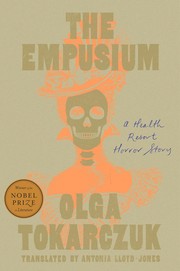
A men-only sanatorium in 1913, written against The Magic Mountain, with something in the woods. Her first novel after the Nobel, short by her standards, and a good place to stop.
Discussion
Keep reading
Paths that share books, cover the same subject, or open a related topic.