Nonprofit Fundraising: The Best Books on Asking for Money, in Order
Fundraising is a distinct discipline from grant writing, and most of the money in the charitable sector does not come from foundations — it comes from individuals, and it is raised by asking them. This path is organised around that fact: the overview of how a development programme works, then the ask itself as a skill, then the donor relationship that makes the second gift possible, then the writing and the systems around it, and finally the research literature for anyone who wants evidence rather than practitioner conviction.
Start Here: How the Money Actually Works
BeginnerUnderstand the components of a development programme — annual fund, major gifts, events, planned giving — and where a small organisation should put its effort.
▸ Study plan for this stage
Pace: Five to six weeks, but only one of these three is a read-through. Klein's Fundraising for Social Change is 448 pages written for small and grassroots organisations, and it should be read cover to cover over two to three weeks - it is the argument the rest of the path sits inside. Tempel, Seiler, Ald
- Where charitable money actually comes from: individuals rather than foundations, which is the fact Klein builds her entire method on and the reason grant-chasing is a strategic error for most small organisations
- The gift pyramid and the donor pipeline - identification, qualification, cultivation, solicitation, stewardship - as the standard model Achieving Excellence formalises
- Annual fund, major gifts, planned gifts and capital campaigns as distinct programmes with different time horizons, not as a single activity done at different sizes
- Klein's grassroots premise: a broad base of small donors is more achievable and more stable than institutional money, and it also buys independence
- The case for support as a document, and the difference between what an organisation needs and what a donor wants to accomplish
- The board's fundraising role, and why Heyman's governance chapters belong in a fundraising path at all - development programmes fail for organisational reasons at least as often as for fundraising ones
- Cost per dollar raised, and why the cheapest channel is rarely the one to grow
- What proportion of charitable giving in the United States comes from living individuals rather than foundations and corporations, and what does Klein say follows from that for a small organisation?
- Describe the donor pipeline in Achieving Excellence's terms, and say what specific activity belongs at each stage.
- Why does Klein argue that a broad small-donor base is more stable than a handful of large institutional grants? What is the counter-argument?
- What can a board legitimately be asked to do in fundraising, and what does Heyman's volume say about what happens when the board's role is left undefined?
- Which of these three books would you hand to a new executive director, and which to a first-year development associate?
- Work Klein's exercise of listing your organisation's actual income by source for the last three years, in dollars and percentages, and set it against her recommended mix. The gap between the two is your whole strategy for the next year.
- Using Achieving Excellence's chapter structure as a checklist, audit which functions your organisation performs at all - annual fund, major gifts, planned giving, events, stewardship - and mark each as running, nominal, or absent. This tells you which later stages of this path you actually need.
- Draft a one-page case for support following Klein's guidance, then hand it to someone outside the organisation and ask them what problem it says you solve. Rewrite until they get it right on the first reading.
- Read the governance chapters of Nonprofit Management 101 with your own board list in front of you and write, for each member, what they have actually done for fundraising in the past year. Heyman's point becomes concrete very quickly with real names on the page.
Next up: You now have the map of a development programme and the argument for building it around individuals; the next stage is the one skill on which every part of that programme depends.
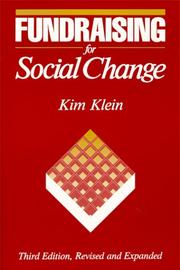
The best first book in the field, written for small and grassroots organisations rather than universities and hospitals. Klein's argument that broad-based individual giving is both more achievable and more stable than chasing institutional money is the frame everything else in this path sits inside.

The Lilly Family School of Philanthropy's comprehensive textbook, now led by Genevieve Shaker. Read it second as the systematic map — every function, every gift type, with the research base cited. It is a reference more than a read-through.

Placed here because fundraising fails for organisational reasons at least as often as for fundraising reasons. Heyman's edited volume covers board governance, finance and communications — the context a development officer has to operate in.
The Ask Itself
BeginnerLearn to conduct a solicitation — the meeting, the number, the silence after it, and the follow-up.
▸ Study plan for this stage
Pace: Two to three weeks for about 550 pages, and this stage is short on purpose because the work is practice rather than reading. Panas's Asking is only 108 pages and should be read in one or two sittings; it is the attitude, and it is deliberately unpadded. Fredricks's The Ask is 243 pages and is the pr
- That the discomfort in a solicitation belongs to the fundraiser and not to the donor - Panas's central and unsentimental point
- The structure of a face-to-face ask: the visit's purpose, the specific amount, the silence after the number, and who speaks next
- Naming a specific figure for a specific purpose rather than asking for support in general, and why the specificity is what makes a yes possible
- Objection handling as information rather than resistance - Fredricks's treatment of what a 'not now' actually tells you
- Asking for things other than money: time, introductions, a name on a list, a meeting with someone else
- What Mega Gifts found actually motivates very large gifts, and the finding that tax treatment is not the driver most fundraisers assume it to be
- Solicitation as the end of a process rather than an event - if the ask is a surprise to the donor, the failure happened months earlier
- Why does Panas insist you name a specific amount, and what goes wrong when you name a range instead?
- What is the fundraiser supposed to do in the seconds after the number is spoken, and why?
- Fredricks distinguishes several kinds of ask beyond money. Name three and say when each is the right one.
- What did Panas's donor interviews in Mega Gifts find about motivation, and how does that contradict the standard assumption about tax deductibility?
- All three books are written by practitioners from their own experience. Which of their claims would you most want to see tested against research, and why?
- Write a full solicitation script for one real prospect using Fredricks's structure - opening, case, the specific number, the pause, the three most likely objections and your response to each - and then say it out loud to a colleague playing the donor. Do it before you read Mega Gifts, so that the interview findings land against a script you have already written.
- Make the ask. Pick the smallest real gift you can plausibly solicit in person this month and do it, following Panas exactly, including the silence. Then write half a page on what actually happened versus what the book predicted.
- Take Mega Gifts's account of donor motivation and interview two of your own existing donors about why they gave, using Panas's questions rather than your own. Compare their answers to what your organisation's materials assume donors care about.
- Build an ask ladder for ten current donors: what each gave last, what you will ask for next, and the specific purpose attached to each number. Fredricks's preparation chapters are the model; the exercise is producing ten defensible figures rather than ten guesses.
Next up: Asking well produces a first gift; the next stage is about the far more valuable thing, which is the second one.
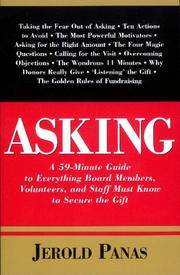
Short, direct, and the best book in print on the mechanics of a face-to-face solicitation. Panas is unsentimental about the fact that the discomfort is the fundraiser's, not the donor's. Read it before any other book on major gifts.
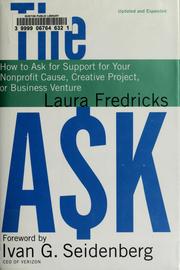
The fuller treatment: scripts, objection handling, and asks for time, money and introductions across every gift level. Where Panas gives you the attitude, Fredricks gives you the preparation.

Panas's study of what actually motivated very large donors, based on interviews rather than theory. Read it third — it is the evidence behind the advice in the first two, and it usefully contradicts the assumption that tax treatment drives major giving.
Donors as Relationships
IntermediateShift from transactions to retention, and understand why the second gift is harder and more valuable than the first.
▸ Study plan for this stage
Pace: Four to five weeks for roughly 1,300 pages, and the stage with the highest return for an organisation losing donors. Burk's Donor-Centered Fundraising is 284 pages and should be read first and closely; its argument rests on her own large donor surveys, which is the strongest evidence base of any pra
- Burk's central finding on why donors lapse: not because they were asked too often, but because they were never told what the previous gift accomplished
- Donor retention rate as the number that governs everything - and the arithmetic showing that a few points of retention outweigh a great deal of acquisition
- The thank-you as a piece of work rather than a courtesy: speed, specificity, who signs it, and whether it asks for anything
- Stewardship reporting - telling a donor the outcome of their own money, in terms they would recognise
- The donor-centred versus organisation-centred voice in every piece of communication, which Ahern reduces to a testable rule about pronouns and subject position
- McCrea and Walker's alternative frame: shared enterprise and mutual interest in place of solicitation, and what it asks of an organisation that adopts it seriously
- Grace's reframe of donors as investors and of the case as values rather than needs, which is the same argument in a form a development office can act on tomorrow
- What are the top reasons Burk's surveyed donors gave for lapsing, and which of them are within an organisation's control?
- Calculate it: if your retention rate rose five points, how many more donors would you have in three years than under your current rate?
- What does Ahern say makes a thank-you letter work, and how many of his criteria does your organisation's current letter meet?
- Is The Generosity Network compatible with Panas's model from the previous stage, or is it a rejection of it? Argue both ways.
- Grace calls donors investors. What changes operationally if you take that literally, and what is lost?
- Compute your organisation's actual donor retention rate for the last three years, by year and by gift size. Burk's argument is worthless as reading and decisive as arithmetic; do the arithmetic before finishing her book.
- Pull your last twelve months of donor communications - acknowledgements, newsletters, appeals - and score every one against Ahern's criteria in Keep Your Donors. Then rewrite the acknowledgement letter, and time how long it currently takes from gift to letter.
- Take one recent gift and write the stewardship report Burk says the donor wanted: what their specific money did, in a paragraph, with a number in it. Send it. This is the single highest-return action on this path.
- Read The Generosity Network and then run one donor meeting with no ask in it at all, structured as McCrea and Walker describe - shared problem, their expertise, what they would want to build. Write up afterwards what you learned that a solicitation meeting would not have produced.
- Rewrite your case for support from stage one in Grace's investor language, side by side with the original, and show both to a board member without saying which is which.
Next up: Relationships at scale become writing and systems, which is what the next stage supplies - the copy, the strategy and the resilience that keep a programme running when it is bigger than one person's memory.

Burk's donor surveys are the most-cited evidence in the sector on why donors lapse: not because they were asked too often, but because they were never told what their gift did. This is the single highest-return book here for an organisation with poor retention.
Ahern and Simone Joyaux turn Burk's finding into practice — stewardship communications, thank-you letters, newsletters that are actually read. Read it directly after Burk; it is the implementation manual for her research.

McCrea and Jeffrey Walker's argument that the donor-supplicant frame is itself the problem, and that the work is building shared enterprise. The most philosophically ambitious book in the path and a genuine alternative to the Panas model.
Grace makes the same case in more operational terms — investors rather than donors, values rather than needs. Read it as the bridge from McCrea's framing back into something a development office can act on.
Writing, Campaigns and Systems
IntermediateBuild the machinery: appeals that convert, a multi-year plan, and a programme that survives a bad year.
▸ Study plan for this stage
Pace: Three to four weeks. Warwick's How to Write Successful Fundraising Appeals is 384 pages and is a working manual - read it with a draft appeal open, not in an armchair. Joyaux's Strategic Fund Development is 432 pages and is the heaviest reading here, aimed at executive directors and development dire
- The mechanics of direct-response copy: the lead, the story, the specific ask, the postscript, the reply device, and the finding that length is not the enemy
- Segmentation - lapsed, active, first-time, major - and why the same letter to all of them is the commonest expensive mistake
- Testing as a discipline: one variable, a real control, and enough volume to learn something
- The economics of acquisition, where the first gift often loses money and the programme is justified by the second and third
- Joyaux's argument that fundraising is a function of organisational strategy rather than a department, and the board's specific role in it
- Building a development plan with named responsibilities, dated activities and a revenue target attached to each channel
- Diversified income and reserve as protection, and Klein's account of what to cut first when revenue falls - the question every plan avoids until it is urgent
- What does Warwick say a postscript is for, and why does it get read when the body does not?
- How would you segment your own list, and what would you say differently to each segment?
- What single variable would you test first in your next appeal, and how many pieces would you need to mail to learn anything?
- In Joyaux's terms, what does it mean for fundraising to be strategic rather than tactical, and what does an executive director have to change to make that true?
- Klein asks what you cut when income drops. Applying her criteria, what would you cut first, and what would you protect at any cost?
- Rewrite your organisation's last appeal letter following Warwick's structure exactly - lead, story, specific ask, postscript, reply device - and lay the two versions side by side. Then mail the new one to a real segment and record the response rate against the old one.
- Segment your donor file into at least four groups and write the opening paragraph of the same appeal four times, once per segment. The exercise is to find out how much of your current copy is generic because segmenting was never done.
- Build a one-page development plan on Joyaux's model: each revenue channel, the dollar target, the person responsible, and the dates. Take it to your executive director or board chair and get it signed.
- Do Klein's stress test in writing: model your budget with the largest single source of income removed, and decide now, on paper, what you would cut and in what order. Keep the document; the point of writing it while solvent is that the decisions are better.
Next up: You now have a working programme built on practitioner conviction; the last stage is where those convictions are checked against evidence.

The standard on direct-response copy, and specific in a way most writing advice is not — structure, length, the postscript, the reply device. Read it before writing a single letter or email appeal.
Joyaux on building fundraising into organisational strategy rather than bolting it on, including the board's actual role. The most useful book here for an executive director or a development director in their first leadership post.
Klein's follow-up, written after the 2008 crash and about resilience: diversified income, sustained donor bases, and what to cut when income drops. Read it once the programme exists — it is about protecting something, not starting it.
The Research View
BeginnerMove from practitioner conviction to the empirical literature on philanthropic behaviour.
▸ Study plan for this stage
Pace: Four to six weeks, and unmistakably a different kind of book. Sargeant and Shang's Fundraising Principles and Practice is 712 pages and is an academic text: it reviews the research literature on donor motivation, retention economics, message framing and relationship fundraising, and it cites its evi
- What the research actually supports about donor motivation, and how much of it is prosocial, identity-based or reciprocal rather than tax-driven
- The empirical basis for relationship fundraising and donor retention, including which of Burk's findings replicate and which rest on a single survey programme
- Lifetime value and the economics of retention, done properly with discounting rather than as a rule of thumb
- Message framing effects - identifiable victim, negative versus positive appeals, matching and anchoring - and the size of the effects, which is usually smaller than the practitioner literature implies
- The difference between an effect demonstrated in a controlled experiment and a practice recommended from consulting experience, and why both belong in a fundraiser's toolkit for different purposes
- Where the evidence is genuinely thin, particularly on major-gift solicitation, which is the least researched and most confidently written-about part of the field
- How to read a fundraising claim: sample, comparison group, outcome measured, and who paid for the study
- Which of the practitioner claims you took from stages two and three does Sargeant and Shang's evidence support, and which does it qualify?
- What does the research say about the effect of framing an appeal around a single identifiable beneficiary versus statistics, and how large is the effect?
- How is donor lifetime value properly calculated, and what does your own file's number look like when you compute it that way?
- Where is the evidence base weakest, and what does that imply about how confidently the major-gift books should be read?
- Having finished the path: which one book of the sixteen would you keep if you could keep only one, and for what job?
- Go back through your notes from the previous four stages and list ten claims you now treat as true. Find each one in Sargeant and Shang, and mark it supported, qualified, or not addressed. This is the exercise the whole path was built to end on.
- Compute donor lifetime value for your own file using the method in the book rather than a rule of thumb, segmented by acquisition channel. Then decide, with the number in front of you, which acquisition channel you would stop funding.
- Design one real experiment on your own list following the book's guidance on framing: two versions of an appeal differing in exactly one framing variable, randomly assigned, with enough volume to detect a difference. Run it and write up the result honestly, including if it is null.
- Write a two-page memo for your board summarising what the research does and does not support about donor retention, citing Sargeant and Shang rather than the practitioner books. Being able to write that memo is the difference between a fundraiser with opinions and one with a case.
Next up: This is the last stage: with the evidence base in hand you can read any new fundraising book, including the confident ones earlier on this path, and tell instantly which of its claims are demonstrated and which are conviction.

Sargeant and Jen Shang's academic text is the one place the sector's received wisdom is systematically checked against research on donor motivation, retention economics and message framing. End here — it will tell you which of the earlier books' claims are actually supported.
Discussion
Keep reading
Paths that share books, cover the same subject, or open a related topic.