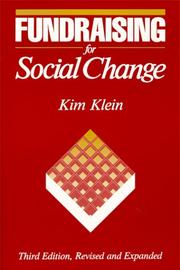
Read Kim Klein's Fundraising for social change first. It is written for small and grassroots organisations rather than for universities and hospitals, and its central argument — that broad-based individual giving is both more achievable and more stable than chasing institutional money — is the frame everything else here sits inside. It is also the correct starting point for the most common mistake in the field, which is treating fundraising as a synonym for grant writing. Foundations are a minority of charitable giving in most countries. Individuals are the majority, and they are reached by asking.
One caveat to apply throughout: fundraising books date faster than almost any other practitioner literature. Channel economics, benchmark response rates, platform advice and the tax treatment of gifts all move, and much of this shelf is written from a United States regulatory context. Charity registration, solicitation licensing and gift-receipting rules are jurisdictional and none of these books is legal or tax advice. Read them for method — how a solicitation works, why donors lapse, what a good appeal does structurally — and get your numbers and your compliance from current sources.
How the money actually works
Achieving Excellence in Fundraising, the Lilly Family School of Philanthropy's textbook, is the systematic map: every function, every gift type, with the research base cited. It is a reference more than a read-through. Nonprofit management 101 is here because fundraising fails for organisational reasons at least as often as fundraising ones — board governance, finance and communications are the context a development officer has to work inside.
The ask itself
Jerold Panas's Asking is short, direct, and the best book in print on the mechanics of a face-to-face solicitation; he is unsentimental about the fact that the discomfort belongs to the fundraiser, not the donor. Laura Fredricks's The ask is the fuller treatment — scripts, objection handling, and asks for time, money and introductions at every gift level. The two overlap, and if you take only one, Panas gives you the attitude and Fredricks gives you the preparation. Panas's Mega Gifts is the evidence behind both: an interview study of what actually motivated very large donors, which usefully contradicts the assumption that tax treatment drives major giving. Its examples are of their period; the finding is not.
Donors as relationships
Penelope Burk's Donor-Centered Fundraising reports the most-cited donor surveys in the sector, and the finding is the single highest-return idea on this list for an organisation with poor retention: donors lapse not because they were asked too often but because they were never told what their gift did. Tom Ahern's Keep your donors is effectively the implementation manual for that research — stewardship communications, thank-you letters, newsletters people actually read — and belongs directly after Burk.
Then two books that challenge the model rather than refine it. The generosity network argues that the donor-supplicant frame is itself the problem and that the work is building shared enterprise; it is the most philosophically ambitious book here and a genuine alternative to the Panas approach. Kay Sprinkel Grace's Beyond Fundraising makes a similar case in operational terms — investors rather than donors, values rather than needs — and is the bridge back into something a development office can act on next week.
Writing, systems and the research view
Mal Warwick's How to write successful fundraising appeals is the standard on direct-response copy and is specific where most writing advice is vague: structure, length, the postscript, the reply device. Read it before writing a single letter or email appeal, and update its channel assumptions yourself. Simone Joyaux's Strategic fund development is about building fundraising into organisational strategy rather than bolting it on, including the board's actual role, and is the most useful book here for a first leadership post. Klein's Reliable fundraising in unreliable times, written after the 2008 crash, is about resilience — diversified income, sustained donor bases, what to cut when income drops — and is for protecting a programme rather than starting one.
Finish with Adrian Sargeant and Jen Shang's Fundraising principles and practice, the academic text that checks the sector's received wisdom against research on donor motivation, retention economics and message framing. It will tell you which claims in the earlier books are actually supported, which is why it belongs at the end rather than the beginning. Follow the full path for the stage notes and study questions.
Follow the full ordered path here: The Best Nonprofit Fundraising Books to Read First.