Nero Wolfe Reading Order: Where to Start
Rex Stout wrote thirty-three Nero Wolfe novels and around forty novellas across forty-one years, and the honest answer to the reading-order question is that you do not need to read them in order — Wolfe never ages, the brownstone never changes, and each case closes. The one real exception is the three-book Zeck sequence, which must be read together and in order. This path gives you the two openers, the strongest standalone entries, that trilogy, and the famous later cases; it deliberately stops well short of completeness.
The Two That Start It
BeginnerMeet Wolfe and Archie Goodwin in the first two books, and settle whether the voice is for you.
▸ Study plan for this stage
Pace: Settle the order question before you open anything, because with Nero Wolfe it is almost a non-question. Rex Stout wrote thirty-three novels and around forty novellas over forty-one years, and the characters never age, never develop and carry nothing between cases. The brownstone resets every time.
- Archie Goodwin is the book. He narrates, he does all the legwork, and he is a competent detective in his own right rather than a Watson who exists to be baffled
- The brownstone routine is a plot mechanism, not decoration: orchids from nine to eleven and four to six, Fritz Brenner in the kitchen, Theodore Horstmann in the plant rooms, a beer quota, the red leather chair for the client
- Wolfe will not leave the house on business, which means every case has to be dragged to West Thirty-Fifth Street. That constraint generates most of the plotting
- Fer-de-Lance is Stout still finding the rhythm. The voice is there in patches and the pacing is not. The League of Frightened Men is where the double act locks in, and it is the fairer test
- This is not fair-play detection and you should know that going in. Archie narrates, and Archie does not tell you what Wolfe told Saul Panzer to go and do. Readers who come for a solvable puzzle are routinely disappointed
- Money and inertia are Wolfe's only motives. He works when the bank balance forces him to, which is why so many books open with Archie needling him about the checkbook
- The League of Frightened Men turns on whether a crime has occurred at all, which is a more interesting question than who did it, and Stout never quite repeats the trick
- By the end of these two, whose company are you actually reading for, and could you describe Wolfe without describing Archie describing him?
- Name three things Stout has fixed between Fer-de-Lance and The League of Frightened Men. They are visible in the first chapter of each.
- In The League of Frightened Men, what is the evidence against Paul Chapin, and at what point does the accumulation of evidence stop being detection?
- Could you have solved either case from what Archie told you? Answer honestly, because it decides whether this series is for you.
- What does Wolfe's refusal to leave the house cost the plot, and what does it buy it?
- Read both inside one week, then stop and write two sentences on whether the voice works for you. Do not defer the verdict. Wolfe does not develop, so no later book will change your answer.
- Write a one-page cast list now: Fritz Brenner, Theodore Horstmann, Saul Panzer, Fred Durkin, Orrie Cather, Inspector Cramer, Sergeant Purley Stebbins. Every later book assumes you know them and none reintroduces them properly.
- Time one reading session and work out your pages per hour on Stout. You will want the number when you plan the Zeck trilogy, which is best read fast.
- Mark every place Archie withholds something from you rather than from a character. There are more than you expect, and it is the single biggest difference between Stout and the fair-play writers he was published alongside.
Next up: With the voice settled and the household fixed in your head, you can go straight to the two pre-war books most readers name the best, both of which work by breaking the one rule you have just learned.
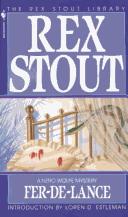
The first Nero Wolfe, from 1934: a golf course, a poisoned driver and a snake. Start here for the introductions, but know that Stout had not yet fully found the rhythm — if it feels stiff, that is the book, not the series.
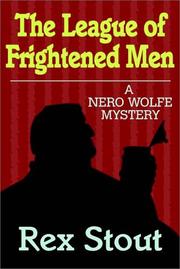
A group of Harvard men being killed off one by one by a classmate they crippled at a hazing. The second book and the one where the Wolfe-Archie double act clicks into place. Read it second and judge the series on this rather than on Fer-de-Lance.
The 1930s Peak
BeginnerRead the pre-war books most often named the best in the series, and see Stout at full strength.
▸ Study plan for this stage
Pace: Two books, a week, ideally one sitting each: Too Many Cooks runs 208 pages and Some Buried Caesar 263, and both move. One thing to state plainly before you start Too Many Cooks. It is set at a West Virginia resort in 1938, a chunk of its plot depends on the testimony of the Black kitchen staff, and
- Both books get Wolfe out of the brownstone, and in each case the removal is itself the event. Stout only spends this device a handful of times in thirty-three novels
- Food is a genuine subject rather than a running joke. The sauce printemps tasting in Too Many Cooks is a real set piece and the closest Stout comes to writing a puzzle chapter
- Some Buried Caesar introduces Lily Rowan, the only recurring character who touches Archie's private life across the whole corpus and the nearest the series has to continuity
- The bull, the pasture and the boulder in Some Buried Caesar are the best comic sequence Stout wrote, and they arrive in the first thirty pages
- This is where the consensus best-of lists land, and it is worth noticing why: the constraint is broken, so Archie has more to do and Wolfe is visibly uncomfortable, which is funnier than the office
- Notice how little the solutions matter to your enjoyment. If you finish Some Buried Caesar remembering the bull and not the murderer, that is the correct response and it tells you what the series is
- What changes in the writing when Wolfe leaves the house? Be specific about Archie, who gets more room rather than less.
- In Too Many Cooks, what does Wolfe offer the kitchen staff in exchange for their testimony, and why is that the scene people still cite?
- In Some Buried Caesar, what is the actual relationship between the bull and the solution, and did you have it before Wolfe rang for Fritz?
- What does Lily Rowan give Archie that the plots cannot, and why does Stout keep her at the edge of the series rather than in it?
- Four books in, which do you rate highest, and is your reason the plot or the company?
- Read Some Buried Caesar in one sitting. It is the best single argument for the series and it loses momentum when broken up.
- Count the pages before Wolfe physically leaves the brownstone in each book, then compare with the two books from the previous stage. The pattern is deliberate.
- Copy out one meal description from Too Many Cooks. Stout took the food seriously enough that a real Nero Wolfe Cookbook was published in 1973 gathering the dishes, which our catalogue does not carry, but the passages stand on their own.
- After both, write down what you would tell someone who asked for one Wolfe book to sample. Keep it, and check whether it survives the rest of the path.
Next up: You now know how firmly the series resets after every case, which is exactly the expectation the next three books are built to violate.
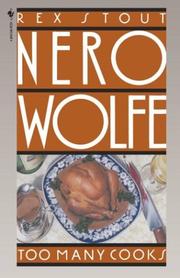
Wolfe leaves the brownstone — which is itself the event — for a gathering of the world's greatest chefs in West Virginia, and a murder. The food writing alone justifies it.
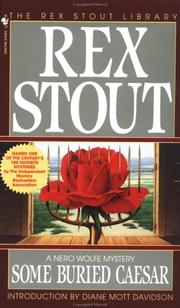
An orchid exhibition, a prize bull, a body in a pasture, and the first appearance of Lily Rowan. Very widely regarded as the single best Nero Wolfe — if you want to sample one book to decide, sample this one.
The Zeck Trilogy, In Order
IntermediateRead the one sequence in the series that genuinely must be taken in order, from first contact with Wolfe's only real adversary to the resolution.
▸ Study plan for this stage
Pace: This is the one stage on the path where order is not negotiable, and it is the whole point of it. And Be a Villain in 1948, The Second Confession in 1949, In the Best Families in 1950, in that order, with no substitutions. Arnold Zeck is the only continuing antagonist Stout ever wrote and these are
- Zeck is a structural experiment, not a Moriarty tribute. Stout wanted to know whether a series built on total reset could carry consequence across three books, and the answer he arrived at is visible in the next stage
- Three warnings, escalating: a phone call, then violence against the thing Wolfe loves, then the demand that ends the arrangement. Each book is one rung
- In And Be a Villain the murder case is the foreground and Zeck is a shadow at the edge. By The Second Confession the proportions have flipped and the case matters less than the war
- The Second Confession has Zeck machine-gun the orchid rooms, which is the only attack in the series aimed at Wolfe rather than at a client, and it also carries a Communist Party subplot that dates the book precisely to 1949
- In the Best Families breaks the format completely. Wolfe abandons the brownstone, Archie is left without an employer, and Stout makes you sit with that for most of the novel
- The reason there was never a fourth Zeck book is the reason the series works at all. Consequence is the one thing this format cannot metabolise, and Stout took the lesson
- What does Zeck actually demand of Wolfe in each of the three books, and how does the demand change shape?
- Be specific: what exactly would a reader lose by opening with In the Best Families? Name at least three things that only land in sequence.
- In The Second Confession, where does the murder investigation sit relative to the Zeck material, and does Stout still bother to make the case work?
- What does Archie do while Wolfe is gone, and what does his conduct reveal that nine books of narration had not?
- Does the trilogy change the series permanently? Form a view now and test it in the next stage.
- Read all three inside two weeks with no other Wolfe between them. This is the only place on the path where pace genuinely matters.
- After And Be a Villain, write down everything you actually know about Arnold Zeck. It will be close to nothing, and that restraint is the design.
- Avoid search engines and back-cover copy for In the Best Families specifically. Several editions give away the central move on the blurb, and it is the most surprising page Stout ever wrote.
- At the end of In the Best Families, note in one line what has changed at the brownstone. Check that note again after the next stage and see how much survived.
Next up: Having watched the series break its own rules and put itself back together, you are in the right position to see how completely the reset holds in the post-war books, which pick up as though none of it happened.
A death on live radio, and the first shadow of Arnold Zeck. The opening of the only continuing storyline Stout wrote — start the trilogy here and do not skip ahead.
Zeck's second warning, delivered by machine-gunning Wolfe's orchid rooms. Middle volume; the personal stakes escalate and the case matters less than the war.
The finale, in which Wolfe abandons the brownstone entirely and Archie is left with no employer. The single most surprising book in the series, and worthless out of sequence — read it third.
The Famous Later Cases
IntermediateSample the strongest post-war entries, which can be read in any order.
▸ Study plan for this stage
Pace: Three books, no required order among them, about two weeks. They run 235, 192 and 182 pages, which is the size Stout settled into for the rest of his life. One sequencing suggestion rather than a rule: take The Doorbell Rang last of the three. Its whole charge comes from knowing how rigid Wolfe's ro
- The reset is total. Nothing from the Zeck trilogy carries into these books, and Stout does not pretend otherwise. That is the deal the series offers and this stage is where you either accept it or stop
- Murder by the Book is the best-constructed plot in the corpus: a manuscript nobody can produce, which kills everyone who reads it. The trick is that the object of the mystery never appears on the page
- The Golden Spiders opens with a boy who washes windshields at a light bringing Wolfe a case and dying for it within pages, and it is one of the few times Wolfe works without a fee. Watch what that does to his behavior
- The Doorbell Rang names the FBI, in 1965, as the antagonist, and the client's opening move is to mail ten thousand copies of a real 1964 book of criticism to influential Americans. Stout was a public figure who had chaired the Writers War Board, and he meant it
- The Doorbell Rang is the most famous Wolfe and not the best one. It is worth separating the two judgments in your own head
- Length is now doing work: at 182 pages Stout has cut nearly everything except the voice, which is either the series at its most distilled or at its thinnest depending on the day
- What carries over from the Zeck trilogy into these three books, and what does the answer tell you about what kind of series this is?
- In Murder by the Book, how does Stout make a manuscript the reader never sees carry an entire plot?
- What changes in Wolfe when there is no fee in The Golden Spiders, and does Stout make you believe it?
- In The Doorbell Rang, what does Wolfe actually achieve against the FBI, and what does he conspicuously not achieve?
- Which of these three would you hand a newcomer, and why is it not the one you enjoyed most?
- Read The Doorbell Rang last, and before you start it write down what you expect Wolfe would never do. The book is built for that list.
- Look up one fact: the book Wolfe's client mails out in The Doorbell Rang is real, published in 1964. Our catalogue does not carry it, but knowing it exists changes how the first chapter reads.
- Open any two chapters at random and count the lines Archie needs to place you in a room. It is usually three or four, and that economy is the thing Stout is actually good at.
- Nine books in, revisit the sample recommendation you wrote in stage two. If it has changed, note why.
Next up: You have now read the series at full strength in three different decades, which is the preparation needed for the short form and for the one book that genuinely belongs at the end.
An unpublished manuscript that gets everyone who reads it killed. The best-plotted of the 1950s books and a fine demonstration that the series recovered fully after the Zeck arc.
A boy washing windshields brings Wolfe a case and is dead within pages, which makes it personal. One of the few times Wolfe works for nothing.
Wolfe takes on the FBI, in 1965, by name. The most famous entry in the series and the one non-readers have heard of — read it here rather than first, because its impact depends on knowing how rarely Wolfe leaves his routine.
The Novellas, and the End
BeginnerLearn where the short-form Wolfe fits, and read the one book that genuinely belongs last.
▸ Study plan for this stage
Pace: Two books, about a week, and they are doing very different jobs. Black Orchids is not a novel. It is a 1942 volume of two novellas, Black Orchids and Cordially Invited to Meet Death, and our listing does not say so. Roughly a third of all Wolfe stories are novellas, usually published three to a volu
- The novella is arguably Stout's best form. The word count forces out the padding and leaves the voice and the mechanism, which is why the collections are consistently well rated
- Black Orchids gives you a flower show, a corpse in an exhibit, and a second unrelated story in the same volume, so you get two complete Wolfe cases in 200 pages
- A Family Affair puts the murder inside the brownstone itself and implicates the household, which is the one thing the format had always protected
- It deliberately breaks the no-consequences rule the other thirty-two novels run on. Whether Stout earned that in his last book, at eighty-eight, is the only real critical argument the series has
- Watergate is explicitly in A Family Affair, published a year after Nixon resigned, which makes it the most precisely dated book in the series and pairs it with The Doorbell Rang as Stout's other direct swing at power
- Where this path stops and what comes after: Robert Goldsborough wrote authorized continuations from 1986 onward. Those are a separate decision and not part of Stout's thirty-three
- Read one novella and one novel back to back. What does the short form gain, and what specifically does it lose?
- Which of the series' standing rules does A Family Affair break, and did Stout earn the break?
- Would you hand Black Orchids to someone unwilling to commit to a novel? Defend the answer against the fact that it assumes you already know the household.
- Twelve books in, where would you now tell a newcomer to start, and having read the Zeck trilogy, do you still say order does not matter?
- Across all twelve, did you ever solve a case before Wolfe called everyone into the office? If not, does that bother you?
- After A Family Affair, reread the first chapter of Fer-de-Lance. Forty-one years separate them and the brownstone has not moved an inch, which is either the achievement or the limitation.
- Pick your next six Wolfes at random from the twenty-one novels you have not read. You genuinely cannot get it wrong now, because the only sequence that mattered is behind you.
- Name the gap and fill it yourself: our catalogue carries Black Orchids but not the other novella collections, so if the short form suits you, buy Trouble in Triplicate, Three Doors to Death, Curtains for Three or Triple Jeopardy wherever you buy books.
- Write one paragraph on whether you read Stout for the puzzles or for the company. If the honest answer is the puzzles, stop here, because the remaining twenty-one will not improve on that front.
Next up: This is the end of the path, and the natural next move is not another author but the rest of the corpus in whatever order you please: pick any Wolfe novel you have not read, since the only fixed sequence in thirty-three books is the Zeck trilogy you have already finished.
Two novellas rather than a novel, and the best entry point to the short form — roughly a third of all Wolfe stories are novellas, published in threes, and they are where Stout's plotting is tightest. Read any of these collections at any point once you know the characters.

The last Nero Wolfe, published in 1975 weeks before Stout died, and the only one that must come last: a murder inside the brownstone itself, and an ending that closes the household. Stop here — the series continues in Robert Goldsborough's authorised continuations, which are a separate decision.
Discussion
Keep reading
Paths that share books, cover the same subject, or open a related topic.