Natsume Soseki Reading Order: Where to Start
Soseki is the novelist modern Japanese fiction is measured against, and his career runs from broad comedy to some of the coldest psychological writing anyone has done. Publication order works badly as an entry route because the first book is a 600-page satire narrated by a cat. This path starts with the two short novels every Japanese schoolchild reads, takes the middle trilogy in its proper sequence, then returns to the early comedies and ends with the late, bleak books.
The Two to Start With
BeginnerRead the two Soseki novels that are short, famous and completely unalike, and pick which Soseki you want more of.
▸ Study plan for this stage
Pace: Two to three weeks for about 450 pages, and the first evening is better spent adjusting your expectations than your pace. Soseki (1867-1916) is an early-modern writer working in a formal, discursive register. Most of his novels were newspaper serials, his plots turn on obligations nobody says out lo
- Serial construction — Soseki wrote his mature novels as daily instalments for the Asahi Shimbun, which is why chapters end on small hooks and why characters get quietly re-described every few pages
- The confessional handover: Kokoro spends two-thirds in a young narrator's voice and then gives the last third to Sensei's letter, so the novel abandons the person you have been following
- The death of the Meiji emperor and General Nogi's junshi, the suicide following one's lord, which Sensei cites directly — an era ending is doing plot work here
- Unspoken obligation as the engine. Nothing in Kokoro is illegal, nothing is even unusual, and a man ruins his life over it
- Botchan's voice: fast, rude, Tokyo shitamachi bluster, with nicknames for every colleague (Redshirt, Porcupine) — a translation problem you can watch a translator either solve or fumble
- Kiyo the old servant as the only unconditional relationship Soseki lets anyone have, and the reason Botchan's ending is not a joke
- Two temperatures, one writer: the comic Soseki and the cold Soseki are the same man four years apart, and the path exists to show you both before you commit
- Why does Kokoro withhold Sensei's letter until the final third, and what would be lost if it came first?
- What exactly did Sensei do to K, and why does he treat it as unforgivable when nothing about it broke a rule?
- How does the death of the emperor function in Sensei's decision — as cause, as permission, or as excuse?
- Who is Kiyo, and why does Botchan give her its last paragraph rather than its plot?
- Botchan is funny and Kokoro is not. What do the two narrators nevertheless have in common?
- Which of the two did you prefer, and what does that tell you about which half of Soseki's career you will get on with?
- Before you buy, read the first two pages of two different Kokoro translations side by side using online samples. The gap between a 1957 and a 2010 version is larger than you expect and it decides your next nine books.
- Keep a running list of moments where a character declines to say something and someone else acts on it anyway. That list is what these novels are actually made of, and it will be long by the end of the path.
- Read Sensei's letter in one sitting rather than across three nights. It is roughly ninety pages and it was built to be received whole.
- Spend five minutes looking up when the Meiji emperor died and what junshi means. It makes the final chapter of Kokoro legible instead of merely sombre.
- After Botchan, write two sentences on the joke Soseki is making about provincial schools and Tokyo self-regard. You will want it when the early comedies arrive in stage three.
Next up: You now know both of Soseki's registers and have accepted his pace, which is the condition for reading the three middle novels, where nothing happens for long stretches and the cost of that is the entire subject.
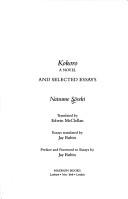
A student befriends an older man carrying a secret, which arrives as a long confessional letter in the final third. The most read novel in modern Japan and the best single entry point: short, plain and devastating.

A hot-tempered young Tokyo teacher posted to a provincial school he despises. Comic, fast, and the exact opposite of Kokoro in temperature — read it second to see the full range before committing to the longer books.
The Trilogy, In Order
IntermediateRead the three loosely connected novels about a man failing to choose a life, in the sequence Soseki wrote them.
▸ Study plan for this stage
Pace: Roughly 740 pages across three books, four to six weeks, read close together and strictly in the listed order. Correct one expectation before you start: these three are called a trilogy but they share no characters and no continuing story. Each has a different protagonist, and a reader who finishes
- Stray sheep — Mineko's phrase in Sanshiro, and the nearest Soseki comes to naming what is wrong with a man who cannot choose
- Sanshiro's three worlds (the village he left, the university, the modern city) set out explicitly by Hirota, and the fact that Sanshiro never settles in any of them
- Daisuke in And Then as the koto yumin, the higher loafer: thirty, unemployed by principle, living on his father's money, and articulate about why that is superior
- The trilogy's real subject is not love but delay — each novel is about the interval between wanting something and being permitted to want it
- The structural trick of The Gate: it opens years after the act And Then ends on, so the decisive event is never dramatised, only lived with
- Weather, rent, illness and small domestic objects doing all the emotional work, because the characters will not state a feeling directly
- Sosuke's failed retreat to a Zen temple in The Gate — Soseki offers his character the obvious consolation and then withholds it
- Family money and obligation as the plot machinery in all three: brothers, fathers and allowances decide more than desire does
- Sanshiro ends without resolving Mineko. What, if anything, has Sanshiro learned, and does the novel think he has?
- What does Daisuke give up in And Then, and what does the closing image of the world turning red tell you about what comes next for him?
- The Gate begins after the choice And Then ends with. What does Soseki gain by refusing to show that choice being made?
- Sosuke goes to a Zen temple and comes back with nothing. Why is he denied the consolation the structure of the book seems to promise him?
- Read as one arc, what age is each novel about, and how does the cost of not choosing change across the three?
- Read And Then and The Gate back to back with nothing in between. They are the same story from opposite sides and a month's gap kills the effect.
- Keep a one-line note per novel recording what the protagonist wants and what he does about it. The gap between the two columns is the trilogy.
- After finishing The Gate, go back and reread the last chapter of And Then. It stops being an ending and becomes a prologue.
- Rather than hunting for recurring characters that do not exist, list the three women — Mineko, Michiyo, Oyone — and note how differently each is allowed to speak and how much less each says as the sequence goes on.
- If you find the third book heavy going, read the first chapter of the Sibley translation before deciding you dislike the novel.
Next up: Having watched Soseki strip his prose down to rent, weather and silence, you are in the right position to go back to the loud, digressive, over-talkative books he started with and see what he gave up.

A country student arrives at Tokyo Imperial University and is baffled by the city, by science and by a woman. The first of the trilogy and the gentlest — read it first of the three.
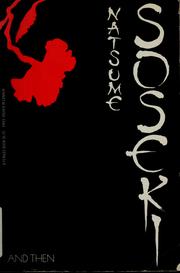
A man of thirty living on his father's money decides, too late, to claim the woman he gave away. The middle panel, and where the trilogy's real subject — the cost of inaction — comes into focus.
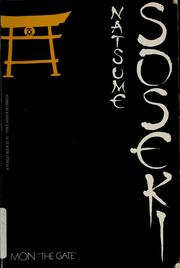
The aftermath: a couple living quietly with the consequences of exactly the choice made in And Then. Read third; it is the quietest of the three and only pays if the first two are fresh.
The Early Comedies
IntermediateGo back to the discursive, satirical Soseki that the novels of psychology grew out of.
▸ Study plan for this stage
Pace: Two books that behave nothing like the trilogy and should be paced accordingly — allow three weeks and do not try to read either one straight through in a weekend. I Am a Cat is plotless by design, a sequence of set pieces in a schoolmaster's parlour, and one chapter a night is the correct dose; rea
- The cat narrator has no name and says so in the first line, which sets up the whole device — an observer with perfect access and no stake
- Kushami the dyspeptic schoolteacher is a self-portrait, and the parlour full of pedants declaiming at each other is Meiji intellectual life being made ridiculous from inside
- Shaseibun, the sketch-from-life prose the Hototogisu circle around Masaoka Shiki was writing, which is what I Am a Cat came out of and why plot is beside the point
- The comic rhythms are those of rakugo, spoken storytelling, so digressions that look like padding are the performance
- Kusamakura's stated programme of hininjo, non-emotion: a painter walks into the mountains determined to observe people as scenery and feel nothing about them
- Nami appears to the painter as composition rather than as a person for almost the whole book, which is the experiment the novel is running
- I Am a Cat ends with the cat drowning in a water butt, comedy closing in a death — the earliest appearance of a move Soseki never stopped making
- What can Soseki say through a cat that Kushami could not say for himself?
- How does I Am a Cat end, and what does that ending do to the hundreds of comic pages before it?
- Kusamakura's painter sets out to feel nothing. Where does the programme break down, and does the novel treat that as failure or as the point?
- What is the painter finally able to paint, and what has to happen to Nami's face first?
- Which of these two is closer in method to the trilogy you just read, and why does the answer matter for the late books?
- Check your I Am a Cat edition against the complete text's page count before you begin, so you know whether you are reading the whole novel or its first third.
- Read one chapter of I Am a Cat a night and nothing more, treating it as a column rather than a book.
- Mark the page where I Am a Cat stops being funny. Most readers can name it, and comparing your page to the ending is the most useful thing this stage offers.
- Read the opening paragraph of Kusamakura in both the Turney and McKinney versions. It is the most quoted passage Soseki wrote and the two readings differ enough to change what you think the book is.
- Read Kusamakura in a single day if you can, and notice how much of it would be unbearable at a slower pace and how much only works because you are unhurried.
Next up: The comic Soseki disappears completely after this, so having heard him at his most talkative you will feel exactly what has been removed when the last three novels start.

Meiji intellectual society observed by a nameless housecat. Long and plotless by design — read it after Botchan has taught you Soseki's comic register, and read it in sittings rather than straight through.
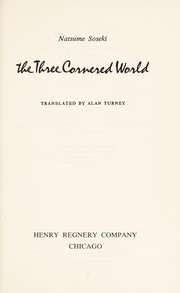
A painter walks into the mountains determined to feel nothing. Barely a novel at all, closer to an essay on art, and the most beautiful sentences he wrote. Also published in English as The Three-Cornered World.
The Late, Difficult Books
IntermediateFinish with the last novels, written while Soseki was dying, where the comedy is gone entirely.
▸ Study plan for this stage
Pace: Close to 900 pages and the hardest going on the path — give it six weeks and do not read anything else alongside it. Three catalogue titles need untangling before you order anything. The wayfarer = is The Wayfarer, serialised 1912-13 and known in Japanese as Kojin; the stray equals sign is a catalog
- Ichiro in The Wayfarer asks his own brother to test his wife's fidelity, which is not really jealousy but epistemology — he cannot accept that another mind is closed to him
- The Wayfarer ends in a long letter from a third party, the friend H., exactly as Kokoro does; twice now Soseki has taken the ending away from the man the book is about
- Michikusa is his only openly autobiographical novel: Kenzo is Soseki, and the foster father who keeps reappearing is the Shiobara household that adopted him as a child
- Every relationship in Michikusa is conducted through money, and the book is honest that affection and obligation have become indistinguishable to its narrator
- Michikusa's closing line — that almost nothing in this world is settled, and what has happened once will go on happening — is the flattest and bleakest sentence he wrote
- Meian alternates close third person between a husband and a wife, and it is the first time Soseki gives a woman as much interior life as the man she is married to
- Meian opens with a haemorrhoid operation and proceeds at microscopic scale, which is why it is usually called his most modern novel
- Sokuten kyoshi, follow heaven and depart from the self — the idea he was reportedly reaching for in Meian, and which the unfinished book never has to demonstrate
- What does Ichiro actually want to know about his wife, and is it the kind of thing anyone could know?
- Why does Soseki hand the endings of both Kokoro and The Wayfarer to a letter from a secondary character?
- In Grass on the Wayside, what does Kenzo's foster father want, and why does paying him not settle it?
- Light and Darkness breaks off mid-story. From what you have, where do you think Tsuda's journey to the spa was heading, and what would an ending have cost the book?
- Having read all ten books on this path, would you still hand a newcomer Kokoro first, or has something else displaced it?
- Set the final letter of The Wayfarer beside the final letter of Kokoro and read them one after the other. Four years apart, same device, and the difference in what Soseki thinks a confession achieves is the clearest measure of his late turn.
- Read Michikusa immediately after The Wayfarer. One is the coldness invented and the other is the coldness remembered, and back to back they explain each other.
- Before starting Light and Darkness, look up the date of Soseki's death and the number of the last instalment. Knowing there is no ending changes how you read the last hundred pages, and being blindsided by the break wastes the book.
- Keep the obligation list you started in stage one running to the end, then read it back. Ten books of people ruined by things nobody was willing to say aloud is an argument, not a mood.
- Write a paragraph naming which Soseki you would defend to someone who calls him slow, and which of the ten books you would concede.
Next up: This is the end of the path, and the natural next move is outward rather than back — to the generation that read him and wrote against him, Mori Ogai just ahead of him and Tanizaki and Kawabata just behind, or to his own lectures and essays, which our catalogue does not currently carry and which are where he argues in his own voice about the individualism his novels only dramatise.
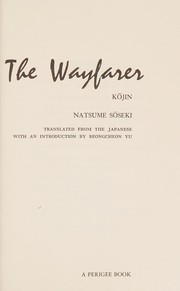
A scholar convinced his wife cannot be known asks his brother to test her. The bleakest of the middle-late books and the bridge into the final ones.

His only openly autobiographical novel — an adoptive father reappears to extract money, and nothing is resolved. Read it late; it reads as a key to everything before it.

The unfinished final novel, and by common agreement his most modern: a marriage examined at microscopic length, breaking off mid-story because he died. The right last book precisely because it has no ending.
Discussion
Keep reading
Paths that share books, cover the same subject, or open a related topic.