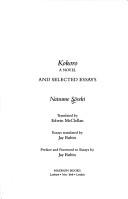
Start with Kokoro, then read Botchan. Kokoro is 272 pages, it is the novel Soseki is taught on, and it contains everything his later books do at greater difficulty: a young narrator, a withheld confession, and a man who ruins his life over an obligation nobody ever stated. The obvious alternative is to begin with I Am a Cat, his first and funniest book — but it is plotless by design and runs past six hundred pages complete, which is a strange thing to hand a new reader.
Botchan immediately after is the corrective. It is 178 pages of fast, rude Tokyo bluster, finishable in two sittings, and it shows you that the comic Soseki and the cold Soseki are the same man four years apart. Reading both before you commit is the whole reason for this order.
Adjust one expectation first. Soseki wrote between 1867 and 1916 in a formal, discursive register, most of his mature novels were newspaper serials, and his emotional climaxes are muted by the standard of anything written in the last fifty years. If you come from contemporary fiction the crises will pass before you register them. That is the book, not you.
The edition problem is real and it starts here. Kokoro exists in several English versions of very different ages, from Edwin McClellan's 1957 translation to Meredith McKinney's for Penguin, and the older ones read noticeably stiffer. Read two opening pages side by side in online samples before you buy; that choice sets the tone for the next nine books.
The trilogy, in order — and it is not what you think
Sanshiro, And then and Mon - The Gate are called a trilogy and share no characters and no continuing story. A reader who finishes Sanshiro looking for Sanshiro will spend fifty pages of And then waiting for a man who never appears. What links them is one situation told three times at three ages: a man who does not act, and then the bill.
Read them close together and strictly in that order, and read the second and third back to back with nothing in between — they are the same story from opposite sides, and Mon - The Gate opens years after the choice that And then ends on, so the decisive event is never dramatised, only lived with. The catalogue title there is the Japanese Mon bolted onto the English Gate by a cataloguer; the novel is usually sold as The Gate. If the older translation feels wooden, William Sibley's NYRB version is considerably more fluent, and worth trying before you decide you dislike the book.
The early comedies
I Am a Cat belongs here rather than at the start. One chapter a night is the correct dose — readers who attack it like a novel stall in the middle and never come back. Check the page count before ordering: the complete text runs past six hundred pages, while the edition our catalogue lists is a recent 240-page one, and English publishers have historically printed anything from the first serialised part alone to the whole thing.
Kusamakura is 184 pages and reads best in a single unhurried day. Another title trap: the same short book is sold as The Three-Cornered World in Alan Turney's older translation and as Kusamakura in McKinney's newer Penguin, and our listing mixes the two, showing one title with the other translator credited.
The late, difficult books
Six weeks, roughly 900 pages, and nothing else read alongside. The wayfarer = is The Wayfarer — the stray equals sign is a cataloguing artefact where the record ran the English title into the Japanese one — and it hands its ending to a letter from a secondary character, exactly as Kokoro does. Grass on the wayside is his only openly autobiographical novel, and our listing carries no ISBN, so its buy link is a search rather than a product page and you will be picking the edition yourself.
Say the last thing plainly before you start Light and Darkness Soseki, which is Light and Darkness with the author's surname accidentally welded to the title: it is unfinished. Soseki was still serialising it when he died in December 1916, and it stops mid-story with the marriage unresolved. There is no ending and none was written. Being blindsided by the break wastes the book; knowing in advance makes the last hundred pages readable.
Where to stop
Stopping after the trilogy is entirely defensible, and many readers do. The late books are better than they are enjoyable. His lectures and essays, where he argues in his own voice about the individualism the novels only dramatise, are not in our catalogue. Readers wanting more from this corner of the shelf can try Michael Ondaatje.
Follow the full ordered path here: Natsume Soseki Reading Order: Where to Start.