Mixed martial arts for beginners: best books to learn MMA fundamentals
This curriculum builds a well-rounded MMA fighter from the ground up, starting with the physical and mental foundations of combat sports, then diving into each core discipline — striking, wrestling, and Brazilian jiu-jitsu — before synthesizing everything into MMA-specific strategy and fight IQ. Each stage prepares the reader's vocabulary, body awareness, and tactical thinking for the next, mirroring how a real fighter develops in the gym.
Foundations of Combat
BeginnerUnderstand the mindset, physical conditioning, and basic movement principles that underpin all combat sports, and get an honest overview of what MMA training demands.
▸ Study plan for this stage
Pace: 6–8 weeks, ~25–30 pages/day. Read "The Fighter's Mind" first (3–4 weeks), then "Convict Conditioning" (3–4 weeks). Allow time for reflection and practice between books.
- The fighter's mindset: how mental toughness, focus, and emotional regulation separate elite competitors from others
- Fear management and visualization techniques used by professional fighters to prepare for high-stress situations
- Progressive calisthenics and bodyweight training as the foundation for functional strength and injury prevention in combat sports
- The principle of 'greasing the groove'—consistent, frequent practice of fundamental movements to build neural pathways and durability
- Conditioning for combat: building work capacity and cardiovascular endurance without destroying joints
- Movement quality over intensity: mastering basic positions and transitions before adding speed or power
- The role of discipline and incremental progress in building a sustainable training practice
- What does Sam Sheridan identify as the core difference between fighters who excel under pressure and those who don't?
- How does 'The Fighter's Mind' describe the relationship between fear and performance in combat sports?
- What is the 'ten steps' progression system in Convict Conditioning, and why is moving through it slowly critical?
- Explain the concept of 'greasing the groove' and how it applies to building combat-ready movement patterns.
- What are the main joint-friendly conditioning methods Paul Wade recommends, and why does he caution against high-impact training for beginners?
- How do the mental frameworks from Sheridan's book complement the physical training philosophy in Convict Conditioning?
- Complete a daily 10-minute 'groove' session: pick one fundamental movement (push-up, squat, or plank) from Convict Conditioning and perform it for low reps throughout the day, 5–6 days/week.
- Practice one visualization exercise from 'The Fighter's Mind' twice weekly: mentally rehearse a challenging physical task (e.g., a difficult set of push-ups) before attempting it in real life.
- Establish a baseline: perform the initial assessment movements from Convict Conditioning (standard push-up, bodyweight squat, dead hang) and record your numbers; retest after 4 weeks.
- Keep a 'mindset journal': after each training session, write 1–2 sentences about what mental obstacles you faced and how you managed them, connecting it to Sheridan's concepts.
- Follow one full Convict Conditioning progression for 4 weeks (e.g., the push-up progression or leg progression), advancing only when you hit the rep targets.
- Conduct a 'fear audit': identify one specific fear or discomfort in training (e.g., holding a plank, attempting a harder variation), then design a 2-week micro-progression to desensitize yourself using Sheridan's principles.
Next up: This stage establishes the mental resilience and movement foundation necessary to safely enter sport-specific training, preparing you to learn the technical and tactical elements of actual MMA disciplines (striking, grappling, submissions) with a conditioned body and disciplined mindset.

A journalist-turned-fighter interviews elite coaches and fighters to decode the mental game of combat sports — the perfect first read to set realistic expectations and build the right mindset before touching technique.
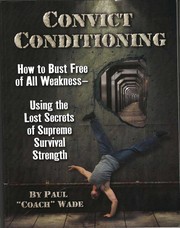
Establishes a bodyweight strength and mobility base essential for all MMA disciplines; reading this early ensures the learner can physically absorb the technical training that follows.
Wrestling and Takedowns
IntermediateUnderstand wrestling's core concepts — level changes, penetration steps, ties, and top control — so the learner can take the fight to the ground or defend takedowns at will.
▸ Study plan for this stage
Pace: 4–5 weeks, ~25–30 pages/day, with 2–3 dedicated practice days per week for drilling and live rolling
- Level changes as the foundation for all takedown entries and defensive positioning
- Penetration steps and base control to establish dominant positioning before committing to a throw or takedown
- Tie-ups and clinch control as the bridge between striking and grappling exchanges
- Top control mechanics: weight distribution, pressure points, and preventing escape routes
- Guerrilla jiu-jitsu philosophy: using unorthodox angles and timing to catch opponents off-guard
- Transitioning between wrestling and submissions through positional dominance
- Reading opponent posture and base to identify vulnerability windows for takedowns
- What is a level change and why is it the critical first step in executing a takedown?
- How do penetration steps differ from a level change, and when do you apply each?
- What are the main tie-ups Camarillo emphasizes, and how do they control an opponent's posture and base?
- How do you establish and maintain top control to prevent an opponent from escaping or reversing you?
- What does 'guerrilla jiu-jitsu' mean in the context of wrestling, and how does it apply to takedown entries?
- How can you chain wrestling techniques into submissions using positional control?
- Drill level changes daily: practice dropping your hips and driving forward from a standing position, focusing on knee bend and posture, 5 minutes per session
- Practice penetration steps in isolation: step forward explosively while maintaining a strong base, alternating legs, 10 reps per leg
- Work tie-up drills with a partner: establish collar-and-elbow ties, underhook ties, and overhook control; practice posture breaks and base disruption for 10–15 minutes
- Live wrestling exchanges: practice level changes and penetration steps against a resisting partner in 3–5 minute rounds, focusing on timing and entry angles
- Positional control drills: from top position, practice maintaining pressure, controlling hips, and preventing common escapes (shrimping, bridging) for 5–10 minutes per position
- Takedown-to-submission chains: execute a takedown, establish top control, then transition into a submission (e.g., side control to armlock or north-south choke), drilling 5–8 reps per chain
Next up: This stage equips you with the wrestling fundamentals and top control mechanics needed to confidently initiate ground exchanges, setting the stage for the next level where you'll refine positional transitions, escape defense, and submission chains from dominant positions.
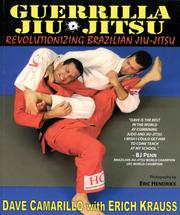
Written by a Division I wrestler and black belt, this book uniquely blends wrestling transitions with jiu-jitsu, making it the ideal bridge between the wrestling and BJJ stages of the curriculum.
Brazilian Jiu-Jitsu and Ground Control
IntermediateMaster the positional hierarchy of BJJ — guard, mount, back control — and learn fundamental submissions and escapes that make the ground game dangerous and complete.
▸ Study plan for this stage
Pace: 4–5 weeks, ~20–25 pages/day with 2–3 days per week for practical mat work
- The rubber guard as an offensive guard position that neutralizes posture and creates submission opportunities
- Leg lock mechanics and how the rubber guard facilitates heel hook and calf slicer attacks
- Positional control from the rubber guard: how to prevent opponent escape and maintain dominance
- The relationship between rubber guard and traditional guard hierarchy: where it fits in the positional landscape
- Grip fighting and hand placement as the foundation for rubber guard control
- Transition chains: flowing from rubber guard into submissions, sweeps, and back control
- Defensive applications: using rubber guard to escape and reverse pressure from top positions
- What is the rubber guard and how does it differ mechanically from traditional closed guard or open guard positions?
- How does the rubber guard neutralize an opponent's posture, and why is this critical for offensive submissions?
- What are the primary leg lock attacks available from the rubber guard, and what makes them effective?
- How do you maintain positional control and prevent your opponent from escaping the rubber guard?
- What are the key grip and hand placement principles that make the rubber guard functional?
- How does the rubber guard fit into the broader positional hierarchy of BJJ, and when should you prioritize it over other guard positions?
- What are the main transition chains from rubber guard, and how do you flow between submissions, sweeps, and back control?
- Drill rubber guard entry: practice establishing the position from closed guard, open guard, and half-guard against a stationary partner
- Grip fighting drills: isolate hand placement and grip control specific to rubber guard without moving, focusing on wrist and arm positioning
- Posture neutralization practice: have a partner attempt to posture up while you work to control their posture using rubber guard mechanics
- Leg lock chain drilling: practice the progression from rubber guard into heel hooks, calf slicers, and knee reap attacks on a compliant partner
- Sweep and submission flow: practice transitioning from rubber guard into sweeps, submissions, and back control in sequence without stopping
- Live rolling with rubber guard focus: roll with specific emphasis on entering and maintaining rubber guard, limiting yourself to rubber guard-based attacks for 5–10 minute rounds
- Positional sparring: start in rubber guard position and practice both offensive attacks and defensive escapes against increasing resistance
Next up: This mastery of the rubber guard as an advanced offensive guard position—with its leg lock arsenal and positional control mechanics—prepares you to explore the full spectrum of leg lock systems and how they integrate into a complete ground game across all positional hierarchies.

Introduces an innovative, MMA-specific guard system designed to control opponents and hunt submissions from the bottom — a natural next step once basic BJJ positions are understood.
MMA Strategy and Fight IQ
ExpertSynthesize striking, wrestling, and grappling into a coherent MMA game plan — understanding range management, transitions between disciplines, cage work, and how elite fighters think during a fight.
▸ Study plan for this stage
Pace: 4–5 weeks, ~40–50 pages/day (with 2–3 days per week for reflection and analysis)
- The mental and philosophical foundation of fight IQ—how elite fighters develop intuition, decision-making under pressure, and adaptability
- Sheridan's exploration of different fighting styles (boxing, wrestling, Muay Thai, BJJ) and how they shape strategic thinking
- The concept of 'range management'—understanding distance, timing, and positioning as core strategic elements across disciplines
- How fighters transition between striking and grappling ranges, and the mental framework required to execute seamless transitions
- The role of experience, failure, and learning from losses in developing championship-level fight IQ
- Cage awareness and spatial intelligence—using the octagon/ring as a strategic tool, not just a boundary
- The fighter's mindset: ego management, respect for opponents, and the psychological resilience required at elite levels
- According to Sheridan's account, what is the relationship between a fighter's martial arts background and their strategic approach to MMA?
- How does Sheridan illustrate the concept of range management through the fighters and training camps he visits?
- What does Sheridan identify as the key differences between technical mastery in a single discipline and fight IQ in MMA?
- How do elite fighters use the cage strategically, and what mental skills are required to exploit positional advantages?
- What role does failure and learning from losses play in developing championship-level fight IQ, based on Sheridan's interviews and observations?
- How does Sheridan characterize the transition between striking and grappling ranges, and what does this reveal about MMA strategy?
- Fight breakdown analysis: Watch 3–4 fights from elite MMA fighters (referenced or discussed in the book) and annotate 5–10 key moments where range management, transitions, or cage positioning determined the outcome. Compare your analysis to Sheridan's observations.
- Range management mapping: Create a visual diagram (or written description) of how a specific fighter transitions between striking range, clinch range, and ground range. Identify the triggers and decision points Sheridan emphasizes.
- Opponent study: Select one fighter profiled in the book and research their fight history. Write a 1–2 page strategic profile explaining their primary strengths, weaknesses, and how they manage range across their career.
- Mindset reflection journal: As you read, keep a journal of Sheridan's insights on fighter psychology and decision-making. Reflect on 3–4 moments where a fighter's mental approach (ego, adaptability, respect) directly influenced their strategic choices.
- Cage positioning exercise: Using a physical space (mat, room) or video analysis, map out how fighters use corners, fence, and center positioning as strategic elements. Explain how this connects to Sheridan's broader discussion of fight IQ.
- Comparative style analysis: Write a 2–3 page essay comparing how two different fighting backgrounds (e.g., boxer vs. wrestler) approach MMA strategy, using specific examples from Sheridan's accounts.
Next up: This stage establishes the philosophical and strategic foundation of elite MMA thinking through Sheridan's firsthand observations, preparing you to study specific tactical systems, game-planning methodologies, and how to apply these principles to your own fighting or analysis.

Sheridan's experiential account of training across disciplines and cultures ties the entire curriculum together, showing how elite fighters synthesize technique, strategy, and identity into a complete martial artist.
Discussion
Keep reading
Paths that share books, cover the same subject, or open a related topic.