Learn boxing: the sweet science, in order
This curriculum takes a complete beginner from the absolute basics of stance and punching all the way through advanced ring craft, conditioning science, strategy, and the rich history of boxing. Each stage builds on the last — you must walk before you can slip a jab, and you must understand the mechanics before you can appreciate the chess match happening inside the ropes.
Foundations: Stance, Punches & First Principles
BeginnerUnderstand the core physical language of boxing — stance, the basic punches (jab, cross, hook, uppercut), footwork, and beginner defense — so every later book makes immediate sense.
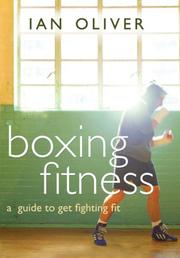
A highly practical, illustrated beginner manual that walks through stance, guard, all four fundamental punches, and basic footwork step by step — the ideal first text before anything more conceptual.
A classic foundational primer by a legendary champion that introduces the 'why' behind the mechanics, giving beginners their first taste of boxing as a thinking person's sport rather than just a physical one.
Technique & Defense: Slipping, Rolling & Ring Craft
BeginnerMove beyond offense to master defensive fundamentals — slipping, parrying, rolling, clinching — and begin developing spatial awareness and ring generalship.
▸ Study plan for this stage
Pace: 2–3 weeks, ~15–20 pages/day — Dempsey's book is concise (~150 pages) but dense with technique; re-read key chapters on defense and footwork at least twice before moving on
- Falling step & weight transfer: understanding how Dempsey's 'falling step' generates power and how the same principle underpins defensive movement
- Slipping punches: moving the head off the centerline (inside and outside slips) so incoming shots miss by inches while keeping you in counter-punching range
- Rolling & bobbing: dipping under hooks and looping punches by bending the knees and rotating the torso, not just the neck
- Parrying & deflecting: using the lead or rear hand to redirect punches with minimal energy expenditure rather than blocking with brute force
- Clinching as a tactical tool: Dempsey's discussion of tying up an opponent to neutralize pressure, recover, or disrupt rhythm — not merely as a survival reflex
- Ring generalship & spatial awareness: controlling the center of the ring, cutting off angles, and using the ropes and corners deliberately rather than accidentally
- The 'on-balance' principle: Dempsey's insistence that every defensive move must leave you balanced and immediately ready to counter-attack
- Combination offense off defense: how slips, rolls, and parries are entry points into counters — defense and offense as a single fluid sequence
- According to Dempsey, why is the 'falling step' relevant not just to punching power but also to defensive footwork and repositioning?
- What is the mechanical difference between slipping to the outside versus slipping to the inside of a jab, and what counter-punching opportunities does each create?
- How does Dempsey describe the role of knee bend in rolling under hooks, and why does rolling from the waist alone leave a fighter vulnerable?
- What does Dempsey mean by being 'on-balance' at all times, and how does this principle constrain which defensive techniques are considered sound?
- In Dempsey's framework, when is clinching a legitimate strategic choice rather than a foul or a sign of weakness, and how should it be executed?
- How does ring generalship — controlling position and angles — reduce the defensive work a fighter must do in the first place?
- Shadow-boxing slip drill: Set a timer for 3×2-minute rounds. Throw a jab at an imaginary opponent, then immediately practice slipping left and right off that centerline, focusing on keeping your eyes up and hands ready to counter — just as Dempsey emphasizes staying 'on-balance' after every movement.
- Knee-bend rolling drill: Stand in front of a mirror and simulate rolling under a hook — drop the knees, rotate the torso, and come up on the opposite side. Do 20 reps each direction, checking that the movement originates from the legs, not just the neck or waist.
- Parry-and-counter visualization: Re-read Dempsey's sections on deflecting punches, then shadow-box 2-minute rounds where every parry is immediately followed by a counter (jab, cross, or hook). The goal is to feel defense and offense as one motion.
- Ring-position walk-through: In any open space, mark a 'ring' with tape or cones (~20×20 ft). Practice moving — without punching — to always stay near the center, cut off a moving target (a partner or imaginary opponent), and avoid backing into corners. Narrate your decisions aloud to build spatial awareness.
- Falling-step footwork drill: Using Dempsey's falling-step description, practice the weight-shift in slow motion: shift weight to the lead foot, let the body 'fall' forward, then recover. Repeat laterally and at angles to understand how the same mechanic applies to circling and cutting angles defensively.
- Read-and-react partner drill (if a partner is available): One person slowly throws telegraphed jabs and hooks while the other practices slipping, rolling, and parrying — no power, full focus on correct mechanics. Switch every 2 minutes. After each round, discuss what felt 'on-balance' versus what felt rushed, referencing Dempsey's criteria.
Next up: Mastering Dempsey's defensive fundamentals and ring-position principles creates the spatial and mechanical foundation needed to study advanced combination work, counterpunching strategy, and fight-specific game-planning in the next stage.
Bridges offense and defense with clear explanations of defensive mechanics and ring movement, building on the punch vocabulary established in Stage 1.

Written by one of the hardest punchers in history, this legendary manual goes deep on body mechanics, the falling step, and explosive technique — essential reading that elevates raw beginners into students of the craft.
Conditioning & the Athlete's Body
IntermediateUnderstand how to build a boxer's body — roadwork, bag work, sparring cycles, strength, and endurance — so physical preparation is no longer guesswork.
▸ Study plan for this stage
Pace: 3–4 weeks, ~20–25 pages/day; Oliver's book is practical and drill-heavy, so budget extra time on workout-design chapters to test sessions in real life before moving on
- Roadwork as the aerobic foundation — Oliver's progressive running protocols (steady-state, fartlek, interval) and how each targets a different energy system used in boxing
- The three energy systems (ATP-PC, glycolytic, oxidative) and how a boxer trains all three to sustain high-intensity rounds with short rest
- Bag work as skill-conditioning fusion — heavy bag, speed bag, and double-end bag drills structured for both technique reinforcement and cardiovascular load
- Round-based training structure — using timed rounds (e.g., 3 min on / 1 min off) to simulate fight demands and build sport-specific endurance
- Sparring cycles — how to periodize light, technical, and hard sparring within a training week to develop toughness without accumulating excessive wear
- Strength and power development for boxers — Oliver's bodyweight and resistance protocols designed to build functional punching power without sacrificing speed or weight-class limits
- Recovery as a training variable — sleep, active rest days, nutrition timing, and how Oliver frames recovery within the weekly training block
- Periodization and the training week — structuring morning roadwork, afternoon bag/pad work, and sparring into a coherent weekly cycle that peaks for competition or assessment
- According to Oliver, what is the primary purpose of roadwork in a boxer's program, and how should running intensity vary across a training week?
- How does Oliver recommend structuring a heavy bag session differently from a speed bag session in terms of goals, duration, and intensity?
- What is the role of the three energy systems in boxing, and which drills or methods in Boxing Fitness target each one?
- How does Oliver suggest integrating sparring into a weekly training cycle without overtraining, and what markers indicate a boxer is recovering adequately?
- What principles does Oliver use to design strength work for boxers, and why does he caution against conventional bodybuilding-style training?
- How would you design a complete one-week training block for an intermediate boxer using only the methods described in Boxing Fitness?
- Run Oliver's three roadwork variants (steady-state, fartlek, interval) on three separate days in one week — log heart rate, perceived effort, and recovery time to feel the difference between energy systems firsthand
- Execute a full bag-work circuit from Boxing Fitness (heavy bag → speed bag → double-end bag) using the timed-round format Oliver prescribes; record round count, rest adherence, and technique breakdown points
- Design a complete 7-day training block on paper using Oliver's weekly structure — assign roadwork type, bag/pad sessions, sparring type (technical vs. hard), strength work, and rest days, then justify each choice in writing
- Track your recovery for two full weeks: log sleep hours, morning resting heart rate, and muscle soreness daily, then compare weeks with higher sparring load vs. lighter weeks to observe Oliver's recovery principles in action
- Perform Oliver's bodyweight strength circuit (push-ups, core work, squat variations) immediately after a bag session to simulate the fatigue context in which boxing-specific strength must function — note where form breaks down
- Self-assess one sparring or heavy-bag round by video: count punches thrown, identify rest moments, and measure active work time vs. passive time — then compare your work-to-rest ratio against the round structure Oliver recommends
Next up: Mastering how to build and sustain a boxer's physical base through Oliver's conditioning framework gives the reader the athletic readiness to absorb more advanced technical and tactical instruction — because refined skill work and strategic thinking can only be applied consistently by a body that is already well-prepared to train hard.
Complements the drilling manual with the physiological side of boxing training, covering aerobic and anaerobic conditioning, nutrition basics, and periodization for fight preparation.
Strategy & the Sweet Science
IntermediateThink like a boxer — understand styles, match-ups, in-fight adjustments, pressure vs. counter-punching, and how champions impose their game plan on an opponent.
▸ Study plan for this stage
Pace: 2–3 weeks, ~20–25 pages/day — Sheridan's narrative is immersive and anecdotal, so read in long sittings (30–45 min) to follow the arc of each camp or fight; re-read key sparring and corner scenes slowly for tactical detail
- Styles make fights — Sheridan trains across disciplines (Muay Thai, MMA, boxing) and repeatedly encounters how a fighter's style dictates which opponents they can and cannot beat; identify the stylistic logic behind each match-up he describes
- The sweet science as problem-solving — boxing is framed throughout as a thinking person's endeavor; note every moment Sheridan or his trainers articulate WHY a technique or tactic is chosen, not just what it is
- Pressure vs. counter-punching as strategic identities — track how the fighters and coaches Sheridan encounters embody one philosophy or the other, and how each demands a completely different physical and mental skill set
- In-fight adjustments — Sheridan documents corner advice and mid-round changes; pay attention to how coaches read what is going wrong and prescribe specific tactical corrections between rounds
- Imposing a game plan — observe how elite fighters Sheridan meets (and fights alongside) dictate the terms of engagement rather than simply reacting; note the tools used to 'impose' (pace, ring generalship, feints, pressure)
- The mental and emotional architecture of a fighter — Sheridan's central thesis is that fighting reveals character; connect each psychological observation to a concrete tactical consequence (fear → hesitation → getting countered, etc.)
- Cross-disciplinary tactical transfer — Sheridan moves between boxing, Muay Thai, and MMA; identify which strategic principles are universal and which are sport-specific, sharpening your sense of what 'boxing strategy' truly means
- The role of the trainer as strategist — coaches like Pat Miletich and others act as the intellectual architects of a fight plan; study how they communicate strategy to a fighter under stress
- According to Sheridan's experiences across different gyms and camps, what distinguishes a pressure fighter's mindset and physical approach from that of a counter-puncher — and what does each style demand from a trainer?
- Sheridan repeatedly finds that elite fighters 'think' during a fight rather than just react. What specific examples from the book illustrate a fighter making a conscious in-fight tactical adjustment, and what triggered that adjustment?
- How do the coaches and corner men Sheridan trains under diagnose problems between rounds, and what does this reveal about the strategic layer that exists above the physical execution of punching?
- Sheridan enters each new discipline as an outsider. How does this outsider perspective help him (and the reader) identify the underlying strategic logic of a style that insiders take for granted?
- What does Sheridan's book suggest about the relationship between a fighter's personality or emotional makeup and the fighting style they gravitate toward or are best suited to?
- Using evidence from 'A Fighter's Heart,' explain how a fighter 'imposes' a game plan on a resistant opponent — what physical, psychological, and tactical tools are deployed?
- Style-mapping journal: As you read each chapter set in a new gym or camp, write a one-paragraph 'style profile' — label the style (pressure, counter, boxer-puncher, etc.), list its key weapons, and name one style it beats and one it loses to. Build this into a reference sheet by the end of the book.
- Corner simulation: Choose any fight scene or sparring session Sheridan describes. Write a 60-second corner speech — diagnose the problem, give one tactical adjustment, and motivate the fighter. Keep it under 100 words, as a real corner man must.
- Game-plan blueprint: Pick one real fight Sheridan witnesses or participates in and write a pre-fight game plan (half a page) as if you were the head trainer: identify the opponent's style, your fighter's strengths, the tactical approach, and one contingency if the plan isn't working.
- Pressure vs. counter debate: After finishing the book, write a structured one-page argument for WHY one strategic identity (pressure or counter-punching) is harder to master, using only evidence drawn from Sheridan's observations and experiences.
- Tactical transfer exercise: Identify three strategic principles Sheridan encounters in Muay Thai or MMA that apply directly to boxing. For each, write two sentences: (1) how it appears in the non-boxing context, and (2) how a boxer would apply the same principle.
- Re-read and annotate: Go back to the two or three sparring/fight scenes that felt most tactically rich. Annotate in the margins (or a notebook) every moment a strategic decision is made — label it: 'game plan,' 'adjustment,' 'imposition,' 'counter-strategy,' or 'breakdown.' Count how many decisions occur in a single round.
Next up: Sheridan's ground-level, experiential account builds the strategic intuition and fighter's vocabulary needed to engage with more technical or historical boxing literature — the next stage can now assume the reader thinks in terms of styles, match-ups, and game plans rather than just punches and combinations.
Sugar was the foremost boxing analyst of his era; this book dissects styles, tactics, and the strategic chess match of elite boxing, giving the reader a framework for watching and thinking about fights analytically.

A journalist immerses himself in boxing (and combat sports) training worldwide, translating high-level strategic and philosophical concepts into vivid, accessible prose — perfect for cementing strategic intuition through narrative.
History, Culture & Mastery
ExpertPlace boxing inside its full historical, cultural, and literary context — understanding the lineage of champions, the social forces that shaped the sport, and what separates greatness from mere competence.
▸ Study plan for this stage
Pace: 8–10 weeks total: Weeks 1–5 for "The Sweet Science" (~20–25 pages/day, savoring Liebling's prose slowly); Weeks 6–10 for "King of the World" (~25–30 pages/day, with heavier analytical reading on the cultural chapters). Reserve the final 3–4 days of each book for review, note consolidation, and refle
- The 'Sweet Science' as craft: Liebling's argument that boxing is an art form requiring intelligence, economy of movement, and ring generalship — not merely brute force
- Lineage and mentorship: How knowledge is transmitted fighter-to-fighter and trainer-to-trainer, illustrated through Liebling's portraits of figures like Archie Moore and Sandy Saddler
- Journalism as ringside witness: Liebling's literary voice as a model for how close observation and cultural literacy transform sports writing into literature
- The Golden Age of boxing (1950s): The specific ecosystem of gyms, promoters, managers, and arenas that produced world-class fighters in mid-century America
- Cassius Clay / Muhammad Ali as a cultural rupture: Remnick's thesis that Ali was not just a champion but a figure who forced America to confront race, religion, and political dissent simultaneously
- Sonny Liston as a symbol: How Liston embodied the fears and prejudices of white America and the boxing establishment, and why his defeats were so seismically significant
- The intersection of boxing and the Civil Rights Movement: Remnick's detailed mapping of how the sport's power dynamics mirrored — and sometimes catalyzed — broader social upheaval in 1960s America
- Greatness vs. competence: Synthesizing both books to define what separates all-time champions (footwork, timing, psychological dominance, adaptability, ring IQ) from merely skilled fighters
- According to Liebling in 'The Sweet Science,' what specific technical and intellectual qualities elevate a fighter to the level of artist, and which fighters of his era best embodied those qualities?
- How does Liebling use his own persona as narrator — his humor, his appetite, his literary references — to argue that boxing deserves serious cultural attention? What rhetorical work does that voice do?
- In 'King of the World,' how does Remnick construct Sonny Liston's biography to explain why his loss to Ali felt like more than a sporting upset to both Black and white audiences?
- Remnick argues that Ali's conversion to the Nation of Islam and his relationship with Malcolm X were inseparable from his boxing identity. What evidence does he marshal for this claim, and do you find it convincing?
- Comparing both books: How did the business and social infrastructure of boxing change between Liebling's 1950s and Remnick's early 1960s, and what do those changes reveal about American society more broadly?
- Having read both authors, how would you define 'mastery' in boxing? What physical, psychological, and cultural ingredients does each author identify as essential?
- Liebling close-reading log: For each chapter of 'The Sweet Science,' write one paragraph identifying (a) the fighter or fight being described, (b) the specific technical detail Liebling highlights, and (c) the literary or cultural allusion he uses — then explain what that allusion adds to the argument.
- Fighter lineage map: After finishing 'The Sweet Science,' draw a visual family tree connecting the fighters, trainers, and managers Liebling mentions. Annotate each connection with the type of relationship (trainer-pupil, rival, promoter) to make the ecosystem of 1950s boxing visible.
- Comparative fight report: Watch archival footage of one fight covered in 'The Sweet Science' (e.g., an Archie Moore bout) and one Ali fight covered in 'King of the World' (e.g., the first Liston fight). Write a 500-word report for each using Liebling's descriptive vocabulary — footwork, feinting, economy — to analyze what you see.
- Cultural context timeline: As you read 'King of the World,' build a parallel timeline with two tracks: (1) Ali's career milestones and (2) key Civil Rights Movement events. After finishing, write a one-page reflection on the moments where the two tracks intersect most meaningfully.
- Mastery definition essay: After completing both books, write a 750–1,000 word essay answering: 'What separates a great boxer from a merely competent one?' Draw specific evidence from at least three fighters discussed across the two books, and engage with both Liebling's technical lens and Remnick's cultural lens.
- Socratic dialogue journal: At the end of each week's reading, write a half-page imagined conversation between Liebling and Remnick about a fighter or theme you encountered that week — forcing yourself to articulate each author's distinct perspective and where they might agree or clash.
Next up: By grounding the reader in boxing's historical arc, its literary representation, and the cultural forces that forge champions, this stage builds the interpretive framework needed to engage with more technical or contemporary material — whether that means analyzing modern fighters through the same lenses of craft, lineage, and social context that Liebling and Remnick established.
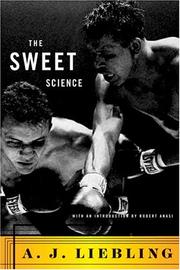
Widely considered the greatest book ever written about boxing, Liebling's ringside essays from the 1950s are the gold standard of boxing literature — by this stage the reader has the technical vocabulary to appreciate every nuance he describes.
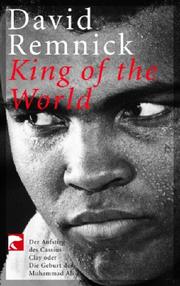
Remnick's account of Muhammad Ali's rise is both a masterclass in ring strategy and a sweeping portrait of boxing's place in American history — the ideal capstone that fuses technique, history, and culture into one essential read.
Discussion
Keep reading
Paths that share books, cover the same subject, or open a related topic.