Memory, Sorrow, and Thorn Reading Order: Where to Start
Tad Williams wrote Memory, Sorrow, and Thorn as three novels, but the third grew so long that the paperback edition split it in two — which is why the series is sold as either three books or four depending on the edition, and why reading orders disagree about its length. This path uses the three-novel convention: The Dragonbone Chair, Stone of Farewell, and To Green Angel Tower, noting that the paperback halves are titled Siege and Storm and must be read in that order with nothing between them. After the original trilogy come the bridge novella, the prequel, and the four-book sequel series set thirty years later.
Start Here: The Dragonbone Chair
BeginnerGet through the famously slow opening and reach the point where the series becomes what it is.
▸ Study plan for this stage
Pace: One book, around 780 pages, three to four weeks at thirty to forty pages an evening. The hazard is precisely located and worth naming before you open it: roughly the first two hundred pages are castle routine - a kitchen boy called Simon, chores, an ageing king dying slowly, no quest in sight - and
- The deliberately ordinary opening. Williams spends two hundred pages establishing a scullion's daily life so that the later loss of it costs something, and the payoff is entirely back-loaded.
- The three swords named in the series title. Watch for each being named or found; the whole trilogy is organised around them and the first book barely explains why.
- The Sithi, the world's elder race, glimpsed rather than introduced - Williams withholds them almost completely in book one and the restraint is intentional.
- Prophecy treated as unreliable data. Characters act on a prophecy they only partly understand, and being wrong about it drives more plot than being right.
- Doctor Morgenes and the teacher-figure convention, used and then dismantled early.
- The brothers Elias and Josua as a political rather than moral conflict; the book is more interested in a disputed succession than in a dark lord.
- Dreams as a channel of information, which becomes one of the trilogy's main narrative devices.
- The apparatus at the back of the volume - glossary, cast list, pronunciation notes - which exists because the book expects you to need it.
- What does Simon actually want in the first two hundred pages, and does he ever get it?
- When is each of the three swords first named, and what does each is said to do?
- How much do you know about the Storm King by the end of the book, and how much of that came from a character rather than from the narration?
- What is the political dispute between Elias and Josua, and is the book asking you to take a side?
- Where exactly did the novel take hold of you? Note the page - it is a useful thing to be able to tell the next reader.
- Look at the back of the book before you start. Knowing the glossary and cast list are there saves a great deal of flipping and rereading, and Williams assumes you have found them.
- Mark the page where you first want to stop, then keep going to page two hundred and compare the two. Most readers who quit this series quit inside that gap, and seeing it as a measured distance rather than an endless one is usually enough.
- Keep a one-line note for every named non-human group as it appears - Sithi, Norns, trolls, Qanuc. Book two assumes you have them straight and does not reintroduce them.
- Note every reference to a prophecy or a rhyme, with the page. You will want that list at the end of the trilogy, when what the prophecy actually meant becomes the point.
Next up: The Dragonbone Chair ends mid-flight with the party scattered and no resolution offered, so Stone of Farewell begins in the middle of a sentence the first book left hanging.

A kitchen boy in a castle, an old king dying, and roughly two hundred pages before anything much happens. The slow start is the single most common reason people abandon the series — it is deliberate, it pays off, and everything after it moves.
The Middle Book
IntermediateFollow the scattered cast across the north and learn the mythology the finale will turn on.
▸ Study plan for this stage
Pace: About 730 pages, three to four weeks, and a different kind of reading from book one. There is no slow start here - it opens at speed - but the cast is now split across several countries and the chapters rotate between them. That produces the classic middle-volume problem: you will find one or two th
- The split party as structure. Williams uses separation to open the map, and the book's geography expands more in this volume than in the other two combined.
- The Sithi finally stepping forward after a book of glimpses, which changes the scale of the conflict from a succession war to something much older.
- Simon's apprenticeship. He stops being a boy things happen to and starts being someone with obligations, and the change is gradual rather than announced.
- Backstory delivered as legend rather than exposition - songs, ruins and half-remembered history carry the information the third book will need.
- The Norns given a culture and a grievance instead of remaining a menace, which is one of the things this series did that its imitators did not.
- Josua's dwindling force and the politics of a losing side, which occupies much more page space than the magical plot.
- The middle-volume convention itself: the trilogy is at its widest here, and nothing is meant to resolve.
- Which of the separated threads did you most want to return to, and what does that tell you about what you are actually reading this series for?
- What do you learn about the Sithi here that book one only implied, and who tells you?
- How has Simon changed since the Hayholt, and can you point to the scene where it became visible?
- What is the Stone of Farewell, and why does the title give it to the whole book?
- What does the novel want you to think about the Norns by the end - enemy, casualty, or both?
- Keep a running map note: which named character is in which region at the end of each chapter. The book cuts between four or five locations and gives you no recap.
- Write down every piece of history you are told about the fall of the Sithi and the making of the swords, with a page reference. This is the material the finale converts into plot.
- When you hit the thread that bores you, read one full chapter of it slowly rather than skimming three. The information density in the slow strands is higher than in the fast ones.
- Before starting the finale, spend ten minutes writing down where every major character stands. To Green Angel Tower opens with all of them and reintroduces none.
Next up: Stone of Farewell leaves every thread stretched to its limit and the three swords still scattered, which is precisely the configuration the finale exists to collapse.

The classic middle volume: the party is split, the world opens out, and the Sithi finally step forward. Read it directly after The Dragonbone Chair, which ends mid-flight.
The Finale
IntermediateFinish the original story, in whichever edition you own.
▸ Study plan for this stage
Pace: One novel, and one of the longest in English-language fantasy - past a thousand pages in the one-volume edition. Before anything else, the edition question, because it confuses more readers than any other thing about this series. Our listing shows a single title, To Green Angel Tower, which is corre
- Convergence. Every thread separated in Stone of Farewell is drawn back together, and the pleasure of the first half is watching characters who have been apart for a thousand pages arrive in the same room.
- The three swords finally brought into one place, and what the prophecy about them turns out to have actually meant.
- The long siege section, which is the book's structural centre and the reason the novel is the length it is.
- Payoffs planted in book one. Details from Simon's kitchen-boy chapters return with weight, which retroactively justifies the slow opening you were warned about.
- The viewpoint count at its maximum, with several characters who began as minor figures now carrying whole chapters.
- A resolution that closes the story rather than setting up a continuation. Nothing important is left dangling, which is what makes the stopping decision in the next stage a genuinely free one.
- The Siege and Storm break as a publishing artefact, not an authorial one. Nothing in the text acknowledges it.
- What did the prophecy about the three swords actually mean, and at what point did you work it out?
- Which payoff from The Dragonbone Chair landed hardest, and how many pages earlier had it been planted?
- If you read the paperback halves, can you find the join without checking the covers? What does that tell you about the split?
- Who among the secondary characters ends the book carrying more of the story than you expected at the start of the trilogy?
- Is anything left genuinely unresolved at the end, or only left open?
- If you own Siege and Storm, shelve them together and start Storm the day you finish Siege. The break falls mid-sequence, and a gap there costs you momentum the second half is built to exploit.
- Bring out the prophecy notes you kept in the first two stages and check each entry against what the finale does with it. This is the exercise that shows how tightly the trilogy was planned.
- Mark the chapter where the last separated pair of characters is reunited. It is a long way in, and the wait is the design.
- Stop here for at least a week before deciding whether to continue. This is a complete story with a real ending, and the decision about the sequels is better made from outside the momentum of the finale.
Next up: This is the honest end of the story - a reader who stops after To Green Angel Tower has read a complete trilogy with nothing left hanging, and everything that follows extends the world rather than finishing it.
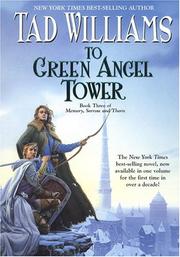
The conclusion, and one of the longest single fantasy novels ever published in English — which is why paperback editions split it into Siege and Storm. Either buy the one-volume hardcover or read Siege then Storm; they are halves of one book, not two novels.
The Bridge and the Prequel
IntermediateRead the two shorter Osten Ard books that stand between the original trilogy and the sequels.
▸ Study plan for this stage
Pace: Two short books after a thousand-page finale, and the pace is a relief: about 220 pages and 320 pages, one to two weeks for both. The Heart of What Was Lost is a novella-length war story that begins days after To Green Angel Tower ends, so read it while the finale is still fresh rather than saving i
- The bridge novella's timing. Written decades after the trilogy but set within days of its ending, which is why chronology and publication order disagree here and chronology wins.
- The defeated enemy given the page. The Heart of What Was Lost follows the Norns in retreat, which is a deliberate reversal of who the trilogy asked you to watch.
- Isgrimnur and the Rimmersmen carrying a book of their own, and how differently the world reads from a soldier's viewpoint rather than a kitchen boy's.
- Prequel as recontextualisation. Brothers of the Wind tells the Sithi story the trilogy only alluded to, and its effect depends entirely on your having heard the allusions first.
- A much older Osten Ard, before the human kingdoms mattered, which quietly changes the scale of everything the trilogy showed you.
- Williams writing short. Both books are tight in a way the trilogy never attempts, and they are useful evidence that the length of the original was a choice.
- How long after To Green Angel Tower does The Heart of What Was Lost begin, and what does the immediacy let it do?
- Does following the Norns in retreat change how you read their part in the trilogy?
- What does Brothers of the Wind tell you that the trilogy only hinted at, and where in the trilogy was the hint?
- Would Brothers of the Wind work as a first Osten Ard book? Argue it either way and you will have understood why this path puts it fourth.
- What do these two short books add that the trilogy actually needed, and what is simply more of a world you enjoy?
- Read The Heart of What Was Lost within a week of finishing the finale. It is written for a reader who has just closed To Green Angel Tower and it loses most of its force at any greater distance.
- While reading Brothers of the Wind, note each moment you recognise a name or an event the trilogy mentioned in passing. That list is the whole point of the book's placement here.
- Decide at the end of this stage whether you are continuing. Four more books totalling around 2,600 pages is a serious commitment, and stopping now still leaves you with a complete and closed story.
Next up: These two books hand you the Sithi history and the immediate aftermath that the sequel series assumes you already hold, which is the only preparation The Witchwood Crown offers you.

A short novel picking up immediately after To Green Angel Tower and following the defeated Norns north. Written decades later but set within days of the trilogy's end, so read it here and not later.

A prequel set centuries earlier, telling the Sithi story that the trilogy only alludes to. Deliberately placed after the bridge novella — it is far more resonant once you have met these characters as legends first.
The Last King of Osten Ard
IntermediateRead the four-book sequel series, which assumes complete knowledge of the original trilogy.
▸ Study plan for this stage
Pace: Four books, roughly 2,600 pages, three to five months at a steady pace. Two warnings, both structural. First, The Witchwood Crown opens slowly for the same reasons The Dragonbone Chair did - it is re-establishing a world and a new generation before it moves - so the same commitment applies, and know
- Thirty years on. The heroes of the trilogy are now middle-aged rulers with the ordinary problems of power, which is a deliberate and unsentimental thing to do to a fantasy cast.
- A generational handover. The new characters take over the narrative across the first two books, and how you feel about that largely determines how you feel about the series.
- The Norns returned as a fully realised society rather than a defeated enemy, building on what The Heart of What Was Lost started.
- Convergence with the prequel. Into the Narrowdark is where the sequel plot meets the mythology laid out in Brothers of the Wind, which is why that book was read before this stage.
- Comprehensive spoiling of the trilogy, treated here as a fact about the reading order rather than a complaint - the sequel assumes complete knowledge and behaves accordingly.
- Middle age and succession as subject matter. The series is repeatedly about people who won something once and now have to hold it.
- A closing volume set thirty-five years after The Dragonbone Chair, which ends the whole Osten Ard sequence rather than only this quartet.
- How do Simon and Miriamele read as rulers compared with how they read as young people, and is the change convincing?
- At what point does the narrative genuinely hand over to the younger generation, and did you follow it willingly?
- What does Into the Narrowdark do with the material from Brothers of the Wind, and would it have worked if you had not read the prequel?
- The Witchwood Crown opens slowly by design. Does the payoff arrive on the same schedule The Dragonbone Chair's did?
- Does Navigator's Children close the original trilogy as well as this series, or only this one?
- Reread the last twenty pages of To Green Angel Tower before starting The Witchwood Crown. The sequel opens on people you last saw at the end of that book and assumes you remember exactly where it left them.
- Keep a two-column list as you go: original-trilogy characters and new ones. The balance shifts steadily across the four books and watching it shift is the clearest way to see what Williams is doing.
- Read Empire of Grass and Into the Narrowdark close together. The middle of this quartet is continuous and a long gap between them is the easiest way to lose the Norn plot.
- When you finish, write down which of the two series you would recommend to a new reader and whether you would tell them the sequel exists. That is a genuinely contested question among readers and having an answer is worth more than having finished.
Next up: You have now read the entire Osten Ard sequence, trilogy through sequel, in the only order that keeps the surprises intact - the remaining moves are a reread of The Dragonbone Chair, which reads completely differently once you know what Simon becomes, or the short fiction and companion material Williams has written around the edges of this world.

Thirty years on, the heroes of the trilogy are middle-aged rulers with a difficult grandson. It opens slowly for the same reasons The Dragonbone Chair did, and it spoils the trilogy comprehensively — do not start here.

The second volume, where the new generation takes over the narrative and the Norn plot accelerates. Read straight on from The Witchwood Crown.

The third volume, and the point at which the sequel series converges with the mythology set up in Brothers of the Wind. The pace is at its best here.

The conclusion of the whole Osten Ard sequence, thirty-five years after The Dragonbone Chair. The right place to stop — it closes both series at once.
Discussion
Keep reading
Paths that share books, cover the same subject, or open a related topic.