Otherland Reading Order: Where to Start with Tad Williams
Otherland is a single novel of roughly four thousand pages that was published as four books because no one could bind it otherwise, and that is the whole answer to the question readers actually ask: no, you cannot start anywhere, and no, the volumes are not standalone. City of Golden Shadow ends mid-scene, and each subsequent volume picks up where the last stopped. What this path adds beyond that flat answer is the rest of Tad Williams — because the honest advice for someone eyeing four thousand pages is to test the water first, and because the two other doorstop series are what Otherland readers usually want next. The order below runs Otherland first, then the epic fantasy sequence that made his name, then his second one, then the short and strange books that show what he does when he is not building cathedrals.
Otherland, and There Is No Other Order
BeginnerRead the four volumes in sequence and understand the structure — a virtual-reality conspiracy told through a dozen viewpoint characters scattered across simulated worlds.
▸ Study plan for this stage
Pace: Three months at a realistic pace, and there is no shortcut. City of Golden Shadow is 782 pages, River of Blue Fire 675, Mountain of Black Glass 784 and Sea of Silver Light 1,072 - about 3,300 pages of a single novel published in four parts because no one could bind it otherwise. Thirty to forty page
- The structure: a large ensemble of viewpoint characters whose threads are deliberately kept separate for hundreds of pages before they begin to intersect
- The simulation network itself as the series' organising idea - a private, illegal set of virtual worlds each built to a different aesthetic, and what a story gains by being able to change genre every hundred pages
- The frame plot beneath the simulations: children in comas, a conspiracy of the very rich, and the question of what the network is actually for
- Volume breaks that fall mid-scene rather than at a resolution, which is the clearest signal that this is one book and not four
- The long setup as a deliberate method: Williams plants in volume one what he pays off in volume four, and the density of the planting is the series' real argument for its length
- Reading a large cast without a chart, and the point at which making one becomes worthwhile
- What the virtual worlds are doing thematically as well as narratively - each simulation is also a comment on the fiction it imitates
- How many viewpoint threads does City of Golden Shadow open with, and at what point does the first pair converge?
- What is the simulation network for, according to its builders, and what is it actually for?
- Which of the simulated worlds does the most narrative work rather than merely providing spectacle, and why?
- Where does the pace change in River of Blue Fire, and what changes it - a plot event or a structural decision?
- Name three things planted in the first hundred pages of volume one that are only resolved in Sea of Silver Light.
- Keep a character and thread list from page one - name, thread, current location, last thing that happened - and update it at the end of each reading session. By Mountain of Black Glass it stops being optional; starting it in volume one is what makes volume three readable.
- Mark the exact page where each volume ends and where the next resumes, and write down what a conventional volume ending would have required at each of those three seams. This is the concrete demonstration that you are reading one book, and it takes five minutes per volume.
- For each simulated world the characters pass through, write one line on the genre it is imitating and one line on what happens to a character inside it. By the end you will have a list that reads as an argument about fiction, which is the series' least obvious ambition.
- After finishing Sea of Silver Light, go back and reread the first fifty pages of City of Golden Shadow. Note everything you now recognise. Most readers find the density of foreshadowing in that opening is the strongest case for the whole four-thousand-page structure.
Next up: Having read the biggest thing Williams has written, the obvious question is where the technique came from - and the answer is the epic fantasy sequence that made his name a decade earlier.
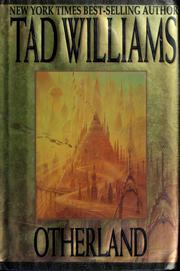
Volume one, and unavoidably the starting point. It is also the slowest — several hundred pages of apparently unconnected threads before the shape appears — so know going in that the pace is deliberate and that Williams does eventually pay everything off.
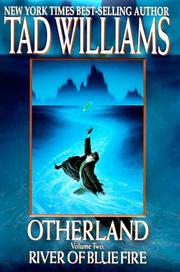
Volume two, picking up mid-motion. The simulated worlds become the main event here, and the book's set pieces are the best argument for the series' existence. If volume one nearly lost you, this is where it recovers.
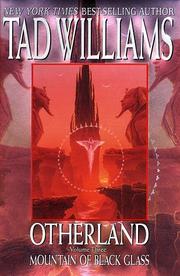
Volume three, and the point where the conspiracy plot and the virtual-worlds plot finally converge. The most demanding of the four for tracking who is where; a character list is genuinely useful by now.
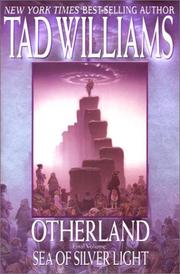
Volume four, and the resolution of everything — including several threads planted in the first hundred pages of volume one. Long, and it earns its length; this is where the four-book gamble either pays off for you or does not.
Where Williams Came From: Memory, Sorrow and Thorn
BeginnerRead the epic fantasy trilogy that established his method — enormous scale, a slow first act, and a payoff that reframes the whole thing.
▸ Study plan for this stage
Pace: Two and a half to three months for about 2,620 pages: The Dragonbone Chair is 783, Stone of Farewell 733 and To Green Angel Tower 1,104. Read strictly in order; nothing here stands alone. The first volume has a famously slow opening - the kitchen-boy protagonist does not leave the castle for a very
- The scattered-party structure: a group separated early and followed in parallel for most of the trilogy, which is the technique Otherland later runs at much larger scale
- The slow opening as a deliberate choice - Williams builds a world and a household in detail before the plot displaces the protagonist from it, and the payoff is that the displacement lands
- The coming-of-age spine, and how a passive protagonist is made to work for eight hundred pages
- Epic fantasy's inherited furniture - the dark lord, the prophecy, the magic swords - and the specific places Williams uses the convention against itself
- The trilogy's influence on the genre, and its acknowledged effect on later epic fantasy including A Song of Ice and Fire
- Long-range plotting: the number of pages Williams is willing to leave between a plant and its payoff, which is already at Otherland scale here
- The volume-three splitting problem and how a publishing decision can misrepresent a book's shape
- How long is the opening before the protagonist leaves the castle, and what does Williams accomplish in that stretch that a faster opening could not?
- Where does the party first scatter, and how many threads is the trilogy tracking at its widest?
- Which genre convention does Williams set up in order to subvert, and where does the subversion land?
- Compare the trilogy's ending to Sea of Silver Light. What does Williams do the same way in both?
- If you had read this trilogy first, what would have been easier about Otherland?
- Count the threads. At the end of each of the three volumes, write down how many separate viewpoint parties the book is tracking. Lay that count beside the equivalent count from Otherland and you have a measurement of what Williams learned in the intervening decade.
- Time the slow opening: note the page on which the protagonist leaves the castle, then list everything established before that page that pays off later. The exercise settles the standing argument about whether the opening is a flaw or a foundation.
- Take one convention - the prophecy, or the magic swords - and track every appearance of it across the three volumes. Williams's handling changes as the trilogy goes on, and the trajectory is the most interesting thing about the books structurally.
- Before buying the third volume, check the page count of the edition in front of you against the 1,104 pages listed here, and buy accordingly. A five-minute check that saves a reader from finishing half a book and wondering what happened.
Next up: One doorstop sequence done, and the natural comparison is his second one - built later, deliberately, and with the epic mode's problems already understood.

The trilogy's first volume, and famously the slowest opening in modern epic fantasy — the kitchen boy does not leave the castle for a very long time. It is also the book George R. R. Martin has credited as a direct influence on A Song of Ice and Fire, which is the best reason to push through.

The middle volume, where the scattered-party structure that Otherland later uses at much larger scale is worked out for the first time. Read in sequence; nothing here stands alone.
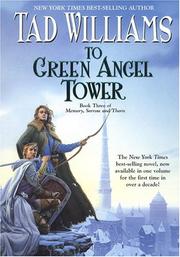
The conclusion, and one of the longest single fantasy novels published in English — so long that it was split into two paperbacks, which is why the record here shows a book-three designation. Buy whichever edition you find, but be aware you may be buying half a book.
The Second Doorstop: Shadowmarch
BeginnerRead the later four-volume fantasy sequence and see what Williams changed after Otherland.
▸ Study plan for this stage
Pace: Two and a half months for about 2,680 pages: Shadowmarch is 672, Shadowplay 672, Shadowrise 564 and Shadowheart 768. Read in order. This sequence began as a serialised online novel before being rewritten for print, and it is the most conventionally structured of his big series - which makes it, in p
- A faster epic opening: what Williams does differently in the first hundred pages here, having been criticised for twenty years about the first hundred pages of the earlier trilogy
- The border between worlds as this sequence's central idea, and the Qar as an alternative to the standard fantasy other-people
- Twin protagonists and a divided court - the structural device that keeps two plot lines legitimately separate without scattering a party
- Serialised origins and their traces: chapter rhythms and recap habits that come from online publication
- The split-finale problem again, in a different form from the previous stage's paperback division - here the book itself was divided during writing
- How the same author solves the same structural problems twice, twenty years apart, and what the second solution reveals about the first
- Where this sequence is genuinely better than Memory, Sorrow and Thorn and where it is more conventional, which is not the same question
- How does Shadowmarch's opening differ from The Dragonbone Chair's, concretely - what has Williams cut?
- What are the Qar for, thematically as well as in plot terms, and how do they differ from the earlier trilogy's non-human peoples?
- Where can you see the serialised origins in the prose or the chapter structure?
- Shadowrise ends abruptly. Point to what a real ending would have needed at that spot.
- Which of the two epic sequences is better, and on what criterion? Answer for structure and for prose separately, because the answers differ.
- Read the first chapter of Shadowmarch and the first chapter of The Dragonbone Chair back to back and list every difference in how the two open - what information arrives, in what order, and how soon anything happens. This is the single most instructive hour in the whole path for anyone interested in how epics start.
- Track the twin-protagonist structure across all four volumes: which chapters belong to which, and how many pages separate their storylines at the widest point. Then compare that separation to the scattered party in stage two.
- Mark the point in Shadowrise where the original single finale was cut in two, on the evidence of the text alone, then read on and see whether you were right. Split books usually leave a seam.
- Write a one-page comparison of how the two sequences end. Same author, same mode, two decades apart, and both endings have to close four or five converging threads - the comparison is the point of having read both.
Next up: Three enormous series in, the last stage does the opposite - the short, self-contained books that show how little of Williams is actually about scale.
Volume one of a four-book sequence begun as a serialised online novel, and the most conventionally structured of his big series. A better first Williams than The Dragonbone Chair if you want the epic mode without the notorious slow opening.
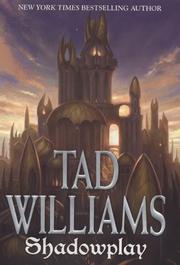
Volume two. The Qar and the border between worlds move to the centre, which is where the sequence's real interest lies.
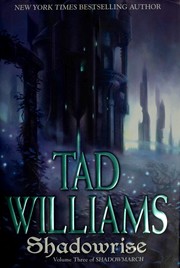
Volume three. Originally intended as the finale and split in two by length, so it ends abruptly — read it knowing volume four is not optional.

Volume four, and the actual conclusion. After this, the Osten Ard world of stage two continues in a later sequence beginning with The Witchwood Crown, which is the natural next stop if the epic mode still has hold of you.
The Short and the Strange
IntermediateRead the standalones — the books to try first if four thousand pages is too large a bet, and the ones that show his range.
▸ Study plan for this stage
Pace: Six to seven weeks for about 1,490 pages, and by the standards of this path that is a holiday. Tailchaser's Song is 320 pages and is his first novel, an epic quest with a cat protagonist - by a wide margin the shortest thing here and the cheapest way to test whether you like his sentences before com
- A first novel's tells: what Tailchaser's Song does that the later books do not, and what is already fully formed
- Non-human viewpoint as a technical problem - the vocabulary, the sensory register, and the amount of world that has to be built for a cat
- The single-volume secondary world: what The War of the Flowers has to compress that a four-book sequence can take its time over
- Faerie as an industrial class society rather than a pastoral, and what the substitution lets Williams say
- First person as a change of register - The Dirty Streets of Heaven is voice-driven in a way none of the doorstops are, and the comedy comes with the voice
- Genre mixing: noir, urban fantasy and theological bureaucracy in one book, and how lightly it is carried
- The path's closing argument - that the scale Williams is famous for is a choice rather than a habit, and that the short books are where you see the choosing
- What is already recognisably Williams in Tailchaser's Song, and what is not yet there?
- How does he solve the problem of a cat's-eye narration - name three specific techniques?
- The War of the Flowers builds a whole secondary world in one volume. What does it leave out that Shadowmarch spends four volumes on?
- What does first person give Bobby Dollar that a close third would not?
- Having read fourteen books: what is the constant across all of them - the thing Williams is always doing regardless of length or genre?
- Read the opening chapter of Tailchaser's Song and the opening chapter of Sea of Silver Light in one sitting - the first novel and the largest one - and write a paragraph on what a writer gains over a career. It is the cleanest before-and-after available in this catalogue.
- Take The War of the Flowers and list what a Williams doorstop would have done with the same premise: how many viewpoints, how many volumes, what subplots. Then say what the compression gains. This is the exercise that makes the case for the short books.
- Read fifty pages of The Dirty Streets of Heaven aloud. The voice is the book, and hearing it is the fastest way to feel how far it sits from the epic mode.
- Finish the path by writing your own recommendation: someone asks where to start with Tad Williams and how much of him is worth reading. Answer in one paragraph, name a specific first book, and say what it depends on. You have now read all four shapes and can answer it properly.
Next up: This is the last stage, and it closes the path by inverting it: after ten thousand pages of series, three self-contained novels showing that the scale was always a decision.

His first novel, an epic quest with a cat protagonist, and by a wide margin the shortest thing here. The cheapest way to find out whether you like his sentences before committing to a series.
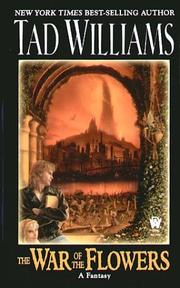
A standalone: a failing musician pulled into an industrialised, class-stratified faerie world. Self-contained, roughly a third of Otherland's length, and the best single-volume demonstration of what he does with a secondary world.

First of the Bobby Dollar books — an angel working as a heavenly advocate in a noir-inflected California, written in first person and much funnier than anything else on this path. The right last stop, because it shows how little of Williams is actually about scale.
Discussion
Keep reading
Paths that share books, cover the same subject, or open a related topic.