Matthew Scudder Reading Order: Where to Start
Lawrence Block's Matthew Scudder novels have to be read in publication order, because the real story is not the cases — it is a New York cop turned unlicensed investigator drinking himself toward death, getting sober, and staying sober for thirty years. Read out of sequence and the sobriety arc collapses into inconsistency. This path takes the core seventeen-book run rather than every title: the drinking years, the bottom, the flashback novel that sits out of order on purpose, the celebrated middle stretch, and the ending.
Start Here: The Drinking Years
BeginnerMeet Scudder while he is still functioning, and learn the shape of a Block novel — short chapters, bar conversations, a case that is mostly an excuse.
▸ Study plan for this stage
Pace: Three very short novels, 186, 191 and 200 pages, each readable in two evenings. Two weeks is generous. Read them knowing what you are reading, because this is where most people misjudge the series: the cases in these three are thin and the plotting is slack if you are reading for plot. Matthew Scudd
- The drinking is the plot. Block is counting, even when Scudder is not, and the case exists mostly to give the drinking somewhere to happen.
- Scudder is not a licensed investigator and says so constantly. He takes favours for cash, which keeps him outside procedure, outside records, and outside anything that could hold him accountable.
- The tithe: he gives away ten percent of every fee to whatever church he passes, and lights candles for the dead. He is not religious and never explains it. It recurs for thirty years.
- A life with no fixed address of consequence: a hotel room, a bar that functions as his office, a pay phone that functions as his line.
- 1970s New York as a broke and genuinely dangerous city, written by someone living in it, not remembered fondly later.
- Short chapters and dialogue-heavy scenes. Conversation is the investigative method, which is why so much of the work happens at a bar.
- The wife and sons he left, and the incident that ended his police career, are established early and referred back to for decades.
- In the Midst of Death closes the opening trio. What follows is a different writer working on the same man.
- How many drinks does Scudder have in one of these books? Try to count one and see whether it is even possible.
- What is the tithing doing for him, given that he does not believe in it?
- Why does he refuse to get a licence? What would having one cost him, practically and otherwise?
- These three are commonly called the weakest in the series. Read as a portrait of a functioning alcoholic rather than as mysteries, does that verdict hold?
- What ended his career on the force, and how does he tell it? Notice what he leaves out.
- Count the drinks in one whole book and write the number down. Keep it. You will use it at the end of the path.
- Track how much of each case is solved by talking to someone in a bar rather than by evidence. That ratio is the series method, and it is not incidental.
- Note every time Scudder tells someone he has no licence, and what happens in the conversation immediately after.
- Before starting the next stage, commit to the frame: this is a series about alcoholism with cases attached, not a private-eye series with drinking attached. Read on that basis and the pacing stops looking like a flaw.
Next up: The next two are where the drinking stops being colour and becomes the emergency: A Stab in the Dark starts counting, and Eight Million Ways to Die puts him in AA rooms unable to say the words.
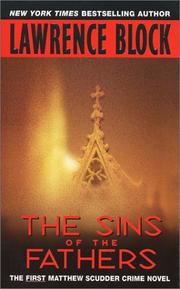
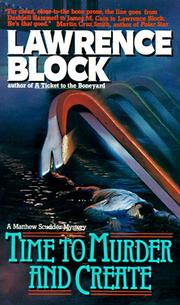
The first one: an ex-cop with no licence takes money to look into a murdered girl and lights candles in churches for the dead. Thin by later standards, but every element of the series is already present.
A blackmailer's insurance envelope lands on Scudder after the blackmailer dies. Read it second — these first three are short, and the drinking is still background rather than subject.

A corrupt cop asks Scudder for help. Completes the opening trio; from here Block leaves the series alone for several years and comes back a much better writer.
The Bottom
IntermediateRead the two books where the alcoholism stops being colour and becomes the plot.
▸ Study plan for this stage
Pace: Two books, the shortest stage by count and the heaviest by weight. A Stab in the Dark is another short one at under 200 pages. Eight Million Ways to Die is 326 pages and is what the first half of the series has been building toward. Give it a clear run of three or four evenings rather than a chapter
- A Stab in the Dark is where the tone shifts hard. An old serial-killer case reopens, but the change that matters is that Scudder has started counting his drinks, which is what a drinker does when he already knows.
- Eight Million Ways to Die makes the alcoholism explicit. It is named, it is treated, and it takes the foreground away from the case.
- AA on the page: meetings, qualifications, the specific language of the rooms, reproduced closely and without irony. Block uses meeting testimony as narrative structure, not as texture.
- Scudder's inability to say the sentence at a meeting is the real climax of the book. The murder solution is not.
- The title is arithmetic. The number is the population of New York, and the book keeps a running tally of deaths lifted from the newspapers, most of them unrelated to the case.
- The mystery is deliberately less satisfying than the recovery material, and the imbalance is the design.
- This is the single most recommended Scudder novel and the one people read standalone. It means far more with the four books before it, which is why the path put them there.
- Where exactly does the tone change in A Stab in the Dark, and what else changes with it?
- Why does Eight Million Ways to Die keep interrupting the investigation with unrelated newspaper deaths? What is the tally for?
- Which mystery does the book treat as more urgent, the murder or whether Scudder is going to live?
- Does the case get a satisfying solution? Should it, given what the book is doing?
- After five books, what has happened to Scudder that cannot be undone?
- Read the AA meeting scenes in Eight Million Ways to Die straight through, skipping the case chapters, and see whether the arc still holds. It does, and that tells you what the book is.
- Compare a drink described in The Sins of the Fathers with one described in A Stab in the Dark. Same man, entirely different narration.
- Mark the page where you knew he was not going to be fine, then look back and find where the book had already told you.
- Take the first honest stopping point deliberately rather than by drifting. Eight Million Ways to Die is a complete arc and a great many readers stop here having got what the series is for. Stopping means giving up thirty years of staying sober, Mick Ballou, and everything the remaining stages are about.
Next up: The next stage opens with the flashback novel on purpose: When the Sacred Ginmill Closes goes back to the drinking years and only works now that you have watched him get out.
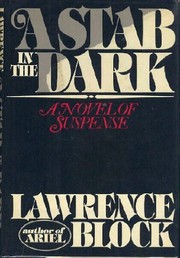
An old serial-killer case reopens and Scudder starts counting drinks. The tone shifts hard here, and the shift is the point.

The masterpiece of the early run: a dead prostitute, a city coming apart, and Scudder in AA rooms unable to say the words. If you read only one Scudder novel this is the one — but it means far more with the four books before it.
The Flashback and the Comeback
IntermediateHandle the one book that sits outside the timeline, then follow Scudder into early sobriety.
▸ Study plan for this stage
Pace: Three books at 264, 260 and 320 pages, roughly four weeks. Read them in this order and not in chronological order. When the Sacred Ginmill Closes was published sixth but is set back in the drinking years, narrated by a sober Scudder looking back at the man he was. Slotted into chronological position
- Retrospective narration done without excuse-making. A sober man describes his own drinking accurately, and the book never turns into a recovery memoir.
- The gap between what the narrator knows and what he knew at the time is where the whole novel lives. Watch for the lines where the older voice breaks in.
- Out on the Cutting Edge picks up several years later with Scudder sober and in meetings, so sobriety becomes maintenance rather than crisis. The series has to find a new engine, and does.
- Mick Ballou arrives in Out on the Cutting Edge: a Hell's Kitchen criminal who becomes Scudder's closest friend, and the all-night sessions in his bar, Mick on whiskey and Scudder on coffee, are the series' signature scenes.
- Cases now happen to a man with a life, which means there are people around him who can be threatened. A Ticket to the Boneyard is the first book to use that, and the series never fully reverses it.
- Scudder begins counting sober years the way he once counted drinks. Block usually marks it in a single sentence per book.
- Elaine, and the relationship that runs through everything remaining.
- What does the narrator of When the Sacred Ginmill Closes know that his younger self did not, and where in the prose does that gap actually show?
- Why does the flashback fail if you read it in chronological position? Argue it from the book, not from this plan.
- What kind of friendship is Scudder and Mick Ballou's, given how Mick makes his money, and how does a man working a recovery programme square it?
- Is Scudder better at the work sober? Compare a piece of legwork here with one from the first three books.
- A Ticket to the Boneyard threatens the people around him. Which of them did you already care about, and which book made you care?
- Before opening When the Sacred Ginmill Closes, write down what you expect a flashback to add. Check it against what it actually does.
- Mark Mick Ballou's first appearance and read that scene twice. It establishes a register the next five books depend on.
- Find the one line in each of these books that states how long Scudder has been sober. It is easy to miss and it is the series keeping score.
- Read the first chapter of Out on the Cutting Edge immediately after the last chapter of Eight Million Ways to Die and notice how many years of repair Block declines to dramatise.
Next up: The next stage is the celebrated run and also the most violent in the series, so go in knowing that A Dance at the Slaughterhouse and A Walk Among the Tombstones are genuinely brutal books.
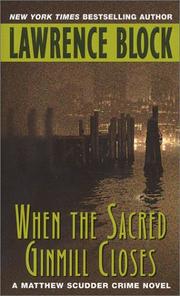
Published sixth but set back in the drinking years, narrated by a sober Scudder looking back. Read it in publication order and not chronologically: the whole effect depends on already knowing he gets out, which Eight Million Ways to Die has just told you.
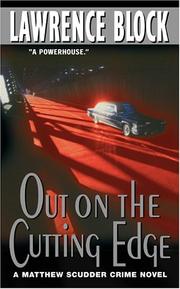
The return to the present with Scudder several years sober, and the arrival of Mick Ballou, the series' most important supporting character. Skipping it makes the later books' friendships come from nowhere.
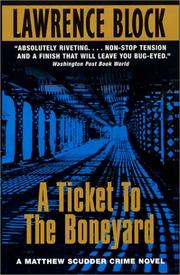
A killer Scudder framed years ago is released and comes for everyone he knows. The most propulsive book in the series and the one that puts real stakes on the people around him.
The Great Middle Stretch
IntermediateRead the run of nineties novels that most readers consider the series at full height.
▸ Study plan for this stage
Pace: Three books of roughly 320 to 340 pages published a year apart in the early 1990s, about five weeks at a book every ten days. The warning goes first, because a reader deserves it before starting rather than after: these are the most violent novels in the series. A Dance at the Slaughterhouse turns o
- The darkness now comes from the city rather than from Scudder. His sobriety is settled, so the books stop being about whether he survives himself and start being about what he is looking at.
- A Dance at the Slaughterhouse won the Edgar for best novel and is the most formally ambitious book in the series.
- A Walk Among the Tombstones is the most tightly plotted, and is where most new readers arrive from, because of the film.
- The structural trick of Tombstones is victims who cannot go to the police: drug traffickers whose wives are taken. That constraint is also the answer to why an unlicensed man keeps getting the work.
- The Devil Knows You're Dead gives Scudder an obvious culprit he does not believe in, and the least comfortable answer in seventeen books.
- The recurring cast is now why the books hurt. Mick, Elaine, TJ and the meetings run underneath every case.
- Scudder's personal life moves decisively in The Devil Knows You're Dead. The series is willing to change his circumstances permanently rather than reset him each book.
- What does Block gain by making Scudder stable and sober before writing his darkest three novels?
- Why is it structurally necessary in A Walk Among the Tombstones that the victims cannot go to the police?
- Is the violence doing work, or is it there for effect? Answer separately for Slaughterhouse and for Tombstones, because they are not the same case.
- What does Scudder believe in The Devil Knows You're Dead that the evidence does not support, and is he right to?
- How much of your reaction to the danger here comes from the cases, and how much from having spent ten books with these people?
- Decide before you start whether you want the two brutal ones. If not, read The Devil Knows You're Dead alone and move on. The arc survives the omission, and knowing that in advance is better than quitting mid-book.
- Note every AA meeting scene across the three. They are shorter now than in the earlier stages, and the shrinkage is deliberate.
- Track the sober-years count across these three and set it beside the count you found in the previous stage.
- Take the second honest stopping point here. This run is where many readers finish, having had the series at full height. Going on gets you the ending and one very costly book.
Next up: The last stage collects the bill for the Mick Ballou friendship and then, thirteen years later, sends Scudder back to his first sober year to close the circle the flashback opened.
A snuff film and a wealthy suspect; it won the Edgar for best novel. Scudder's sobriety is settled by now, so the darkness comes entirely from the city.
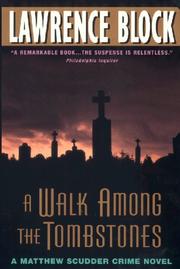
Drug traffickers cannot go to the police when their wives are abducted. The most tightly plotted book in the series and the one most people arrive from, via the film.

A street shooting with an obvious culprit that Scudder does not believe in. The most morally complicated of the nineties books, and it moves his personal life decisively forward.
The Ending
IntermediateFinish the arc, and see where a series about staying sober can honestly stop.
▸ Study plan for this stage
Pace: Two books at 338 and 319 pages, but separated by thirteen years of publication and a great deal of change in the writer. Three to four weeks. Everybody Dies is the payoff for the Mick Ballou friendship and is brutal in a different register from the previous stage: not sadistic, but expensive, and pe
- Everybody Dies charges the cost of the Ballou friendship, and it only lands if you have read from Out on the Cutting Edge onward.
- A Drop of the Hard Stuff repeats the structure of When the Sacred Ginmill Closes, but the narrator has aged decades between them. The same device from two entirely different vantage points.
- The circle: the first flashback was written by a man a few years sober about the drinking; the second by a man long sober and old, about the year he stopped.
- Thirty years of staying sober is the actual subject the series has been writing all along, and these two books are where it becomes visible as a whole.
- The meetings never stop. That constancy across seventeen books is the series making its argument by repetition rather than by statement.
- There is no tidy final volume and no farewell. A Drop of the Hard Stuff is the right place to end because of what it is, not because Block wrote it as an ending.
- What does Everybody Dies cost Scudder, and does the series persuade you the friendship was worth it anyway?
- Set the two flashback novels side by side. What does the older narrator see that the newly sober one could not?
- Is A Drop of the Hard Stuff a good final book, or only a fitting one? They are different claims.
- Describe the arc of thirteen books in one sentence without mentioning a single case.
- Was the drinking the plot? Argue it from the books rather than from this plan, and include the three you thought were weak.
- Re-read the first two pages of The Sins of the Fathers immediately after finishing A Drop of the Hard Stuff. Same narrator, forty years apart in both writing and life.
- Put the drink count you wrote down in the first stage next to the number of sober years at the end. That pair of numbers is the series.
- List the recurring people you now know, Mick and Elaine and TJ and the rooms, and note the book each of them entered in. Then check how many of them exist in the first three novels.
- If you want the four skipped novels, read them out of curiosity rather than obligation. The arc is closed; they add texture, not resolution.
Next up: You have read thirteen of seventeen and the arc is complete, so the honest next move is not more Scudder but either the four skipped novels at your leisure or a re-read of Eight Million Ways to Die, which is a different book once you know he stays sober for thirty years.
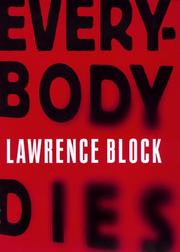
Mick Ballou's world catches up with him and Scudder pays for the friendship. Brutal, and it only works if you have read Out on the Cutting Edge onward.
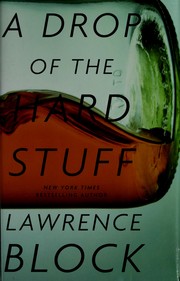
Block's late return to the series, a flashback to Scudder's first year sober told by a man now in his seventies. The right final book: it closes the circle that When the Sacred Ginmill Closes opened, and it is the last full-length Scudder novel.
Discussion
Keep reading
Paths that share books, cover the same subject, or open a related topic.