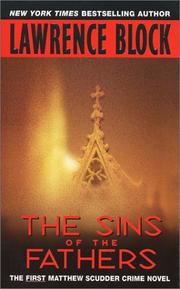
Start with The Sins of the Fathers, the 1976 first novel, and read in publication order. That second instruction is the whole argument of this page, because two of the best books in the series are flashbacks and slotting them into their chronological positions ruins them.
Read them knowing what you are reading, because this is where most people misjudge the series. The first three novels are short, the cases are thin, and the plotting is slack if you are reading for plot. Matthew Scudder is a former New York police officer with no licence, living in a hotel, taking cash favours, putting bourbon in his morning coffee and drinking hard all day. The alcoholism is the subject. The cases are largely a device for moving him between bars. A reader expecting a straight private-eye series will call these three badly constructed; a reader who understands that the drinking is the plot will find them doing exactly what they mean to.
The drinking years
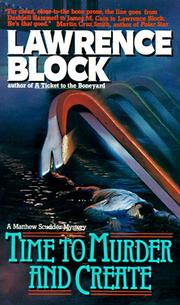
The Sins of the Fathers, Time to Murder and Create and In the Midst of Death, all under 200 pages, two evenings each. Block then left the character alone for several years and came back a considerably better writer.
The bottom
A Stab in the Dark is another short one. Eight Million Ways to Die is what the first half of the series has been building toward, and it deserves a clear run of three or four evenings rather than a chapter at a time, because it interleaves the murder investigation with AA meeting scenes and the meetings are the load-bearing part. The title is arithmetic: the number is the population of New York, and the book keeps a running tally of deaths lifted from the newspapers, most of them unrelated to the case. It is bleak without relief.
The flashback and the comeback
Read these three in this order and not in chronological order. When the Sacred Ginmill Closes was published sixth but is set back in the drinking years, narrated by a sober Scudder looking at the man he was. Slotted into its chronological position it is a decent early novel; read here it is one of the best books in the series, because the entire effect depends on already knowing he survived — which Eight Million Ways to Die has just told you.
Out on the cutting edge is the quiet one and the one readers are tempted to skip, and skipping it makes every later friendship arrive from nowhere. A ticket to the boneyard is the fastest read on the path and the most frightening.
The great middle stretch
The warning goes first, because a reader deserves it before starting rather than after. These are the most violent novels in the series. A dance at the slaughterhouse turns on a snuff film and describes what is on it. A walk among the tombstones opens with an abduction and a dismemberment and does not look away from either. Both are excellent and both are hard, and someone who was fine with the first eight books can still find these two too much. If you can, do not read them back to back. The devil knows you're dead is the least violent of the three and the most morally difficult.
The ending
Everybody dies is the payoff for the Mick Ballou friendship and is brutal in a different register — not sadistic, but expensive, and people you have followed for six books do not survive it. A drop of the hard stuff is quiet, slow and elegiac, another flashback, told by a man in his seventies about his first year sober. Read it last and read it slowly.
Where this path stops
Seventeen Scudder novels exist and thirteen are here. A Long Line of Dead Men and Even the Wicked sit between The devil knows you're dead and Everybody dies; Hope to Die and All the Flowers Are Dying sit between Everybody dies and A drop of the hard stuff. Block also wrote further Scudder short fiction afterwards. The series stops rather than concludes, and A drop of the hard stuff is a better last book than a last book has any right to be.
Follow the full ordered path here: Matthew Scudder Reading Order: Where to Start.
Ready to learn something deeply?
Build a reading path — free