Masters of Rome Reading Order and Guide
Colleen McCullough's Masters of Rome is seven novels covering the last sixty years of the Roman Republic, from Gaius Marius to the death of Antony and Cleopatra. It is one continuous story with a recurring cast, so publication order is the only order — later books assume you know who was consul when and who owes whom a favour. The stages below break the sequence at its natural political hinges rather than at difficulty levels, because the difficulty is constant from page one.
Start at the Beginning: Marius and Sulla
IntermediateLearn the machinery of the Republic — consuls, the Senate, the client system, the legions — through the two men who first broke it, and build the character map the whole series runs on.
▸ Study plan for this stage
Pace: 8–10 weeks for The First Man in Rome (1,056 pages) and The Grass Crown (1,057). These are enormous books and the first hundred pages of The First Man in Rome are the hardest in the series — budget a week for them alone at 15 pages a day, then expect to speed up to 30–40 once the cast is fixed. The s
- The Republic's machinery is the real protagonist: consuls and their one-year terms, the cursus honorum, the Senate as an advisory body with no formal power, the tribunes' veto, and the client-patron system that makes all of it work
- Gaius Marius's army reforms — recruiting the landless, making legions loyal to a general rather than the state — are the mechanism by which the Republic later dies; everything in seven volumes follows from them
- Naming practice is a real reading obstacle and also a real historical fact: filiation, adoption and cognomina all encode information, and once you can read a name you can read a family's politics
- The Grass Crown covers the Social War and Sulla's march on Rome — the first time a Roman army attacked the city, which is the taboo the series is about breaking
- McCullough writes from an unusually pro-Marian, pro-Caesarian position; she is a partisan historian, and it is worth knowing that early rather than discovering it in volume five
- The novels are heavily researched and heavily infodumped: long passages of political explanation sit inside the narrative, and skipping them makes later volumes incomprehensible
- The ageing Marius against the rising Sulla is the series' first tragedy and sets the template for every later pairing
- Explain the cursus honorum and why a man in his thirties could not simply become consul.
- What did Marius's reforms change about who served in the legions, and why did that make generals dangerous?
- Read a full Roman name aloud and say what each element tells you. Try it on three characters.
- What is the Social War about, and why does the granting of citizenship fail to settle it?
- Sulla marches on Rome. Why is that unprecedented, and what does the Senate actually do about it?
- Build a one-page family tree of the Julii, the Cornelii and the Caesares before page 200. Everything afterwards is easier.
- Keep the glossary bookmarked and look up every term the first time; the vocabulary is finite and mostly lands in the first volume.
- For each consular year, note who held office. The series is organised by year and this is how experienced readers keep their place.
- After The Grass Crown, write two sentences on where you think the Republic became unrecoverable. You will revise this at the end.
- Check one of McCullough's claims against a modern history — Mary Beard's SPQR works — to calibrate where the novels editorialise.
Next up: With the vocabulary and the family map established, the next two volumes can move much faster: Sulla's dictatorship arrives and Caesar moves from a footnote to the centre of the page.
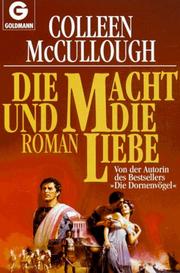
Gaius Marius reforms the army and wins seven consulships. This is the entry point and there is no alternative: it teaches the political vocabulary every later volume assumes. The first hundred pages are the hardest in the series; the glossary is not optional.
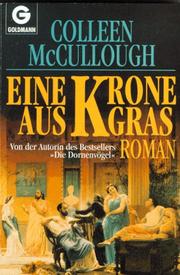
The Social War and Sulla's march on Rome. The pace picks up sharply now that the cast is established, and the ageing Marius against the rising Sulla is the series at its most tragic.
The Republic Cracks
IntermediateFollow Sulla's dictatorship and the arrival of the generation that will finish the Republic off, with Caesar moving from a footnote to the centre of the page.
▸ Study plan for this stage
Pace: 6–8 weeks for Fortune's Favourites (878 pages) and Caesar's Women (870). These read faster than the first two because the cast is already in your head — 35–40 pages a day is comfortable. Read them consecutively; Fortune's Favourites changes protagonist and must follow The Grass Crown immediately or
- Sulla as dictator: proscriptions, constitutional reform meant to restore senatorial power, and voluntary retirement — the series' strangest and most consequential figure
- The generation that will finish the Republic arrives here — Pompey, Crassus, Cicero and the young Caesar — and their rivalries set up everything in the final volumes
- The Spartacus revolt is handled as a military and political embarrassment rather than a moral drama, which is characteristic of McCullough's priorities
- Caesar's Women is the least military and most political volume: the courts, the Catiline conspiracy, and the households run by women who control the marriage alliances the men need
- Aurelia, Servilia and Julia are given real political agency, and this volume is the strongest evidence for reading the series as a study of how power actually moved in Rome
- This is the volume that makes the civil war intelligible — the debts, the alliances and the enmities are all contracted here
- The pace changes markedly: less campaigning, more Senate procedure, and readers who want battles often find this the slowest stretch of the seven
- Why did Sulla resign the dictatorship, and did his constitutional settlement have any chance of holding?
- What does Crassus want, and how does his kind of power differ from Pompey's?
- How does Caesar accumulate obligations before he has held any significant office?
- What is the Catiline conspiracy really about, and how does Cicero's handling of it damage him later?
- How much political power do the women in Caesar's Women actually exercise, and by what mechanisms?
- Chart the marriage alliances made in these two volumes. They predict the civil-war sides more reliably than any speech does.
- List every debt Caesar incurs and to whom. The First Triumvirate becomes obvious once it is written down.
- Summarise Sulla's constitutional reforms and then note which survive to the end of the series.
- Note where McCullough's sympathies show. Comparing her Cicero with a historian's Cicero is the clearest test.
Next up: Everything the series has built now converges on Caesar himself, and the next stage is the summit of the sequence.
Sulla as dictator, the young Pompey, the Spartacus revolt, and Caesar's first appearances. The volume where the series changes protagonists, so it must be read directly after The Grass Crown.
Rome itself for once, not the frontier: Caesar's rise through the courts, the Catiline conspiracy, and the women who run the households that run the city. The most political and least military book, and the one that makes the civil war intelligible.
The Caesar Books
IntermediateRead the Gallic conquest and the civil war, the two volumes the whole sequence has been building toward, with the Republic dying in real time.
▸ Study plan for this stage
Pace: 4–5 weeks for The October Horse (792 pages). One practical warning about this stage: the volume immediately preceding it in the series — the one covering the Gallic conquest, the crossing of the Rubicon and the civil war against Pompey — is not currently in our catalogue, so you will need to source
- The October Horse covers Egypt and Cleopatra, the dictatorship, the constitutional deadlock and the Ides of March
- Caesar is written as a man whose competence is the problem: he can govern better than the Senate, which is precisely why the Senate cannot survive him
- The assassination is staged as a political failure rather than a moral one, and the conspirators are given motives that are neither noble nor absurd
- Cleopatra is drawn as a Ptolemaic monarch with a dynastic strategy, not as a romantic interest, which is one of McCullough's better corrections
- The volume's emotional weight depends entirely on the four thousand pages that precede it — these senators have been characters since volume one, and their deaths land accordingly
- The title's ritual — the October Horse sacrifice — is the series' image for what Rome does to its best men, and it is worth looking up
- This is where the Republic actually ends, whatever the constitutional forms continue to say
- What does Caesar want after the civil war, and is the series convinced he wanted a crown?
- Why do the conspirators believe assassination will restore the Republic, and what does their failure to plan beyond it reveal?
- How does the portrayal of Cleopatra differ from the popular version, and what is McCullough correcting?
- Which senators' deaths land hardest, and what did the earlier volumes do to make that possible?
- Was the Republic already dead before the Ides of March? Revise the answer you wrote after The Grass Crown.
- List the conspirators and trace each one back to their first appearance in the series. Most go back several volumes.
- Write out Caesar's constitutional position — offices held, powers granted, precedents broken. The illegality is cumulative rather than singular.
- Look up the October Horse ritual and reread the title's use of it.
- Compare Caesar's assassination here with Plutarch's or Suetonius's account and mark what McCullough has chosen to add.
Next up: One volume remains, written years later and in a noticeably different key, to close a story that began sixty in-world years earlier.
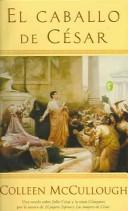
Egypt, Cleopatra, the dictatorship and the Ides of March. The emotional summit of the series, and it only lands with this weight because you have known these senators for four thousand pages.
The Aftermath
IntermediateFinish the sequence with the succession struggle, and see McCullough close a story she began sixty in-world years earlier.
▸ Study plan for this stage
Pace: 3 weeks for Antony and Cleopatra (572 pages) — the shortest volume in the series and the fastest to read. Some readers deliberately stop after The October Horse; read this one if you want the story finished rather than merely concluded.
- The succession struggle between Antony and Octavian, ending at Actium and with the annexation of Egypt
- The volume was published five years after The October Horse and is noticeably different in tone — shorter, harsher, and less in love with its principals
- Antony is unsentimentally drawn as a competent soldier and a poor politician, and Cleopatra's dynastic project is taken seriously to the end
- Octavian is given the series' least romantic treatment of a winner: patient, cold and consistently underestimated by everyone in the book
- The Republic's forms survive the Republic's substance, which is the closing argument of all seven volumes
- Readers frequently find this the weakest volume; deciding whether that is a fair judgement or a consequence of reading it after the summit is part of finishing the series
- Why does Antony lose? Give a military answer and a political one.
- Is Octavian's victory presented as an accident of temperament or the outcome of a system?
- How does the tone differ from the earlier volumes, and is the change deliberate?
- What survives of the Republic at the end, and in what form?
- Having finished all seven, when did the Republic die? Defend the date.
- Write the series' timeline on one page, from Marius's first consulship to Actium. Sixty years and seven volumes fit surprisingly neatly.
- Compare McCullough's Octavian with Augustus as a modern historian describes him.
- Revisit your family trees and mark who is left alive at the end. The attrition is the argument.
- Write two paragraphs on whether the series is history or advocacy, citing one specific portrayal.
Next up: That completes the sequence; readers who want the same period without the fiction should move to a narrative history of the late Republic, and those who want another very long historical series should look at other multi-volume historical fiction on the site.
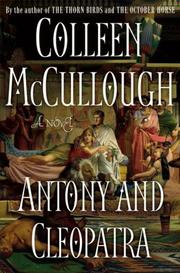
Actium and the end of the Republic, written years after The October Horse and noticeably different in tone. Some readers stop at volume six; read this one if you want the story finished rather than merely concluded.
Discussion
Keep reading
Paths that share books, cover the same subject, or open a related topic.