Begin tai chi
This curriculum guides a complete beginner from the philosophy and body-awareness roots of tai chi through its core forms and principles, and finally into the deeper internal arts and lifelong practice habits. Each stage builds the vocabulary — physical, philosophical, and energetic — needed to absorb the next, so that by the end the learner has both a grounded daily practice and the conceptual depth to keep growing independently.
Foundations: Body, Mind & First Steps
BeginnerUnderstand what tai chi is, why it works for balance and calm, and begin moving with basic awareness and safety.
▸ Study plan for this stage
Pace: 4 weeks, ~20–25 pages/day (the book is ~300 pages); read Mon–Fri and use weekends for review and physical practice
- The Eight Active Ingredients of Tai Chi — Wayne's framework explaining *why* tai chi works (mindful movement, breathing, intention, structural alignment, etc.) rather than treating it as a single mysterious art
- The mind-body connection: how conscious attention to movement simultaneously trains the nervous system, reduces stress hormones, and improves proprioception
- Structural alignment and upright posture ('sung' / relaxed rootedness) as the physical foundation for every tai chi movement
- Breathing as an anchor — diaphragmatic, coordinated breathing that links mental focus to physical motion
- The 12-week progressive model: Wayne's evidence-based rationale for gradual loading, why rushing advancement increases injury risk and reduces benefit
- Safety-first principles for beginners: joint protection, working within a pain-free range of motion, and adapting movements for individual limitations
- Scientific evidence base: understanding the research on tai chi's effects on balance, falls prevention, cardiovascular health, and cognitive function so practice is motivated by evidence, not just tradition
- Beginner's mind (non-judgmental awareness): approaching each session without performance pressure, which is itself a core therapeutic mechanism
- In your own words, what are Wayne's Eight Active Ingredients, and why does he argue that all eight — not just the physical movements — are necessary for tai chi's full benefits?
- What physiological and neurological mechanisms does Wayne cite to explain how tai chi improves balance and reduces fall risk in older adults?
- How does the 12-week structure in the book reflect principles of safe, progressive physical training? What would be the risks of skipping ahead?
- What does 'structural alignment' mean in the context of tai chi, and how does Wayne suggest a beginner checks and corrects their own posture before and during practice?
- How does mindful, diaphragmatic breathing differ from ordinary breathing, and what role does Wayne assign it in connecting the mental and physical dimensions of tai chi?
- What populations or health conditions does Wayne specifically address in the safety and adaptation sections, and what general principles can any beginner draw from those modifications?
- **Daily Posture Check (Week 1):** Before each reading session, stand in Wayne's 'basic stance' (feet shoulder-width, knees soft, spine tall) for 2 minutes. Mentally scan from feet to crown, noting tension. Journal one observation per day.
- **Breathing Log (Week 1–2):** Practice 5 minutes of diaphragmatic breathing each morning. Place one hand on your belly and one on your chest; aim for belly-first expansion. Record how your mental state shifts before vs. after in a simple 1–10 calm rating.
- **Eight Active Ingredients Map:** After finishing Part 1 of the book, draw a spider diagram with each ingredient as a branch. Under each branch, write one real-world example of how you already experience (or lack) that quality in daily life.
- **Follow the 12-Week Movement Sequences:** Beginning in Week 2, physically perform each movement introduced in the book's weekly lessons — even if only for 10 minutes per session. Do not skip weeks; treat the schedule as a minimum effective dose.
- **Video-Mirror Practice:** Record yourself doing one movement from the week's lesson on your phone. Compare your alignment to Wayne's descriptions (or any accompanying online resources he references). Write down one alignment correction to focus on next session.
- **Evidence Summary Card:** After finishing the research chapters, create a single index card listing three health outcomes (e.g., balance, blood pressure, cognition), the type of evidence Wayne cites for each (RCT, meta-analysis, observational), and the approximate effect size or finding. Keep it as a motivational reference throughout the curriculum.
Next up: Completing this stage gives the reader a scientifically grounded understanding of *why* tai chi works and a safe, aligned starting posture, which is the essential prerequisite for learning the continuous, flowing form sequences and deeper energetic principles explored in more intermediate study.
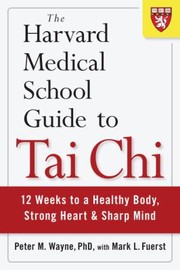
Written by a Harvard researcher and long-time tai chi teacher, this is the ideal first book — it explains the science of how tai chi improves balance, reduces stress, and supports lifelong health, giving the beginner a trustworthy 'why' before diving into the 'how'.
Core Principles: Relaxation, Breath & Flow
BeginnerInternalize the key principles of sung (relaxation), rooting, and mindful breathing that transform physical movement into genuine tai chi.
▸ Study plan for this stage
Pace: 6–8 weeks total. Week 1–4: "The Tai Chi Book" by Robert Chuckrow (~15–20 pages/day, reading slowly and re-reading technical sections on relaxation and breathing). Week 5–8: "Embrace Tiger, Return to Mountain" by Al Chung-liang Huang (~10–15 pages/day, journaling responses to Huang's experiential, po
- Sung (relaxation): the active, conscious release of muscular tension that Chuckrow distinguishes from mere limpness or passivity — the foundation of all tai chi movement
- Rooting: Chuckrow's concept of sinking weight downward through relaxation to establish a stable, grounded connection with the earth, enabling balanced and powerful movement
- Mindful breathing: Chuckrow's guidance on natural abdominal (diaphragmatic) breathing coordinated with movement, avoiding forced or held breath
- Chi (qi) and its relationship to relaxation: understanding how Chuckrow frames the flow of internal energy as dependent on the absence of muscular tension
- Yielding and non-resistance: the principle, reinforced by Huang, that tai chi responds to force by softening and redirecting rather than opposing — a physical expression of Taoist wu wei
- Flow and continuity: Huang's emphasis on movement as an unbroken, organic river — no jerking, stopping, or mechanical repetition — echoing the Tao Te Ching's image of water
- Body-mind integration: Huang's experiential approach showing that tai chi is not a set of instructions to follow but a felt, whole-body awareness to cultivate
- Naturalness (ziran): Huang's insistence that authentic tai chi emerges from one's own nature rather than imitation of a fixed external form
- According to Chuckrow in 'The Tai Chi Book,' what specifically distinguishes sung (relaxation) from simply going limp, and why does this distinction matter for safe and effective practice?
- How does Chuckrow explain the relationship between rooting and relaxation — what must happen in the body for genuine rooting to occur?
- What breathing pattern does Chuckrow recommend for tai chi practice, and what common breathing mistakes does he caution beginners against?
- In 'Embrace Tiger, Return to Mountain,' how does Huang use the metaphor of water or a river to explain the quality of movement that tai chi seeks to embody?
- How does Huang's concept of 'flow' challenge a beginner's instinct to memorize and mechanically reproduce a sequence of postures?
- How do Chuckrow's technical, anatomical explanations of relaxation and Huang's poetic, experiential descriptions of flow complement each other — and where, if anywhere, do they seem to tension?
- Sung body scan (daily, 5–10 min): Stand in Wu Ji (basic standing posture as described by Chuckrow). Starting from the crown of the head, consciously release tension joint by joint — jaw, shoulders, elbows, wrists, hips, knees, ankles — pausing to notice the difference between active relaxation and collapse. Journal one specific observation after each session.
- Abdominal breathing practice (daily, 5 min): Lie on your back with one hand on your belly. Practice the natural diaphragmatic breath Chuckrow describes: belly rises on inhale, falls on exhale. Then stand and attempt to maintain this breath while doing slow arm raises, noticing where you unconsciously hold your breath.
- Rooting visualization walk (2–3x per week): Walk very slowly across a room, pausing on each step to consciously sink your weight into the standing foot before lifting the other. Imagine, as Chuckrow suggests, that your weight is draining downward like water filling a vessel. Notice how relaxation in the hip and knee affects your sense of stability.
- Continuous flow drawing (once, after finishing Huang): With a large sheet of paper and a brush or marker, draw a single unbroken line for 3–5 minutes without lifting the pen — letting it spiral, curve, and change direction organically. Reflect in writing on how this mirrors Huang's description of tai chi movement as one continuous gesture.
- Mirror-free slow-motion movement (2–3x per week): Choose any 3–5 posture transitions from your current form study (or simple arm circles if you have no form yet). Perform them at one-quarter speed with eyes half-closed, focusing entirely on internal sensation — breath, weight shift, and the absence of tension — rather than on correct external shape, as Huang encourages.
- Comparative reading journal (ongoing throughout stage): After each reading session, write 3–5 sentences answering: 'What did Chuckrow explain technically today?' and 'What did Huang evoke experientially today?' At the end of the stage, review your entries and write a one-page synthesis of how both authors describe the same underlying principle.
Next up: Internalizing sung, rooting, and breath through Chuckrow and Huang gives the beginner a felt, principled foundation — a living quality of movement — upon which the structured study of specific tai chi forms, postures, and martial applications can now be meaningfully layered rather than mechanically memorized.

Chuckrow bridges Western biomechanics and classical Chinese principles, making concepts like 'sinking the chi' and 'substantial and insubstantial' concrete and accessible — essential vocabulary before moving to deeper classical texts.
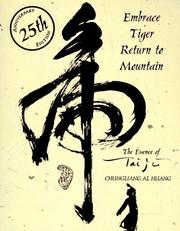
A poetic, experiential guide to the spirit of tai chi movement and Taoist flow; reading it here opens the learner's intuition to the meditative, non-striving quality that distinguishes tai chi from mere exercise.
Classical Roots: Taoism & the Internal Arts
IntermediateUnderstand the Taoist philosophical foundation — yin/yang, wu wei, and qi — that gives tai chi its internal depth and its power as a lifelong practice.
▸ Study plan for this stage
Pace: 6–8 weeks total. Week 1–2: Read the Tao Te Ching in full (81 short chapters), ~5–8 chapters per sitting, 3–4 sittings per week — slow, contemplative reading; re-read each chapter at least once before moving on. Week 3–6: Read The Way of Qigong by Kenneth S. Cohen (~400 pages), ~20–25 pages per day,
- The Tao (道) as the ineffable source and organizing principle of all reality — and why Laozi insists it cannot be fully named or grasped intellectually
- Yin and Yang as complementary, mutually arising polarities (not opposites) — softness overcoming hardness, emptiness enabling usefulness, yielding as a form of strength
- Wu Wei (無為) — non-forcing, effortless action aligned with natural flow — as the governing principle behind tai chi movement and internal cultivation
- Qi (氣) as the vital life-force that animates the body and connects the individual to the cosmos, as explained and contextualized by Cohen in The Way of Qigong
- The Three Treasures: Jing (essence), Qi (vitality), and Shen (spirit) — Cohen's framework for understanding the layered energetics that qigong and tai chi develop
- Dan Tian (丹田) — the body's primary energy center below the navel — as the physical anchor for internal practice described by Cohen
- The relationship between stillness and movement: how the Tao Te Ching's praise of stillness and emptiness maps directly onto Cohen's instructions for rooting, centering, and moving from the inside out
- Qigong as a living bridge between Taoist philosophy and embodied tai chi practice — Cohen's historical and medical framing grounds the Tao Te Ching's abstractions in the body
- In your own words, what does Laozi mean when he says 'the Tao that can be told is not the eternal Tao' — and how does that humility about language apply to learning tai chi from books or teachers?
- How do the Tao Te Ching's recurring images of water, valleys, and empty vessels illuminate the tai chi principles of yielding, rooting, and creating space in the body?
- According to Cohen in The Way of Qigong, what is qi, how is it cultivated, and what distinguishes it from purely mechanical or anatomical descriptions of the body?
- How does wu wei, as described by Laozi, manifest as a practical physical principle in the qigong postures and breathing methods Cohen teaches?
- What are the Three Treasures (Jing, Qi, Shen), and why does Cohen argue that understanding them is essential for anyone who wants to move beyond tai chi as mere exercise into tai chi as an internal art?
- Where do the Tao Te Ching and The Way of Qigong agree — and where do they create productive tension — in their treatment of effort, discipline, and the role of the teacher?
- Slow-reading ritual for the Tao Te Ching: Choose 3 chapters per session, read each one aloud twice — once at normal pace, once very slowly. After the second reading, sit in silence for 2 minutes before writing a single sentence about what you felt, not just what you understood.
- Wu Wei movement journal: After each qigong session guided by Cohen's instructions, write 3–5 sentences answering: 'Where did I force? Where did I yield? What happened when I stopped trying?' Track this over 4 weeks to observe your own internal arc.
- Yin/Yang body scan: Stand in Cohen's basic qigong standing posture (Zhan Zhuang / standing like a tree) for 5–10 minutes. Mentally scan for pairs of opposites in your body — heavy/light, tense/relaxed, full/empty — and practice consciously shifting the balance without forcing. Repeat 3×/week.
- Concept mapping: Draw a visual map connecting at least 6 ideas from the Tao Te Ching (e.g., wu wei, pu/the uncarved block, yielding, emptiness) to specific passages or practices in The Way of Qigong. Use your own words and arrows to show how philosophy becomes practice.
- Dan Tian breathing practice: Using Cohen's instructions on abdominal breathing and dan tian awareness, practice 10 minutes of focused dan tian breathing daily for two weeks. Keep a one-line log each day noting any shift in sensation, focus, or energy quality.
- Comparative reflection essay (500–700 words): Write a personal essay answering the question, 'How has reading these two books changed — or challenged — the way I think about what I am actually doing when I practice tai chi?' Cite at least one specific passage from each book.
Next up: By internalizing the Taoist philosophical framework and its embodied expression through qigong, the reader is now equipped to encounter the classical tai chi forms and lineage texts not as physical choreography to be memorized, but as living expressions of the very principles — yin/yang, wu wei, and qi — they have just spent weeks absorbing.
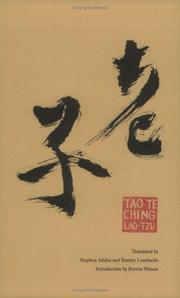
The source text of Taoist philosophy; reading it now — after physical practice has begun — makes its teachings on yielding, softness, and effortless action feel embodied rather than abstract.

The most thorough and reliable English-language guide to qi, breath, and the energy practices that underpin tai chi; it deepens the learner's understanding of what is happening internally during every movement.
Going Deeper: Form, Application & Tradition
IntermediateExplore the classical transmission of tai chi — its martial roots, its family lineages, and the principles that unify all styles — to enrich and refine ongoing practice.
▸ Study plan for this stage
Pace: 8–10 weeks total: Weeks 1–5 on "Tʻai chi classics" (~15–20 pages/day, including re-reading dense classical passages); Weeks 6–10 on "The essence of T'ai chi ch'uan" (~12–18 pages/day, with slower passes through the translated treatises and commentary).
- The Three Classics and their authorship — understanding the texts attributed to Chang San-feng, Wang Tsung-yueh, and Wu Yu-hsiang as the philosophical and technical foundation of all tai chi lineages (Liao)
- Sung (relaxation/yielding) and its relationship to structural integrity — Liao's commentary unpacks how complete relaxation is not limpness but an alert, rooted readiness
- Jing (intrinsic energy/refined force) vs. Li (brute muscular force) — the central distinction in both books; tai chi power arises from cultivated internal energy, not gross strength
- The Thirteen Postures (Ba Men Wu Bu) — the eight gates (ward-off, roll-back, press, push, pull, split, elbow, shoulder) and five steps as the complete energetic vocabulary of tai chi (both books)
- Yin-Yang polarity in movement — every posture, transition, and application is a dynamic interplay of fullness/emptiness, opening/closing, advance/retreat (Lo)
- Push-hands (tui shou) as a laboratory for principles — Lo's text grounds the classical language in two-person sensitivity training, making abstract concepts testable
- Family lineage transmission and the Yang style classics — Lo's translations and commentary situate the texts within the Yang family oral tradition, showing how principles were preserved and transmitted
- Mind (Yi) leading Qi, Qi moving the body — the hierarchy of intention → breath/energy → physical movement as the correct sequence of tai chi action (both books)
- According to Liao's commentary on the Classics, what is the functional difference between jing and li, and why does tai chi insist on eliminating li in favor of jing?
- How do the Thirteen Postures serve as a complete system? Can you name all eight gates and five steps and describe the energetic quality each one represents?
- What does the Classic phrase 'use the mind, not force' mean in practical terms during solo form and push-hands, as explained across both Liao and Lo?
- How does Liao interpret the role of sung (relaxation) in generating power — and how does Lo's push-hands commentary reinforce or expand that interpretation?
- In what ways do the Yang family lineage notes in Lo's book show continuity with — or subtle departures from — the principles laid out in the older classical texts translated by Liao?
- What is the correct relationship between Yi (intention), Qi, and physical movement according to the Classics, and how should a practitioner use this hierarchy to self-correct their form?
- Daily 'Classical Phrase Journaling': Each practice session, choose one sentence from Liao's translations (e.g., 'Root at the feet, issue through the legs, controlled by the waist, expressed in the fingers') and spend 10 minutes moving through your form with that single phrase as your only instruction. Write 3–5 sentences afterward on what you noticed.
- Thirteen Postures Mapping: Draw or print a diagram of your form's sequence and annotate every posture with its corresponding gate(s) or step(s) from the Thirteen Postures. Use Lo's commentary to verify your attributions. Revisit and revise the map after finishing both books.
- Sung Body Scan Drill: Before each form practice, stand in Wu Ji for 3–5 minutes and systematically release tension from crown to feet, then walk through the first section of your form at half speed. Use Liao's commentary on sung as a checklist — shoulders, elbows, wrists, hips, knees.
- Push-Hands Sensitivity Sessions: Practice basic fixed-step push-hands with a partner (or use a wall for solo feedback) at least twice a week. After each session, re-read one passage from Lo's push-hands commentary and identify one principle you felt — or failed to feel — during practice.
- Comparative Text Study: Select any one of the three Classics translated in Liao's book and read the same passage in Lo's book if it appears there. Write a one-page comparison of how each author's commentary illuminates or differs on that passage, noting which interpretation resonates more with your physical experience.
- Lineage Timeline Exercise: Using the biographical and historical notes in both books, construct a simple timeline of tai chi's transmission from the legendary origins through the Yang family to the present day. Annotate each node with one key principle or innovation that lineage holder is associated with, then reflect on how your own teacher/style fits into that chain.
Next up: By internalizing the classical principles and lineage context from Liao and Lo, the reader now has a principled framework — rooted in original texts — against which to evaluate and deepen advanced practice topics such as weapons forms, qigong integration, or the subtler energetics of fa jing, which a more advanced stage would explore.
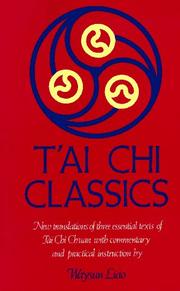
A translation and commentary on the original tai chi treatises attributed to the art's founders; having a practice base makes these dense classical texts suddenly illuminating rather than opaque.
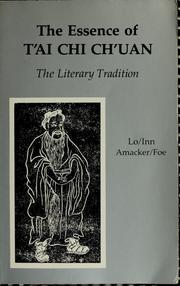
Translates and unpacks the foundational Yang-style writings, including the famous 'Treatise' and 'Song of the Thirteen Postures,' connecting the learner directly to the living lineage of the art.
Lifelong Practice: Integration & Continued Growth
ExpertDevelop a self-sustaining, evolving daily practice — understanding how to teach yourself, avoid stagnation, and carry tai chi's calm and balance into every aspect of life.
▸ Study plan for this stage
Pace: 10–12 weeks total: ~3 weeks on "There Are No Secrets" (~20–25 pages/day, reading reflectively and journaling), then ~7–9 weeks on "Opening the Energy Gates of Your Body" (~15–20 pages/day, with mandatory movement sessions after each reading block — this book demands slow, embodied reading).
- The 'no secrets' principle: mastery is revealed through dedicated, honest practice rather than hidden teachings — Lowenthal's study under Cheng Man-ch'ing illustrates that the art transmits itself through the body, not just the intellect
- Teacher–student transmission and the limits of verbal instruction: understanding how to become your own teacher by cultivating internal awareness and self-correction
- Wu wei and effortless action: integrating Taoist non-doing into daily movement and decision-making so that tai chi becomes a life philosophy, not just an exercise
- The 70% rule (from Frantzis): never practice at full effort — training at 70% capacity protects the body, prevents burnout, and allows the nervous system to absorb subtle internal changes over decades
- The body's energy gates (kwa, tantien, spine, shoulder/hip joints, etc.) as described by Frantzis: learning to dissolve tension systematically from the outside in, layer by layer
- Cloud Hands and standing practice as diagnostic tools: using these foundational movements to locate and release chronic holding patterns in the body
- Sung (relaxation/release) as an active, progressive skill — distinguishing true release from collapse, and understanding how sung deepens over years of practice
- Self-sustaining practice design: how to structure solo sessions that remain alive and investigative, avoiding mechanical repetition and stagnation
- According to Lowenthal's account of Cheng Man-ch'ing, why are there 'no secrets' in tai chi — and what does this imply about how an advanced practitioner should approach self-teaching?
- How does Frantzis define the energy gates of the body, and why does he argue that releasing them in a specific sequence (outer to inner) is essential for safe, long-term nei gong development?
- What is the 70% rule as described by Frantzis, and how should it reshape the way you structure daily practice intensity across months and years?
- How do the philosophical lessons Lowenthal draws from his time with Cheng Man-ch'ing connect to the embodied, sensation-based methodology Frantzis prescribes — where do these two authors agree on what advanced practice looks like?
- What are the signs, according to both books, that a practice has become stagnant or mechanical, and what concrete strategies do each author offer to restore aliveness and depth?
- How does Frantzis distinguish between muscular relaxation and the deeper energetic 'sung' quality, and what practice methods does he recommend for progressively accessing it?
- 'Transmission journaling' (for There Are No Secrets): After each reading session, write one page in the voice of your own inner teacher — what did your body learn today that words almost can't capture? Review these entries weekly to track the evolution of your self-instruction.
- Daily standing practice (zhan zhuang) using Frantzis's energy gate framework: Stand for 10–20 minutes each morning, systematically scanning each gate (feet, ankles, knees, kwa, tantien, spine, shoulders, neck) and practicing sung/dissolving at each location before moving on.
- The 70% practice audit: For two full weeks, deliberately cap every tai chi session at 70% of your usual effort, speed, and range. Keep a log of what you notice — where does restraint reveal subtlety? Where does the form feel different?
- Cloud Hands gate investigation: Isolate Cloud Hands from your form and practice it for 10 minutes daily for one month, using it exclusively as a diagnostic tool to find and release one specific energy gate per week as outlined by Frantzis.
- Teach-back sessions: Once a week, teach one concept from either book to a partner, a mirror, or a voice recording. Attempt to convey it without using your hands — only through verbal instruction and demonstration. Reflect on what gaps this reveals in your own understanding.
- Integration walk: Once per week, take a 20-minute slow walk applying Frantzis's dissolving/sung principles and Lowenthal's wu wei philosophy — no destination, no pace goal. Afterward, write three sentences on how tai chi's qualities did or did not carry into ordinary movement.
Next up: By internalizing the self-teaching mindset from Lowenthal and the systematic internal body-work from Frantzis, the reader has built the autonomous, investigative practice foundation needed to pursue any deeper specialization — whether formal teaching, push-hands, or advanced nei gong — entirely on their own terms.
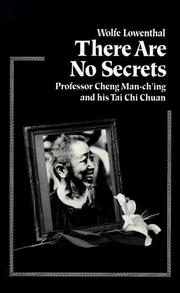
A beautifully written memoir of studying under master Cheng Man-ch'ing; it models what devoted, humble, long-term practice looks like and inspires the learner to trust the process of slow, deep refinement.
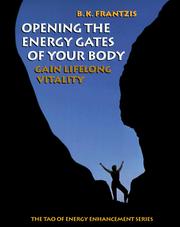
Frantzis's guide to standing qigong and internal body awareness gives advanced practitioners the tools to keep discovering subtlety in movements they have done thousands of times, ensuring the practice never plateaus.
Discussion
Keep reading
Paths that share books, cover the same subject, or open a related topic.