Mario Vargas Llosa Reading Order: Where to Start
Vargas Llosa is the most technically demanding of the Boom novelists — interleaved timelines, dialogues spliced across decades — and starting with the wrong book means fighting the structure before you care about the story. Begin with the two most welcoming major novels, then go back to the early Peruvian ones now that the technique is legible, then out to the big historical and political books. The memoir and the craft book close it, because both are Vargas Llosa explaining his own machinery.
Start Here
BeginnerGet the range in two books — one comic and autobiographical, one a masterpiece of political dread — without hitting the hardest prose first.
▸ Study plan for this stage
Pace: 3–4 weeks. Aunt Julia and the Scriptwriter runs about 385 pages, but it alternates a memoir chapter with a standalone soap-opera episode, so it reads in clean 20-page units. One chapter pair a day finishes it comfortably in three weeks, and the alternation makes it unusually easy to pick up after a
- The alternating-chapter structure: odd chapters follow young Mario in a Lima radio station, even chapters are Pedro Camacho's serials, and the two strands infect each other
- Autobiographical fiction handled as comedy — the eighteen-year-old courting his aunt by marriage is Vargas Llosa's own life, played for laughs
- Pedro Camacho's scripts start coherent and progressively lose their grip, with characters and names bleeding between serials
- Melodrama treated seriously as a form: the novel is genuinely interested in what popular storytelling does, not just amused by it
- 1950s Lima as a social map — radio, class, the newsroom, the provincial arrivals — which recurs across the whole body of work
- This is the friendliest door into Vargas Llosa because the structure is legible from the first chapter, unlike the early novels where you have to earn it
- How would you know, without being told, that Camacho's serials are deteriorating? What are the specific symptoms?
- The novel alternates memoir and invention. Which strand is more reliable, and does the book let you decide?
- What does the alternating structure achieve that a single narrative could not?
- Vargas Llosa is writing about a real marriage. Where does the comedy protect him, and where does it expose him?
- By the end, is Camacho a joke, a warning about writers, or a self-portrait?
- Keep a tally of Camacho's characters and note the first time a name recurs in the wrong serial — that moment is the novel's hinge
- Read only the odd chapters straight through, then only the even ones, and note what the alternation was actually doing
- Write a one-page soap-opera episode in Camacho's register; it will teach you why the deterioration is funny rather than tedious
- Note every formal device you can name here — alternation, embedded narrative, tonal contrast — and keep the list; the harder novels reuse all of them
Next up: With one Vargas Llosa structure fully legible, you can go back to the early Peruvian novels and read the formal experiments as technique rather than as obstruction.

The friendliest door into his work: a teenage radio journalist courting his aunt by marriage, alternating with the increasingly deranged soap operas of a Bolivian scriptwriter. Funny, fast, and it teaches the alternating-chapter structure painlessly.
The Early Peruvian Novels
IntermediateGo back to the books that made him at thirty and understand the formal experiments that everything afterward simplifies.
▸ Study plan for this stage
Pace: 12–14 weeks and this is the hardest stage on the path. The Time of the Hero takes 3 weeks. The Green House needs 4 and its first hundred pages are genuinely disorienting by design. Conversation in the Cathedral is 600-plus pages of spliced dialogue and needs 6 weeks minimum — read it in long sitting
- The Leoncio Prado military academy, a stolen exam and a killing — The Time of the Hero was publicly burned by the academy it depicted
- Multiple narrators with unmarked handovers: the debut teaches you that a paragraph break can mean a change of consciousness
- The Green House interleaves five storylines across the Peruvian desert and the Amazon, cut together without transitions
- Vargas Llosa's own term, the Chinese box — a story nested inside a story inside a story, which you will meet by name in the last stage
- Telescoped dialogue in Conversation in the Cathedral: two conversations decades apart spliced together mid-sentence, so a question in 1950 gets its answer in 1963
- 'At what precise moment had Peru fucked itself up' — the opening question that the whole 600 pages is an answer to
- The Odría dictatorship as the subject: corruption reconstructed from a bar conversation rather than narrated from above
- The technique survives translation intact because it is structural rather than verbal — the difficulty in English is exactly the difficulty in Spanish
- In The Time of the Hero, whose voice is the hardest to identify, and why did Vargas Llosa make that one hardest?
- The Green House gives you no map for its first hundred pages. What are you meant to do with that, and did you do it?
- How does telescoped dialogue in Conversation in the Cathedral change the meaning of an answer given decades after its question?
- Are these novels difficult because the events are complex, or because the presentation withholds ordering information?
- Which of the three would you now tell someone to skip, and what would they lose?
- The academy burned the debut. What in it was intolerable — the plot, or the method of telling it?
- For The Green House, keep a page listing each storyline and its cast, and update it whenever a new thread starts
- In Conversation in the Cathedral, take one spliced passage and separate the two conversations onto two columns; do this once and the rest of the book opens
- Read the first chapter of the debut twice before continuing — the second pass is where the narrators separate
- Set a schedule for Conversation in the Cathedral before starting and protect long reading blocks; this book punishes stop-start reading more than any other here
- After all three, write a paragraph on what these novels are arguing about Peru, without describing plot
Next up: Having survived the hardest structural experiments, you can meet the historical epics as what they are — bigger canvases handled with far clearer architecture.

The debut — a Lima military academy, a stolen exam and a killing — publicly burned by the academy it depicted. The most straightforward of the early books, so take it first.
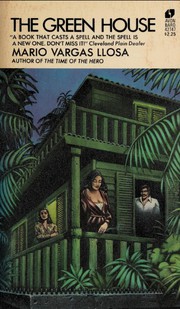
Five storylines across the Peruvian desert and jungle, cut together without warning. Harder than the debut and best attempted with it behind you, because it assumes you will trust the confusion to resolve.

His own favourite and the summit of the difficult period: a bar conversation that unpacks a whole corrupt decade, with dialogue spliced across time mid-sentence. Attempt it only here, fourth — it is the deep end.
The Big Political and Historical Novels
IntermediateFollow him out of Peru into the historical epics, where the subject is always how an idea turns into violence.
▸ Study plan for this stage
Pace: 12–14 weeks. The War of the End of the World is the longest book on this path and needs 6 weeks, but it is structurally far clearer than Conversation in the Cathedral, so it moves better than its length suggests. The Storyteller is short and can be read in a fortnight. The Dream of the Celt runs abo
- Canudos: a millenarian rebellion in the Brazilian backlands, crushed by the young Brazilian republic, told from every side at once
- Vargas Llosa's constant subject stated most clearly here — how a conviction becomes violence, whichever direction it comes from
- Fanaticism handled without a villain: the republicans and the millenarians are both certain, and certainty is the antagonist
- The Storyteller's double structure: a narrator in Florence and the oral tales of a Machiguenga hablador, told in the tribe's own narrative logic
- Saúl Zuratas, the Jewish Peruvian who disappears into an Amazonian tribe, as the compact version of the lifelong argument about narrative and belonging
- Roger Casement in The Dream of the Celt — the Congo, the Amazon rubber atrocities and a British gallows — the historical mode applied to one life
- Research-heavy fiction: from here on, Vargas Llosa builds from archives, and the technique becomes selection rather than invention
- Why these are easier than the early novels despite being longer: the interleaving is signposted rather than concealed
- In The War of the End of the World, is there a character whose position Vargas Llosa endorses? What does the answer say about the book?
- The Storyteller alternates a European narrator with Machiguenga oral tales. What does the second voice do that an anthropological account could not?
- How is the fanaticism at Canudos different from the political conviction in Conversation in the Cathedral?
- Casement was both a human-rights investigator and a convicted traitor. How does the novel handle the two without flattening either?
- These books are built from documents. Where can you feel the archive, and does that help or hurt?
- What does 'how an idea turns into violence' actually mean in each of the three books?
- Before The War of the End of the World, read a two-page factual summary of the Canudos campaign; the novel assumes the outline and you will read faster for it
- Track the point of view section by section for the first 150 pages of Canudos — once you see the rotation, the rest is easy
- Read The Storyteller's Machiguenga chapters consecutively, skipping the frame, then read the frame chapters; then decide which order the book wants
- For The Dream of the Celt, note where the novel departs from what is documented about Casement and ask what the invention is for
- Write down one sentence per novel naming the idea that turns into violence
Next up: After 1,500 pages of political weight, the comic and popular novels arrive as relief and as evidence that the same formal games can be played for laughs.

A millenarian rebellion in the Brazilian backlands, and by many accounts his greatest novel. Long, but structurally far clearer than Conversation in the Cathedral, so it rewards the work you have already put in.
A short, strange book about a Jewish Peruvian who vanishes into an Amazonian tribe as its oral storyteller. The most compact statement of his lifelong argument about narrative and belonging.
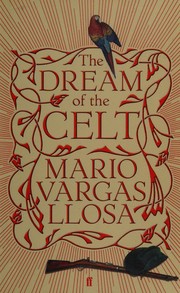
Roger Casement from the Congo and the Amazon to a British gallows — his major post-Nobel novel. Placed here because it is the historical mode of The War of the End of the World applied to a single life.
The Lighter Cuts
IntermediateSee the comic and popular Vargas Llosa, which is a real part of the career and not a lesser one.
▸ Study plan for this stage
Pace: 6–7 weeks. Captain Pantoja and the Special Service is short and told largely in memos, orders and broadcasts, so it reads very fast — 2 weeks. The Bad Girl is about 310 pages of conventional narrative across four decades and four cities; 3 weeks at an easy pace.
- Captain Pantoja is built almost entirely out of documents — military memos, radio scripts, reports — with almost no ordinary narration
- Bureaucratic prose as comedy: the joke is that the language never once acknowledges what it is describing
- Farce as a legitimate mode for the same formal apparatus used in the epics, not a lesser gear
- The Bad Girl is his most conventional novel: one hopeless obsession followed across Lima, Paris, London and Tokyo over forty years
- The obsessive lover as a recurring Vargas Llosa figure, here without any political scaffolding
- Reading these after the epics shows how much of his difficulty was choice rather than temperament
- Captain Pantoja has almost no scenes. How does a novel made of documents still generate character?
- Where does the farce turn uncomfortable, and is that a failure of tone or the point?
- The Bad Girl abandons the structural games almost entirely. Is it a weaker book for it?
- Does the obsession in The Bad Girl illuminate anything, or is it just sustained?
- Would you recommend either of these as a first Vargas Llosa? Which one, and what would the reader misunderstand about him?
- Read Captain Pantoja aloud in a flat administrative voice for a page; the comedy is entirely in register
- List the document types Vargas Llosa uses and what each one can reveal that the others cannot
- Map The Bad Girl's four decades against the political history running behind them, which the novel keeps in the background on purpose
- Compare the treatment of a brothel in The Green House with the one in Captain Pantoja — same institution, opposite tone
Next up: You have now seen every register he works in, which is the right moment to read him explaining both the life and the machinery behind it.

An army officer ordered to organize a mobile brothel for jungle garrisons, told in memos and broadcasts. Broad farce built out of documents, and proof that the formal games can be played for laughs.

Forty years of one hopeless obsession across Lima, Paris, London and Tokyo. His most conventional novel and an easy palate cleanser after the epics.
The Life and the Method
IntermediateRead Vargas Llosa on Vargas Llosa — the childhood and failed presidential run behind the fiction, and his own account of how novels are built.
▸ Study plan for this stage
Pace: 6–7 weeks. A Fish in the Water is the long one and alternates childhood chapters with the 1990 presidential campaign — 4 weeks, and the campaign chapters read faster than the memoir ones. Letters to a Young Novelist is short and should be read slowly over a fortnight, one letter at a time, with a no
- A Fish in the Water alternates the early life with the 1990 Peruvian presidential campaign he lost to Fujimori — the same alternating structure as Aunt Julia, used for autobiography
- The factual originals of half the fiction: the Leoncio Prado, the father, the radio station, Lima's class geography
- A novelist writing about his own political defeat while it is still fresh, and what the fiction writer's instincts do to a memoir
- Letters to a Young Novelist names his devices explicitly — the Chinese box, shifting narrators, telescoped time, the 'hidden fact'
- The theory of the novel as a settling of accounts with reality, which retroactively explains the ambition of Canudos and Conversation in the Cathedral
- Reading the manual last means every device he names is one you have already survived in practice
- Both books are widely read in English translation — Helen Lane's for the memoir and Natasha Wimmer's for the letters, per the editions listed here
- Which fictional episodes turn out to have factual originals, and where did the fiction improve on the fact?
- The campaign chapters were written close to the defeat. Where can you hear that, and does it compromise the account?
- Take one device from Letters to a Young Novelist and find it working in three different novels on this path.
- Vargas Llosa argues that novels are written out of grievance with reality. Does that hold for the comic novels too?
- Having read the manual, is there a book on this path you would now read differently?
- Does knowing the autobiography make Aunt Julia and the Scriptwriter better or smaller?
- Read Letters to a Young Novelist one letter at a time and, after each, find the technique in a novel you have already finished
- Make a two-column list — event in A Fish in the Water, its transformation in fiction — and see what he consistently changes
- Reread the first chapter of Aunt Julia and the Scriptwriter immediately after the memoir's corresponding chapters
- Write your own short account of the Chinese-box structure using an example from The Storyteller rather than one of his
- Draft the reading order you would now give someone else and note the two places you would depart from this one
Next up: This closes the path: with the life and the method both on the page, the technical difficulty of the early novels reads as design rather than as obstruction.

The memoir, alternating his early life with the 1990 Peruvian presidential campaign he lost to Fujimori. It supplies the factual originals for half the fiction, which is why it comes after it.

A short manual on the devices he actually uses — shifting narrators, telescoped time, the Chinese-box structure. The ideal closing book, because you will now recognize every technique he names.
Discussion
Keep reading
Paths that share books, cover the same subject, or open a related topic.