Lew Archer Reading Order: Where to Start
Ross Macdonald wrote eighteen Lew Archer novels between 1949 and 1976, and the standard advice is sound: do not start at the beginning. The first half-dozen are competent Chandler imitations, and the series only becomes great in 1959 with The Galton Case, when Macdonald found his real subject — buried family secrets surfacing a generation later, with Archer as the man who listens. This path starts where the writing turns, takes the late peak, then goes back for the early books once you know what they were rehearsing for. The mysteries are self-contained; Archer barely changes, so there is no continuity to protect.
Start Here: Where the Series Turns Great
BeginnerRead the three books most often named the best, and learn the Macdonald pattern — a missing person, a thirty-year-old crime, and a family that cannot say why.
▸ Study plan for this stage
Pace: Three to four weeks for about 740 pages. These are short novels by modern standards, 200 to 275 pages each, and any of them can be finished in three or four evenings. Read them in this order and close together, because the pattern is the point and it is easiest to see across three consecutive books.
- You are starting at book eight on purpose. The first seven are competent Chandler imitations and the series turns great in 1959 with The Galton Case, which is why this path opens there rather than at the beginning.
- Nothing is lost by joining mid-run. Each novel is a self-contained case, Archer barely changes across eighteen books, and there is no continuity, no recurring cast and no arc to protect. This is one of the very few long series where a reader can start anywhere.
- The Macdonald pattern, which these three establish: a missing person in the present, a crime a generation old underneath it, and a family that cannot say out loud what happened.
- Archer as a listener rather than an actor. He mostly drives, arrives, and lets people talk, and the confessions do the work a chase would do in another writer.
- The psychoanalytic shape of the plots: guilt inherited rather than committed, substitution of one child for another, and identity as the thing actually in dispute.
- Archer as a near-empty narrator with no private life on the page, which is what lets each novel fill him with someone else's family.
- Southern California as a social map, from oil money to reform schools to country clubs, with class read off addresses.
- In each of the three, how old is the crime that actually explains the book, and how far back does Archer have to go to find it?
- The Chill is usually called the masterpiece. What does its final revelation do to the story you thought you were reading, and could it work at any other length?
- The Far Side of the Dollar has four adults lying about one boy's identity. What is each of them protecting, and are any of their lies about the murder?
- Archer solves very little by physical action. Count the scenes in The Galton Case where he does anything other than travel and listen.
- What does Archer want? After three books, can you say anything about him that is not a professional attribute?
- For each novel, sketch the family tree as you read, including the generation before the one on the page. The plots are built on those trees and drawing them is the fastest way to see the pattern repeat.
- Stop at the halfway mark of The Chill and write down who you think did it and why. The book is engineered so that a careful reader reaches a confident wrong answer.
- Mark every passage where Archer describes a house or a street before describing the people in it. Macdonald uses property as characterisation almost systematically.
- After The Far Side of the Dollar, write one sentence stating the Macdonald formula in your own words. Keep it; the next three books are variations on whatever you wrote.
Next up: These three fix the pattern in your head, which is what makes the late books legible as Macdonald pushing that same structure toward something sadder and more ambitious.
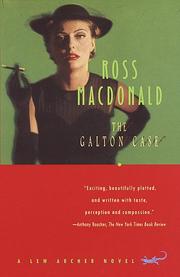
The break point of the whole series, and the first Archer novel built on Macdonald's own abandoned-father history. A missing heir turns up too conveniently; everything that follows is a variation on this.

Widely considered his masterpiece, with a final revelation that reorganises the entire book. Read it second while the Galton Case pattern is fresh, because The Chill is that pattern executed perfectly.

A boy runs from a reform school and Archer finds four adults lying about who he is. The cleanest demonstration of Macdonald's argument that crime is a family inheritance.
The Late Peak
IntermediateContinue through the books of the late sixties and early seventies, where the prose thins out and the sadness deepens.
▸ Study plan for this stage
Pace: Three to four weeks for around 750 pages. The reading gets slightly harder even though the books do not get longer: the prose thins out, the wisecracks nearly disappear, and more of the plot arrives in dialogue. Black Money is the most conventional and the quickest. The Goodbye Look has the most int
- The comedy draining out. Compare almost any page here with the tone of The Galton Case and the series has changed register while keeping the same structure.
- The Goodbye Look as the book that got Macdonald reviewed as a novelist rather than a genre writer, and the plotting that earned it: several concealed generations stacked into one case.
- Black Money as the most openly Gatsby-haunted of the novels, with a false identity, new money, and a man who has invented himself for a woman.
- The Underground Man collapsing the ecological and the familial catastrophe into one image, so the fire is not backdrop but argument.
- Archer growing more explicitly compassionate toward the young and harder on the parents, which is the closest thing to character development in the series.
- Plot delivered almost entirely through interviews, with Macdonald increasingly willing to let a minor character talk for three pages.
- Coincidence used deliberately rather than apologised for, on the theory that a small enough social world makes the improbable structural.
- The Goodbye Look hides more than one generation of crime. How many separate historical events have to be uncovered before the present-day case makes sense?
- Black Money turns on a man who has manufactured an identity. How is that different from the identity problem in The Far Side of the Dollar, which you have already read?
- In The Underground Man, what is the fire doing that a storm or an earthquake could not?
- Is Archer more sympathetic in these books than in the first three you read, or just more tired?
- Which of the six novels so far would you hand to someone who had never read Macdonald, and why not The Chill?
- Take one interview scene from The Goodbye Look and mark who is lying, who is mistaken, and who is telling a truth they do not understand. Macdonald usually runs all three at once.
- Read the opening two pages of Black Money aloud, then the opening of The Moving Target when you reach it in the next stage. Hearing the sentences is the clearest way to register the twenty-year distance.
- Keep a note of how many characters in these three books are looking for a father. Then decide whether the repetition is a limitation or the subject.
- After The Underground Man, write down what you now expect from an Archer novel. The next stage exists to test that expectation against the books he wrote before he could meet it.
Next up: Having seen the pattern at full stretch, you now have something to measure the early novels against, which is the only reason to read them in this position.

A gambler with a false identity in a Californian country-club town. The most Gatsby-haunted of the novels, and Macdonald knew it.
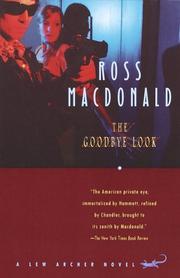
A stolen gold box, a missing boy, and the review that finally got Macdonald taken seriously as a novelist rather than a genre writer. The plotting is at its most intricate here.
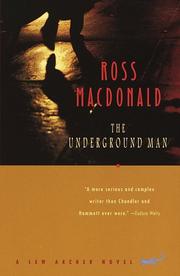
A wildfire burns through the case as Archer works it — his most ambitious book and the one where the ecological and the familial catastrophes become the same thing. Read it as the summit of the run.
Back to the Beginning
IntermediateRead the early Archer novels for what they are — fast, hard, Chandler-shaped, and a useful measure of how far he travelled.
▸ Study plan for this stage
Pace: Two to three weeks for roughly 640 pages, and the fastest reading in the path. These are lean, hard, fast novels with a joke every other page, and any of them goes down in two evenings. Read them straight through as a block rather than interleaving them with the later books. A reader who does not ca
- What this stage is for: measuring the distance travelled. These are the books Macdonald wrote before he found his subject, and they are most interesting once you know what he found.
- The Moving Target as an accomplished Chandler pastiche, with the missing millionaire, the wisecracking narrator and the swimming pool all in place, and none of the generational archaeology.
- The Drowning Pool showing the first flicker of the family-secret theme that takes over ten years later, so it reads as a rehearsal rather than an imitation.
- The Way Some People Die as the hardest-boiled book he wrote, and the strongest of the pre-1959 novels on its own terms rather than as a preview.
- Archer as an active protagonist here, taking punches and giving them, which is the clearest single difference from the listener he becomes.
- Plots that resolve on criminal conspiracy rather than family history, which is precisely what changes at The Galton Case.
- A brighter, harder postwar California, before the money in these books turns into inherited guilt.
- What does The Moving Target have that The Chill does not, and is any of it something you missed?
- Where in The Drowning Pool does the family material surface, and why does it not take over the plot the way it would twenty years later?
- The Way Some People Die is a crime novel about the heroin trade rather than a family novel. Does Archer work better or worse in it?
- How much physical violence does Archer commit in these three books compared with the six you have already read?
- If you had read these first, would you have carried on to book eight?
- Read the first chapter of The Moving Target immediately after finishing The Underground Man. The gap in sentence rhythm is obvious back to back and almost invisible otherwise.
- Count the wisecracks in any twenty pages of The Moving Target, then do the same in twenty pages of The Goodbye Look. The number is the change, stated numerically.
- In The Drowning Pool, mark the passages that could have come from a late novel. There are only a handful and finding them is the whole point of reading it here.
- Decide after The Moving Target whether you want the other two. This stage is optional by design and stopping after one is a legitimate outcome.
Next up: You have now read the two ends of the career, so the last stage fills in the hinge between them and finishes the series.
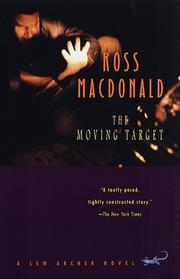
The first Archer: a missing oil millionaire and a wisecrack every other page. Enjoyable and completely unlike the late books, which is exactly why it works better read after them than before.
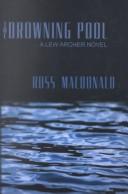
Blackmail in an oil town, and the first flicker of the family-secret theme that would take over the series ten years later. Read straight on from The Moving Target.

A missing nurse and the Los Angeles heroin trade; the best-regarded of the early novels and the hardest-boiled thing he wrote. If you only sample one pre-1959 Archer, make it this.
The Bridge Books and the End
IntermediateFill in the transition years and finish with the last novel, then decide whether to complete the remaining six yourself.
▸ Study plan for this stage
Pace: Three weeks for about 730 pages. The Doomsters is the one to read first and slowly, since it is the book immediately before the breakthrough and its interest is in watching Macdonald almost get there. The Zebra-Striped Hearse is the most straightforwardly enjoyable book in this stage and reads as fa
- The Doomsters as the immediate precursor to The Galton Case, and the first novel in which Archer admits he has been solving the wrong problem. Read in this position the leap into the next book becomes legible.
- The Zebra-Striped Hearse as the pattern working at full strength in mid-series, a father hiring Archer to prevent a marriage and getting a generation of history instead.
- The Blue Hammer as the eighteenth and last, about a painter who may have faked his own death, and a natural place to stop. Macdonald developed Alzheimer's disease shortly afterwards and wrote no more novels.
- Archer's guilt over an earlier case in The Doomsters, one of the few times the series lets him carry anything from book to book.
- The forgery and false-identity plot recurring one final time in The Blue Hammer, which by now you can recognise from four earlier novels.
- Six of the eighteen novels are not on this path. With the pattern learned and no continuity to protect, you can pick them up in any order and skip any that do not appeal.
- In The Doomsters, what has Archer been getting wrong, and how does the admission change what he does for the rest of the book?
- Read The Doomsters against The Galton Case, which you read first. What exactly is present in the later book that is missing here?
- The Zebra-Striped Hearse is often shelved beside The Chill. Do you agree, and if not, what is it missing?
- The Blue Hammer is generally judged tired. Name the specific thing that is weaker: the plotting, the prose, or Archer himself.
- Across twelve novels, has Archer changed at all, and would the series be better if he had?
- Read the last chapter of The Doomsters and the first chapter of The Galton Case back to back. Six months of writing separates them and the difference is visible in a single sitting.
- List every novel on this path that turns on a disputed or invented identity. The count is high enough to be a thesis about what Macdonald thought crime was.
- Before starting The Blue Hammer, decide whether you want a final book or would rather end on The Underground Man. Both are defensible and stopping early costs you nothing.
- Pick the two novels here you would reread, and note what they have in common. That is your answer to which of the remaining six to try.
Next up: You have read twelve of the eighteen Archer novels, including every book anyone argues about, and you now know the pattern well enough to choose the remaining six for yourself in any order you like, or to stop here with the series' best work behind you.

The novel immediately before The Galton Case, where Archer first admits he has been solving the wrong problem. Read it here and the leap in the next book becomes legible.

A father hires Archer to break up his daughter's engagement. A strong mid-series entry that sits comfortably beside The Chill.
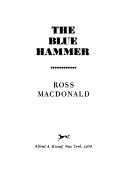
The eighteenth and last Archer, about a painter who may have faked his own death. A tired book by his standards, but the right place to stop — Macdonald developed Alzheimer's shortly after and wrote no more.
Discussion
Keep reading
Paths that share books, cover the same subject, or open a related topic.