Best Books on Legal Writing and Advocacy, in Reading Order
Legal writing is the rare professional skill where the received style is actively bad and the corrective literature is unusually good. This path starts by stripping out the inherited jargon, then builds the analytical structure that legal argument depends on, then moves to persuasion in briefs, and finishes with standing up and arguing out loud. The books are chosen so that each stage supplies a habit the next one assumes. It teaches craft, not doctrine — nothing here is legal advice or a substitute for a lawyer.
Plain Language First
BeginnerCut the inherited legalese — surplus words, nominalisations, passive constructions, doublets — and be able to write a clear declarative sentence about a legal question.
▸ Study plan for this stage
Pace: 3–4 weeks, and the only stage where the exercises matter more than the reading. Wydick's Plain English for Lawyers is 145 pages and can be read in two evenings — do not, because it is built around exercises that take longer than the text. Garner's Legal Writing in Plain English is 159 pages of fifty
- Omit surplus words — Wydick's opening rule, and the one that produces the largest measurable improvement in a first draft
- Nominalisations: 'make a determination' for 'determine', 'is in violation of' for 'violates', and how to spot the buried verb
- Lawyerly doublets and triplets — null and void, cease and desist, give devise and bequeath — and the historical accident that produced them
- Base verbs and the active voice, with the specific cases where passive is correct: when the actor is unknown, irrelevant, or deliberately being obscured
- Sentence length discipline: one main idea per sentence, and Wydick's target averages
- Williams's core principle — readers expect the main character as grammatical subject and the main action as the verb — which explains why Wydick's rules work rather than merely asserting them
- Old information before new: cohesion at sentence level and the topic-string method for diagnosing an incoherent paragraph
- Garner's coverage across document types — memos, briefs, contracts, correspondence — and the fact that the same principles apply with different tolerances in each
- What is a nominalisation, and what is the two-step procedure for repairing one?
- Wydick tells you to prefer the active voice, then lists the exceptions. Name three situations where passive is the better choice, with a reason for each.
- Williams says a sentence is clear when characters are subjects and actions are verbs. Take a sentence you find hard to read and show that the diagnosis holds.
- What is the topic-string test, and how do you apply it to a paragraph that feels disorganised but has no obvious fault?
- Which of Wydick's rules would you relax in a contract, and why? What is the drafting interest that competes with clarity there?
- Do every exercise in Wydick, in writing, and check each against his answers. This is the single highest-return task on the path and it takes about six hours.
- Take a 500-word passage from a real judicial opinion or filed brief and rewrite it to half its length without losing any legal content. Count words before and after and list which of Wydick's rules produced each cut.
- Apply Williams's topic-string diagnosis to three paragraphs of your own past writing: underline the subject of every sentence, read the resulting list, and rewrite any paragraph whose subject list is incoherent.
- Build a personal list of the twenty legalese constructions you use most and their plain replacements, drawn from Garner's fifty principles. Keep it as a find-and-replace checklist for your own drafts.
- Rewrite one paragraph three ways — for a judge, for an opposing counsel, and for a client with no legal training — and write 200 words on what changed and what could not.
Next up: Clear sentences are worthless if the analysis behind them is not organised, which is what the next stage builds.
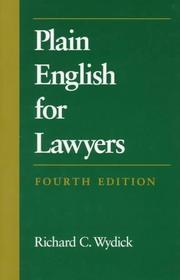
A short book of concrete rules with exercises, and the one nearly every American law school assigns. Read it first and actually do the exercises: it is the fastest measurable improvement available in this path.
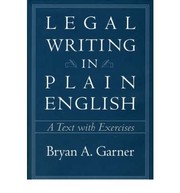
Garner's fuller treatment, organised around fifty principles with worked before-and-after examples across memos, briefs and contracts. Read it after Wydick as the expansion of the same argument into every document type you will actually produce.
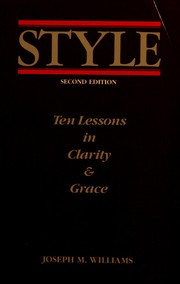
The best general book on English prose clarity, built on the idea that readers expect characters as subjects and actions as verbs. It is not a legal book, which is exactly why it belongs here — it explains why Wydick's rules work rather than only asserting them.
Reading and Structuring Legal Analysis
IntermediateLearn how lawyers read cases and how legal analysis is organised on the page — rule statements, application, counter-argument — before trying to make it persuasive.
▸ Study plan for this stage
Pace: 8–10 weeks. Reading Like a Lawyer is 285 pages, Neumann's Legal Reasoning and Legal Writing 486, and Garner's Elements of Legal Style 252. Read McKinney and Neumann in sequence; do not read Elements of Legal Style through — put it on the desk from here on and consult it while drafting, which is the
- Active case reading: reading for the court's holding, the procedural posture and the facts the court treated as material, rather than reading for the story
- The distinction between holding, dictum and the reasoning that connects them, and why the boundary is often genuinely contested
- Synthesising a rule from multiple cases where no single opinion states it, which is the central skill of the stage
- IRAC and its better-organised descendants (CREAC, the rule-explanation-application structure), and the fact that the acronym is a scaffold rather than a template
- Rule explanation as a distinct component: showing how the rule has operated in decided cases before applying it to yours
- Analogical reasoning done properly — matching on the facts the rule makes material, not on surface similarity
- The predictive memo versus the persuasive brief: same analysis, opposite stance toward adverse authority, and the professional obligation to disclose it
- Garner's Elements as a lookup reference for sentence and paragraph craft specific to legal prose — citation placement, quotation handling, headings
- Take an opinion and state its holding in one sentence at three levels of generality. Which is the honest one, and how do you tell?
- What is the difference between a rule you can quote from a case and a rule you have to synthesise from several? Give an example of each.
- Why does rule explanation come before rule application, and what specifically goes wrong when a writer skips it?
- How does the structure of a predictive memo differ from that of a brief section arguing the same issue? List every difference you can identify.
- What makes an analogy to a prior case strong? Name the failure mode of a weak analogy in one sentence.
- Brief five cases on the same legal question using McKinney's active-reading method, recording for each: procedural posture, material facts, holding, and reasoning. Then synthesise a single rule statement from all five and write 300 words defending it.
- Write a 1,500-word predictive memo on a hypothetical set of facts using your synthesised rule. Structure it explicitly as issue, rule, rule explanation, application, counter-analysis, conclusion, and label the sections in the margin.
- Take the same memo and convert it into a persuasive brief section for one side, then for the other. Note every sentence that had to change and every one that did not.
- Find a filed brief that cites an opinion you have read closely, and check the citation: does the case say what the brief says it says? Write 250 words on any gap.
- Look up ten specific drafting questions in Garner's Elements of Legal Style over the course of the stage, as they arise in your own writing, and note the answers. Using it as a reference is the exercise.
Next up: With sound analysis structured on the page, the next stage is about ordering and framing that analysis to persuade a reader who has other cases to get through.
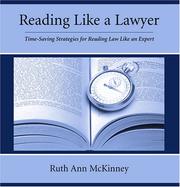
Legal writing begins with legal reading, and this book teaches the active case-reading habits that produce usable rule statements. Start here: most weak legal writing is a symptom of imprecise reading rather than of style.
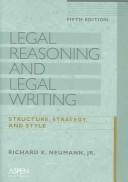
The standard text on organising analysis — how a rule is built from authority, how it is applied, and how a memo or brief section is structured around it. This is the architectural stage that the persuasion books all assume you have completed.
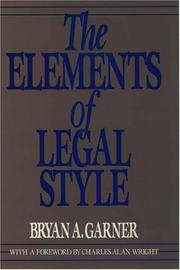
A reference on sentence and paragraph craft specific to legal prose, arranged for lookup rather than straight reading. Keep it beside you from this point forward and consult it while drafting rather than reading it through.
Briefs and Persuasion
IntermediateWrite a persuasive brief: frame an issue, order arguments by strength, use the statement of facts as advocacy, and handle adverse authority honestly.
▸ Study plan for this stage
Pace: 10–12 weeks. The Winning Brief is 456 pages arranged as roughly a hundred numbered tips and works best applied to a live draft a few tips at a time. Point Made is 377 pages built on excerpts from real filed briefs. Writing to Win is 283 pages. Garner's and Guberman's examples are drawn from American
- The deep issue statement: Garner's syllogistic, under-75-word framing that states premises and question together, which is the technique the book is best known for
- Ordering arguments by strength rather than by logical dependence, and the judgment involved when the strongest argument is not the most defensible
- The statement of facts as advocacy — selection, sequence and emphasis, all without a single unsupported assertion
- Point headings that state a proposition rather than name a topic, so that the table of contents reads as an argument
- Handling adverse authority: the ethical duty to disclose controlling contrary law, and the tactical advantage of confronting it before the other side frames it
- Guberman's reverse-engineered techniques — openers, transitions, sentence rhythm, the use of short sentences after long ones — taken from briefs by well-known advocates
- The reader's constraints — a judge or clerk with a stack of filings, reading under time pressure — which is the fact that justifies almost every rule in this stage
- Stark's coverage of the wider document set: client letters, demand letters, complaints, and the different audience each addresses
- Write a deep issue statement in Garner's form for a problem you know. Does it stay under 75 words, and does the answer follow from the premises as stated?
- When would you put your second-strongest argument first? Give a concrete situation.
- What separates a statement of facts that is advocacy from one that is misleading? State the line as precisely as you can.
- Guberman analyses openers from real briefs. What do the strongest ones have in common, and what does a weak opener typically do instead?
- You have found a controlling appellate decision squarely against your client. Set out your options in order of preference and say what each risks.
- Stark writes about letters as well as briefs. What changes when the reader is a client rather than a court?
- Take a brief you or someone else has written and run it against twenty of Garner's numbered tips, marking each as pass or fail with a note. Then revise and re-run the same twenty.
- Write five deep issue statements for five different problems, then cut each to under 75 words without losing a premise.
- Rewrite a bland statement of facts as advocacy for each side, using only facts in the record. Set the two versions side by side and identify exactly which techniques — order, emphasis, level of detail, verb choice — produced the difference.
- Take the table of contents of a real filed brief and rewrite every point heading as a full proposition. Then read the headings alone and assess whether they carry the argument.
- Pick one advocate Guberman analyses, read a full brief of theirs from a court's public docket, and write 500 words identifying five techniques Guberman names and one he does not.
- Draft a one-page demand letter and a one-page client advice letter on the same facts, following Stark, and note what each requires that a brief does not.
Next up: A written argument that has been ordered, framed and stress-tested is the material you will have to defend out loud, which is the final stage.
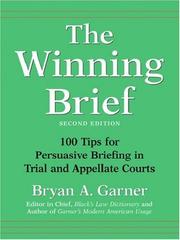
A hundred numbered tips, each with real examples and judicial commentary, covering everything from issue statements to headings. Start the stage here because it is organised as a checklist you can apply to a draft immediately.

Guberman reverse-engineers the techniques of well-known advocates from their actual filed briefs, which makes the advice concrete in a way general guidance is not. Read after Garner so you can recognise the moves rather than merely admiring them.
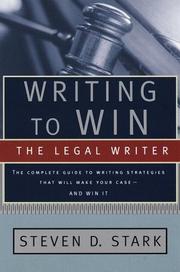
Covers the wider range of documents a practising lawyer writes — letters, memos, complaints, contracts — with a journalist's eye for audience. It closes the stage by generalising brief-writing craft to everything else on the desk.
Standing Up: Oral Argument and Trial
IntermediateMove from the page to the courtroom: structure an oral argument, handle questions from the bench, and understand the mechanics of examination at trial.
▸ Study plan for this stage
Pace: 10–12 weeks. Making Your Case is 245 pages of a hundred short rules; Mauet's Fundamentals of Trial Techniques is 400 pages and is the systematic text to work through slowly; Wellman's The Art of Cross-Examination is 224 pages and is a 1903 book. ⚠ Read Wellman knowing what it is: the rules of eviden
- Structuring an oral argument around two or three points that survive interruption, on the assumption that you will not get through your prepared sequence
- Answering the bench: answer first, then explain — and the concession you should be prepared to make before you are forced into it
- Scalia and Garner disagreeing with each other in print, which is the most useful part of the book because it marks which conventions are genuinely contested rather than settled
- The theory of the case as the organising sentence that every witness, exhibit and argument at trial must serve
- Direct examination: open questions, letting the witness carry the story, and looping to control pace without leading
- Cross-examination discipline: leading questions only, one fact per question, short questions in plain words, and never asking a question whose answer you do not know
- The rule against the one question too many, which is Wellman's most famous lesson and is illustrated by transcript rather than asserted
- Impeachment by prior inconsistent statement as a mechanical procedure — commit, credit, confront — that has to be rehearsed to be usable
- Where do Scalia and Garner actually disagree? List three disagreements and say what each reveals about the underlying convention.
- A judge interrupts your second point with a hostile question about your first. What do you do, in what order, and why?
- What is a theory of the case, and how would you test whether a proposed one is strong enough to try a case on?
- Why are leading questions forbidden on direct and required on cross? What does each rule protect?
- Wellman's examinations date from before the modern rules of evidence. Pick one and identify what would be objectionable today, and what technique still transfers.
- Set out the three-step impeachment procedure and explain what goes wrong if you skip the middle step.
- Write out a full oral argument for a problem you have briefed, then reduce it to a one-page outline of three points, then to a set of index cards. Deliver it aloud against a timer and record yourself.
- Write twenty hostile questions a judge could ask about your own argument — including the two you least want to be asked — and draft a two-sentence answer to each, answer first.
- Draft a full cross-examination of a fictional witness from a fact pattern: leading questions only, one fact per question, no question whose answer is not established in the record. Then go through it and delete every question that risks an open answer.
- Read one of Wellman's transcribed cross-examinations, mark where the examiner stops, and write 300 words on what the one additional question would have been and what it would have cost.
- Using Mauet, draft the foundation questions for admitting three different kinds of exhibit — a document, a photograph and a business record — and rehearse each aloud until it runs without notes.
- Write and deliver a five-minute opening statement, then go back through the transcript of your own delivery and mark every sentence that crossed into argument.
Next up: This is the end of the path; the natural continuations are evidence and civil procedure in depth, Garner's usage and drafting references, and — the only real substitute for the last stage — supervised practice in an advocacy programme or moot court.

A Supreme Court justice and a leading usage authority set out a hundred rules for written and oral advocacy, occasionally disagreeing with each other in print. The disagreements are the most useful part — they show which conventions are genuinely contested.
The standard trial-advocacy text: opening statements, direct and cross examination, exhibits, objections, closing. It is the systematic foundation that the next book performs on rather than explains.
The 1903 classic, built almost entirely from transcripts of famous cross-examinations. Read it last and read it as craft rather than procedure — the rules of evidence around it have changed completely, but the questioning technique is why advocates still cite it.
Discussion
Keep reading
Paths that share books, cover the same subject, or open a related topic.