Learn Turkish: the best books in order for beginners
This curriculum takes a complete beginner from zero Turkish to confident independent reading, moving through four carefully sequenced stages: first mastering the grammar system and pronunciation, then building vocabulary through structured practice, then easing into real Turkish through graded readers, and finally engaging with authentic Turkish prose. Each stage prepares the mental scaffolding needed for the next, so no step feels like a leap.
Foundations: Grammar & the Turkish System
BeginnerUnderstand Turkish sentence structure, vowel harmony, agglutination, and core grammar — the essential framework everything else hangs on.
▸ Study plan for this stage
Pace: 4–5 weeks, ~25–30 pages/day from Lewis, alternating with 15–20 pages/day from Backus for applied practice
- Turkish vowel harmony (front/back, rounded/unrounded) and its systematic application across all word forms
- Agglutination: how Turkish builds meaning by stacking suffixes rather than using separate words
- Core case system (nominative, accusative, genitive, dative, locative, ablative) and when to use each
- Verb conjugation patterns: personal endings, tense markers, and how they stack in agglutinative order
- Subject-Object-Verb (SOV) word order and how it differs from English
- The distinction between definite and indefinite objects and its grammatical consequences
- Participles and gerunds as Turkish's way of building complex sentences without relative clauses
- Postpositions and how they govern case, replacing English prepositions
- Explain vowel harmony in Turkish: what are the four vowel classes, and why does a suffix like -lar/-ler/-lar/-lır change form?
- What is agglutination, and how does it make Turkish fundamentally different from English in how it expresses grammatical meaning?
- When do you use the accusative case versus the nominative in Turkish, and why does the definiteness of the object matter?
- Describe Turkish verb conjugation: how do personal endings, tense markers, and mood suffixes stack together, and in what order?
- Why is Turkish SOV word order significant, and how does it affect where information appears in a sentence?
- What are participles and gerunds in Turkish, and how do they allow you to express ideas that English handles with relative clauses?
- From Lewis: Work through all vowel harmony drills in the early chapters; create a personal reference chart mapping vowel classes to common suffix variants (-lar/-ler, -da/-de, -dan/-den, etc.)
- Decompose 20 Turkish words from Backus into their morpheme components (root + suffixes), labeling each suffix's grammatical function
- Conjugate 10 verbs across all six persons in present tense, then repeat in past tense, noting how suffixes stack and vowel harmony applies
- Take 15 sentences from Backus and identify the subject, object, and verb; rewrite 5 of them with the object moved to different positions and note how meaning or emphasis shifts
- Create 10 sentences using each of the six cases (nominative, accusative, genitive, dative, locative, ablative) with the same noun, showing how case changes the relationship
- Convert 10 English relative clauses ('the book that I read') into Turkish participle constructions, using Backus examples as models
Next up: Mastering these foundational patterns—vowel harmony, agglutination, case, and verb structure—gives you the grammatical skeleton to hang vocabulary and real-world usage on, preparing you to move into conversational fluency and authentic text comprehension in the next stage.
The gold-standard reference grammar of Turkish by the foremost Western scholar of the language. Start here to understand how Turkish actually works at a structural level — vowel harmony, suffixes, and verb conjugation explained with precision.
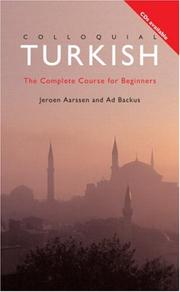
A practical, dialogue-driven course that complements Lewis's grammar with real conversational patterns and exercises. Reading it after Lewis means you can immediately map spoken structures onto the grammar rules you've just learned.
Building Blocks: Vocabulary & Structured Practice
BeginnerExpand core vocabulary to ~1,500–2,000 words and internalize high-frequency patterns through systematic, structured practice.
▸ Study plan for this stage
Pace: 8–10 weeks, ~40–50 pages/day with daily practice sessions (15–20 minutes vocabulary drills, 20–30 minutes grammar exercises, 15–20 minutes listening/speaking repetition)
- Core vocabulary acquisition (~1,500–2,000 high-frequency words) organized by semantic fields (family, food, daily activities, numbers, time, directions, shopping)
- Turkish grammar fundamentals: noun cases (nominative, accusative, genitive, locative, ablative, instrumental), verb conjugation in present and past tenses, agglutination and suffix stacking
- Sentence construction patterns: subject-object-verb (SOV) word order, question formation with -mi/-mı/-mu/-mü particles, negation with -me/-ma
- Listening comprehension and pronunciation: vowel harmony, stress patterns, and phonetic distinctions unique to Turkish
- Structured dialogue practice: survival phrases for greetings, introductions, asking for directions, ordering food, and basic social interactions
- Pattern recognition and productive use: applying learned suffixes and grammatical rules to generate new sentences from known vocabulary
- Cultural context: understanding how Turkish social conventions (formal vs. informal address, politeness markers) embed in language structure
- Can you conjugate regular and common irregular verbs in the present and simple past tenses, and explain how Turkish verb suffixes stack to create meaning?
- How do Turkish noun cases (nominative, accusative, genitive, locative, ablative, instrumental) change word endings, and when do you use each case in a sentence?
- What is vowel harmony, and how does it affect the suffixes you add to Turkish words?
- Can you construct and respond to basic Turkish questions about identity, location, time, and daily activities using correct word order and case agreement?
- How do you form negations and questions in Turkish, and what is the role of particles like -mi/-mı/-mu/-mü and -me/-ma?
- Can you recognize and use 1,500–2,000 high-frequency Turkish words across common semantic domains (family, food, numbers, directions, shopping, professions)?
- Daily vocabulary drills: flashcard sets (Anki or paper) organized by semantic field; aim for 15–20 new words per day with spaced repetition of previously learned words
- Grammar pattern practice: complete fill-in-the-blank exercises from the textbook focusing on one grammatical concept per session (e.g., accusative case, present tense conjugation, question particles)
- Dialogue memorization and role-play: memorize 5–10 key dialogues from the textbook and practice speaking them aloud daily; then adapt them by substituting vocabulary to create variations
- Listening and repetition: use the textbook's audio files (if included) or supplementary Turkish audio resources to listen to native speakers and repeat sentences for pronunciation and intonation
- Written sentence construction: write 10–15 original sentences daily using newly learned vocabulary and grammar patterns, focusing on correct case endings and verb conjugation
- Case and suffix application drills: given a base word, generate all six case forms and apply common suffixes (diminutive, plural, possessive) to internalize agglutination
- Translation exercises: translate simple English sentences into Turkish and vice versa, checking against answer keys to reinforce vocabulary and grammar accuracy
Next up: Mastery of foundational vocabulary, case systems, and verb conjugation equips you to move into the next stage—reading authentic texts, engaging in real-world conversations, and tackling more complex grammatical structures (conditional, subjunctive, passive voice) with confidence.
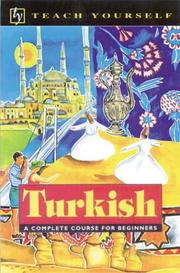
A structured course with audio-linked dialogues, vocabulary lists, and progressive exercises. At this stage it serves as a vocabulary-building engine, exposing you to high-frequency words in meaningful contexts.
Transition: Graded & Simplified Reading
IntermediateRead simplified and graded Turkish texts fluently, building reading stamina and encountering natural Turkish sentence rhythm for the first time.
▸ Study plan for this stage
Pace: 4–5 weeks, ~25–30 pages/day (approximately 150–180 pages total)
- Recognizing and processing Turkish sentence structure in context without translation
- Building automaticity with common Turkish verb conjugations and tense markers in graded passages
- Understanding Turkish narrative rhythm and natural word order through repeated exposure
- Identifying and inferring meaning from context clues in simplified but authentic Turkish prose
- Developing reading stamina by sustaining attention through longer, coherent passages
- Distinguishing between formal and informal register in graded texts
- Recognizing morphological patterns (suffixes, agglutination) as meaning-making devices in running text
- Can you read a full page of Elementary Turkish aloud with natural pacing and without mentally translating each word?
- What strategies do you use to infer the meaning of unfamiliar words from context in a graded passage?
- How do Turkish verb endings and case markers function to convey meaning in a complete sentence?
- Can you summarize the plot or main idea of a passage from Elementary Turkish in Turkish or English without referring back to the text?
- What differences do you notice between the formal Turkish in instructional sections and the more natural Turkish in narrative passages?
- How has your reading speed and comprehension improved from the beginning to the end of this book?
- Read 2–3 pages aloud daily, focusing on maintaining natural rhythm and not pausing at every word
- After each reading session, write a 3–5 sentence summary in Turkish of what you just read
- Create a personal vocabulary log of new words encountered in context, noting the sentence where you found them
- Retell a short passage from memory (in Turkish or English) without looking back at the text
- Identify and underline all verb forms on a single page, then note their tense/mood based on endings
- Read the same passage twice: first for gist, then for detailed comprehension, and compare your understanding
- Write simple questions about a passage and answer them in complete Turkish sentences
- Time yourself reading a passage at the start and end of the week to track reading speed improvement
Next up: Mastering fluent reading of graded Turkish texts equips you with the confidence and automaticity needed to transition to authentic, unsimplified Turkish materials where you'll encounter natural complexity, varied registers, and real-world vocabulary without the scaffolding of simplified grammar.

A classic American university textbook with carefully graded reading passages that bridge the gap between grammar exercises and real texts. The passages grow in complexity chapter by chapter, making it ideal for this transitional stage.
Authentic Turkish: Literature & Real Prose
ExpertRead authentic, unabridged Turkish literary prose, engage with a Nobel Prize-winning author's style, and reach genuine independent reading ability.
▸ Study plan for this stage
Pace: 8–10 weeks, ~25–30 pages/day (approximately 200–250 pages total; allows time for re-reading complex passages and linguistic analysis)
- Sabahattin Ali's modernist prose style: fragmented narrative, stream-of-consciousness, and psychological depth in early 20th-century Turkish literature
- Lexical and syntactic complexity in unabridged Turkish: archaic vocabulary, regional dialect, colloquialisms, and literary registers beyond textbook Turkish
- Thematic analysis of 'İçimizdeki Şeytan': alienation, moral ambiguity, psychological conflict, and the tension between individual desire and social constraint
- Narrative technique and character development: how Ali constructs unreliable narrators and explores internal contradictions without explicit authorial judgment
- Cultural and historical context: 1920s–1930s Turkish society, the early Republican period, and how literature reflects social transformation
- Inferential reading: deriving meaning from subtext, symbolism, and implicit cultural references rather than explicit exposition
- Stylistic variation and register: recognizing when Ali shifts between formal narration, dialogue, interior monologue, and poetic description
- What are the central psychological conflicts driving the protagonist in 'İçimizdeki Şeytan,' and how does Ali reveal them through narrative technique rather than direct exposition?
- How does Sabahattin Ali's prose style differ from contemporary Turkish literature or textbook Turkish? Identify specific examples of archaic, colloquial, or regionally marked language and explain their effect.
- What role does the historical and social context of 1920s–1930s Turkey play in shaping the moral and existential dilemmas presented in the novel?
- How does Ali use unreliable narration and ambiguity to explore themes of alienation and moral ambiguity? Cite specific passages.
- What symbolic or metaphorical significance do key objects, settings, or recurring images carry in the novel?
- How would you characterize Ali's treatment of desire, morality, and social conformity? What is his implicit critique or perspective?
- Close reading: Select 3–5 passages (1–2 pages each) that exemplify Ali's modernist style. Annotate them for syntax, vocabulary, tone shifts, and narrative perspective. Translate difficult sentences into contemporary Turkish or English to clarify meaning.
- Vocabulary and register journal: Maintain a running list of archaic, colloquial, or unfamiliar words encountered in the novel. For each, note the page, context, standard modern equivalent (if applicable), and the emotional or stylistic effect of Ali's choice.
- Character analysis essay (1,500–2,000 words): Trace the psychological development of the protagonist across the novel. Use textual evidence to argue how internal conflict manifests in behavior, relationships, and moral choices.
- Comparative stylistic analysis: Read a short story or essay by a contemporary Turkish author (e.g., Ahmet Hamdi Tanpınar or Yakup Kadri Karaosmanoğlu) and write a 1,000-word comparison of narrative technique, vocabulary, and thematic concerns with 'İçimizdeki Şeytan'.
- Dialogue reconstruction: Identify 2–3 key dialogue scenes. Rewrite them in modern colloquial Turkish, then reflect in writing on what nuance or authenticity is lost or gained.
- Historical context research: Write a 1,000-word essay on a specific aspect of 1920s–1930s Turkish society (e.g., urbanization, gender roles, intellectual ferment) and explain how it illuminates a major theme or conflict in the novel.
Next up: Mastery of 'İçimizdeki Şeytan' establishes your ability to navigate unabridged, psychologically complex Turkish prose and prepares you to engage with multiple literary voices and experimental forms in subsequent advanced texts.

One of the most beloved and widely read Turkish novels, written in clear, accessible modern Turkish prose. Sabahattin Ali's straightforward style makes this the ideal first authentic literary novel for an advanced learner.

Pamuk's Nobel Prize-winning novel, written in rich but readable modern Turkish. Having built up to this point, the learner can now engage with one of the greatest living Turkish writers in his own language — the ultimate milestone of this curriculum.
Discussion
Keep reading
Paths that share books, cover the same subject, or open a related topic.