Learn Dutch: a beginner reading path to real fluency
This curriculum takes a complete beginner from zero Dutch to confident independent reading, moving through grammar foundations and self-study method, into structured vocabulary building, then graded readers of increasing difficulty, and finally authentic everyday Dutch texts. Each stage builds directly on the last, so no step feels like a leap.
Foundations: Grammar & Self-Study Method
BeginnerUnderstand Dutch sentence structure, core grammar rules, and establish a reliable self-study routine from day one.
▸ Study plan for this stage
Pace: 4–5 weeks, ~25–30 pages/day, with 2–3 review days per week
- Dutch sentence structure: word order in main clauses, subordinate clauses, and questions (SVO vs. V2 patterns)
- Noun gender (common, neuter) and its impact on articles (de, het) and adjective agreement
- Verb conjugation: present tense regular and irregular verbs, and the infinitive form
- Pronoun system: personal pronouns (ik, je, hij, zij, etc.) and their use in different contexts
- Basic adjective and adverb formation, including comparative and superlative forms
- Tense fundamentals: present, simple past (preterite), and present perfect with hebben/zijn
- Establishing a self-study routine: active note-taking, spaced repetition, and daily practice habits from Colloquial Dutch's methodology
- How does Dutch word order differ between main clauses and subordinate clauses, and why is the V2 rule important?
- What are the three noun genders in Dutch, and how do articles and adjective endings change based on gender and case?
- How do you conjugate regular and common irregular verbs (zijn, hebben, gaan) in the present tense?
- What is the difference between the simple past (preterite) and present perfect in Dutch, and when would you use each?
- How do you form comparative and superlative adjectives and adverbs in Dutch?
- What self-study habits and techniques from Colloquial Dutch will you apply to maintain consistent progress after this stage?
- Complete all grammar exercises in Colloquial Dutch chapters 1–8, focusing on sentence construction and verb conjugation drills
- Create a personal grammar reference sheet with Dutch sentence structure rules, verb conjugation tables, and noun gender patterns; update it weekly
- Write 10–15 short sentences daily (3–5 sentences per grammar topic covered that day) using new structures from Colloquial Dutch, then review and correct them
- Practice the dialogues in Colloquial Dutch aloud daily (5–10 minutes), paying attention to word order and verb placement in natural speech
- Build a spaced-repetition flashcard deck (using Anki or paper cards) with: noun + article + gender, irregular verb forms, and key sentence patterns from each chapter
- Conduct a weekly self-assessment: choose 2–3 grammar points from the week, write 5 example sentences for each, and identify any patterns you're still struggling with
- Record yourself speaking short responses to the comprehension questions in Colloquial Dutch, then listen back to check for word-order errors and verb placement
Next up: Mastering Dutch grammar foundations and establishing a disciplined self-study routine here prepares you to move into conversational practice and vocabulary expansion, where you'll apply these structural rules to real-world dialogues and authentic texts with confidence.

A structured self-study course with dialogues, grammar explanations, and exercises that trains you to read and understand everyday Dutch from the very beginning, complementing the grammar reference perfectly.
Vocabulary & Core Language Building
BeginnerAcquire the most frequent Dutch words and phrases needed for reading simple texts with growing independence.
▸ Study plan for this stage
Pace: 4–5 weeks, ~25–30 pages/day (alternating between grammar foundations and practical vocabulary application)
- Dutch noun gender (common/neuter) and article usage (de/het/een)
- Regular and irregular verb conjugation in present and past tenses
- Fundamental word order patterns: main clauses, subordinate clauses, and verb-final constructions
- Essential vocabulary clusters: numbers, time expressions, common verbs, and everyday nouns
- Adjective agreement with noun gender and number
- Prepositions and their role in spatial and temporal relationships
- Sentence construction from simple statements to compound and complex structures
- How do you determine whether a Dutch noun takes 'de' or 'het', and why does this matter for reading comprehension?
- What are the main differences between regular and irregular verb conjugation in Dutch, and can you conjugate at least 10 common verbs in present and past tense?
- How does Dutch word order change between main clauses and subordinate clauses, and why is this critical for parsing longer sentences?
- Can you identify and use the 200–300 most frequent Dutch words in context, including numbers, time expressions, and basic verbs?
- How do adjectives change form based on noun gender and number, and what role does the article play in determining adjective endings?
- What are the most common prepositions in Dutch, and how do they function in spatial, temporal, and other relationships?
- Complete all grammar exercises in Shetter's 'Dutch - An Essential Grammar' focusing on articles, noun gender, and verb conjugation
- Create a personal vocabulary log organized by semantic field (food, family, time, location, action verbs) with 50–75 words from 'Basic Dutch', using each word in a sample sentence
- Conjugate 15 common Dutch verbs (zijn, hebben, gaan, doen, zeggen, kunnen, willen, moeten, etc.) across present and past tense in all persons
- Translate 20–30 simple English sentences into Dutch using only vocabulary and structures from the two books, then check against provided answer keys
- Read aloud 5–10 short passages from 'Basic Dutch' daily, focusing on pronunciation and intonation while tracking comprehension
- Build 10–15 short dialogues (3–5 exchanges each) using high-frequency phrases from both books, then practice speaking them aloud or with a language partner
- Complete word-order drills: reorder scrambled Dutch sentences to practice main clause vs. subordinate clause patterns
- Create flashcards for 100+ core vocabulary items with gender markers and example sentences; review daily using spaced repetition
Next up: Mastery of core vocabulary, article-noun agreement, and basic sentence patterns equips you to move into the next stage—reading authentic simple texts and building conversational fluency—with the grammatical and lexical foundation needed to recognize and produce increasingly complex structures.

A concise but thorough grammar consolidation that reinforces what you learned in stage one and fills gaps, preparing you to handle more varied sentence patterns in reading.

Workbook-style exercises tied to high-frequency vocabulary and structures cement active recall, bridging passive grammar knowledge into reading fluency.
Graded Reading: Easy Texts
BeginnerRead short, controlled Dutch texts comfortably, building reading stamina and confidence with authentic-feeling material.
▸ Study plan for this stage
Pace: 4–5 weeks, ~15–20 pages/day (approximately 1–2 short stories per week)
- Recognizing and understanding high-frequency Dutch vocabulary in narrative context
- Identifying present and past tense verb forms in authentic short story passages
- Extracting main ideas and key details from simple Dutch narratives without translating every word
- Understanding common Dutch sentence structures and word order patterns through repeated exposure
- Building reading fluency by processing Dutch text at a natural pace rather than word-by-word
- Recognizing cultural and contextual clues that aid comprehension in short story settings
- Developing confidence to read longer passages independently while tolerating some ambiguity
- What is the main event or conflict in the short story you just read, and how is it resolved?
- Which high-frequency verbs and nouns appear repeatedly across multiple stories, and what do they mean?
- Can you identify whether a passage is written in present or past tense, and what clues helped you recognize it?
- What can you infer about a character's feelings or intentions from the context, even if you didn't know every word?
- How does the story's setting or cultural context help you understand what is happening?
- Can you retell the story in simple Dutch or English without looking back at the text?
- Read one complete short story from 'Short Stories in Dutch for Beginners' without stopping to look up words; note unfamiliar words and check them only after finishing
- Create a simple timeline or storyboard of the main events in each story, labeling key moments in Dutch
- Write a 3–5 sentence summary of each story in simple Dutch, using only vocabulary you encountered in the text
- Identify and list all present-tense and past-tense verb forms in a single story; note the infinitive form of each
- Read one story aloud, focusing on natural pacing and intonation rather than perfect pronunciation
- Discuss or write answers to comprehension questions about each story (if provided in the book) without re-reading the full text first
- Create flashcards for 10–15 new high-frequency words from each story and review them daily across all stories
- Retell a story to a language partner or record yourself summarizing it in Dutch without reading from the text
Next up: Mastering these accessible, graded stories equips you with a solid foundation of authentic Dutch vocabulary, sentence patterns, and reading confidence—preparing you to tackle longer, less controlled texts with greater independence and comprehension in the next stage.

Eight compelling short stories written in controlled, beginner-friendly Dutch with vocabulary support, giving you your first experience of reading extended Dutch prose for pleasure.
Intermediate Graded Readers & Simple Authentic Texts
IntermediateHandle longer, more complex Dutch narratives and begin reading texts written for native speakers with manageable support.

Bridges the grammar gap between beginner and intermediate reading, introducing subordinate clauses, modal verbs, and more complex structures you will encounter in real Dutch texts.
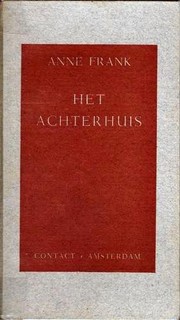
Written in clear, personal, diary-style Dutch by a young writer, this iconic text is highly readable for intermediate learners and exposes you to authentic, unedited everyday Dutch prose.
Confident Reading: Everyday & Contemporary Dutch
ExpertRead contemporary Dutch literature and non-fiction written for native speakers with confidence and genuine comprehension.
▸ Study plan for this stage
Pace: 12–14 weeks, ~40–50 pages/day (accounting for re-reading passages and note-taking)
- Narrative complexity in Dutch literature: handling multiple timelines, perspectives, and metafictional elements (as in Mulisch's layered storytelling)
- Idiomatic and colloquial Dutch in contemporary prose: recognizing and understanding informal speech, regional variations, and period-specific language
- Literary themes in post-war Dutch culture: existentialism, love, mortality, artistic creation, and the search for meaning in modern life
- Stylistic variation between authors: contrasting Mulisch's philosophical, dense prose with Wolkers' sensual, emotionally direct narrative voice
- Cultural and historical context: understanding Dutch society, intellectual traditions, and the literary canon reflected in these canonical works
- Close reading skills: analyzing symbolism, metaphor, and structural choices that convey deeper meaning beyond surface plot
- Vocabulary expansion in specialized domains: philosophical terminology, artistic language, and intimate/emotional vocabulary
- How does Mulisch use the structure of 'De ontdekking van de hemel' (with its multiple narrative frames and the role of the angels) to explore themes of fate, free will, and artistic creation?
- What is the significance of the title 'Turks fruit' in Wolkers' novel, and how does the sensuality and physicality of the prose style reinforce the novel's central concerns about love and mortality?
- Identify and explain three examples of idiomatic or colloquial Dutch from either text that would be difficult to understand through literal translation alone.
- How do the two novels differ in their approach to depicting human relationships and emotional experience, and what does this reveal about different strands of Dutch literary tradition?
- What role does the historical and cultural context of the Netherlands (post-war society, intellectual climate, artistic movements) play in shaping the themes and concerns of these works?
- Analyze a passage of symbolic or metaphorical significance from either novel and explain how the language choices contribute to its meaning.
- Read 'De ontdekking van de hemel' in full (weeks 1–7), keeping a reading journal that tracks the multiple narrative threads, character relationships, and recurring symbols (the angels, the letters, the painting). Note moments where the narrative structure surprises or challenges you.
- Create a detailed timeline or mind map of 'De ontdekking van de hemel' showing how past and present narratives intersect; identify how Mulisch uses this structure to build meaning.
- Read 'Turks fruit' in full (weeks 8–12), annotating passages that strike you as particularly sensual, emotionally raw, or linguistically distinctive. Compare the tone and style to Mulisch.
- Compile a personal glossary of 15–20 idiomatic expressions, colloquialisms, or culturally-specific terms from both texts (e.g., Dutch attitudes toward love, art, or mortality) with explanations of their significance.
- Write a comparative essay (1,500–2,000 words) analyzing how Mulisch and Wolkers each approach the theme of love and human connection, using specific textual evidence from both novels.
- Select one chapter or section from each novel and perform a detailed stylistic analysis, examining sentence structure, vocabulary choices, imagery, and tone to articulate the differences between the two authors' voices.
Next up: Mastering these two canonical Dutch novels—one philosophically complex and formally innovative, the other emotionally direct and sensually vivid—equips you to engage with diverse voices in contemporary and classical Dutch literature, preparing you to read independently across genres and periods with critical sophistication.
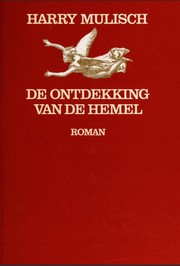
One of the most celebrated modern Dutch novels, written in rich but accessible prose — reaching this text signals true reading independence and exposes you to the full range of literary Dutch.

A landmark of Dutch literature with vivid, direct, colloquial language that trains you to read the kind of informal, expressive Dutch you will encounter in newspapers, blogs, and everyday life.
Discussion
Keep reading
Paths that share books, cover the same subject, or open a related topic.