Learn Norwegian: The Best Books to Study, in Order
This curriculum takes a complete beginner from zero Norwegian to conversational fluency by moving through four carefully sequenced stages: building a phonetic and grammatical foundation, expanding vocabulary and reading ability, deepening grammar and listening comprehension, and finally achieving near-native fluency through authentic Norwegian texts and advanced conversation practice. Each stage builds directly on the last, ensuring no gaps in grammar, vocabulary, or pronunciation.
Stage 1 – First Steps: Sound, Script & Survival
BeginnerUnderstand how Norwegian sounds, master the alphabet and basic pronunciation, and handle simple everyday phrases and sentences with confidence.
▸ Study plan for this stage
Pace: 4–5 weeks, ~20–25 pages/day (approximately 140–175 pages total from "Teach Yourself Norwegian Complete Course")
- Norwegian phonetic system: vowels, consonants, and diphthongs with accurate pronunciation patterns
- The Norwegian alphabet and letter-sound correspondences, including special characters (æ, ø, å)
- Stress patterns and intonation in Norwegian words and phrases
- Basic sentence structure: subject-verb-object word order and simple present tense conjugation
- Essential survival vocabulary: greetings, introductions, numbers, days, months, and common courtesies
- Fundamental grammar: gender (common/neuter), definite and indefinite articles, and basic noun-adjective agreement
- Practical listening and speaking skills for everyday interactions and simple conversations
- How do Norwegian vowels and consonants differ from English, and how do you pronounce the special characters æ, ø, and å?
- What are the main stress and intonation patterns in Norwegian, and how do they affect word meaning?
- Can you introduce yourself, ask someone's name, and exchange basic greetings in Norwegian?
- How does Norwegian word order work in simple sentences, and what are the basic present tense verb forms?
- What are the three grammatical genders in Norwegian, and how do articles and adjectives change accordingly?
- How do you count, tell time, and reference days and months in Norwegian?
- Phonetic drills: Repeat the vowel and consonant sounds from the course daily, focusing on æ, ø, å, and the 'kj' and 'skj' sounds until they feel natural
- Alphabet mastery: Write out the full Norwegian alphabet multiple times and practice recognizing each letter in isolation and within words
- Dialogue memorization: Memorize and recite the introductory dialogues from the course (greetings, introductions, basic courtesies) until you can perform them fluently without notes
- Number and time practice: Write out numbers 0–100 and practice saying them aloud; then practice telling time and naming all days and months in sequence
- Sentence building: Construct 10–15 simple present-tense sentences using the subject-verb-object pattern, focusing on correct verb conjugation and article agreement
- Listening and shadowing: Use the course audio to listen to native speakers, then shadow (repeat aloud simultaneously) at least 5 short phrases or sentences daily
- Gender and article drills: Create flashcards for 20–30 common nouns with their correct articles and genders, then quiz yourself until you can recall them instantly
Next up: This stage equips you with the phonetic foundation, alphabet mastery, and basic grammatical structures needed to move into Stage 2, where you'll expand your vocabulary, deepen your understanding of verb tenses, and begin constructing more complex sentences for real-world conversations.

The single best all-in-one beginner course for English speakers: it introduces pronunciation, the Latin alphabet with Norwegian special characters (æ, ø, å), core grammar, and survival vocabulary in a structured, self-study-friendly format. Start here to get a solid, broad foundation before going deeper into any one skill.
Stage 2 – Building Blocks: Vocabulary & Reading
BeginnerAcquire a working vocabulary of 1,500–2,000 words, read simple Norwegian texts independently, and begin forming grammatically correct sentences in writing and speech.
▸ Study plan for this stage
Pace: 8–10 weeks, ~25–30 pages/day, with 2–3 days per week dedicated to vocabulary drills and written exercises
- Core vocabulary acquisition (1,500–2,000 high-frequency words) through thematic units in Colloquial Norwegian
- Present tense verb conjugation and basic sentence structure for forming grammatically correct statements and questions
- Reading comprehension of simple, everyday dialogues and short texts in Norwegian
- Practical listening and speaking skills through colloquial expressions and conversational patterns
- Writing simple sentences and short paragraphs using acquired vocabulary and grammar rules
- Understanding Norwegian pronunciation and intonation patterns to support both reading and speaking fluency
- Can you identify and use 1,500–2,000 common Norwegian words across everyday topics (greetings, food, family, travel, shopping)?
- How do you conjugate regular and common irregular verbs in the present tense, and can you form grammatically correct statements and questions?
- Can you read and comprehend simple Norwegian texts (dialogues, short narratives, advertisements) without translating every word?
- Can you hold a basic conversation in Norwegian using colloquial expressions and everyday phrases from Colloquial Norwegian?
- Can you write short paragraphs (5–8 sentences) in Norwegian about familiar topics with correct grammar and appropriate vocabulary?
- How do Norwegian pronunciation rules and intonation patterns affect meaning, and can you apply them when reading aloud?
- Complete all vocabulary exercises in Colloquial Norwegian, organizing new words by thematic units (e.g., food, family, travel) and review them daily using flashcards or spaced repetition software
- Work through all dialogues in the book: read aloud for pronunciation practice, then translate key phrases, and finally recreate the dialogue from memory
- Write 3–4 short paragraphs per week (150–200 words each) on topics covered in Colloquial Norwegian (e.g., 'My Daily Routine,' 'A Trip to the Market,' 'My Family'), focusing on correct verb conjugation and sentence structure
- Practice present tense verb conjugation drills: conjugate 10–15 regular and irregular verbs daily, then use each in a complete sentence
- Read and summarize one short text or dialogue from Colloquial Norwegian per day in your own words (in Norwegian if possible, or English as a bridge)
- Engage in speaking practice: record yourself reading dialogues aloud, compare your pronunciation to native speaker audio (if available with the book), and repeat until natural
Next up: This stage equips you with a solid foundation of everyday vocabulary, present tense grammar, and reading fluency in simple texts—essential prerequisites for Stage 3, where you'll tackle more complex grammar (past and future tenses, subordinate clauses) and progress to longer, more sophisticated Norwegian texts.
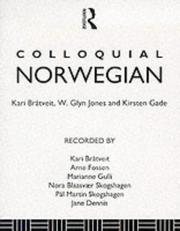
Picks up where Teach Yourself leaves off by focusing on natural, colloquial spoken Norwegian — the kind you actually hear in Norway. Its dialogues and exercises bridge the gap between textbook grammar and real conversation, making vocabulary stick through context.
Stage 4 – Fluency: Authentic Texts & Advanced Conversation
ExpertRead authentic Norwegian literature and non-fiction with ease, understand regional accents and informal speech, and communicate with near-native fluency and cultural nuance.
▸ Study plan for this stage
Pace: 8–10 weeks, ~40–50 pages/day (alternating between the two books), with 2–3 days per week dedicated to supplementary listening and conversation practice
- Philosophical and abstract vocabulary: engaging with Gaarder's exploration of Western philosophy, metaphysics, and existential questions through Norwegian prose
- Literary narrative techniques: understanding frame narratives, epistolary elements, and philosophical dialogue as employed in 'Sofies verden'
- Colloquial and minimalist language: mastering the sparse, conversational style of Loe's 'Naiv, super' and its use of humor, irony, and cultural commentary
- Regional and informal speech patterns: recognizing dialectal variations, slang, and contemporary colloquialisms in both texts
- Cultural nuance and subtext: interpreting Norwegian humor, social commentary, generational perspectives, and implicit cultural references
- Advanced grammar in context: passive constructions, subjunctive moods, complex subordination, and stylistic variation across philosophical and minimalist prose
- Reading for inference and ambiguity: developing comfort with texts that leave meaning open-ended or rely on cultural knowledge
- Authentic listening comprehension: tracking regional accents and natural speech rhythms through film adaptations and author interviews
- What is the central philosophical question that drives 'Sofies verden,' and how does Gaarder use the frame narrative to explore it?
- How does the epistolary structure in 'Sofies verden' (the letters from Alberto Knox) serve both narrative and pedagogical purposes?
- What is the tone and narrative voice of 'Naiv, super,' and how does Loe's minimalist style differ from Gaarder's more elaborate philosophical prose?
- Identify three examples of Norwegian cultural humor or social commentary in 'Naiv, super' and explain their significance
- What regional or colloquial Norwegian expressions appear in both texts, and what do they reveal about contemporary spoken Norwegian?
- How do both authors use irony and understatement as literary devices, and what does this reveal about Norwegian cultural values?
- Read 'Sofies verden' in 4–5 weeks (40–50 pages/day): annotate philosophical concepts and unfamiliar vocabulary; keep a glossary of abstract terms related to epistemology, metaphysics, and ethics
- Watch the 1997 film adaptation of 'Sofies verden' (in Norwegian with subtitles) after completing the book; note how dialogue differs from written prose and identify regional accents
- Read 'Naiv, super' in 3–4 weeks (40–50 pages/day): highlight colloquialisms, slang, and humor; write brief reflections on how Loe's style contrasts with Gaarder's
- Conduct a comparative analysis essay (1,500–2,000 words): contrast the philosophical depth of 'Sofies verden' with the minimalist social critique of 'Naiv, super'; discuss how each author uses language to achieve their aims
- Listen to author interviews or podcasts featuring Jostein Gaarder and Erlend Loe (in Norwegian); transcribe key passages and practice shadowing their speech patterns
- Participate in a book club discussion (in Norwegian) with native speakers or advanced learners; prepare talking points about themes, characters, and cultural context from both texts
Next up: Mastery of these two canonical Norwegian texts—one philosophical and elaborate, one contemporary and minimalist—equips you to independently navigate any Norwegian literary or non-fiction work, recognize stylistic variation, and engage in nuanced cultural discussion, preparing you for specialized reading (literary criticism, journalism, or domain-specific texts) and near-native conversational fluen

Sophie's World is one of the most famous Norwegian novels ever written and is beloved for its clear, accessible prose — making it the ideal first full novel to read in Norwegian. Its philosophical narrative introduces sophisticated vocabulary and sentence structures in an engaging story, pushing your reading ability to an advanced level.

Loe's cult classic is written in a deliberately simple, conversational style that mirrors how modern Norwegians actually speak and think. Reading it after Gaarder exposes you to informal registers, contemporary slang, and the rhythms of everyday Norwegian speech — the final bridge to natural fluency.
Discussion
Keep reading
Paths that share books, cover the same subject, or open a related topic.