Learn Ukrainian: Best Books and Textbooks in Order
This curriculum takes a complete beginner from the Ukrainian alphabet and basic phrases all the way to confident reading and grammatical fluency, using proven textbooks, grammars, and graded readers. Each stage builds directly on the last — script and survival language first, then structured grammar, then reading practice, and finally reference-level mastery for consolidation.
Core Grammar & Vocabulary Building
BeginnerUnderstand Ukrainian's case system, verb conjugation, and aspect, and build a working vocabulary of ~1,000–1,500 words.
▸ Study plan for this stage
Pace: 8–10 weeks, ~20–25 pages/day with daily grammar drills
- The seven-case system of Ukrainian (nominative, genitive, dative, accusative, instrumental, locative, vocative) and how case endings change nouns, adjectives, and pronouns
- Present, past, and future tense formation in Ukrainian, including regular and irregular verb patterns
- Perfective vs. imperfective aspect and how it shapes verb meaning and usage
- Gender agreement rules (masculine, feminine, neuter) and their impact on adjectives, past tense, and pronouns
- Core vocabulary clusters (~1,000–1,500 words) organized by frequency and semantic fields (family, daily activities, food, numbers, time)
- Prepositions and their case government—which cases follow which prepositions
- Sentence structure and word order patterns in Ukrainian declarative and interrogative sentences
- How do the seven cases function in Ukrainian, and what grammatical role does each case typically express (e.g., genitive for possession, dative for indirect objects)?
- What is the difference between perfective and imperfective aspect, and how do you recognize and use each in context?
- How do you conjugate regular verbs in the present, past, and future tenses, and what are the main irregular verbs you must memorize?
- How do gender and number agreement work in Ukrainian, and how do they affect adjectives, pronouns, and past-tense verb forms?
- What are the most common prepositions in Ukrainian, and which cases do they govern?
- How does word order in Ukrainian differ from English, and what are the typical patterns for statements and questions?
- Complete all declension tables in 'Modern Ukrainian' for nouns, adjectives, and pronouns across all seven cases; write out 5–10 example sentences for each case to internalize the patterns
- Conjugate 20–30 high-frequency verbs (both perfective and imperfective pairs) across present, past, and future tenses; create flashcards with aspect pairs (e.g., читати/прочитати) and use them daily
- Build a personal vocabulary notebook organized by semantic field (family, food, numbers, time, common verbs); aim to add 15–20 new words per day and review previous entries weekly
- Translate 10–15 short sentences from English to Ukrainian daily, focusing on correct case endings and verb forms; have a native speaker or tutor review for accuracy
- Parse 3–5 sentences from 'Modern Ukrainian' by identifying the case of each noun/adjective, the tense and aspect of each verb, and the gender/number agreement; write explanations for each choice
- Write 5–10 short paragraphs (3–4 sentences each) about familiar topics (your family, daily routine, favorite food) using varied cases, tenses, and aspects; revise based on feedback
- Create a preposition reference sheet mapping each common preposition to its governing case(s) with 2–3 example sentences; test yourself weekly
- Listen to and transcribe 2–3 short Ukrainian dialogues or audio clips from the book; identify case forms, verb tenses, and aspect in context
Next up: Mastery of the case system, verb conjugation, and aspect—combined with a solid 1,000–1,500 word vocabulary—provides the grammatical foundation and lexical base needed to move into conversational fluency, where you'll practice real dialogues, idiomatic expressions, and more complex sentence structures.
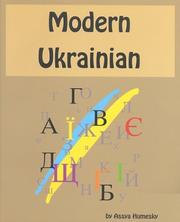
The natural continuation of the same author's beginner course, deepening grammar coverage and expanding vocabulary through longer reading passages and more complex exercises.
Intermediate Grammar Consolidation
IntermediateSolidify and systematize all grammar learned so far, fill gaps, and handle complex sentence structures with confidence.
▸ Study plan for this stage
Pace: 4–5 weeks, ~40–50 pages/day with daily grammar drills
- Aspect system (perfective vs. imperfective verbs) and its role in expressing completed vs. ongoing/habitual actions
- Case system mastery: all six cases (nominative, genitive, dative, accusative, instrumental, locative) with their functions and prepositions
- Verb conjugation patterns across all tenses (present, past, future) and moods (indicative, conditional, imperative)
- Complex sentence structures: subordinate clauses (conditional, temporal, causal, relative) and their conjunctions
- Adjective and pronoun agreement across all cases, genders, and numbers
- Prepositions and their case governance: when to use which case after specific prepositions
- Verbal nouns (gerunds) and participles: formation and usage in modern Ukrainian
- Stress patterns and their grammatical significance in Ukrainian morphology
- How do perfective and imperfective aspects differ in meaning, and how do you choose the correct aspect for a given context?
- Can you identify the case of a noun in a sentence and explain why that case is required based on the verb or preposition used?
- What are the key differences between Ukrainian past tense formation and how does it relate to aspect?
- How do you construct and recognize complex sentences with subordinate clauses, and what conjunctions introduce each type?
- Explain the rules for adjective and pronoun agreement across cases, and identify errors in agreement in sample sentences
- Which cases follow specific prepositions (e.g., в, на, з, без), and how does this affect noun endings?
- Complete 20–30 aspect-focused fill-in-the-blank exercises daily, converting between perfective and imperfective forms in context
- Parse 5–10 sentences daily, identifying all cases, their functions, and the grammatical reason for each case choice
- Conjugate 10–15 verbs across all tenses and moods, then use each form in a complete sentence
- Transform simple sentences into complex sentences using subordinate clauses (conditional, temporal, causal, relative)
- Correct 10–15 sentences with intentional agreement errors (adjectives, pronouns, numerals with nouns across cases)
- Create a personal reference chart of prepositions and their case governance; test yourself weekly on 15–20 preposition + case combinations
- Translate 5–10 English sentences with complex structures into Ukrainian, then reverse-translate to check accuracy
- Write a 200–300 word paragraph using at least 3 subordinate clauses, 2 perfective verbs, and 2 imperfective verbs; self-edit for case and agreement
Next up: Mastering these systematic grammar patterns and complex structures equips you to read authentic Ukrainian texts (literature, news, academic writing) with confidence and move toward advanced fluency and stylistic nuance.
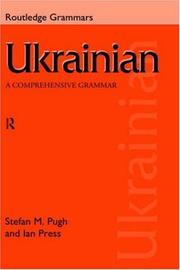
The most thorough descriptive grammar of Ukrainian available in English; at this stage you have enough language to use it actively, looking up nuanced rules and understanding the 'why' behind patterns you have already encountered.
Advanced Reading & Authentic Texts
ExpertRead authentic Ukrainian literature and journalism with minimal dictionary use, achieving a near-independent (B2+) level of reading proficiency.
▸ Study plan for this stage
Pace: 8–10 weeks, ~15–20 pages/day (with careful re-reading of poetry sections)
- Archaic and poetic Ukrainian vocabulary and syntax specific to 19th-century literary language
- Romantic and nationalist themes in Shevchenko's poetry, particularly the critique of Russian imperial rule and Polish-Lithuanian history
- Stylistic devices in Ukrainian poetry: metaphor, alliteration, anaphora, and their cultural/historical significance
- Historical and cultural context of Cossack tradition, serfdom, and Ukrainian identity as reflected in Kobzar
- Meter and prosody in Ukrainian verse (primarily iambic and trochaic patterns) and how form reinforces meaning
- Intertextual references to Ukrainian folk traditions, biblical narratives, and classical literature embedded in the poems
- Emotional and philosophical depth: how to extract nuanced meaning from densely layered poetic language
- Regional and dialectal variations in Ukrainian as used by Shevchenko for stylistic effect
- What are the major historical grievances and themes of national identity that Shevchenko addresses across Kobzar, and how do they reflect 19th-century Ukrainian consciousness?
- How does Shevchenko use archaic and folk-derived vocabulary to create emotional resonance, and what specific examples illustrate this technique?
- Explain the role of the Cossack figure in Kobzar: what does it symbolize, and how does Shevchenko's portrayal differ from Russian or Polish representations?
- Analyze the prosodic structure of at least two poems: how does the meter and rhythm contribute to the poem's meaning and emotional impact?
- What biblical, folk, and classical allusions appear in Kobzar, and what cultural knowledge do they assume from the reader?
- How does Shevchenko's language and imagery reflect the oral tradition of the kobzar (wandering minstrel), and what effect does this have on the reader's experience?
- Read 3–4 poems aloud multiple times, paying attention to rhythm, stress patterns, and sound repetition; record yourself and listen for musicality
- Create a glossary of archaic and poetic terms encountered in Kobzar, organized by semantic field (e.g., nature, emotion, historical/political terms), and note their modern equivalents
- Annotate 2–3 poems line-by-line, identifying all metaphors, allusions, and historical references; research unfamiliar references using scholarly notes or Ukrainian literary databases
- Write a 500–750 word literary analysis in Ukrainian of one poem, focusing on how form (meter, rhyme, imagery) serves the thematic content
- Compare Shevchenko's treatment of a theme (e.g., love, freedom, national suffering) across 2–3 different poems; identify shifts in tone and perspective
- Engage with a scholarly article or critical essay on Kobzar (in Ukrainian or English translation) and summarize the main argument, relating it to specific poems you've read
Next up: This stage establishes mastery of complex, culturally-embedded poetic language and historical context, preparing the reader to engage independently with other canonical Ukrainian literature, contemporary journalism, and specialized texts without reliance on translation or extensive glossing.

The foundational canonical work of Ukrainian literature; reading selections from Shevchenko at this stage connects your language skills to Ukrainian cultural identity and exposes you to elevated, poetic register.
Discussion
Keep reading
Paths that share books, cover the same subject, or open a related topic.