Learn Hebrew: The Best Books to Study Modern Hebrew, in Order
This curriculum takes a complete beginner from zero knowledge of Hebrew all the way to confident modern conversational ability, in four carefully sequenced stages. Each stage builds directly on the last — starting with the script and sounds, moving through core grammar, then expanding vocabulary and reading fluency, and finally developing real-world conversation and listening skills.
The Alphabet & Sounds — Reading Hebrew
BeginnerRead and write the Hebrew alphabet (including vowel marks), recognize letter forms, and produce correct sounds — the essential foundation before any grammar or vocabulary study.
▸ Study plan for this stage
Pace: 2–3 weeks, ~15–20 pages/day, with daily practice sessions of 20–30 minutes on letter recognition and sound production
- The 22 Hebrew consonants: their names, printed and cursive forms, and correct pronunciation
- The five vowel marks (nikud) and how they modify consonant sounds
- Letter-sound correspondence and how to blend sounds into syllables
- Recognizing letters in different positions (beginning, middle, end of words) and how some letters change form
- Distinguishing visually similar letters (e.g., ב/כ, ד/ר, ח/ה) and producing their distinct sounds
- Reading short, simple Hebrew words using the alphabet and vowel marks as taught in the book
- Can you name all 22 Hebrew consonants and produce their correct sounds without hesitation?
- What are the five main vowel marks in Hebrew, and how does each one change the sound of a consonant?
- How do you recognize and differentiate between visually similar letters like ב and כ, or ח and ה?
- Can you read a short Hebrew word (with vowel marks) by sounding out each letter and blending them together?
- How do some Hebrew letters change their form depending on whether they appear at the beginning, middle, or end of a word?
- What is the difference between reading Hebrew with vowel marks (nikud) versus without them?
- Daily flashcard drills: create or use flashcards for all 22 consonants (printed and cursive forms), testing recognition and pronunciation for 10–15 minutes each day
- Vowel mark mapping: write out each of the five vowel marks next to the same consonant (e.g., א with each vowel) and practice pronouncing the resulting sounds aloud
- Letter discrimination practice: focus on confusing letter pairs (ב/כ, ד/ר, ח/ה, etc.) by writing them side-by-side and saying them aloud until you can distinguish them instantly
- Tracing and handwriting: copy each letter in both printed and cursive forms multiple times, saying the letter name and sound aloud as you write
- Sound blending drills: take simple two- or three-letter combinations from the book (e.g., בַת, כַל) and blend the sounds together smoothly, repeating until fluent
- Reading practice from the book: work through all the word examples and practice passages in 'Aleph Isn't Tough,' reading aloud and recording yourself to check pronunciation
Next up: Mastery of the alphabet and vowel sounds equips you to move into basic vocabulary and grammar, where you'll apply these reading skills to understand word meaning and sentence structure without relying on vowel marks.

A gentle, self-study-friendly introduction to the Hebrew alphabet, vowel signs, and basic pronunciation. Its slow, clear pace makes it the ideal first book for a complete beginner with no prior exposure to the script.
Core Grammar — Building the Language Engine
BeginnerUnderstand modern Hebrew sentence structure, verb conjugation (binyanim), noun gender, pronouns, and essential grammar patterns needed to form and understand real sentences.
▸ Study plan for this stage
Pace: 8–10 weeks, ~25–30 pages/day (alternating between structured grammar lessons and conversational practice)
- Hebrew sentence structure: SVO word order and flexibility; subject-verb-object patterns in modern Hebrew
- Binyanim (verb stems): the 7 major patterns (Qal, Nifal, Hifil, Hofal, Piel, Pual, Hitpael) and how they modify verb meaning
- Verb conjugation: present, past, and future tenses across all persons (singular/plural, masculine/feminine)
- Noun gender and agreement: masculine/feminine forms, definite/indefinite articles (ה, את), and gender agreement with adjectives and verbs
- Pronouns and possessives: independent pronouns (אני, אתה, היא), attached possessive suffixes (שלי, שלך, שלו), and object pronouns
- Essential prepositions and particles: ב (in/with), ל (to/for), את (direct object marker), את (with), מ (from), and their attachment to nouns
- Adjectives and adverbs: agreement with nouns in gender and number; formation and placement in sentences
- Negation: לא for present/future, לא הייתי for past; negative imperative with אל
- What are the seven binyanim (verb stems) in Hebrew, and how does each one typically modify the meaning of a root?
- How do you conjugate a regular verb in the past, present, and future tenses for all six persons (I, you-m, you-f, he, she, we, you-pl, they)?
- Explain the rules for noun gender agreement: how do adjectives, verbs, and articles change based on whether a noun is masculine or feminine?
- What is the difference between the independent pronouns (אני, אתה) and attached possessive suffixes (שלי, שלך), and when do you use each?
- How do prepositions like ב, ל, את, and מ attach to nouns, and what happens to the definite article when they do?
- How do you form negative sentences in the present, past, and future tenses, and what is the negative imperative?
- Conjugation drills: Take 10 common Hebrew roots and conjugate them across all seven binyanim in present, past, and future tenses; write out full paradigm tables
- Sentence construction: Build 20–30 original sentences using the grammar patterns from each chapter of 'Hebrew From Scratch, Part 1'; focus on subject-verb-object order and preposition attachment
- Gender and agreement practice: Given a list of 50 nouns, write them with the definite article, add 3 agreeing adjectives in correct gender/number form, and use each in a complete sentence
- Pronoun substitution: Take dialogues from 'Colloquial Hebrew' and rewrite them substituting different pronouns and possessive forms; verify agreement throughout
- Negation transformation: Convert 15–20 positive sentences (present, past, future) into their negative equivalents using correct negation patterns
- Real-world application: Write a short personal narrative (8–10 sentences) about your daily routine using past tense, varied binyanim, correct gender/number agreement, and prepositions; have a native speaker or tutor review
Next up: Mastery of core grammar—verb conjugation, noun agreement, and sentence structure—provides the solid foundation needed to move into the next stage, where you will expand your vocabulary and learn to navigate more complex sentence patterns, idiomatic expressions, and authentic texts.

The most widely used modern Hebrew textbook in the world, designed specifically for self-study and classroom beginners. Part 1 covers the full beginner grammar syllabus with dialogues, exercises, and vocabulary in a logical, cumulative order.

Complements the grammar-focused approach of Hebrew from Scratch by presenting the same structures in natural, spoken dialogues — helping learners hear how grammar actually sounds in everyday Israeli conversation.
Expanding Grammar & Vocabulary — Going Deeper
IntermediateMaster intermediate grammar (all major verb binyanim, past/present/future tenses, complex sentences), build a working vocabulary of 1,500+ words, and start reading authentic modern Hebrew texts.
▸ Study plan for this stage
Pace: 8–10 weeks, ~40–50 pages/day (textbook + verb reference work combined)
- All seven Hebrew verb binyanim (Qal, Nifal, Piel, Pual, Hifil, Hofal, Hitpael) and their semantic patterns
- Past, present, and future tense conjugation across all binyanim and person/gender/number combinations
- Complex sentence structures: relative clauses, conditional sentences, and dependent clauses with conjunctions
- Building and actively using a working vocabulary of 1,500+ intermediate words from authentic contexts
- Verb stems and root patterns as the foundation for recognizing and producing new words
- Transitivity, reflexivity, and causality expressed through binyan choice
- Reading comprehension of authentic modern Hebrew texts (news, literature, everyday materials)
- What are the seven Hebrew binyanim, and how does each one typically modify the meaning of a root (e.g., simple action vs. passive vs. reflexive vs. causative)?
- How do you conjugate a verb in the past, present, and future tenses across different binyanim, and what are the key patterns for person, gender, and number agreement?
- What is the difference between a relative clause (משפט יחסי) and a conditional clause (משפט תנאי), and how do you construct each in modern Hebrew?
- How do you recognize and use the 1,500+ intermediate vocabulary words from 'Hebrew From Scratch Part II,' and how do word roots help you infer meaning?
- Can you read and comprehend an authentic modern Hebrew text (a news article, short story, or advertisement) and identify the binyanim, tenses, and complex structures used?
- How does the choice of binyan affect the meaning and transitivity of a verb, and how do you apply this when speaking or writing?
- Conjugate 10–15 verbs daily from '501 Hebrew Verbs' across all seven binyanim in past, present, and future tenses; write out full paradigm tables for at least 3 verbs per week
- Complete all grammar exercises in 'Hebrew From Scratch Part II' focusing on verb conjugation, tense usage, and complex sentence construction; review answers and identify patterns
- Create flashcards for 20–30 new vocabulary words per week from the textbook; organize by root family and binyan to reinforce word-formation patterns
- Translate 5–10 short sentences daily from English to Hebrew, deliberately using different binyanim and tenses to express nuanced meanings (e.g., 'He was helped' vs. 'He helped himself')
- Read 2–3 short authentic modern Hebrew texts per week (news headlines, social media posts, short stories) and annotate verbs with their binyan, tense, and root; discuss comprehension with a study partner or tutor
- Write 3–4 short paragraphs (100–150 words each) per week in Hebrew using at least 5 different binyanim and a mix of past, present, and future tenses; have a native speaker or tutor review for accuracy
Next up: Mastery of all seven binyanim, complex tenses, and a solid intermediate vocabulary foundation equips you to tackle authentic literary and journalistic Hebrew texts with confidence, preparing you for advanced reading comprehension and stylistic analysis in the next stage.

The direct continuation of Part 1, covering intermediate grammar including all seven verb binyanim, relative clauses, and more complex structures — essential for moving beyond basic sentences.
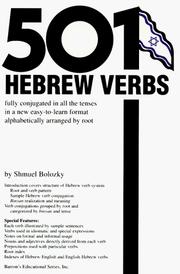
A comprehensive conjugation reference for all major Hebrew verbs across all tenses and binyanim. Used alongside Part 2, it solidifies verb mastery — the single most important grammatical system in Hebrew.
Conversation, Fluency & Real-World Hebrew
IntermediateSpeak and understand modern Israeli Hebrew in real-life situations, develop listening comprehension, learn colloquial expressions, and gain the confidence to hold genuine conversations.
▸ Study plan for this stage
Pace: 8–10 weeks, ~40–50 pages/day (alternating between phrasebook immersion and grammar deep-dives)
- Mastering high-frequency colloquial expressions and idioms from the Lonely Planet phrasebook for real-world scenarios (greetings, ordering food, asking directions, shopping, emergencies)
- Understanding modern Israeli Hebrew grammar patterns including present tense verb conjugations, object pronouns, and construct state (סמיכות) as explained in Glinert
- Developing listening comprehension through phonetic transcriptions and pronunciation guides in the phrasebook
- Learning to recognize and use colloquial speech patterns, slang, and informal registers that differ from textbook Hebrew
- Building confidence in spontaneous conversation by internalizing common response patterns and conversational flow
- Mastering essential grammar structures (binyanim/verb patterns, prepositions, negation) that underpin natural speech
- Recognizing cultural context and pragmatics—when and how to use formal vs. informal address (tu/ata vs. atah)
- How would you order a coffee at a café, ask for the bill, and handle a simple complaint in Hebrew using natural, colloquial phrasing?
- Explain the difference between present tense verb conjugations for different person/gender combinations and how Glinert's grammar framework clarifies these patterns
- What are five common Israeli colloquial expressions or idioms from the phrasebook, and in what real-world situations would you use them?
- How do you construct and understand sentences using the construct state (סמיכות) and object pronouns in modern Hebrew?
- Describe the grammatical structure of a complex sentence you've encountered in the phrasebook and identify its key components using Glinert's terminology
- What strategies would you use to understand spoken Hebrew in a noisy environment, and how does the phrasebook's phonetic system help you?
- Daily phrasebook immersion: Spend 15–20 minutes each day reading and recording yourself pronouncing 10–15 phrases from a specific scenario (e.g., restaurant, transportation, shopping). Listen back and compare to native speaker audio if available.
- Grammar-to-conversation mapping: Take 5 grammar rules from Glinert (e.g., present tense conjugation, construct state) and find 3–4 real examples of each in the phrasebook; write out how the grammar rule applies in context.
- Scenario role-play: Choose a real-world situation from the phrasebook (ordering food, asking for directions, making a complaint) and write out a full dialogue, then practice speaking both parts aloud, varying tone and pace.
- Colloquial expression journal: Extract 20–30 colloquial expressions or idioms from the phrasebook over the course of the stage; for each, note the literal meaning, the actual meaning, and a context where you'd use it.
- Listening comprehension drills: If the phrasebook includes audio or QR codes, listen to 5–10 dialogues per week without reading the text first; try to identify key phrases and overall meaning, then check the transcript.
- Grammar pattern recognition: Read a section of Glinert on a specific grammar topic (e.g., verb patterns/binyanim), then search the phrasebook for 10+ examples of that pattern in use; annotate each example with the grammatical structure.
Next up: This stage equips you with practical conversational tools and the grammatical scaffolding to understand how modern Hebrew actually works in real situations, preparing you to move into advanced reading, media consumption (films, podcasts, news), and more nuanced cultural communication in the next stage.

A practical, topic-organized reference for real-world conversational situations (travel, shopping, dining, emergencies) that gives learners immediately usable phrases and builds confidence for live interaction.

A definitive, linguistically rigorous reference grammar of modern Israeli Hebrew. At this stage it serves as the authoritative resource to resolve grammar questions, deepen understanding of nuance, and polish accuracy.
Discussion
Keep reading
Paths that share books, cover the same subject, or open a related topic.