Learn Czech: The Best Books to Study, in Order
This curriculum takes a complete beginner from the Czech alphabet and basic grammar all the way through confident self-study conversation and reading. Each stage builds directly on the last: you first internalize the sound system and core grammar, then master the notorious Czech case system, then expand vocabulary and reading fluency, and finally develop real conversational ability through structured dialogue and authentic practice.
Foundations: Alphabet, Pronunciation & Survival Grammar
BeginnerRecognize and pronounce Czech sounds, understand basic sentence structure, and handle essential everyday phrases with confidence.
▸ Study plan for this stage
Pace: 4–5 weeks, ~40–50 pages/day (alternating between grammar reference and conversational practice)
- Czech alphabet, diacritical marks, and phonetic pronunciation rules (stress, vowel length, consonant softness)
- The seven-case system and how cases change nouns, adjectives, and pronouns to show grammatical relationships
- Verb aspects (perfective vs. imperfective) and basic present, past, and future tense conjugation
- Word order patterns in Czech declarative and interrogative sentences
- Essential survival vocabulary and phrases for greetings, introductions, asking for help, and basic transactions
- Gender agreement in nouns, adjectives, and past-tense verbs (masculine, feminine, neuter)
- Prepositions and their case requirements (e.g., v + locative, na + accusative/locative)
- Reflexive verbs and their role in everyday Czech communication
- How do Czech diacritical marks (háček, čárka) change pronunciation, and which consonants and vowels are most affected?
- Explain the seven Czech cases and give an example of how one noun changes across at least three cases.
- What is the difference between perfective and imperfective aspects, and how does this distinction affect how you express completed vs. ongoing actions?
- How does gender agreement work in Czech, and why must adjectives and past-tense verbs agree with their nouns?
- What are the main word order patterns in Czech declarative sentences, and how do they differ from English?
- Demonstrate how to form and use at least five survival phrases (greetings, apologies, requests) in appropriate contexts.
- Pronunciation drill: Record yourself reading aloud passages from 'Czech: An Essential Grammar' focusing on stress patterns, vowel length, and diacritical marks; compare with native speaker audio if available.
- Case system mapping: Create a chart for 3–4 common nouns (e.g., 'muž', 'žena', 'dítě') showing all seven cases with English translations and example sentences.
- Verb conjugation practice: Conjugate 10 high-frequency verbs (e.g., být, mít, dělat, jít) across present, past, and future tenses, noting aspect differences.
- Dialogue transcription and repetition: Work through dialogues in 'Colloquial Czech', transcribe them, identify grammatical structures, and practice speaking them aloud until fluent.
- Survival phrase role-play: Create and perform 5–6 short scenarios (ordering coffee, asking directions, introducing yourself) using phrases from 'Colloquial Czech'.
- Gender and agreement exercises: Complete fill-in-the-blank exercises where you must select correct adjective and verb forms based on noun gender.
Next up: Mastering these foundational elements—sound recognition, case inflection, and basic sentence patterns—equips you to move into the next stage with the grammatical scaffolding and core vocabulary needed to expand into more complex dialogues, reading comprehension, and authentic texts.

The single most respected English-language reference grammar for Czech, written by an Oxford scholar. Start here to get a clear, structured map of how Czech works before diving into any coursebook.
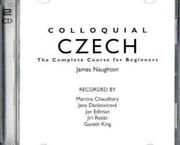
A beginner-friendly coursebook by the same trusted author, pairing dialogues with grammar explanations. Read it immediately after the grammar overview so you can apply rules to real spoken situations from day one.
The Case System: Unlocking Czech Grammar
BeginnerUnderstand and actively use all seven Czech grammatical cases for nouns, adjectives, and pronouns — the central challenge of the language.
▸ Study plan for this stage
Pace: 6–8 weeks, ~25–30 pages/day, with 2–3 days per week dedicated to case-focused grammar drills and exercises
- The seven Czech cases (nominative, genitive, dative, accusative, locative, instrumental, vocative) and their primary functions in sentences
- How case endings change for masculine, feminine, and neuter nouns across all seven cases
- Adjective agreement: matching adjectives to nouns in gender, number, and case
- Pronoun declension: personal, possessive, and demonstrative pronouns across all cases
- Prepositions and their case requirements: which prepositions govern which cases
- Practical case usage in common contexts: expressing possession (genitive), indirect objects (dative), location (locative), and agency (instrumental)
- The relationship between case and word order: how cases reduce ambiguity in Czech sentences despite flexible word order
- Can you identify which case a noun is in and explain why it appears in that case within a given sentence?
- How do you form the genitive, dative, and instrumental cases for regular masculine, feminine, and neuter nouns, and what are the common exceptions?
- Given a preposition, can you determine which case it requires and use it correctly in a sentence?
- How do adjectives and pronouns change to agree with nouns in all seven cases, and what patterns help you predict these changes?
- Can you construct sentences using different cases to express possession, location, indirect objects, and the agent of an action?
- What is the relationship between Czech cases and word order, and how do cases clarify meaning when word order varies?
- Complete case-declension tables for 10–15 common nouns (one per gender) across all seven cases, using examples from 'Czech Step by Step'
- Identify and label the case of every noun, adjective, and pronoun in 5–10 sentences from 'New Czech Step by Step'; explain the grammatical reason for each case choice
- Create a preposition reference sheet mapping each Czech preposition to its required case(s), with at least two example sentences per preposition
- Write 20–30 short sentences (3–5 words each) demonstrating each case in isolation, then combine them into a short paragraph showing multiple cases in context
- Practice pronoun substitution: take sentences from the textbooks and replace nouns with pronouns, ensuring correct case agreement
- Translate 15–20 English sentences into Czech, focusing on correct case selection for nouns, adjectives, and pronouns based on grammatical function
Next up: Mastery of the case system provides the grammatical foundation needed to advance to more complex topics such as verb aspects, conditional constructions, and subordinate clauses, all of which interact with case endings to create precise meaning in Czech.

The most widely used Czech self-study course in the world, beloved for its gradual, visual introduction to the cases. Its structured drills make the case endings feel manageable rather than overwhelming.

The expanded, updated successor to Czech Step by Step, covering cases and grammar more thoroughly with richer exercises. Read it directly after the original to consolidate and extend your case knowledge.
Conversation & Listening: Bringing Czech to Life
IntermediateHold practical conversations on everyday topics, understand colloquial spoken Czech, and bridge the gap between textbook Czech and real-world communication.
▸ Study plan for this stage
Pace: 4–5 weeks, ~40–50 pages/day with active listening and speaking practice integrated throughout
- Colloquial Czech expressions and informal speech patterns distinct from textbook Czech
- Practical conversation structures for everyday topics (shopping, dining, directions, small talk)
- Listening comprehension strategies for native-speed speech and regional variations
- Pragmatic language use: politeness levels, register switching, and context-appropriate responses
- Common abbreviations, slang, and idiomatic phrases in spoken Czech
- Pronunciation and intonation patterns that signal meaning and emotion in dialogue
- Confidence-building techniques for real-time interaction and error recovery
- What are the key differences between formal textbook Czech and colloquial spoken Czech as presented in Communicative Czech?
- How do you adjust your register and politeness level depending on whether you're speaking to a friend, stranger, or authority figure?
- Can you identify and use at least 15 common colloquial expressions and idioms from the book in natural conversation?
- What strategies does Communicative Czech recommend for understanding native speakers despite accents, speed, or regional variations?
- How would you handle a real-time conversation breakdown (mishearing, not understanding) and recover gracefully?
- What are the most frequent everyday topics covered in Communicative Czech, and can you hold a basic 2–3 minute conversation on each?
- Record yourself reading dialogue passages aloud from Communicative Czech, then listen back and compare your intonation and rhythm to native speaker audio (if available)
- Create flashcards for colloquial expressions and idioms from each chapter; quiz yourself daily and use them in self-made sentences
- Practice shadowing: play native Czech audio (from the book or supplementary sources) and repeat simultaneously to internalize natural speech patterns
- Role-play everyday scenarios (ordering food, asking directions, making small talk) with a language partner or tutor using dialogues from the book as templates
- Transcribe 5–10 minutes of conversational Czech audio (from the book or external sources) to train your ear for connected speech and contractions
- Write and perform your own short dialogues (2–3 minutes) on topics from Communicative Czech, focusing on natural flow and colloquial language
- Listen to a dialogue from the book multiple times: first for gist, then for specific details, then for emotional tone and register—document what you notice each pass
- Identify and memorize 3–5 'filler phrases' and hesitation markers (like 'no, tak, víš') and practice using them naturally in spontaneous speech
Next up: This stage equips you with the conversational fluency and listening comprehension needed to move into more specialized or advanced communication contexts, such as professional Czech, cultural nuance, or deeper literary and media engagement.

A dialogue-heavy coursebook used in Czech university language programs, focused on real communicative situations. It trains you to speak and respond naturally, not just recite grammar rules.
Advanced Self-Study: Fluency & Cultural Depth
ExpertRead and understand authentic Czech texts, handle complex grammar with ease, and engage with Czech culture and idiomatic expression at a near-independent level.
▸ Study plan for this stage
Pace: 8–10 weeks, ~40–50 pages/day with active engagement (reading, note-taking, and exercises)
- Advanced Czech grammar structures: conditional mood, passive voice, and complex subordinate clauses
- Idiomatic expressions and colloquial Czech beyond textbook language
- Authentic Czech cultural contexts: literature, history, media, and social norms reflected in texts
- Pragmatic language use: register variation, politeness strategies, and context-appropriate communication
- Strategies for independent comprehension of complex texts without constant dictionary reliance
- Czech morphology at depth: aspect, perfective/imperfective verb pairs, and their stylistic implications
- Reading comprehension of authentic materials: news, essays, and literary excerpts from 'Česky krok za krokem 2'
- What are the key differences between conditional and subjunctive constructions in Czech, and when would you use each in authentic speech or writing?
- How does the perfective/imperfective aspect system function in Czech, and what stylistic or semantic differences does it create?
- Can you identify and explain idiomatic expressions encountered in 'Česky krok za krokem 2' and use them appropriately in new contexts?
- What cultural insights about Czech society, history, or values emerge from the authentic texts and dialogues in this book, and how do they reflect Czech identity?
- How do you approach reading an unfamiliar authentic Czech text (news article, blog post, literary passage) and extract meaning through context and structural analysis?
- What are the nuances of register in Czech—how do formal, colloquial, and literary registers differ, and when is each appropriate?
- Complete all grammar exercises in 'Česky krok za krokem 2' with focus on conditional, passive, and complex sentence structures; review errors and create personal grammar reference cards
- Read and annotate one authentic Czech text per week (news article, blog post, or literary excerpt) outside the textbook; identify new idioms and cultural references, then discuss or write about them
- Maintain an idiomatic expression journal: collect 10–15 new idioms/collocations per week from the book and authentic sources; use each in 2–3 original sentences
- Engage in weekly writing exercises: compose short essays (200–300 words) on topics from 'Česky krok za krokem 2' using advanced structures and idiomatic language
- Practice active listening with Czech media (podcasts, interviews, or film clips related to book content); transcribe key phrases and analyze grammar/register
- Create a cultural portfolio: for each unit in the book, research and document one aspect of Czech culture (history, literature, customs, media); write reflections on how it connects to the language
- Conduct peer or self-review dialogues: role-play complex scenarios (debates, formal discussions, interviews) using structures and vocabulary from the book
Next up: This stage establishes near-independent fluency and deep cultural literacy with Czech, positioning you to engage with unguided authentic materials, pursue specialized interests (literature, media, professional Czech), and transition to immersion-based learning or real-world application.

The advanced continuation of the Step by Step series, introducing sophisticated vocabulary, idiomatic expressions, and cultural content. It rounds out the curriculum by connecting language mastery to authentic Czech life and thought.
Discussion
Keep reading
Paths that share books, cover the same subject, or open a related topic.