Best Books on Labor Unions and Organizing, in Reading Order
This path treats unions as two separate subjects that are usually confused: a contested question in economics and politics, and a practical craft with techniques you can learn. You begin with narrative labor history so the institutions have a story attached, then read the historians and economists who disagree about what unions have actually done to wages, productivity and their own decline. The final stage is the how-to layer — the organizing manuals used by real campaigns — which is where the subject stops being an argument and becomes a set of skills.
Where unions came from
BeginnerKnow the basic arc of American labor history — the strikes, the laws, the people — well enough that later arguments about union decline have something concrete to attach to
▸ Study plan for this stage
Pace: 10-12 weeks. Fight Like Hell is 288 pages and reads quickly — two weeks. There Is Power in a Union is 816 pages and is the long one; five to six weeks at 25 pages a day, and it is worth keeping a name-and-date list as you go. A History of America in Ten Strikes is 311 pages of ten discrete case stud
- Kelly's organising principle: labor history told through the people usually cut from it — women, immigrants, Black organisers, disabled workers — which makes visible how much of the record is not the famous set-piece strikes. Read her for who is in the story, not for chronology
- The chronology Dray supplies and Kelly assumes: the early trades and the Knights of Labor, Haymarket in 1886 and the founding of the AFL, Homestead and Pullman, the IWW, the 1930s upheaval, and the postwar accord
- The legal turning points, which are where American labor history actually pivots: the use of injunctions and antitrust against unions, the Norris-LaGuardia Act, the Wagner Act of 1935 establishing the NLRB and the right to organise, and Taft-Hartley in 1947 which narrowed it substantially
- What the Wagner Act's framework actually created — a certified exclusive bargaining representative chosen by election, with a duty to bargain in good faith — and why that structure shapes everything American unions do, including the strategy in stage 3
- What Taft-Hartley took away: secondary boycotts, closed shops, and the opening for state right-to-work laws. Understanding this act is the single most useful piece of legal history on the path
- The CIO's industrial-union model against the AFL's craft model, the Flint sit-down strike as the case that proved it, and the eventual merger
- Loomis's method — ten strikes read closely rather than a continuous narrative — which shows how a strike is actually won or lost far better than a survey does: the role of solidarity across trades, the state's willingness to intervene, and the employer's alternatives
- That Loomis writes explicitly from the labor left and says so in the introduction. A committed history that announces its commitment is more useful than one that does not, but read the case selection as a selection
- What did the Wagner Act establish, and what did Taft-Hartley remove? Be specific about at least three provisions in each
- Take one of Loomis's ten strikes and identify why it was won or lost. How much turned on the workers' organisation and how much on state or employer action?
- Who is in Kelly's account that is missing from Dray's, and does the addition change the argument or only the cast?
- Why did the CIO's industrial model succeed in the 1930s where craft unionism had not? What conditions made the difference?
- Loomis says he writes from the labor left. Pick one of his chapters and identify where the commitment shapes the interpretation, and whether it distorts the evidence or only frames it
- Build a timeline from 1870 to 1970 with two tracks: strikes and legislation. The interaction between them is the actual history — most major laws follow a major strike
- Take one of Loomis's ten strikes and write a one-page after-action account: who organised, what leverage they had, what the employer did, what the state did, and what settled it. Do this for at least three of the ten
- For a single decade of your choosing, list the union density figure at the start and end, and note what happened in between. You will need these numbers in stage 2
- Write 300 words on a strike Kelly covers that Dray does not, and say what its omission from the standard narrative costs
- Look up whether your own state has a right-to-work law and when it was passed. Then trace back to Taft-Hartley the provision that permitted it
Next up: With the institutions and the laws attached to specific events, you can read the arguments about what unions do without the abstractions floating free.

The most readable entry point, telling labor history through the workers usually left out of it — women, immigrants, Black and disabled organizers. Start here because it is narrative rather than analytical, and it makes clear how much of the history is not the famous set-piece strikes.
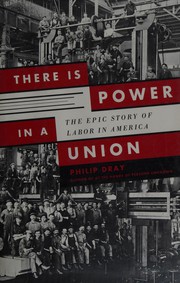
The single-volume sweep, from the early trades through Haymarket, the Wagner Act, the CIO and after. Read it second: it supplies the chronology and legal turning points that Kelly's thematic approach assumes.

Ten case studies read closely, which is a better way to see how a strike is actually won or lost than a continuous narrative. Loomis writes explicitly from the labor left and says so, so read it as a committed history rather than a neutral one.
The argument about what unions do
IntermediateSeparate the empirical questions — effects on wages, inequality, productivity, employment — from the political ones, and understand why serious people reach different conclusions
▸ Study plan for this stage
Pace: 12-14 weeks. What Do Unions Do? is 308 pages of empirical economics — three weeks, and read the tables. State of the Union is 400 pages, three to four weeks. Which Side Are You On? is 304 pages and reads like a memoir; two weeks. Beaten Down, Worked Up is 416 pages, three weeks, and belongs last as
- Freeman and Medoff's two faces framework, which is the reference point everyone since argues with: a monopoly face that raises union wages above the competitive level and may misallocate labour, and a voice face through which workers' collective expression reduces turnover and can raise productivity
- The union wage premium as an empirical quantity rather than a slogan — measured, contested, and varying by sector and period. Learn how it is estimated and what the selection problem is, because that is where the disagreement lives
- The compression finding: unions reduce wage dispersion within and across covered workplaces, which is why union decline appears in the inequality literature as a substantial contributor. Note this is a distributional claim, distinct from the level claim
- The productivity argument and its critics: reduced turnover and formal grievance procedures against restrictive work rules and reduced flexibility. Freeman and Medoff conclude the net effect is often positive; this is the most contested conclusion in the book and later work splits on it
- Lichtenstein's structural explanation of decline: American labor law, the exclusive-representation and workplace-by-workplace election model, and the postwar settlement itself created a system that could not renew — so decline is institutional rather than a matter of employer aggression or bad leade
- Geoghegan's value as the inoculation on this stage: a labor lawyer who is hard on unions themselves — corruption, sclerosis, internal undemocracy — while remaining committed to them. A reader who has only read heroic accounts is not equipped to argue
- Greenhouse's survey of the present: wage stagnation, the gig economy's classification questions, the weakness of the NLRB remedy structure, and the recent organising wave. His reporting connects the historical decline to conditions a reader can observe
- The central discipline of this stage: separate the empirical questions (what is the wage premium, what happened to productivity, how much of inequality tracks density) from the political ones (whether the tradeoffs are worth it). Serious people agree on more of the first than public argument suggest
- State the two faces argument precisely, and give the strongest evidence Freeman and Medoff offer for each. Which face is better established empirically?
- How is the union wage premium estimated, and what is the selection problem? Why does it make the number contested rather than simply measured?
- Lichtenstein blames the legal structure; a simpler account blames employer opposition and globalisation. What evidence distinguishes them, and how much can each explain?
- Geoghegan is committed to unions and hard on them. Take his sharpest criticism and decide whether it is an argument against unions or against a particular legal regime
- Take one empirical claim and one political claim from this stage and set them side by side. What evidence would change your mind about each? If the answer is the same for both, you have probably conflated them
- Chart US union density by decade from 1935 to the present alongside a measure of income inequality. Then write 300 words on what the correlation does and does not establish. Doing this yourself is more instructive than reading anyone's version of it
- Take three of Freeman and Medoff's tables and write, for each, one sentence on what it shows and one on what it cannot show
- Write a two-column ledger of explanations for union decline — legal structure, employer strategy, globalisation and sectoral shift, internal union failure — with the evidence for each drawn from a specific book. Some columns will be much better supported than others
- Write 400 words making the strongest case against the position you currently hold, using only evidence from these four books. If you cannot fill 400 words, you have been reading selectively
- Take one industry you know something about and write a paragraph applying Freeman and Medoff's two faces to it specifically. The framework is more useful when it is not applied in general
Next up: The argument is now separable into its empirical and political parts; the last stage is about what organisers actually do, which is a different kind of knowledge entirely.
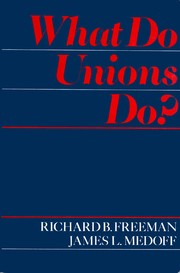
The foundational economics text on the question, framing unions as having both a monopoly face that raises wages and a voice face that can raise productivity. It is the reference point everyone since argues with, including its critics, so read it before any of the advocacy.

A historian's account of why American labor declined, arguing the cause was structural and legal rather than simply employer hostility or bad leadership. Pair it with Freeman to see the same decline explained by institutions rather than by economics.
A labor lawyer's memoir that is unusually hard on unions themselves — corruption, sclerosis, and the ways labor law traps them — while remaining committed to them. The best inoculation against reading only heroic accounts.

A veteran labor reporter's survey of where American work stands now, connecting the historical decline to gig work, wage stagnation and the recent organizing wave. Read it last in this stage as the bridge from history to the present campaigns.
How organizing actually works
IntermediateLearn the concrete craft — mapping a workplace, identifying leaders, running one-on-one conversations, building toward a supermajority — well enough to recognize a real campaign from a symbolic one
▸ Study plan for this stage
Pace: 10-12 weeks. Secrets of a Successful Organizer is 265 pages of manual and is meant to be worked rather than read — three weeks. No Shortcuts is 267 pages of comparative case study; three weeks. A Collective Bargain is 304 pages, two to three weeks. Rules for Radicals is 196 pages and takes a week, r
- The workplace chart, which is the foundational tool in Bradbury: mapping every worker by department, shift and relationship, and marking who talks to whom. Everything else in organising is built on knowing the shape of the workplace
- The distinction between an activist and an organic leader — the person others actually follow, who may be openly sceptical of the union. Identifying and winning organic leaders rather than recruiting the already-convinced is the central practical skill on this stage
- The structure of an organising conversation as Bradbury lays it out: mostly listening, surfacing the issue the person actually cares about, agitating on it, presenting the union as the plan, and asking for a specific commitment. Note that it is mostly questions
- The supermajority standard and why it exists: a campaign that goes public at bare majority support loses under pressure, so the discipline is to build well past the threshold before anyone knows there is a campaign
- Escalation as a designed sequence of low-risk collective actions that test and build participation — buttons, petitions, marches on the boss — each one a structure test rather than a symbolic gesture
- McAlevey's central distinction in No Shortcuts: mobilising activates people already committed, advocacy substitutes staff and lawyers for workers, and organising brings in the unconvinced and builds worker leadership. Her case studies are constructed to show the three producing different outcomes
- Alinsky's contribution and its limits: self-interest as the basis of organisation, power as something taken rather than granted, tactics kept within the experience of your people and outside the experience of the enemy. Read it as an important and much-argued-with book
- Where Alinsky and McAlevey directly conflict: Alinsky's model centres a professional organiser who builds an organisation of organisations, while McAlevey's argues that the leadership must be the workers themselves and that staff-driven campaigns are precisely the failure mode. Both positions have r
- What is the difference between an activist and an organic leader, and why does a campaign that recruits only activists tend to fail?
- Reconstruct Bradbury's organising conversation as a sequence. What proportion of it is the organiser talking, and why that proportion?
- McAlevey distinguishes organising, mobilising and advocacy. Take one campaign from Beaten Down, Worked Up in stage 2 and classify it. Does the classification predict the outcome?
- What is a structure test and what does it measure? Give an example of an action that is a structure test and one that looks similar and is not
- Alinsky centres the professional organiser; McAlevey argues worker leadership is the point. Set out the strongest case for each and the campaign evidence each cites. This is an unsettled disagreement among practitioners — do not resolve it, but be able to say what would count as evidence either way
- Chart a workplace you know — every person, their department and shift, and the informal relationships. Then mark who you think the organic leaders are and, separately, who the loudest people are. The overlap is usually smaller than expected, and that gap is the lesson
- Write out an organising conversation as a script, then mark every line where you are talking rather than asking. Bradbury's standard is demanding and most first drafts fail it badly
- Take two of McAlevey's paired case studies and build a comparison table: who led, who was recruited, what structure tests were run, what the outcome was. Her argument stands or falls on these comparisons, so check them yourself
- Design an escalation sequence for a hypothetical issue in a workplace you know: five actions in increasing order of risk, each with the participation rate that would tell you to proceed or to hold
- Read Alinsky's chapter on tactics and write 400 words on which of his rules McAlevey would reject and why. Then write 200 words on which of them she would keep
- Write a 500-word assessment of one real campaign currently in the news, using the vocabulary of this stage: is it organising or mobilising, what structure tests are visible, what is the apparent support level? Say what you cannot tell from the outside, which will be most of it
Next up: This is the end of the path: you can read a labor dispute as history, weigh the economic and political arguments separately, and tell a campaign built on organisation from one built on publicity.

The most practical manual on the list: charting a workplace, having the organizing conversation, escalating tactics. Start the stage here because everything after it assumes you know what an organizer's day consists of.

The influential argument that mobilizing already-committed activists is not the same as organizing the unconvinced, backed by comparative campaign case studies. It gives Bradbury's tactics a strategic theory and a standard to judge campaigns against.

McAlevey's more accessible restatement aimed at a general reader, with detailed accounts of teacher and nurse campaigns. Read it after No Shortcuts for the worked examples rather than the theory.
The community-organizing classic that shaped how a generation thought about power, tactics and self-interest — and a book both admired and attacked across the political spectrum. Read it last and critically: several of its assumptions about leadership are exactly what McAlevey is arguing against.
Discussion
Keep reading
Paths that share books, cover the same subject, or open a related topic.