Social Movements: The Best Books on How Protest Actually Works, in Order
Movements are studied by two groups who rarely read each other: academics who explain why movements arise and what determines their outcomes, and organisers who are trying to win something this year. This path deliberately reads both, because each corrects the other — the scholarship shows organisers that mobilisation is not the same as power and that a moment of mass attendance is a weak predictor of anything, while the organising literature shows scholars that the variable doing most of the work is usually the boring one, namely whether anybody built a durable structure. The sequence runs from what a movement is and why participation is difficult at all, through the comparative evidence on what makes campaigns succeed, into the organiser's tradition from Alinsky to modern union work, and out to nonviolent strategy and the current arguments against it. Two warnings. The best-known quantitative finding in the field, Chenoweth and Stephan's, is routinely misstated in popular retellings, and their book is here partly so you can see what it actually claims. And the final book argues for sabotage of fossil-fuel infrastructure; it is included as a serious position under active debate and is read here as an argument, not as instruction.
What a Movement Is, and Why Anyone Joins
IntermediateEstablish the analytical vocabulary: repertoires of contention, political opportunity structure, resource mobilisation, framing, and the free-rider problem that makes collective action theoretically puzzling in the first place. By the end you should be able to explain why grievance alone never predicts a movement — grievances are constant and movements are not — and what McAdam's biographical-consequences finding shows about who participates and what participation does to them afterwards.
▸ Study plan for this stage
Pace: Ten to twelve weeks for 1,112 pages, and the four books are quite different animals. Tilly's Social Movements 1768-2018, updated after his death by Castaneda and Wood, is 312 pages and comes first because it makes the object of study historical rather than natural - the social movement as an invente
- Repertoires of contention: the limited, historically specific set of forms a movement has available at a given time and place
- The social movement as an invented political form with an origin, rather than a natural human response to grievance
- The free-rider problem: if the public good arrives whether or not you participate, participation is individually irrational and large groups under-organise
- Selective incentives as Olson's answer, and the ways every later theory dodges or extends it
- Political opportunity structure: movements emerging when openings appear, not simply when suffering increases
- Resource mobilisation and framing as the other two legs of the standard account
- Cycles of contention - the rise, diffusion and exhaustion of a wave - and why a single peak moment is a weak predictor of anything
- McAdam's biographical consequences: who participates, and what participation does to the rest of their lives
- Grievances are constant and movements are not. What does the political-process account put in the explanatory gap, and what evidence supports it?
- State Olson's problem precisely. Why should large groups organise less effectively than small ones, and what is the escape route he offers?
- What is a repertoire of contention? Name a form available now that was not two centuries ago, and one that has fallen out of use.
- McAdam had a comparison group of applicants who did not go. What does that design let him claim that a study of participants alone could not?
- What did participation do to the volunteers' later lives, on McAdam's evidence? Which of those effects would you have predicted?
- Explain a cycle of contention. Where in a cycle would you expect a movement's most visible moment to fall, and is that the same as its most consequential one?
- Take a movement you know and describe its repertoire explicitly - the specific forms of action it uses - then ask which of them Tilly would say it inherited and which it invented. Most inherit almost everything, which is his point.
- Work Olson's argument on a concrete case: a union drive, a neighbourhood campaign, a boycott. Identify the public good, the individual cost, and the selective incentive if there is one. If you cannot find the incentive, you have located the puzzle the rest of the path is answering.
- Reconstruct McAdam's research design on paper - the treatment group, the comparison group, the outcome measures, the follow-up. Then ask what he could not control for. It is the strongest design in the field and it is still worth auditing.
- Map one movement onto Tarrow's opportunity framework: what opened, when, and did the movement's rise follow the opening or precede it? The sequencing is where the theory is testable.
- List the grievances in your own society that have not produced a movement. That list, and the question of what is missing in each case, is the most useful thing this stage leaves you with.
Next up: With the analytical vocabulary in place, the next stage turns to the comparative dataset that reorganised the field - and to reading its central claim precisely rather than as it is usually repeated.

Tilly's history of the social movement as an invented political form with a traceable origin in late-eighteenth-century Britain, and of the repertoires it uses. The right first book because it makes the object of study historical rather than natural. Now updated by other hands after Tilly's death; catalogued without the comma.
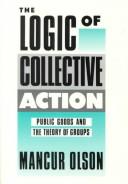
The 1965 economics problem the whole field has to answer: if a public good will be provided whether or not you turn up, participating is irrational, so large groups should under-organise relative to small ones. Read it early — every theory that follows is in some sense a response to it.
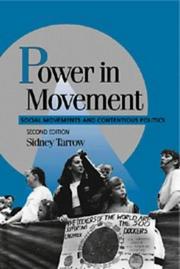
The standard synthesis of the political-process approach: movements emerge when political opportunities open, not simply when suffering increases, and they rise and fall in cycles of contention. The core theoretical text of the path.

The empirical counterpart, and one of the best-designed studies in the field: McAdam traced the volunteers who went to Mississippi in 1964 and, crucially, those who applied and did not go, then followed both for twenty years. It answers who participates and what it does to the rest of their lives with a real comparison group.
The Comparative Evidence on What Works
IntermediateRead the quantitative claim that reorganised the field, and read it precisely. Chenoweth and Stephan compared hundreds of twentieth-century campaigns and found nonviolent ones roughly twice as likely to achieve their objectives, with the mechanism being breadth of participation and the defection of security forces and elites. The widely repeated 3.5% figure is a descriptive observation about their sample — no campaign in it that mobilised that share of the population failed — and not a threshold
▸ Study plan for this stage
Pace: Six to eight weeks for 664 pages, the shortest stage and the one that most rewards slow reading. Chenoweth and Stephan's Why Civil Resistance Works is 296 pages: the dataset and the argument that nonviolent campaigns succeed more often than violent ones, with the causal story running through breadth
- The core comparative finding: nonviolent campaigns roughly twice as likely to achieve their objectives, across hundreds of twentieth-century cases
- The mechanism the authors identify - participation breadth, and the defection of security forces and economic and political elites - which is causal rather than moral
- Why breadth matters more than intensity: a campaign that can include the old, the cautious and the employed reaches people a violent one cannot
- What the 3.5% figure actually is: a descriptive property of a sample, not a causal threshold, and the difference matters
- The narrowing of the effectiveness gap in more recent campaigns, flagged by the authors themselves
- Boundary conditions: what kinds of regime, objective and campaign the finding applies to and does not
- Momentum-driven organising: escalation, sacrifice, absorption of repression, and the question of when a peak has passed
- The distinction between mobilisation and power, which the two books approach from opposite directions
- State Chenoweth and Stephan's finding precisely, including its unit of analysis and what counts as success in their coding.
- What is the causal mechanism they propose? Which link in it is best evidenced?
- Explain what the 3.5% figure is and what it is not. Why does the popular version invert the direction of the claim?
- The gap has narrowed in recent campaigns. What explanations have been offered, and which would you want tested?
- What are the boundary conditions of the finding? Name a campaign type where you would not expect it to hold.
- Engler writes about escalation and about when to stop. What determines the answer, and how would an organiser know in real time?
- Read the coding rules for success in the dataset and then code two campaigns yourself. Coding is where a comparative finding is actually made, and doing two cases shows you how much judgement it involves.
- Write the 3.5% claim out three ways: as Chenoweth states it, as it is usually repeated, and as a causal claim. Then say what evidence would be needed for the third. This is the single most useful half-hour on the path and it inoculates you against the most common misuse of the best-known finding in the field.
- Take a campaign from the last decade and assess it on breadth rather than on size: who could join, who could not, and what the participation barrier was. Breadth is the mechanism and it is not the same as attendance.
- Apply Engler's escalation framework to a campaign you have watched. Identify the peak, and then ask what the organisation did in the six months afterwards. The answer is usually the whole story.
- Find one loyalty shift - a police unit, a business association, a state broadcaster - in a real campaign and trace what preceded it. Defection is the mechanism Chenoweth and Stephan identify, and following one instance makes it concrete.
Next up: The comparative data says breadth and defection matter; the next stage reads the people who have to produce them, and who disagree sharply about how.

The dataset and the argument: nonviolent campaigns succeed more often than violent ones, and the causal story runs through participation breadth and loyalty shifts rather than through moral force. The most important empirical book on this path, and worth reading closely enough to see the boundary conditions it states.
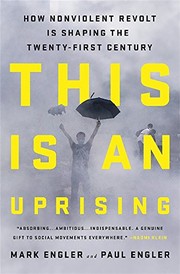
Engler and Engler on momentum-driven organising — the deliberate use of disruptive mass mobilisation to force an issue, and the strategic questions of escalation, sacrifice and when to stop. The practical bridge between the comparative data above and the organising tradition below.
The Organiser's Tradition
IntermediateMove to the literature written to be used. The argument inside this stage is worth following, because these books disagree: Alinsky says build a permanent organisation around self-interest; Piven and Cloward say organisation-building is what dissipates disruptive power, and poor people's movements win in the brief moments they are ungovernable and lose afterwards; McAlevey says both are half right and the variable is whether you do deep organising that develops leaders or shallow mobilising that
▸ Study plan for this stage
Pace: Three to four months for 1,126 pages, and the stage is an argument rather than a syllabus - these books disagree with each other and the disagreement is the content. Alinsky's Rules for Radicals is 196 pages and comes first: the founding manual of American community organising, working from people's
- Alinsky's premises: organise around self-interest as people actually state it, build a permanent organisation, personalise and polarise the target
- Piven and Cloward's counter-claim: disruptive power is available only briefly, and organisation-building dissipates it rather than storing it
- The historical evidence they marshal - four movements, four moments of ungovernability, four subsequent institutionalisations
- McAlevey's distinction between mobilising and organising, and why it is a claim about who is recruited rather than about how hard anyone works
- Organic leaders: the people a workplace or community already follows, as distinct from the people who volunteer
- Supermajority thresholds and structure tests as measurable intermediate goals, which is what makes McAlevey operational
- Lowering the perceived cost of participation - humour, small winnable actions, dispersed tactics - as Popovic's contribution
- Selection on the dependent variable in practitioner literature: a book of successful movements cannot tell you what distinguishes success
- Reconstruct the disagreement between Alinsky and Piven and Cloward as precisely as you can. What would each predict about the same campaign?
- Piven and Cloward argue that organisation dissipates disruptive power. What is their evidence, and what would count against them?
- What is the difference between mobilising and organising on McAlevey's account? Give a concrete test that would tell you which a campaign is doing.
- How do you identify an organic leader, and why does McAlevey insist they are not the volunteers?
- What does a structure test measure, and why is it a better intermediate indicator than turnout?
- For a campaign you know: which of these three accounts fits it best, and what does that imply about what it should do next?
- Write the Alinsky and the Piven and Cloward position on the same campaign as two one-page memos, each recommending a different next step. Then decide, and write down the reason. Treating these as doctrines rather than as competing hypotheses is the commonest failure in this literature.
- Do McAlevey's exercise properly on a group you actually belong to: list the people others follow rather than the people who show up, and check your list against who others name. Almost everyone's first list is wrong, which is her point.
- Design a structure test for a real campaign - a specific, countable, low-risk action with a threshold set in advance. Then run it if you can. It is the difference between a campaign that knows its own strength and one that finds out on the day.
- Take one of Popovic's tactics and ask what conditions it assumes - a regime that can be embarrassed, a population that shares a sense of humour, a low cost of arrest. Then ask where it would fail. Tactics travel badly and the assumptions are what determine whether they travel at all.
- Read Piven and Cloward's account of one movement against the Chenoweth and Stephan mechanism from the previous stage. Disruption and breadth pull in different directions, and working out whether they conflict is the sharpest unresolved question on this path.
Next up: The final stage moves from organising to strategy proper - the theory of why withdrawing cooperation is coercive at all, what networked platforms changed about it, and the argument now being made against the whole consensus.
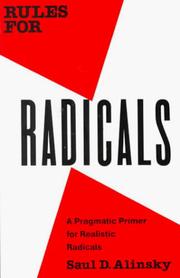
The founding manual of American community organising: work from people's actual self-interest, personalise the target, keep the pressure outside the opponent's experience. Cynical, tactically specific, and the text everyone in this tradition is either applying or arguing with.

Piven and Cloward's direct challenge to Alinsky: the gains of the unemployed, industrial, civil rights and welfare rights movements came from mass defiance, and the effort to build lasting organisations channelled that defiance into forms elites could manage. A genuinely uncomfortable argument, and the best one here.

The modern synthesis, from union organising: the distinction between mobilising the already-committed and organising, which means finding the organic leaders a workplace or community already follows and moving supermajorities. The most operationally useful book on the path.
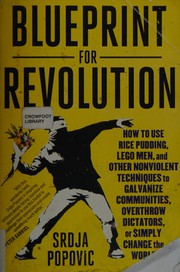
Written by a founder of Otpor, the Serbian student movement that helped bring down Milošević, and focused on humour, small winnable actions and lowering the perceived cost of participation. Read it as tactics from a practitioner rather than as evidence; the movements it draws on are a selected sample of successes.
Nonviolent Strategy, and the Current Argument Against It
IntermediateEnd with strategy proper and with the dispute now live inside the climate movement. Sharp's contribution is analytical rather than moral: power depends on the cooperation of many people, so withdrawing cooperation is a coercive technique available to those without weapons. Tufekci's is the crucial modern qualification — networked platforms make it trivially easy to assemble a large protest and remove the organisational capacity that assembling one used to require and signal. Malm then argues the
▸ Study plan for this stage
Pace: Eight to ten weeks for 793 pages. Sharp's The Politics of Nonviolent Action is recorded here at 114 pages, which is short for a work of this scope - it is published in several forms including a multi-volume edition, so check what you are buying; whichever version you get, it is dense and slow, and t
- Sharp's analytical rather than moral case: power depends on the cooperation of many people, so withdrawing cooperation is a coercive technique available to those without weapons
- Pillars of support - bureaucracy, security forces, business, media, religious institutions - as the units a strategy actually targets
- The catalogue of methods as a strategic menu rather than a list of gestures, and the difference between protest, non-cooperation and intervention
- Tufekci's central qualification: platforms make it trivially easy to assemble a large protest and remove the organisational capacity that assembling one used to require and signal
- Capacities rather than size as the analytic unit - narrative capacity, disruptive capacity, electoral capacity - which is the most useful idea in the field of the last decade
- Tactical freeze: a networked movement that cannot decide what to do next because it has no decision-making structure
- Malm's historical claim about how canonical movements are remembered, and the empirical and ethical objections to his conclusion
- Reading a contested argument as an argument: stating its strongest form before deciding against it
- Explain Sharp's theory of power. Why does it make obedience rather than force the variable of interest?
- Tufekci says a large protest used to signal something it no longer does. What did it signal, and what replaced the work that produced the signal?
- What is a tactical freeze, and what structural feature causes it? What would prevent one?
- Distinguish a movement's size from its capacities. For one recent movement, name the capacity it lacked.
- State Malm's argument in its strongest form. What is the empirical objection from Chenoweth's data, and what is the ethical one? Do they stand or fall together?
- Looking back over the whole path: what is the single best predictor of a movement achieving its objective, on the evidence you have read?
- Take Sharp's method catalogue and, for a campaign you care about, select five methods and say for each what pillar it targets and what it would cost the participants. Strategy in this tradition is method selection against pillars, and doing it once is worth more than reading the whole catalogue passively.
- Apply Tufekci's capacities framework to two movements, one that achieved its objective and one that did not. Score each on narrative, disruptive and electoral capacity. The scores usually explain the outcome better than the crowd sizes do.
- Find a case of tactical freeze in a movement you followed, and identify the decision that could not be made and the structure that was missing. Tufekci's diagnosis is specific enough to check.
- Write the strongest version of Malm's argument in one page, then write the rebuttal from Chenoweth and Stephan's data in another. Being able to write both is the standard this stage sets, and a reader who can only write one has taken a side rather than assessed a dispute.
- Return to the Piven and Cloward disruption argument from the previous stage and place it beside Sharp's non-cooperation. Both are about withdrawing something a system needs, and working out whether they are the same claim is the closing exercise of the path.
Next up: This closes the path. The natural next step is the current empirical literature on any single case you now care about, read with the coding rules and the capacities framework in hand rather than the crowd photographs.

The systematic theory of nonviolent struggle as a technique of power rather than a moral stance, and the book behind a great many twentieth-century campaigns. ⚠️ Our record is Part One, 'Power and Struggle', at 114 pages — not the complete work, which runs to three parts and roughly 900 pages. Part Two carries the famous catalogue of 198 methods and has no separate record here, so buy the three-volume set or the combined edition if you want it.
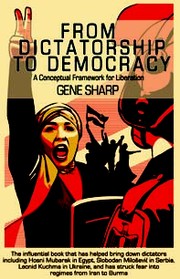
The short, free pamphlet version, written for Burmese dissidents and subsequently translated and used in a long list of uprisings. Read it after the theory as the compressed strategic version — its real-world circulation is itself part of the subject.

The essential modern corrective: networked movements can assemble enormous crowds quickly and often lack the decision-making capacity, negotiating structure and endurance that slower organising used to build along the way. Her concept of a movement's capacities rather than its size is the most useful analytic idea of the last decade here.

The argument that the climate movement's commitment to nonviolence rests on a sanitised reading of historical movements, and that property destruction has a place. Included because it is a serious position now shaping real strategic debate, and flagged plainly: it is contested empirically — Chenoweth's data cuts against it — and ethically, and despite the title it is a work of political argument rather than a manual.
Discussion
Keep reading
Paths that share books, cover the same subject, or open a related topic.