Kobo Abe Reading Order: Where to Start
Abe writes the same experiment over and over: remove one thing a person depends on — a way out, a face, an address, a name — and watch what is left. Start with the novel that made him internationally famous, then read the two books that complete the loose identity trilogy alongside his most formally radical work, then the late novels where the machinery turns comic and hallucinatory, and close with the early science fiction and the essays.
Start Here
BeginnerMeet Abe's method in the two novels that state it most cleanly: a trap, and a man who agrees to stay in it.
▸ Study plan for this stage
Pace: 3 weeks for about 430 pages. The Woman in the Dunes (176pp) over a week — read it in long sittings, because the physical claustrophobia is cumulative and breaks let you out of the pit. The Face of Another (256pp) over 2 weeks; it is a slower, more argumentative book.
- Set expectations correctly before page one: Abe is closer to Kafka than to realism. The premise is irrational, everything downstream of it is documented with clinical precision, and nobody in the book will comment on how strange the situation is
- That precision is the pleasure. Abe trained as a doctor at Tokyo Imperial University and took a medical degree without ever practising, and the fiction reads like a series of controlled experiments — remove one thing a person depends on and record what happens
- In The Woman in the Dunes the removed thing is exit. An amateur entomologist collecting beetles is lowered into a sand pit and kept there to shovel sand that never stops arriving
- The sand is the book's real argument: Abe keeps giving you its physics — grain size, flow, the way it destroys wood and rots timber — until the reader accepts that nothing solid is actually solid, including a life in the city
- The ending is the point and is easy to misread. Do not treat it as defeat; Abe's question is what freedom means once you can leave, and the last few pages are the whole thesis
- The Face of Another moves the same trap inward: a scientist whose face is destroyed in a lab accident builds a lifelike mask, then uses it to seduce his own wife, and writes the entire novel as notebooks addressed to her
- Both novels became films directed by Hiroshi Teshigahara with screenplays by Abe himself. The Woman in the Dunes film is famous in its own right, and watching it after reading is legitimate; watching it first will replace the book's images with someone else's
- What does Niki Jumpei believe about his own status for the first hundred pages, and what specific event ends that belief?
- Why is the crow trap called Hope, and what does the discovery at the end of it actually change?
- The novel opens and closes with bureaucratic missing-person documents. What does that frame do to everything between them?
- In The Face of Another, does the mask change him, or does it license something already there? Find the passage where the narrator himself gets this wrong
- The wife's response at the end of The Face of Another reframes the whole book. What did the narrator never consider?
- Both men construct elaborate justifications in writing. What is Abe suggesting about the relationship between reasoning and self-deception?
- Mark every technical passage about sand in The Woman in the Dunes and read them consecutively. They form a short essay and it is the novel's thesis statement
- Stop at the moment Jumpei is first offered a way out and write down what you expect him to do, before reading on
- In The Face of Another, keep the three notebooks distinct and note where the narrator revises something he wrote earlier
- Write one sentence describing each book's experiment in the form: remove X, observe Y. You will use this format for the whole path
- After finishing both, note that neither is set in a named or recognisably Japanese place. Abe strips national specificity on purpose and it is worth noticing early
Next up: You have seen the trap close on a man in a pit and on a man behind a mask; next it closes on the narrator himself, until there is no reliable person left to report from.

An amateur entomologist is lowered into a sand pit and kept there to shovel. The one indispensable entry point: a perfect premise, unbearable physical detail, and the ending that defines his whole idea of freedom.
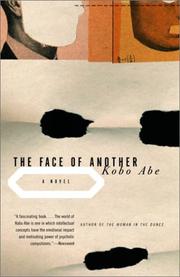
A scientist disfigured in a lab accident builds himself a lifelike mask and uses it to seduce his own wife. Read second: it takes the same trap structure inward, from geography to identity.
The Identity Novels
IntermediateFollow the disappearance theme to its formal extreme, where the narrator stops being locatable at all.
▸ Study plan for this stage
Pace: 4 weeks for about 480 pages. The Ruined Map (299pp) over 2 weeks — it reads like detective fiction until it stops. The Box Man (185pp) over 2 weeks despite being shorter, because it needs rereading in sections; expect to go back thirty pages more than once.
- These complete a loose sequence begun in stage one, often grouped as an identity trilogy with The Face of Another: a man loses his location, then his face, then any stable narrating self
- The Ruined Map uses the machinery of the private-eye novel — a client, a missing husband, a matchbook, a lead — and then lets the machinery consume the detective. By the end the searcher is the missing person
- Abe is precise about paperwork: addresses, registrations, employment records. Disappearing in his fiction is an administrative act as much as a physical one, and that comes straight out of his own displaced childhood
- The Box Man is his most formally radical book. A man walks the city inside a cardboard box, watching through a slit, and partway through you can no longer tell which of several men is narrating or whether any of them is
- The box is a viewing device before it is a hiding place — the book is about the asymmetry of looking at people who cannot look back, which makes it a novel about voyeurism and photography as much as about homelessness
- The text is interrupted by inserted documents, case notes, and in most editions photographs with captions. These are not decoration; they are the evidence the narration has stopped being able to supply
- The correct reading posture for The Box Man is to stop asking who is speaking and start asking who benefits from the confusion
- At what page does The Ruined Map stop being solvable, and is there any clue that it was ever a real case?
- What does the client actually want, and does the novel let you decide whether she is telling the truth?
- In The Box Man, list every candidate narrator you can identify. How many are there, and does the count matter?
- What is the fake box man for, and what does his existence say about the real one?
- Both novels are about men who disappear voluntarily. What does Abe think they are escaping, given that neither is in danger?
- Compare the pit in stage one with the box here: which is the more complete trap, and which is chosen?
- Keep a case file while reading The Ruined Map — client, subject, leads, dates. When it stops cohering, look back at your file and identify where
- On a first pass through The Box Man, do not try to resolve the narration. On a second, mark every switch you can find and see how many were signposted
- Note every mention of watching, slits, lenses and photographs across both books, then write two sentences on Abe and the act of looking
- Write the one-sentence experiment for each of these two, in the same format as stage one. The Box Man is the hardest to compress, which is itself informative
Next up: Having watched the narrator dissolve, you can take the late novels for what they are — the same apparatus, now run as comedy.
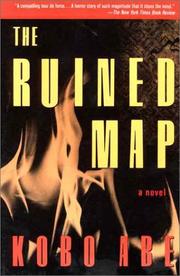
A detective hired to find a missing salaryman loses himself in the search instead. The third of the loose 1960s trilogy and the bridge between the realist traps and the later dissolution.
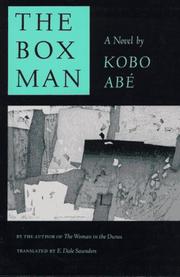
A man walks the city inside a cardboard box, watching through a slit, and the narration itself starts changing hands. His most radical book — attempt it only after The Ruined Map has prepared you for an unreliable centre.
The Later Novels
IntermediateSee the late Abe, where the same apparatus becomes funnier, filthier and closer to farce.
▸ Study plan for this stage
Pace: 5–6 weeks for about 710 pages. Secret Rendezvous (192pp) in 10 days, The Ark Sakura (336pp) over 3 weeks and it goes down easily, Kangaroo Notebook (183pp) over the last 10 days. If any one of them repels you, skip ahead rather than stalling; they are not sequential.
- The late Abe keeps the method and drops the restraint: the same clinical apparatus, now applied to material that is funnier, filthier and openly absurd
- Secret Rendezvous is the most transgressive thing he wrote — a man searching an endlessly bureaucratic hospital for a wife taken by an ambulance nobody called, in a building where the staff are running sexual experiments and one of the senior figures is turning himself into a horse. It needs the goo
- The Ark Sakura is the most enjoyable of the late work: a recluse converts a disused quarry into a nuclear shelter and starts issuing survival tickets, which makes him a bureaucrat of the apocalypse rather than its survivor
- Its running joke is an enormous toilet that flushes anything away, and the plot turns on someone's leg getting stuck in it. Abe means it seriously — the ark's whole promise is that unwanted things can be made to disappear, and the toilet is that promise failing
- The insect in The Ark Sakura, a beetle that eats its own excrement and moves in a circle with the sun, is the book's emblem and worth stopping over
- Kangaroo Notebook is the last novel and the least anchored: radish sprouts grow from the narrator's shins and his hospital bed drives itself to a sulphurous underworld. Read it as an endpoint rather than as a story
- Across all three, hospitals, shelters and institutions replace the pit and the box — the trap is now an organisation with rules, and the comedy comes from characters obeying them
- In Secret Rendezvous, what does the hospital appear to be for, and does the novel ever supply a purpose that would explain it?
- The narrator of Secret Rendezvous is himself no innocent. Where does the book quietly implicate him?
- What criteria does the Ark's owner use to issue tickets, and what does that reveal about who he thinks deserves to survive?
- Why a quarry, a toilet and a beetle? Take each as a deliberate choice and say what it contributes
- Kangaroo Notebook abandons causal sequence almost entirely. Is anything still holding it together — image, tone, or the narrator's body?
- Are these books a decline or a loosening? Argue it against the tighter early novels rather than against your own taste
- Write the one-sentence experiment for each of the three. If you cannot for Kangaroo Notebook, that is the finding, not a failure
- In The Ark Sakura, list what the owner is stockpiling. The inventory is a comic essay on what survival is imagined to require
- Take one page of Secret Rendezvous and note how clinically it is written. The tone is unchanged from The Woman in the Dunes — only the content has moved
- Read the beetle passage aloud and decide whether Abe is describing an animal or a person
- If you have watched any of the Teshigahara films, note what the late novels would be impossible to film, and why
Next up: With the whole run of novels behind you, the early science fiction and the essays show where the experimental method came from and what Abe thought he was doing with it.
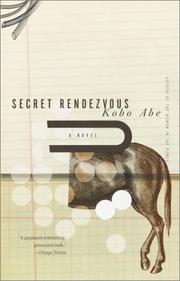
A man searches an endlessly bureaucratic hospital for his wife, taken by an ambulance nobody called. The strangest and most transgressive of the novels; it needs the goodwill the earlier books earn.
A recluse converts a quarry into a nuclear ark and starts choosing who gets a ticket. The most enjoyable late novel and the clearest comedy of survival.
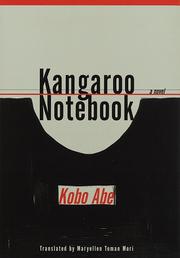
Radish sprouts grow from a man's shins and his hospital bed drives itself to the underworld. The final novel — read last, since its logic only registers as an endpoint.
The Completist Tail
IntermediateFill in the early science fiction, the short stories and the essays that show where the method came from.
▸ Study plan for this stage
Pace: 7–8 weeks for around 890 pages. Inter Ice Age 4 (228pp) over 2 weeks, Beasts Head for Home (191pp) over 10 days, Beyond the Curve (247pp) over 2 weeks reading two or three stories a sitting, and The Frontier Within (224pp) over 2 weeks — essays, so a few at a time.
- Inter Ice Age 4 is frequently called Japan's first full-length science fiction novel: a prediction machine is turned on its own creator while the seas rise and human embryos are being adapted to live underwater
- It is the origin of the whole method. The cold experimental structure of every later book is already there, only with the apparatus visible as literal machinery
- Beasts Head for Home is the most directly autobiographical thing he wrote: a Japanese boy tries to walk home across Manchuria after the war. Abe was raised in Mukden, in Japanese-occupied Manchuria, and returned to a country he had barely lived in
- That biography explains the obsessions cleanly — borders, papers, registration, the impossibility of belonging to a place — and it explains why his fiction is so pointedly unattached to any recognisable Japan
- Beyond the Curve gathers short fiction from across his career, including pieces that later grew into the novels; several are the same experiment at a quarter of the length
- The Frontier Within collects essays on cities, walls, nomads and the invention of the settled life. Here Abe states outright the argument the novels only ever dramatise: that the wall and the identity papers are the same technology
- Reading the essays last converts the fiction from a set of odd premises into a consistent position, which is why they close the path rather than open it
- In Inter Ice Age 4, what does the machine predict, and why is the creator unwilling to accept a forecast he commissioned?
- What is Abe's argument about the future in that novel — is the underwater adaptation a horror, a solution, or a test of the reader's conservatism?
- In Beasts Head for Home, what stops Kyuzo at each stage, and how many of the obstacles are bureaucratic rather than physical?
- Which stories in Beyond the Curve are visibly seeds of novels you have read, and what did the novel add?
- In the essays, what does Abe mean by the frontier, and where does he locate it — geographically, or inside the individual?
- Having read all eleven books, what is the single removal that recurs most often: exit, face, address, or name?
- Read Inter Ice Age 4 immediately after Kangaroo Notebook and note how little the method changed across nearly forty years
- While reading Beasts Head for Home, keep a note of every document, permit and checkpoint. The list is the argument of the essays in narrative form
- Pick two stories from Beyond the Curve and pair each with the novel it anticipates
- Take one essay from The Frontier Within and apply it directly to The Box Man in a paragraph. The fit is close enough to be startling
- Write your eleven one-sentence experiments out in publication order. That list is the clearest possible summary of Abe's career
- Decide which single book you would give someone who says they do not like Kafka. The Ark Sakura and The Woman in the Dunes are both good answers, for opposite reasons
Next up: That is Abe complete — the traps, the dissolutions, the late comedies and the theory behind them — and the natural next reads are the Teshigahara films he wrote, or Oe, the other postwar novelist who refused a traditional Japan, from the opposite direction.

A prediction machine is asked to forecast its own creator's future, in a world preparing for the seas to rise. Often called Japan's first full science fiction novel, and the origin of his cold-experiment structure.

A Japanese boy tries to walk home from Manchuria after the war. The most directly autobiographical book, and it explains where his obsession with borders and papers began.
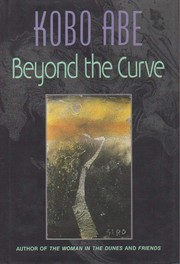
Short fiction spanning his career, including the pieces that later grew into the novels. Best read once the novels are familiar so you can watch the ideas incubating.

Essays on cities, nomads, borders and the invention of the wall. The theoretical close to the path: Abe stating outright what the fiction only ever dramatises.
Discussion
Keep reading
Paths that share books, cover the same subject, or open a related topic.