Learn knots: the essential ties for every situation
This curriculum takes a complete beginner from tying their first overhand knot to mastering a full repertoire of practical knots for climbing, boating, camping, and daily life. Each stage builds on the last — starting with muscle memory for core knots, then expanding into domain-specific applications, and finally developing the deep understanding needed to choose, adapt, and tie any knot under pressure without thinking.
Foundations: Core Knots & Muscle Memory
BeginnerLearn the 10–15 most universally useful knots (bowline, cleat hitch, clove hitch, figure-eight, sheet bend, etc.), understand basic knot anatomy (working end, standing end, bight, loop), and begin building the repetition needed for automatic tying.
▸ Study plan for this stage
Pace: 8–10 weeks total. Week 1–6: "The Ashley Book of Knots" — focus selectively, not cover-to-cover. Read Ashley's introductory chapters on knot history, terminology, and anatomy first (~20–30 pages), then cherry-pick the 10–15 target knots from the relevant chapters (stopper knots, hitches, bends, loops
- Knot anatomy vocabulary: working end, standing end, standing part, bight, loop, elbow, and turn — as defined and illustrated in Ashley's opening sections
- The four functional families of knots covered across both books: stoppers, bends (joining two ropes), hitches (attaching rope to an object), and loops
- The 10–15 core knots: bowline, figure-eight, clove hitch, cleat hitch, sheet bend, reef (square) knot, round turn & two half-hitches, rolling hitch, timber hitch, alpine butterfly loop, double fisherman's, and water knot — drawn from Ashley's numbered entries and reinforced by Pawson's photographs
- Ashley's knot-numbering system (#ABoK numbers) and how to navigate the book's structure to locate a specific knot efficiently
- The concept of 'knot security vs. ease of release' — why some knots jam under load (reef knot) while others release cleanly (bowline), a theme Ashley addresses in his introductory philosophy
- Rope construction basics (laid, braided, natural vs. synthetic fiber) and how material affects knot choice and behavior, touched on in both Ashley and Pawson
- The principle of dressing and setting a knot: why a knot tied loosely looks identical to one tied correctly but performs very differently — emphasized in Pawson's step-by-step photography
- Repetition as a learning method: the idea that a knot is not 'learned' until it can be tied correctly behind the back, in the dark, or under stress
- Without looking at either book, can you define working end, standing end, bight, and loop, and point to each part on a piece of rope mid-tie?
- What is the functional difference between a bend and a hitch, and which of your 10–15 target knots belongs to each family?
- Why does Ashley warn against using the reef knot as a bend for joining two ropes under load, and what knot does he recommend instead?
- Using Ashley's numbering system, how would you locate the bowline (#1010) and the clove hitch (#1670) — and what does the surrounding context in each chapter tell you about related knots?
- How does Pawson's photographic presentation of the sheet bend differ from Ashley's illustrated sequence, and which did you find clearer for learning the tying steps?
- What does it mean to 'dress' a knot, and what visual or tactile cues tell you a knot has been properly set?
- Rope journal: buy 2–3 meters of 6–8 mm practice cord and tie each of the 10–15 target knots daily for one week straight, logging your time-to-tie and any errors — aim to get each knot under 30 seconds by end of stage
- Ashley scavenger hunt: use Ashley's index and numbering system to locate five knots not on your core list, read their entries, and explain in one sentence why each is or isn't worth adding to your repertoire right now
- Anatomy labeling drill: tie a bowline, a clove hitch, and a sheet bend, then use sticky labels or colored tape to mark the working end, standing end, and bight on each finished knot
- Pawson cross-reference: for every knot in your core list, find it in both Ashley and Pawson, then write one sentence comparing how each book explains the tying sequence — note which book's method you'll memorize
- Blind/eyes-closed tying: once you can tie each knot looking at the page, practice tying it with your eyes closed or behind your back — a technique consistent with the muscle-memory philosophy both authors implicitly endorse through their emphasis on repetition
- Knot family sorting game: write each of your 10–15 knots on an index card, shuffle them, then sort them into the four functional families (stopper, bend, hitch, loop) as fast as possible — repeat until you can do it in under 60 seconds without hesitation
Next up: Mastering the anatomy, functional families, and muscle memory of these 10–15 core knots gives you the vocabulary and physical intuition needed to tackle more specialized, load-bearing, and context-specific knots in the next stage — where knot selection, mechanical advantage, and application-specific rigging begin to take center stage.
The definitive encyclopedia of knots — read the introductory chapters first to absorb vocabulary, anatomy, and the logic of how knots work. This is the canonical reference every knot book refers back to, so reading it early anchors all future learning.

A highly visual, step-by-step guide that complements Ashley perfectly for beginners. Its clear photography and concise instructions make it ideal for drilling the core practical knots until they become second nature.
Everyday & Outdoor Practical Knots
BeginnerExpand the knot toolkit to cover camping, hiking, bushcraft, and general outdoor scenarios — lashings, hitches, and load-bearing ties — and understand when and why to choose one knot over another in real field conditions.
▸ Study plan for this stage
Pace: 6–8 weeks total: Weeks 1–4 cover "Bushcraft 101" (~20–25 pages/day, focusing on knot, lashing, and cordage chapters alongside the broader bushcraft context); Weeks 5–8 cover "The Boy Scout Handbook" (~15–20 pages/day, revisiting knot chapters multiple times with rope in hand rather than reading stra
- Cordage selection and natural vs. synthetic rope properties — Canterbury's emphasis on understanding your materials before tying any knot
- The 'Five Cs of Survivability' from Bushcraft 101, with Cordage as a core survival category, framing why knot competence is a life skill, not a hobby
- Core hitch family: clove hitch, timber hitch, and half hitches — how hitches attach rope to an object and when friction or a locking turn is needed
- Lashing techniques (square lashing, diagonal lashing, shear lashing) from The Boy Scout Handbook — binding poles or spars together to build structures under load
- Load-bearing vs. binding knots: understanding which knots hold tension along a line (e.g., taut-line hitch for tent guylines) vs. which bundle or join objects
- Knot selection logic: matching the knot to the task, material, and conditions — Canterbury's field-first mindset of asking 'what does this knot need to DO?'
- Finishing and dressing a knot properly — The Boy Scout Handbook's insistence that an untightened or poorly dressed knot is an unsafe knot
- Redundancy and backup principles — when to add a stopper knot or a second half hitch, and why field conditions (wet rope, dynamic load) demand conservative choices
- According to Canterbury's framework in Bushcraft 101, why is cordage listed among the Five Cs, and what does that priority tell you about the role of knots in a survival or bushcraft context?
- What is the mechanical difference between a hitch and a lashing, and when would you reach for each in an outdoor scenario described across these two books?
- How does the taut-line hitch function, and why do both Canterbury and The Boy Scout Handbook recommend it specifically for adjustable tension applications like tent guylines?
- Walk through the steps of a square lashing as presented in The Boy Scout Handbook — what are the wrapping turns, frapping turns, and finishing clove hitches, and what load does each part handle?
- What factors — rope material, wetness, dynamic vs. static load, ease of untying — should guide your knot choice in the field, drawing on Canterbury's decision-making philosophy?
- How does The Boy Scout Handbook define a 'properly dressed' knot, and what can go wrong structurally if a knot is tied but not dressed and set before loading?
- Tie the five foundational hitches (clove hitch, timber hitch, two half hitches, taut-line hitch, rolling hitch) to a fixed post or tree branch, then deliberately load each one by hanging a weighted bag — observe which slip, which hold, and which tighten under load
- Build a simple bushcraft camp structure (a lean-to ridgeline or a raised platform frame) using only square and shear lashings from The Boy Scout Handbook, then apply body weight to test structural integrity before untying everything and repeating from memory
- Simulate Canterbury's 'Five Cs kit' by packing a small daypack with 50 ft of paracord and a length of bank line, then spend one hour in a backyard or park solving five improvised tasks (hang a tarp, secure a bundle, create a clothesline, lash two sticks, hang a water bottle) using only knots from these two books
- Wet-rope drill: soak your practice rope in water for 10 minutes, then tie and untie a clove hitch, bowline, and taut-line hitch — note how handling, tightness, and ease of release change, and write a one-paragraph field note on each
- Knot-selection quiz: write out 10 real outdoor scenarios (e.g., 'I need to tie a guyline that I'll adjust throughout the night,' 'I need to lash a crossbar to two uprights to hang gear') and, without looking at the books, write the knot you'd choose and why — then verify against Bushcraft 101 and The Boy Scout Handbook
- Timed repetition: set a 2-minute timer and practice tying the clove hitch, taut-line hitch, and square lashing start-to-finish until you can complete each correctly within the time limit, simulating low-light or cold-hands field conditions
Next up: Mastering these field-practical hitches and lashings — and the 'why behind the which' decision logic — gives the reader the real-world intuition needed to move confidently into more specialized or decorative knotwork, where precision of form, not just function, becomes the central challenge.

Grounds knot knowledge in real outdoor survival and camping contexts, showing exactly which knots matter in the field and why. Reading this after the visual foundations stage lets you immediately apply what you've drilled to practical scenarios.

A time-tested, practical guide that covers lashings, pioneering knots, and camp craft in a structured, easy-to-follow format. Its emphasis on repetition and application reinforces muscle memory for the most essential outdoor ties.
Boating & Marine Knots
IntermediateMaster the specific knots and line-handling skills required on the water — cleating, mooring, splicing, and working with different rope types — and understand the safety-critical nature of knot selection in a marine environment.
▸ Study plan for this stage
Pace: 8–10 weeks total. Weeks 1–6: Chapman Piloting and Seamanship (focus on rope/line chapters, marlinspike seamanship sections, and anchoring/docking chapters — approximately 20–25 pages/day, skimming non-knot navigation chapters and reading rope/rigging sections closely). Weeks 7–10: The Marlinspike Sa
- Marine line types and their properties: nylon (stretch/shock absorption), polyester/Dacron (low stretch), polypropylene (floats), and three-strand vs. double-braid construction — as covered in Chapman's seamanship chapters
- Cleating technique: the correct figure-eight and locking hitch sequence on a cleat, and why an improperly cleated line is a safety hazard in docking and mooring situations
- Essential boating knots and their specific marine use cases: bowline (attaching lines to rings/posts), cleat hitch, clove hitch, round turn and two half hitches, reef knot, and the rolling hitch — all detailed in Chapman
- Anchoring line management: scope ratios, rode composition (chain vs. rope), and the knots used to connect rode components, as covered in Chapman's anchoring chapter
- Mooring and docking line strategy: spring lines, breast lines, bow and stern lines — understanding how knot and cleat choices affect a vessel's security at a dock
- Splicing fundamentals from The Marlinspike Sailor: eye splice, back splice, and short splice in three-strand rope — understanding how a proper splice is stronger than any knot
- Decorative and traditional marlinspike work from Smith: Turk's head, monkey's fist, and whipping techniques — understanding their practical origins and ongoing utility aboard
- Safety-critical knot selection: recognizing that the wrong knot in a marine environment (one that jams, slips, or degrades with wet line) can result in loss of vessel, injury, or worse — a theme woven through both books
- According to Chapman, what are the key differences between nylon and polyester line, and in what specific onboard applications would you choose each?
- Walk through the correct sequence for securing a line to a cleat — what makes the final locking hitch both secure and quick to release under load?
- From The Marlinspike Sailor, what are the step-by-step stages of tying an eye splice in three-strand rope, and how does its breaking strength compare to a bowline in the same line?
- What is a rolling hitch and when, as described in Chapman, would you use it instead of a clove hitch or round turn and two half hitches?
- How do spring lines function at a dock, and which knots or cleating methods does Chapman recommend for securing them safely?
- From Smith's Marlinspike Sailor, what is the practical purpose of a monkey's fist, and what knot forms its core — how would you construct one from scratch?
- Rope kit drill: Acquire at least two rope types (three-strand nylon and double-braid polyester) in 10–15 ft lengths. Practice every knot covered in Chapman's marlinspike section — bowline, cleat hitch, clove hitch, round turn and two half hitches, rolling hitch — first dry, then with wet rope, noting how each knot's behavior changes
- Cleat simulation: Mount or clamp a real cleat to a workbench. Practice the full cleating sequence (lead, figure-eight, locking hitch) 20 times until it is automatic, then practice releasing it under simulated load (have a partner pull the line) to build muscle memory for docking scenarios
- Splicing project (from The Marlinspike Sailor): Complete a full eye splice in a 3-strand nylon line following Smith's illustrated instructions. Test the splice by loading it against a bowline tied in the same line — observe and record any difference in deformation or slippage
- Docking line layout exercise: Using a diagram or physical mock-up, lay out a complete set of docking lines (bow, stern, two spring lines) for a hypothetical 30-ft vessel in a slip, labeling the knot or cleating method you would use at each attachment point and explaining your choices in writing
- Monkey's fist construction (from The Marlinspike Sailor): Follow Smith's instructions to tie a monkey's fist around a weighted core (a golf ball works well). Attach it to a heaving line and practice throwing it accurately — connecting the decorative craft directly to its real man-overboard and docking utility
- Wet-line safety audit: Tie six different knots (bowline, reef knot, clove hitch, sheet bend, figure-eight, rolling hitch) in both dry and soaking-wet rope. Attempt to release each under moderate load. Document which knots jam, which slip, and which release cleanly — then write a one-paragraph 'knot selection policy' for a hypothetical day-sail
Next up: Mastering marine knots and line-handling through Chapman and Smith builds the disciplined, safety-first rope craft and material awareness that directly prepares the reader for more specialized or advanced rigging contexts — such as climbing, arboriculture, or load-bearing work — where the same principles of knot selection, strength loss, and line properties apply under even higher consequence cond

The authoritative American boating reference, with thorough coverage of marine knots, hitches, and line work in their real nautical context. Coming here after the foundations stage means you already know the knots and can focus on when and how sailors deploy them.
A classic, focused deep-dive into the art of working with rope at sea — splicing, whipping, and decorative as well as functional knots. It bridges practical seamanship and the craft tradition, adding depth and nuance to marine line work.
Climbing Knots & Life-Safety Applications
IntermediateLearn the specific knots used in rock climbing and rope rescue, understand the strength, security, and failure modes of each knot, and develop the judgment to choose the right knot when lives depend on it.
▸ Study plan for this stage
Pace: 8–10 weeks total. Weeks 1–5: "Mountaineering: The Freedom of the Hills" — focus on the rope-craft and knot chapters (~20–25 pages/day, re-reading technical sections twice). Weeks 6–10: "Rock Climbing" by Craig Luebben — more applied and technique-dense, so ~15–20 pages/day with hands-on rope practic
- Knot strength ratings and the concept of knot efficiency — how each knot reduces the tensile strength of the rope by a specific percentage, and why this matters in load-bearing systems
- The core climbing knots and their roles: Figure-Eight (on a bight, follow-through, directional), Bowline (and its variants like the Double Bowline), Clove Hitch, Munter Hitch, Prusik, Klemheist, and the Overhand/Euro Death Knot for joining ropes
- Security vs. simplicity trade-offs — understanding why a knot that is easy to tie under stress (e.g., Figure-Eight Follow-Through) is preferred over a theoretically stronger knot that is error-prone
- Failure modes: knot capsizing, rolling, untying under load, and the role of stopper/backup knots in preventing catastrophic failure
- Anchor building logic from 'Mountaineering: Freedom of the Hills' — how knots integrate into equalized, redundant, and load-distributing anchor systems (SERENE-A principles)
- Rope rescue and self-rescue applications from Luebben — ascending a fixed line with friction hitches, escaping the belay, and building a 3:1 or 6:1 mechanical advantage haul system using knots
- Rope management and coiling techniques (mountaineer's coil, butterfly coil) and how improper management creates knot-tying errors under pressure
- Judgment and situational awareness: matching the knot to the context — cold/gloved hands, wet ropes, dynamic vs. static loads, and the consequences of a wrong choice in a life-safety scenario
- According to 'Mountaineering: The Freedom of the Hills,' what are the primary criteria for selecting a knot in a climbing anchor, and how do redundancy and equalization influence which knots are chosen?
- What is knot efficiency, and how does the Figure-Eight Follow-Through compare to the Bowline in terms of strength retention and ease of inspection after a fall — as addressed in the Mountaineers text?
- Luebben's 'Rock Climbing' describes friction hitches (Prusik, Klemheist, Bachmann) for ascending and self-rescue. What are the functional differences between them, and when would you choose one over another?
- What failure modes does Luebben identify for the Clove Hitch and Munter Hitch, and what conditions (rope diameter, load angle, wet rope) most affect their reliability?
- How do the two books together define the role of a stopper/backup knot, and in which specific rigging scenarios do both authors consider it non-negotiable?
- Drawing on both books, how would you construct a cordelette anchor at a two-bolt sport anchor and a natural gear anchor on a trad route, and which knots are critical at each stage of the system?
- Timed knot drills: tie each of the seven core knots (Figure-Eight Follow-Through, Figure-Eight on a Bight, Clove Hitch, Munter Hitch, Prusik, Klemheist, Overhand/EDK) to completion in under 30 seconds — first with full dexterity, then with gloves, then with eyes closed, simulating stress and low-visibility conditions
- Knot inspection practice: have a partner tie each knot with one deliberate error (crossed strand, incomplete dress, missing stopper knot); practice identifying the flaw in under 60 seconds, as both Luebben and the Mountaineers emphasize partner checks as a life-safety habit
- Load and compare: using a luggage scale or a simple weight system, hang progressively heavier loads on a Figure-Eight vs. a Bowline tied in the same piece of cord to develop a tactile sense of how each knot seats and deforms under tension
- Build a full anchor system from scratch using only the knots covered in 'Mountaineering: The Freedom of the Hills' — set up a cordelette anchor on two fixed points, equalize it with a Figure-Eight on a Bight, and verbally narrate the SERENE-A checklist aloud
- Self-rescue simulation using Luebben's techniques: attach two Prusik loops to a hanging rope and practice ascending 2–3 feet, then transition to a Munter-Mule-Overhand to escape the belay, completing the full sequence within 10 minutes
- Knot journal: after each reading session, sketch every knot discussed from memory (without looking at the book), label each strand, note its primary use, one failure mode, and one scenario from the text where it is the correct choice — review and correct against the source
Next up: Mastering the mechanical reliability and life-safety judgment of climbing knots builds the precise, consequence-aware mindset needed to tackle the next stage — whether that is advanced rope systems, rescue rigging, or specialized environments — where knots become components of larger, more complex systems demanding the same critical evaluation at greater scale.

The definitive climbing textbook, with a rigorous chapter on climbing knots in the context of real rope systems, anchors, and belaying. Reading it here means you bring a solid knot vocabulary and can focus on the safety logic behind each choice.
A focused, practical climbing skills manual that drills the essential climbing knots with clear photos and safety annotations. It reinforces the Freedom of the Hills material with a more hands-on, step-by-step approach ideal for building automatic tying under pressure.
Mastery: Knot Theory, Craft & Fluency
ExpertDevelop a deep structural understanding of why knots hold, fail, or slip; explore decorative and complex knots as a craft; and reach the level where you can improvise, adapt, and teach any knot confidently across all domains.
▸ Study plan for this stage
Pace: 8–10 weeks total: ~4–5 weeks on "The Handbook of Knots" (Des Pawson) at ~20–25 pages/day, then ~4–5 weeks on "Knots and Splices" (Cyrus Lawrence Day) at ~15–20 pages/day — slower pacing on Day to allow deep technical study, rope-in-hand practice, and review of historical/structural commentary.
- Structural mechanics of knots — why a knot holds: friction, nip, and the geometry of load distribution as catalogued across Pawson's comprehensive taxonomy
- Knot failure modes — slipping, capsizing, and jamming, and how Pawson's working-load and security ratings map onto real-world use cases
- Decorative and craft knotwork as a discipline — Turk's heads, mats, sennits, and ornamental work covered in Pawson, understood both aesthetically and structurally
- Splicing as a distinct skill set — short splice, long splice, eye splice, and back splice as detailed by Day, including how a well-made splice can approach the full breaking strength of the rope
- Historical and maritime context — Day's deep grounding in seafaring tradition and the evolution of specific knots for specific shipboard tasks, giving purpose and memory hooks to each knot
- Rope construction and material science — how fiber type (natural vs. synthetic), lay, and braid construction (covered by both authors) affect knot choice, security, and splice-ability
- Fluency and improvisation — using Pawson's broad catalog as a mental library to select, adapt, or substitute knots under novel conditions without reference material
- Teaching and communication — being able to describe, demonstrate, and correct any knot using precise terminology drawn from both Pawson and Day
- Looking at any knot in Pawson's catalog, can you identify the primary holding mechanism — friction, nip, or a combination — and predict under what load or condition it is most likely to fail or capsize?
- How does Day distinguish between the appropriate use cases for a short splice versus a long splice, and why does splice choice matter when a rope must pass through a block or fairlead?
- Pawson rates knots for security and ease of release — how would you use those ratings to choose between two functionally similar knots (e.g., a bowline vs. a figure-eight loop) for a specific high-stakes application?
- Day places many knots in their historical maritime context — how does understanding a knot's original purpose (e.g., a reef knot for bundling sail) help explain both its strengths and its dangerous misuses?
- Using both books as a combined reference, how would you design a teaching sequence — from simplest to most complex — to bring a complete beginner to intermediate competency in ten sessions?
- How do the properties of modern synthetic rope (stretch, slipperiness, stiffness) change which knots and splices from Day's traditionally natural-fiber-focused text remain reliable, and which require substitution or modification?
- Pawson Catalog Sprint: Work through every knot family in The Handbook of Knots in order, tying each knot at least three times in different rope diameters — log which ones you can tie from memory vs. which still require the diagram.
- Failure Mode Lab: Deliberately induce failure in 10 knots from Pawson (capsize a reef knot under load, slip a poorly-set bowline, jam a figure-eight) and document exactly what geometric change caused the failure — then re-tie correctly and compare.
- Splice Progression (Day): Execute all four core splices from Knots and Splices — back, eye, short, and long — first in thick three-strand natural or synthetic rope, then repeat in a thinner, more challenging diameter; test each splice under load before and after seizing.
- Blind Identification & Tying: Have a partner name any knot from either book at random; tie it correctly, name its primary use, and state one condition under which you would NOT use it — all within 90 seconds.
- Decorative Craft Project (Pawson): Complete one substantial decorative piece — a Turk's head bracelet, a knife lanyard with a diamond knot, or a knotted mat — using Pawson's ornamental section as the sole reference, finishing and whipping all ends properly.
- Teach-Back Session: Prepare and deliver a 20-minute hands-on lesson teaching five knots (spanning bend, hitch, loop, binding, and splice categories) to someone with no knotting experience, using only terminology from Pawson and Day — then reflect in writing on where the learner struggled and how you would adjust.
Next up: By internalizing the structural principles, historical depth, and craft-level execution demanded by Pawson and Day, the reader has built a complete, self-sufficient mental model of knotting — positioning them to move into any specialized domain (climbing, sailing, surgery, bushcraft, rigging) or to pursue original research and innovation in knot design with full confidence.
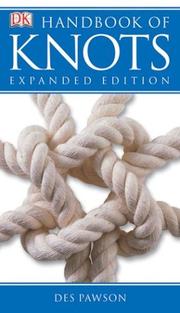
A comprehensive, domain-spanning reference that consolidates climbing, boating, camping, and decorative knots in one volume. At this stage it serves as a master review and gap-filler, revealing connections between knots across disciplines you've now studied separately.

A scholarly yet practical classic that explains the underlying mechanics and history of knots, including splicing and advanced rope work. Reading it last gives you the theoretical fluency to understand any knot you encounter and to teach others with genuine authority.
Discussion
Keep reading
Paths that share books, cover the same subject, or open a related topic.