Learn to sail
This curriculum takes a brand-new sailor from zero knowledge to confident, independent seamanship in four progressive stages. Each stage builds on the last — starting with core concepts and vocabulary, moving through hands-on boat handling, then deepening into weather, navigation, and the judgment that separates a competent sailor from a merely capable one.
Foundations: Language & First Concepts
BeginnerUnderstand how a sailboat works, learn essential sailing vocabulary, and grasp the points of sail before ever leaving the dock.
▸ Study plan for this stage
Pace: 8–10 weeks total. Weeks 1–4: "Sailing for Dummies" by J. J. Isler (~20–25 pages/day, covering Parts I–III thoroughly). Weeks 5–10: "The Annapolis Book of Seamanship" by John Rousmaniere (~15–20 pages/day, pausing frequently to study diagrams and re-read technical sections). Re-read any chapter on po
- Parts of a sailboat: hull, keel, rudder, mast, boom, forestay, shrouds, and their functions as explained in Sailing for Dummies
- Essential sailing vocabulary: port, starboard, bow, stern, windward, leeward, tack, jibe, heel, and trim — introduced in Sailing for Dummies and reinforced with precision in The Annapolis Book of Seamanship
- The points of sail: in irons, close-hauled, close reach, beam reach, broad reach, and running — the core framework laid out in Sailing for Dummies
- How a sail generates lift and forward drive: the aerodynamic and hydrodynamic principles (wind flowing over the sail's curve) explained in The Annapolis Book of Seamanship
- How the keel and centerboard work together with the sails to resist leeway and keep the boat balanced, as detailed in The Annapolis Book of Seamanship
- Basic sail controls: the mainsheet, jib sheets, halyard, and boom vang — their purpose and how adjusting them changes sail shape, covered in both books
- Reading the wind: using telltales, flags, and feel to determine wind direction — a practical skill emphasized in Sailing for Dummies
- Safety fundamentals: the importance of life jackets, the buddy system, checking weather, and basic right-of-way rules introduced in both books
- Can you name and point to at least ten structural parts of a sailboat and explain what each one does, using the terminology from Sailing for Dummies?
- Starting from 'in irons' and moving clockwise, can you describe each point of sail, explain how the sails should be trimmed at each one, and explain why a boat cannot sail directly into the wind?
- How does a sail act like a wing? Using the principles from The Annapolis Book of Seamanship, explain how airflow on both sides of the sail creates forward drive rather than just pushing the boat.
- What is the difference between tacking and jibing, and at which points of sail does each maneuver occur?
- What do telltales tell you, and what should you do if the windward telltale is stalling versus if the leeward telltale is stalling?
- What are the fundamental safety checks — weather, gear, and right-of-way rules — that both Isler and Rousmaniere stress before leaving the dock?
- Draw a blank top-down diagram of a sailboat and label every part covered in Sailing for Dummies from memory; check it against the book's diagrams and repeat until perfect.
- Using a printed or hand-drawn compass rose, place a toy boat or pencil at the center and physically rotate it through all six points of sail, reciting the correct sail trim and sheet position for each — repeat daily for one week.
- Stand outside on a breezy day and practice identifying wind direction using only your face, a wetted finger, and nearby flags or trees — then verify with a wind app; do this for 10 minutes on five separate days.
- Rig a simple model (even a paper boat with a tissue sail) and use a household fan to demonstrate how changing the angle of the sail to the 'wind' changes the drive — observe when the sail luffs and when it is over-trimmed.
- Create a two-column glossary flashcard deck (physical or digital) of every bolded or defined term from both Sailing for Dummies and The Annapolis Book of Seamanship; quiz yourself until you can define all terms without hesitation.
- Visit a marina, yacht club, or sailing club dock and silently identify as many parts of real boats as possible using your vocabulary from both books; if possible, ask a sailor or instructor to confirm your identifications.
Next up: Mastering the static vocabulary, boat anatomy, and points-of-sail framework from these two books gives you the precise mental map and shared language you will need to understand and safely execute on-the-water maneuvers — tacking, jibing, sail trim under real conditions, and crew communication — in the next stage of the curriculum.
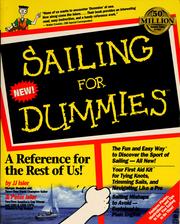
A genuinely accessible, jargon-free introduction that explains points of sail, basic rigging, and boat parts in plain language — perfect as the very first book to build vocabulary and confidence.
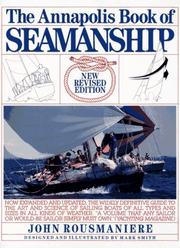
The gold-standard illustrated reference for new sailors; its clear diagrams of points of sail, sail trim, and boat handling make abstract concepts concrete and provide a visual foundation for everything that follows.
Hands-On Boat Handling
BeginnerLearn to actually sail the boat — tacking, jibing, sail trim, docking, and basic crew roles — with enough detail to practice on the water.
▸ Study plan for this stage
Pace: 4–5 weeks, ~20–25 pages/day; read actively with a notebook nearby to sketch diagrams of points of sail, sail trim, and maneuvers
- Points of sail (close-hauled, beam reach, broad reach, running) and how wind angle drives every decision on the boat
- Tacking — the step-by-step process of turning the bow through the wind, crew coordination, and common beginner mistakes (getting stuck in irons)
- Jibing — controlled vs. accidental jibes, boom management, and why jibing demands more caution than tacking
- Sail trim fundamentals — using telltales, adjusting the mainsheet and jib sheets, and the relationship between sail shape and boat speed
- The five essentials of sailing (sail trim, boat balance, boat trim, centerboard/keel position, and course made good) as a unified framework for on-the-water decision-making
- Basic crew roles — helmsman vs. crew responsibilities, communication calls ('ready about,' 'helms alee'), and situational awareness
- Docking and anchoring — approach angles, controlling speed under sail, using wind and current to your advantage, and when to use the engine
- Safety awareness — capsize recovery, man-overboard procedure, and reading weather and sea conditions as a beginner
- What are the points of sail, and how does your sail trim need to change as you move from close-hauled to a broad reach?
- Walk through a tack step by step — what does the helmsman call out, what does the crew do, and what causes a boat to get stuck in irons?
- What makes an accidental jibe dangerous, and what steps does Seidman recommend to execute a controlled jibe safely?
- How do telltales work, and what are they telling you when they stream evenly versus when one lifts or stalls?
- What factors should you consider when planning a docking approach under sail, and how do wind and current affect your strategy?
- What is the man-overboard procedure outlined in the book, and what immediate actions should every crew member know by heart?
- Before your first on-water session, draw a wind-rose diagram from memory labeling all points of sail, the no-go zone, and the correct sail position for each — check it against Seidman's diagrams
- On land (or dockside), practice the verbal sequence of a tack and a jibe with a partner, calling out each helm and crew action in order until it feels automatic
- During your first sail, focus exclusively on sail trim: adjust the mainsheet until telltales stream correctly on both sides, then deliberately over-trim and under-trim to feel the difference in boat speed and heel
- Practice tacking at least 10 times in a single session, consciously narrating each step; have a crew member or instructor note whether you're maintaining speed into the tack
- Execute at least 3 controlled jibes in light-to-moderate wind, with a crew member managing the mainsheet to prevent an accidental slam — debrief after each one
- Simulate a man-overboard drill: toss a fender overboard, execute the figure-eight or quick-stop recovery Seidman describes, and repeat until you can return to the 'victim' within two boat lengths consistently
Next up: Mastering the hands-on mechanics in Seidman's book builds the muscle memory and situational vocabulary needed to tackle more advanced topics — such as coastal navigation, passage planning, and heavy-weather sailing — with confidence rather than anxiety.

Bridges beginner and intermediate levels by covering boat handling, anchoring, and basic seamanship in a single cohesive narrative — a great capstone for this stage before moving to deeper skills.
Seamanship & Safety
IntermediateDevelop real seamanship judgment: reading weather, managing emergencies, understanding rules of the road, and keeping crew and boat safe.
▸ Study plan for this stage
Pace: 8–10 weeks total. Weeks 1–6: Chapman Piloting & Seamanship (~25–30 pages/day, focusing on navigation rules, weather, and safety chapters). Weeks 7–10: Heavy Weather Sailing (~15–20 pages/day — slower pace to absorb case studies and technical storm tactics deeply).
- COLREGS / Rules of the Road: right-of-way hierarchy, lights, shapes, and sound signals as detailed in Chapman — knowing who gives way and why in every encounter situation
- Piloting & Navigation Safety: Chapman's treatment of aids to navigation, chart reading, tidal currents, and dead reckoning as the foundation of keeping a boat off hazards
- Weather Interpretation: reading synoptic charts, understanding frontal systems, sea breezes, and squall lines from Chapman's meteorology chapters — recognizing deteriorating conditions before they arrive
- Stability & Seamanship Fundamentals: Chapman's coverage of hull stability curves, loading, and the seamanlike habits (watchkeeping, lookout, log-keeping) that prevent emergencies
- Heavy Weather Sail Handling: Coles's systematic progression from reefing and headsail changes through storm sails — knowing which sail plan suits which wind range
- Storm Tactics — Heaving-To, Lying Ahull, Running Off, Sea Anchors & Drogues: Coles's comparative analysis of each tactic drawn from real survival accounts, including when each is appropriate and when it has failed
- Knockdown, Capsize & Survival: Coles's case studies of 180° capsizes and dismastings — understanding the conditions that produce them and the onboard decisions (crew on deck, jacklines, tethers, liferaft readiness) that affect survival
- Crew Safety Systems: synthesizing both books — jacklines, harnesses, MOB procedures (Chapman's method), EPIRB/flare protocols, and the watchkeeping culture that keeps people aboard
- According to Chapman, what is the stand-on/give-way hierarchy between a sailing vessel, a vessel restricted in its ability to maneuver, a vessel not under command, and a power-driven vessel — and what actions are required of each?
- Using Chapman's weather chapters, how would you identify an approaching cold front on a synoptic chart, and what sequence of wind, cloud, and sea-state changes would you expect aboard in the hours before and after its passage?
- Chapman outlines the key elements of a man-overboard response. What are the immediate actions, the recommended recovery maneuver under sail, and how does the procedure change at night or in heavy weather?
- Coles presents several storm tactics — heaving-to, lying ahull, running off with warps/drogues, and deploying a sea anchor. What are the deciding factors (boat type, sea state, crew condition, sea room) that should guide the choice between them?
- From Coles's case studies, what combination of conditions (wave height, wave steepness, breaking crests) most commonly preceded catastrophic knockdowns and capsizes, and what onboard preparations did the surviving vessels have in common?
- Both Chapman and Coles address the limits of weather forecasting. How should an intermediate sailor use official forecasts alongside onboard barometric trends and sky observation to make a go/no-go or continue/seek-shelter decision?
- Rules of the Road Flashcard Drill: Create a set of cards for every light configuration and day shape in Chapman. Quiz yourself until you can instantly identify vessel type, status, and your obligation — then run through crossing, overtaking, and head-on scenarios with a sailing partner.
- Barometer & Weather Log: Over 2–4 weeks, record barometric pressure, wind direction/speed, cloud type, and visibility every 3 hours. Compare your predictions (using Chapman's frontal sequences) against actual forecast outcomes to calibrate your weather eye.
- Sail-Reduction Timed Drill: On the water, practice the full reefing sequence (first reef, second reef, and switching to storm jib) as described in Coles's sail-handling chapters. Time each evolution and repeat until the crew can execute a reef in under 3 minutes in a 20-knot breeze.
- Heave-To Practice: In 10–20 knots of wind, practice heaving-to under various sail combinations (full main + backed jib, reefed main + storm jib). Note the boat's fore-reach, leeway, and comfort level — compare your findings against Coles's descriptions for your hull type.
- MOB Simulation: Using a fender as a 'person,' practice the Quick-Stop and Figure-Eight recovery methods from Chapman with your crew. Run the drill in daylight, then repeat at dusk. Debrief: who called the alarm, who kept eyes on the 'victim,' how long did recovery take?
- Pre-Passage Safety Audit: Using Chapman's safety equipment checklists as a template, conduct a full audit of a real or hypothetical vessel — flares, EPIRB registration, jacklines, tether attachment points, liferaft inspection date, bilge pump operation, and engine kill-switch. Write a one-page deficiency report and corrective action plan.
Next up: Mastering seamanship judgment and safety in this stage — especially Chapman's navigation rules and Coles's hard-won storm wisdom — gives the reader the risk-management mindset and boat-handling confidence required to tackle offshore passage-making and celestial navigation at the next level.

The definitive American seamanship reference covering rules of the road, safety equipment, anchoring, and coastal navigation — essential reading before sailing independently.
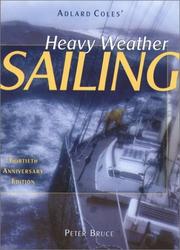
Introduces the realities of wind and sea conditions beyond the beginner's comfort zone, teaching sailors how to recognize, prepare for, and handle deteriorating weather — critical judgment-building material.
Navigation & Going Further
IntermediateAdd coastal navigation, passage planning, and the broader seamanship mindset needed to sail confidently beyond familiar waters.
▸ Study plan for this stage
Pace: 4–5 weeks, ~20–25 pages/day — The Sailor's Handbook is dense with diagrams and reference material, so allow extra time to study charts, tables, and illustrations rather than reading straight through. Dedicate weekends to hands-on practice sessions tied to that week's reading.
- Coastal and piloting navigation: reading nautical charts, understanding depth soundings, buoyage systems (IALA), and plotting a course using compass bearings and fixes
- Passage planning fundamentals: tide and current calculations, waypoint selection, identifying hazards, and building a float plan
- Weather interpretation for sailors: reading forecasts, recognizing cloud patterns and wind shifts, and making go/no-go decisions before and during a passage
- Rules of the Road (COLREGs): right-of-way hierarchy, light and sound signals, and safe conduct in shipping lanes and busy anchorages
- Anchoring and mooring seamanship: scope calculation, bottom types, setting and weighing anchor, and picking up a mooring safely
- Heavy-weather and emergency seamanship: heaving-to, reefing strategy, man-overboard procedures, distress signals, and basic damage control
- Sail trim and boat handling beyond familiar waters: sail combinations for varying conditions, tacking and gybing in stronger winds, and docking in current or wind
- The seamanship mindset: self-reliance, situational awareness, conservative decision-making, and continuous learning as a mariner
- Given a nautical chart excerpt, how would you identify safe water, plot a coastal course between two waypoints, and note the hazards along that route as described in The Sailor's Handbook?
- How do tidal height and tidal current differ, and how does Herreshoff's guidance direct you to account for both when planning a passage through a tidal inlet or along a coast?
- What is the right-of-way hierarchy under the COLREGs for a sailing vessel encountering a power-driven vessel, a vessel restricted in its ability to maneuver, and a vessel not under command?
- Walk through the man-overboard procedure outlined in The Sailor's Handbook — what are the immediate actions, the recovery approach, and the key seamanship principles behind each step?
- What factors does Herreshoff identify as critical in a go/no-go weather decision for a coastal passage, and how should a skipper weigh forecast uncertainty against schedule pressure?
- How does The Sailor's Handbook recommend calculating anchor scope, and what variables — bottom type, expected conditions, rode type — should modify that calculation?
- Chart work session: Obtain a free NOAA raster chart (or use a print chart) of a local or familiar coastal area. Using the techniques in The Sailor's Handbook, plot a 3-leg coastal passage: identify departure and arrival points, mark hazards, draw compass courses for each leg, and note depth contours along the route.
- Tide & current planning drill: Using NOAA tide tables and tidal current tables (free online), plan a passage through a tidal inlet or around a headland. Calculate the best departure time to favor the current, and identify the window when the tide provides adequate depth — cross-check your reasoning against Herreshoff's guidance.
- Rules of the Road flashcard drill: Create a set of flashcards for every light configuration and sound signal covered in The Sailor's Handbook. Quiz yourself until you can identify vessel type, status, and right-of-way obligation within 5 seconds per card.
- Anchoring practice: On your next sail, practice anchoring in at least two different spots. Before dropping the hook, calculate the required scope based on depth + freeboard + expected conditions. After setting, take two visual bearings on fixed objects ashore and monitor them over 15–20 minutes to confirm the anchor is holding.
- Man-overboard drill: With crew or a sailing partner, throw a fender or cushion overboard without warning and execute a full MOB recovery — shout, point, maneuver, and retrieve — timing the evolution and debriefing against the steps in The Sailor's Handbook.
- Float plan & passage debrief: Plan a half-day or full-day coastal passage on paper before you go: weather check, waypoints, hazard notes, tidal windows, emergency contacts, and a float plan left with someone ashore. After the sail, write a one-page debrief noting what matched your plan, what surprised you, and what you would do differently.
Next up: Mastering the coastal navigation toolkit, passage-planning discipline, and seamanship mindset in The Sailor's Handbook gives the reader the situational awareness and procedural confidence needed to tackle offshore and bluewater sailing, where self-sufficiency, celestial navigation, and multi-day watch-keeping become the central challenges.
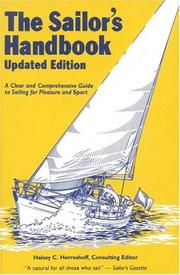
Synthesizes boat handling, navigation, weather, and seamanship into a single authoritative volume, serving as an excellent capstone that ties all prior learning together and points toward lifelong sailing.
Discussion
Keep reading
Paths that share books, cover the same subject, or open a related topic.