Kinsey Millhone Reading Order: Where to Start
Sue Grafton's alphabet series runs from A Is for Alibi to Y Is for Yesterday — twenty-five novels, and no Z, because she died before writing it. The order is not negotiable: the books are dated 1982 onward and Kinsey ages roughly a year per three books, so the recurring cast, the burned-down apartment and the family revelations only make sense in sequence. This path takes the core run rather than all twenty-five: the first six to establish the world, the acknowledged peak in the middle alphabet, and three later books that show where the series goes and where it ends.
Start Here: A, B, C
BeginnerMeet Kinsey, Henry and Rosie, and settle into the first-person voice that carries all twenty-five books.
▸ Study plan for this stage
Pace: About three weeks, one book a week. These are the shortest in the series at roughly 240 to 250 pages each and go down in two or three evenings. Before you start, know the shape of what you are entering: there are twenty-five novels, A Is for Alibi through Y Is for Yesterday, and there is no Z, becau
- The first-person voice and its formula: Kinsey opens most books by introducing herself by name, age and licence status, and the small variations in that paragraph are where Grafton tells you what kind of book this one is.
- The dates are real. The books are set from 1982 onward and Kinsey ages roughly a year per three books, so the series clock runs far slower than the publishing clock. These are period pieces set in their own present, not retro novels.
- No mobile phones, no internet, no databases. The detection is index cards, pay phones, county records, library microfiche and knocking on doors. Notice how much of the plot is simply legwork that could not exist today.
- Henry Pitts, the octogenarian landlord, and the converted garage Kinsey rents. He is the closest thing she has to family and he is load-bearing for twenty-five books.
- Rosie's tavern and the office routine at California Fidelity: the domestic furniture of the series is really built in B Is for Burglar, not in A.
- The Kinsey-is-alone motif: no partner, no children, one all-purpose black dress, a life engineered to have nothing in it that can be taken. Watch how she frames that as a choice.
- The ending of A Is for Alibi is not a self-contained resolution. It is referred back to for the next twenty books, which is why the order is not negotiable.
- C Is for Corpse is the first book where the emotional cost of the job lands on Kinsey rather than sliding off her.
- What does Kinsey actually do all day? List the investigative steps in any one of these three books and count how many involve technology of any kind.
- What does the ending of A Is for Alibi cost her, and how does she describe it in the pages afterward?
- How does the self-introduction paragraph change between A and C, and what does the change tell you?
- Why give her a landlord in his eighties instead of a partner, a family or a police sidekick?
- After three books, can you say what Kinsey wants? An honest answer of not much is allowed, and is worth examining.
- Start an index card, in the spirit of the books, listing recurring people and places: Henry, Rosie, California Fidelity, the police contacts. Grafton stops explaining them around book four.
- Write down the year each book is set in and Kinsey's stated age, then compare the gap across the three. The ageing rate is the single most misunderstood thing about the series.
- Read the opening two pages of each book aloud one after the other. Hearing the near-identical introductions back to back shows you what the formula is doing.
- Pick any chapter of C Is for Corpse and mark every point where a mobile phone would end the scene in one line.
Next up: The next three were written after Grafton knew the series would run: the plotting tightens, the moral tone gets less forgiving, and E Is for Evidence blows up the apartment you have just spent three books learning.

The one that started it, and the book that put a female private investigator on the American mystery shelf alongside Spenser and Marlowe. Start here without exception — the ending is referred back to for the next twenty books.
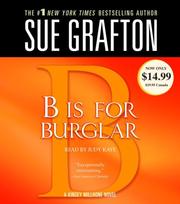
A missing woman in Florida, and the entry that won Grafton her first Anthony award. Read it second: the domestic furniture of the series — Henry Pitts, the landlord, the office routine — is really built here.
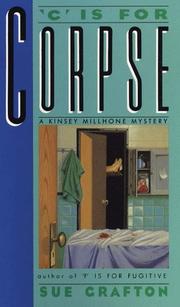
An amnesiac client who suspects his car crash was attempted murder. The first book where the emotional cost of the job lands on Kinsey rather than sliding off her.
The Series Finds Its Feet
BeginnerRead the next three, where Grafton stops writing Chandler pastiche and starts writing Grafton.
▸ Study plan for this stage
Pace: Three to four weeks. D Is for Deadbeat and E Is for Evidence are still short at roughly 260 and 275 pages and read fast. F Is for Fugitive is the outlier at over 300 pages and is slower on purpose: it is a small-town book where the pressure comes from people rather than chases, so give it more eveni
- E Is for Evidence is a hinge book. Someone frames Kinsey for insurance fraud and blows up her apartment, and Henry rebuilds it into the space she lives in for the rest of the series. Skipping it makes later volumes quietly confusing.
- In E, for the first time, Kinsey is both the investigator and the target, which forces her to work without her usual institutional cover.
- F Is for Fugitive is Grafton doing the thing she was quietly best at: small-community poison, seventeen years of it, where everyone in town has a reason to keep the story fixed.
- The plotting tightens visibly from D onward. Fewer coincidences, cleaner clue placement, and endings that follow from the middle rather than arriving.
- The moral tone hardens. D Is for Deadbeat gives you a victim who is hard to mourn, and the book refuses to make that comfortable.
- California Fidelity is her income and her legitimacy. Notice how much of her access comes from being an insurance investigator rather than a private one.
- Still 1980s detection: doorstep interviews, county clerks, phone books, waiting in a parked car.
- What does Kinsey lose when the apartment burns, and what does she conspicuously fail to mourn?
- In D Is for Deadbeat, who is the victim, and who does the book actually want you to feel for?
- Name three ways the town itself obstructs the investigation in F Is for Fugitive. Are any of them malicious?
- Compare the clue structure of C Is for Corpse with F Is for Fugitive. What changed in three books?
- Has Kinsey herself changed over six books, or only her circumstances?
- After E Is for Evidence, write down what Kinsey's home looks like now. The description recurs, unexplained, for the next nineteen books.
- Count the interviews against the physical confrontations in F Is for Fugitive. The ratio is the argument for what kind of books these are.
- Take D Is for Deadbeat and mark the point where Kinsey decides how she feels about the victim, then check whether the ending supports her.
- Stopping point check, and take it seriously: six books is a complete introduction with the world built and the voice fixed. Decide now whether you go on to the peak run or stop here with something whole.
Next up: You now know the furniture well enough that the middle-alphabet books can stop explaining it and get on with being the best mysteries Grafton wrote.
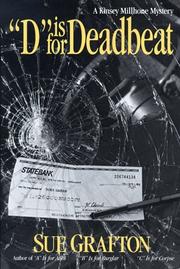
A drunk driver out of prison and a cheque that bounces. Grafton's plotting tightens noticeably here, and the moral tone gets less forgiving.
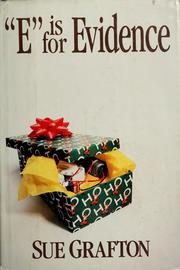
Someone frames Kinsey for insurance fraud and blows up her apartment. A hinge book — the consequences change her living situation permanently, so skipping it makes later volumes confusing.
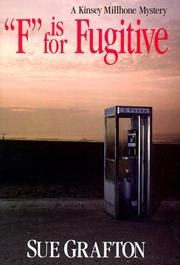
A seventeen-year-old murder in a small beach town. The best of the early books at the thing Grafton was quietly best at, which is small-community poison rather than action.
The Peak: G Through M
IntermediateRead the stretch most readers rank highest, where the mysteries and the character work are both at their strongest.
▸ Study plan for this stage
Pace: Four books at roughly 310 to 375 pages, the longest stretch in the path, so budget five or six weeks. G Is for Gumshoe is the fastest read here because it is essentially a chase. J Is for Judgment and M Is for Malice are the ones to slow down for, and M in particular has an ending that lands badly i
- In G Is for Gumshoe a contract killer is hunting Kinsey while she works a missing-person case. The series learns here how to put her body at risk without becoming an action series.
- The alone motif hardens. Compare how she describes her own solitude in G with how she described it in A, six years of series time earlier.
- I Is for Innocent is the cleanest structure Grafton found: inherit a dead investigator's case file, discover what he got wrong, redo the work. Pure puzzle, minimal noise.
- J Is for Judgment opens Kinsey's own family history. Relatives she did not know existed arrive, and every family thread in the later books starts there.
- M Is for Malice pays off emotionally on the family material rather than on its mystery. The plot alone would not carry that ending.
- The publication gap widens the period effect: these came out in the early and mid-1990s but are set in the late 1980s, so the dated texture is deliberate.
- Henry, Rosie's, the rebuilt apartment and the one black dress are all still running. By now Grafton assumes you know them.
- In G Is for Gumshoe, what does being hunted change about the way Kinsey works, and what does she refuse to change?
- What did the dead investigator in I Is for Innocent get wrong, and what does Kinsey's correction reveal about her own method?
- How does Kinsey react to the family revelation in J Is for Judgment, and is that reaction consistent with the eight books before it?
- Why does the ending of M Is for Malice land emotionally when the same solution in an earlier book would not have?
- You skipped three letters getting here. Did you feel the gaps, and where exactly?
- Keep a family tree from J Is for Judgment onward. The names recur in later books and Grafton does not re-introduce them.
- Read G Is for Gumshoe and then immediately re-read the first chapter of A Is for Alibi. Same self-introduction, eight books of wear on it.
- In I Is for Innocent, list every investigative step that could not be done today, and every one that could not have been done in 1988.
- After M Is for Malice, decide explicitly whether you stop. Most readers who love this series name this run as its best, so stopping here means you have read the peak and skip the long later stretch. Give up the family payoffs and the one formal experiment, and keep everything that made you like it.
Next up: The last stage jumps past most of the remaining alphabet to three late books, so read them knowing you are sampling an ending rather than arriving at one.

A contract killer is hunting Kinsey while she works a missing-person case. Often named the best in the series and the one to read even if you are sampling rather than committing.
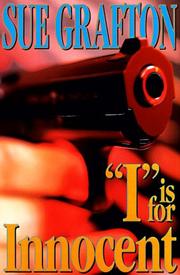
Kinsey inherits a dead investigator's case and has to redo his work. The most satisfying pure puzzle of the middle alphabet.
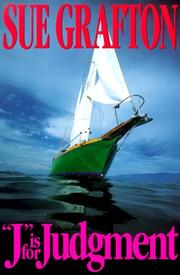
A man declared dead turns up alive in Mexico — and the book that finally opens Kinsey's own family history. Everything about the Kinsey relatives in later volumes starts here.
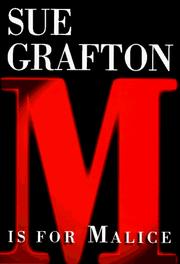
A missing heir and a genuinely moving ending. The emotional high point of the series, and it depends on the family thread J Is for Judgment opened.
Later, and Where It Stops
IntermediateSample the later run and reach the end of an unfinished alphabet.
▸ Study plan for this stage
Pace: Three books and the heaviest pages in the path: O Is for Outlaw at 352, S Is for Silence at 422, Y Is for Yesterday at nearly 500. Five to six weeks. S Is for Silence alternates present-day chapters with 1953 chapters and rewards longer sittings so both timelines stay live. Y Is for Yesterday is the
- O Is for Outlaw finally tells the story of Kinsey's first marriage and divorce, withheld for fifteen books, which is exactly why it works.
- S Is for Silence breaks the first-person format for the first time, running third-person 1953 chapters against Kinsey narrating the present. It is the one formal experiment in twenty-five books.
- The series clock stayed slow to the end: Y Is for Yesterday is set in 1989 despite being published thirty-five years after the first book.
- You are jumping letters again, from M to O, then O to S, then S to Y. Whole stretches of Kinsey's life pass off the page between these three.
- What an unplanned ending does to a last book: there is no summing up, no farewell, no closing of the loop the first book opened.
- Henry, Rosie's and the rebuilt apartment are all still there. This late, that continuity is a large share of the pleasure.
- What does O Is for Outlaw add to Kinsey that fifteen books had held back, and why does holding it back pay off?
- Does the 1953 material in S Is for Silence justify breaking the first-person format? What can it do that Kinsey narrating cannot?
- Y Is for Yesterday is the last book but not a finale. What, if anything, does it actually close?
- Reading O, S and Y with the letters between them missing, what did you have to infer, and did the books let you?
- Thirteen books in, what is this series about, if you answer without mentioning a single case?
- Before starting Y Is for Yesterday, look up when it is set and when it was published, and hold both dates in mind the whole way through.
- In S Is for Silence, mark each transition between timelines and note how Grafton signals it. That craft question is the reason to read this one closely.
- Write one paragraph naming where you would have told a friend to stop: after F, after M, or here, and what each choice gives up.
- If you want the twelve letters you skipped, fill them in from the middle alphabet outward rather than reading forward from Y. There is nothing forward to read.
Next up: You have read thirteen of twenty-five with no twenty-sixth coming, so from here you either fill in the skipped letters at your own pace or leave it where it is, and both are complete ways to have read Sue Grafton.
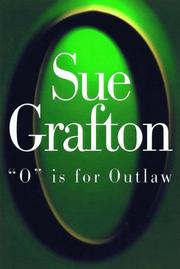
Kinsey's first ex-husband resurfaces and the story of her divorce is finally told. The most personal entry, and the one that most rewards having read the first fifteen.
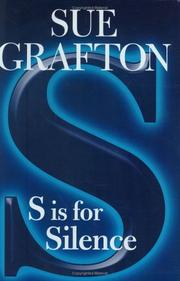
A cold case from 1953, told in alternating past and present chapters — the first time Grafton broke her own first-person format. The best of the late books and proof the series had not settled.

The last novel Grafton completed, published months before her death; there is no Z, and her family will not let anyone else write it. Read it knowing that, and treat it as the end of the series.
Discussion
Keep reading
Paths that share books, cover the same subject, or open a related topic.