Start with A Is for Alibi. The reading order is the alphabet, which is the whole charm of the thing, and Sue Grafton designed it that way from the first book in 1982.
That said, be warned about the specific book you are starting with. A Is for Alibi is the thinnest puzzle of the early run and the most obviously of its decade. If it feels slight, that is the book rather than the series — B and C are both better, and the three read as a unit in about three weeks. Do not start at G Is for Gumshoe or M Is for Malice because someone told you those are the good ones. They are, and they depend on eight books of accumulated debris to work.
Know the shape of what you are entering before you start. There are twenty-five novels, A Is for Alibi through Y Is for Yesterday, and there is no Z: Grafton died in December 2017, months after publishing Y, and her family has said no one else will write the final book. The alphabet does not close. This path takes thirteen of the twenty-five, so you are reading a core run and sampling the rest, not completing a series.
Start here: A, B, C
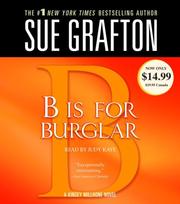
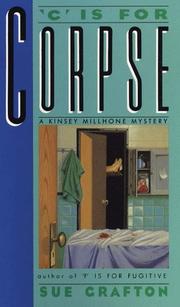
The shortest books in the series, roughly 240 to 250 pages each, two or three evenings apiece. B is for Burglar and C is for Corpse establish what the series actually is: a solitary licensed investigator in a fictional California town, doing genuinely unglamorous work — records searches, knocking on doors, sitting in cars — with a first-person voice that is dry rather than hardboiled.
The series finds its feet
D is for Deadbeat and E is for evidence are still short and fast, and should be read close together because the fallout from E carries straight into everything after it. F is for fugitive is the outlier at over 300 pages and is deliberately slower: a small-town book where the pressure comes from people rather than chases. Give it more evenings instead of pushing through.
The peak: G through M
G is for gumshoe is essentially a chase and the fastest read here. I is for Innocent, J Is for Judgment and M is for Malice are the ones to slow down for, and M in particular has an ending that lands badly if you race it. Read J immediately before M with no gap, since M depends on the family thread J opens.
The obvious thing, said plainly: this stage jumps from G to I to J to M, skipping H, K and L. H Is for Homicide, K Is for Killer and L Is for Lawless are perfectly readable and nothing here spoils them; they simply are not the books that make the case for the series.
Later, and where it stops
The heaviest pages in the path. O is for outlaw runs 352 pages, S Is for Silence 422, and Y is for yesterday nearly 500. S Is for Silence alternates present-day chapters with 1953 chapters and rewards long sittings so both timelines stay live. Y is for yesterday is the longest thing Grafton wrote and the slowest of the three, and it is worth reading with the knowledge that it was not written as a finale. It simply became one.
A buying note
Catalogue records for this series are messy in a way that trips people up. The letter is sometimes stored inside quotation marks, sometimes not, and several records append the series number — so the same novel shows up as B is for Burglar and as B is for Burglar (Kinsey Millhone, #2). They are the same book. Order by the letter and ignore the brackets, and browse the other detective paths if you want a series you can actually finish.
Follow the full ordered path here: Kinsey Millhone Reading Order: Where to Start.
Ready to learn something deeply?
Build a reading path — free