Kingsley Amis Reading Order: Where to Start
This is the elder Amis — Kingsley, who wrote more than twenty novels across forty years, not his son Martin. Start with the comic novel that made him famous at thirty-two, then work outward through the mid-career comedies, the genre detours nobody expects from him, and finally the late books where the comedy turns cruel and much better. Read in this order the career reads as one long argument about ageing that Lucky Jim only appears to be innocent of.
Start Here: Lucky Jim
BeginnerMeet the comic voice that defined postwar English fiction, and see the template Amis spent the rest of his life varying.
▸ Study plan for this stage
Pace: Two to three weeks for 510 pages: Lucky Jim 256 and That Uncertain Feeling 254. Both are short, fast and extremely readable — Lucky Jim can be done in three sittings and often is. Read them back to back, within a fortnight, because the second only makes its point while the first is still fresh.
- This is Kingsley Amis, not his son Martin. Two different novelists, two different styles, and they are constantly confused in catalogues and conversation. Everything on this path is the father's.
- Lucky Jim made him famous at thirty-two and is still one of the funniest novels in English. A junior lecturer in medieval history at a provincial university despises his professor, his subject, his girlfriend and himself, and cannot afford to say so.
- The comedy is built out of concealment. Jim's whole life is a gap between what he thinks and what he can say, and Amis converts that gap into set pieces — the faces Jim pulls when alone, the burned bedclothes, the drunken lecture — that are still copied.
- The prose is the thing to notice. Amis writes very clean, very exact sentences and gets his effects from precision rather than from flourish. Nothing in the humour depends on wordplay; it depends on the right word.
- The book was absorbed into the Angry Young Men label of the mid-1950s, a journalistic grouping Amis disliked. What it actually shares with that moment is a provincial, non-genteel protagonist looking at the English class system from below and finding it absurd.
- Jim's misogyny is already visible and already part of the design — Margaret is written as manipulative and Christine as a prize, and the novel expects you to want him to trade up. Read four decades of Amis in order and this is where it starts.
- That Uncertain Feeling is the second novel and the evidence that Lucky Jim was a method rather than a fluke: a librarian in a small Welsh town, an affair with a wealthy woman, and the same machinery of self-disgust and social climbing.
- It is also where the comedy starts curdling. The protagonist is less likeable, the consequences stick, and the ending offers a compromise rather than the triumphant escape Jim gets. That curve continues across the whole path.
- Wales matters. Amis taught at Swansea for over a decade and the Welsh setting recurs at both ends of his career — here in the second novel and again in the Booker winner thirty years later.
- What does Jim actually want? Note how modest it is, and what the novel thinks of a world where it is hard to get.
- The comic set pieces are famous. Pick one and work out how it is constructed — where the information is planted and where it detonates.
- How is Margaret treated by the novel, as opposed to by Jim? Are they different?
- In That Uncertain Feeling, what does John Lewis lose by his choices, and does the novel let him off?
- Both novels are about class ambition. What does each protagonist think he is climbing towards?
- Read the drunken lecture scene twice, once for laughs and once for structure. It is the most efficient comic writing in the book and it is all setup laid in earlier chapters.
- Mark the passages where Jim thinks something he cannot say. The count is high and it is the whole technique.
- Note the difference in tone between the two endings. Fourteen months apart in publication, and already going somewhere darker.
- Copy out three sentences you find funny and work out why they are funny. In Amis it is almost always the last word.
Next up: You have the template; the sixties novels vary it while steadily removing the reader's sympathy for the man at the centre.
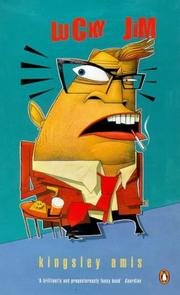
The obvious and correct starting point: a junior lecturer loathes his department, his professor and himself, and the book is still funnier than almost anything written since. Everything Amis did afterwards is a response to it.

The second novel, a Welsh librarian and an affair, and the clearest evidence that Lucky Jim was a method rather than a fluke. Read it straight after to see how quickly the comedy starts curdling.
The Comic Novels of the Sixties
IntermediateFollow Amis through his most productive comic decade, and watch the sympathy drain out of the joke.
▸ Study plan for this stage
Pace: Four to five weeks for 765 pages: Take a Girl Like You 320, One Fat Englishman 192, Girl, 20 253. All three read quickly. Take a Girl Like You is the longest and the one to slow down for, particularly its last forty pages. One Fat Englishman is short enough for a weekend.
- A warning about Take a Girl Like You, because its reputation as a light comedy is wrong. The novel is a long courtship in which a schoolteacher holds out against a man determined to sleep with her, and it ends with him having sex with her when she is too drunk to consent. It is a rape, written in a
- How you read that ending is the central question of Amis's whole career, and this path does not settle it for you. What can be said flatly is that the novel is more interested in Patrick's rationalisations than in Jenny's, and that Jenny is nonetheless the most fully realised woman he ever wrote.
- The book is the hinge of the career: Lucky Jim's charm on one side, the late bleakness on the other. Placed here rather than first, its darkness is legible as a direction of travel rather than an aberration.
- One Fat Englishman is the first novel with a protagonist Amis makes no attempt to have you like. Roger Micheldene is greedy, lecherous, snobbish, anti-American and self-pitying, and the comedy comes entirely from watching him fail.
- It is also the first of the novels in which the appetites — food, drink, sex, resentment — are treated as a single appetite, which becomes the late Amis subject.
- Girl, 20 is the best-constructed of his comedies: an ageing conductor pursuing a teenage girl, observed by a music critic who is complicit, disapproving and useless in roughly equal measure.
- Its real target is the permissiveness of the late 1960s, and its contempt is genuine. This is the period in which Amis's politics moved decisively rightward — he had been a Communist Party member as a student and ended up a public supporter of the Conservative right — and the novels start carrying t
- He wrote an essay in the late 1960s explaining that turn under a title referring to his own most famous character, so the political shift is not something readers have imposed on him; he narrated it himself.
- The narrator of Girl, 20 is the key device: a man who sees clearly, says nothing effective, and profits mildly. Amis is at his sharpest when the observer is compromised.
- What is Jenny Bunn defending, in her own terms rather than in the novel's? She is articulate about it.
- How does Take a Girl Like You arrange the reader's sympathies in its final chapter, and does the arrangement hold?
- Roger Micheldene is unlikeable throughout. What keeps the novel readable, and would it work at twice the length?
- In Girl, 20, what does Sir Roy actually want, and what does the novel think the sixties gave him permission to do?
- What is the narrator of Girl, 20 guilty of? He does almost nothing, which is the charge.
- Across the three, has the comic technique changed, or only the object of the comedy?
- Read Jenny's chapters of Take a Girl Like You consecutively, skipping Patrick's. She holds up as a character on her own, which is worth establishing before the ending.
- In One Fat Englishman, list Roger's failures in order. The novel is a sequence of humiliations and the shape only shows when you set them out.
- In Girl, 20, mark every occasion the narrator could intervene and does not.
- Read Amis's political turn as it appears in the fiction rather than in biography — find the passages in Girl, 20 where the argument is being made through a character, and decide whether the novel endorses it.
- After these three, write down whether you still like him. It is a real question at this point and the rest of the path is more interesting once you have answered it.
Next up: With the comic register exhausted, the next two books show him working in forms nobody associates with him.
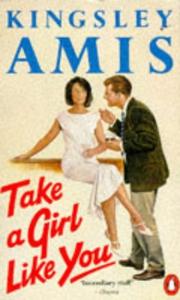
Jenny Bunn resists Patrick Standish for four hundred pages. This is where Amis belongs in the reading order — after Lucky Jim's charm and before the late bleakness, because it is the hinge between them, and its ending is a good deal darker than its reputation.
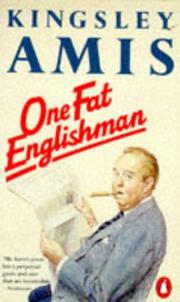
Roger Micheldene, gluttonous and unforgivable, loose in American academia. The first Amis novel with a protagonist he makes no attempt to have you like.
An ageing conductor chases a very young woman while the narrator watches. Late-sixties England seen with real contempt, and one of his best-constructed comedies.
The Genre Detours
IntermediateRead the two books that prove Amis was a serious genre writer as well as a comic novelist.
▸ Study plan for this stage
Pace: Two to three weeks for 448 pages: The Green Man 240 and The Alteration 208. Both are short and both move. The Green Man is best read in a few sittings, ideally including one at night — it is a real ghost story and the effect is atmospheric. The Alteration rewards slower reading because its world-bui
- Amis took genre fiction seriously as a critic — he wrote a book-length study of science fiction, edited anthologies and wrote a James Bond continuation novel. These two books are not slumming; they are a working critic showing he can do it.
- The Green Man is a genuine ghost story with a genuine haunting, correctly constructed: a seventeenth-century figure, a documented history, escalating manifestations, and a climax that pays off the rules established earlier.
- It is also the most autobiographical thing he wrote. Maurice Allington is a heavy drinker who runs an inn, is unfaithful without much pleasure, is frightened of dying, and treats his family badly. Amis's own drinking and terror of death are directly on the page.
- The novel contains a scene in which God appears in person, as a young man, and has a conversation. It is entirely straight-faced, it is the strangest passage in his work, and it says something about mortality he could not have said in a comic novel.
- The Alteration is alternate history: the Reformation never happened, Catholic Europe rules the twentieth century, science has been suppressed, and a boy with an extraordinary voice is about to be castrated to preserve it.
- Its pleasures are the small displacements — the altered technology, the altered art, the writers who exist and the ones who do not — and Amis plants them without explanation, which is how the form is properly done.
- The novel's argument is against institutions that consume individuals for their own continuity, and it is his most sustained attack on organised religion.
- Read after the comedies, both books show Amis using a non-realist frame to handle the two subjects he could not treat straight: dying, and the cost of what men want.
- Does The Green Man work as a ghost story on its own terms? Test it: are the rules consistent and is the climax earned?
- How much of Maurice's terror is supernatural and how much is drink? The novel is careful not to separate them.
- What does the appearance of God change about what the novel is doing?
- In The Alteration, which details of the altered world tell you most about it, and how are they delivered?
- What exactly is being preserved by the alteration of the title, and who benefits?
- Why did Amis need genre to say these things? Answer with reference to what the comic novels cannot do.
- Read The Green Man's historical documents — the accounts of the earlier haunting — with the same attention as the narrative. The plot is assembled from them.
- Keep a list of the world-differences in The Alteration as you spot them. Half the pleasure is the collecting.
- Note how Amis handles the ending of The Alteration. It is bleak, quick and refuses relief, which is worth comparing to the endings of the sixties comedies.
- Set Maurice Allington beside Jim Dixon. Fifteen years apart, both drinking, both dishonest, and only one of them is being forgiven by his author.
Next up: Death and appetite have now been handled at a distance; the late novels take them on directly and are the best books he wrote.
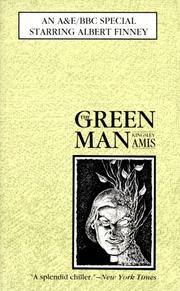
A genuine ghost story, and a good one, wrapped around a drunk innkeeper who is the most autobiographical character Amis ever wrote. Read it after the comedies so you can feel him using the supernatural to say something he could not say straight.
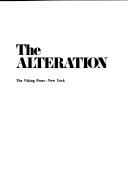
Alternate history: the Reformation never happened and a boy soprano is about to be castrated to preserve his voice. Amis took science fiction seriously as a critic, and this is him showing he could do it.
Late Amis: The Best of Him
IntermediateReach the books about old age, drink and marriage that most critics now rank above Lucky Jim.
▸ Study plan for this stage
Pace: Five to six weeks for 800 pages: Ending Up 176, Jake's Thing 285, The Old Devils 339. Ending Up is very short and can be read in a day, though it is better over three. Jake's Thing is quick and uncomfortable. The Old Devils is the longest and the richest — give it three weeks, and read the drinking
- Most critics now rank the late novels above Lucky Jim, and this stage is why the whole path is ordered as it is. The comedy has become cruel and the cruelty has made it better.
- Ending Up puts five old people in one cottage with no money, no health and no escape from each other, and lets them destroy one another through small acts of spite. It is very funny, very short and genuinely frightening.
- Its ending is abrupt and near-farcical in its efficiency, and it is the clearest statement of the late Amis position: old age is not dignified, the people in it are the same people they always were, and nothing is redeemed.
- Jake's Thing is an Oxford don who has lost his sex drive and submits to a course of therapy he despises. The comedy about therapeutic language, group sessions and clinical equipment is superb and holds up completely.
- Its closing pages are the notorious ones: offered a treatment that would restore his libido, Jake declines, and gives a long list of what he objects to about women. The misogyny there is real, it is stated at length, and the novel does not disown it.
- It is worth arguing with rather than excusing or skipping. Amis's misogyny is a documented feature of the man and it is on the page in the books; stating that plainly is more useful than either defending the passage or pretending the novel around it is not excellent.
- The Old Devils won the Booker Prize and is the summit: a group of retired friends in South Wales, drinking through their days in fixed routines, whose arrangement is disrupted when a successful old rival comes home with his wife.
- It is Lucky Jim's people forty years on, and that is precisely why it goes last. The provincial ambition, the drink, the affairs, the professional resentments — all of it has arrived at its destination, and the novel is unsparing about the destination.
- The women in The Old Devils are given more interiority than anywhere else in his work, and their friendship is written with something close to tenderness. Whatever you conclude about Jake's Thing, this book complicates it.
- The drinking is described with clinical precision — what, when, how much, and what it does — and read as a body of work the late novels are a forty-year record of alcohol by a man who was drinking that way himself.
- In Ending Up, what does each of the five want from the others, and why can none of them leave?
- Is the ending of Ending Up a joke or a judgement?
- In Jake's Thing, what is the novel's target — therapy, Jake, or modern sexual manners? It attacks all three unevenly.
- Take the closing pages of Jake's Thing seriously as an argument. What is Jake claiming, and where is he wrong on his own terms?
- In The Old Devils, what does Alun Weaver represent to the others, and why does his return destabilise them?
- The Old Devils treats its women better than any earlier book. Is that development, or is it the exception that makes the rest more glaring?
- Read Ending Up in as few sittings as possible. It is designed as a single sustained squeeze.
- In Jake's Thing, separate the therapy comedy from the closing argument and judge each on its own. Most readers find one excellent and the other indefensible, and it is worth being precise about which is which.
- In The Old Devils, track a single day's drinking for one character. The routine is the characterisation.
- Set the last page of The Old Devils beside the last page of Lucky Jim. Thirty-two years apart, the same social world, and the difference is the whole career.
- Decide now what you think of him as a novelist, separately from what you think of him as a man. Both judgements are legitimate and they are not the same judgement.
Next up: The fiction is done; the last stage is Amis stating outright the opinions the novels dramatise.
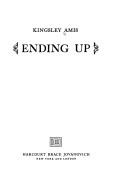
Five old people share a cottage and destroy each other. Very short, very funny and genuinely frightening — the first of the late novels and the best introduction to them.
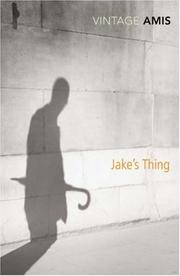
An Oxford don loses his libido and submits to therapy. The misogyny of the closing pages is real and worth arguing with rather than excusing; the comedy around it is superb.
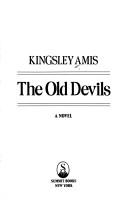
The Booker winner and the summit: retired Welsh friends drinking their way toward death when an old rival returns. Read it last of the novels — it is Lucky Jim's characters forty years on, and it only fully works if you have met them young.
Amis in His Own Voice
IntermediateFinish with the non-fiction, where the opinions the novels dramatise are stated outright.
▸ Study plan for this stage
Pace: Three to four weeks for 689 pages: Memoirs 394 and The King's English 295. Neither is a continuous read. Memoirs is a set of self-contained portraits, best taken two or three at a sitting. The King's English is an alphabetical reference book and works either as browsing or as a straight read of abou
- Memoirs is not a chronological autobiography. It is a series of portraits of people he knew — writers, editors, drinking companions, politicians — arranged largely to settle scores, with a short autobiographical frame around them.
- What it leaves out is as pointed as what it includes. Amis deliberately withholds his marriages and most of his private life, and the omission is stated rather than concealed. A memoir organised entirely around other people is itself a piece of self-portraiture.
- The portraits of fellow writers are the reason to read it, and the malice is the entertainment. Read after the fiction, you can watch acquaintances turn into characters and recognise which mannerisms went into which novel.
- The book is also the plainest statement of the political and social opinions the novels dramatise: on education, on modern manners, on the 1960s, and on other writers' reputations. There is no ventriloquism here and no comic distance.
- The King's English was his last book, published after his death: an alphabetical guide to usage, grammar and pronunciation, written as a comic performance as much as a reference.
- Its organising joke is a distinction between two kinds of language pedant — the fussy prescriptivist and the slovenly permissive — and Amis positions himself against both while quite obviously belonging to one of them.
- It is the best short demonstration of why his prose is so much cleaner than his opinions. The man had an exceptional ear for English, an aversion to slack writing, and the same intolerance applied to almost everything else in life.
- Read at the end of this path, the two books close the argument the fiction has been making: that the appetites, the resentments and the certainties are all continuous, and that the writer who noticed them most sharply in his characters was describing himself.
- Finish knowing the honest position on him. He was a great comic novelist and a better late one; he was also a misogynist whose views are on the page and a man whose politics moved a very long way to the right. Both are documented, both are visible in the books, and neither cancels the other.
- Which portrait in Memoirs is the most generous, and which the most damaging? What does the contrast tell you?
- What is the effect of a memoir that refuses to discuss its author's marriages?
- Where in Memoirs can you identify material that went into a novel? Find at least two.
- In The King's English, which of his usage rulings are genuinely useful and which are simply prejudice with a rule attached?
- What is the joke in his two categories of pedant, and which one is he?
- Having read the whole path: what is the case for Amis, stated in three sentences, and what is the case against?
- Read the Memoirs portraits of the writers you already know first. The pleasure depends on recognition.
- Keep a note of every judgement in Memoirs that you can trace to a novel on this path. The list is long.
- Read the entries in The King's English on a dozen words you use casually. It is the fastest way to feel his ear.
- Copy one paragraph from The King's English and one from Lucky Jim and compare the sentence construction. Forty years apart and it is unmistakably the same writer.
- Finally, rank all thirteen books. If Lucky Jim is not at the top, this path did what it was ordered to do.
Next up: You have the comedies, the genre books, the late novels and the non-fiction, so the remaining twenty-odd titles can be picked up in any order you like.

Not a chronological autobiography but a set of portraits of people he knew, arranged to settle scores. Read it after the fiction so you can spot which acquaintances became which characters.

His last book, an alphabetical guide to usage, and a comic performance in its own right. The best short demonstration of why his prose is so much cleaner than his opinions.
Discussion
Keep reading
Paths that share books, cover the same subject, or open a related topic.