Karate for beginners: top books on kata, kihon, and philosophy
This curriculum takes a beginner from zero karate knowledge to a deep, well-rounded martial understanding across four carefully sequenced stages. It begins with the philosophical and historical "why" of karate, builds through foundational technique and kata, advances into sparring strategy and combat application, and culminates in the deeper philosophical and meditative dimensions that separate lifelong practitioners from casual students.
Roots & Foundations
BeginnerUnderstand what karate is, where it came from, and absorb the core philosophy and etiquette that underpin all future training.
▸ Study plan for this stage
Pace: 4–5 weeks, ~25–30 pages/day. Start with Funakoshi's autobiography (approximately 140 pages) over 2 weeks, then spend 2–3 weeks on Urban's "The Karate Dojo" (approximately 200 pages) to allow time for reflection and integration between books.
- Karate's Okinawan origins and evolution from indigenous fighting systems and Chinese martial arts influence
- Gichin Funakoshi's role in systematizing and modernizing karate, and his philosophy of karate as a way of life rather than mere combat technique
- The concept of 'karate-do' (the way of karate) as a discipline for character development, self-improvement, and moral cultivation
- The dojo as a sacred training space with its own culture, hierarchy, and protocols that reflect karate's philosophical foundations
- Core etiquette principles: respect for instructors and seniors, humility, discipline, and the spiritual dimension of bowing and ritual
- The relationship between physical technique and mental/spiritual development in karate training
- Fundamental stances, blocks, and strikes as expressions of karate philosophy, not just mechanical movements
- What were the historical influences that shaped karate in Okinawa, and how did Gichin Funakoshi transform it into a modern martial art?
- How does Funakoshi define 'karate-do' and what does he mean by karate being a 'way of life'?
- What is the significance of the dojo in karate training, and how does its culture and etiquette reflect the deeper philosophy of the art?
- What are the key principles of dojo etiquette and respect, and why are they considered essential rather than optional?
- How are physical techniques in karate connected to character development and personal growth according to these foundational texts?
- What role does humility play in karate training, and how is it cultivated through practice and interaction with instructors and peers?
- Create a timeline of karate's development from its Okinawan roots through Funakoshi's modernization, noting key figures and turning points mentioned in the texts
- Write a 1–2 page reflection on what 'karate-do as a way of life' means to you personally, drawing specific passages from Funakoshi's autobiography
- Research and document the dojo where you train (or plan to train): map its physical layout, identify its rules and protocols, and explain how they reflect the principles Urban describes
- Practice the fundamental bowing ritual (rei) with intention, and journal about what respect and humility feel like in your body during this gesture
- Memorize and recite the dojo kun (training principles) or equivalent code of conduct, then explain each line in your own words using examples from the texts
- Observe or participate in a karate class, noting moments where physical technique, mental focus, and character development intersect; document these observations
Next up: This stage establishes karate's philosophical and historical foundation, preparing you to move into the next stage where you will learn the actual techniques, forms, and training methods that embody these principles in practice.

Written by the father of modern karate, this short memoir establishes the art's origins, core values, and the meaning of 'Do' (the Way). Reading it first gives every technique a philosophical home.

A practical and cultural introduction to dojo life, etiquette, and the unwritten rules of karate training — essential context before stepping onto the mat or opening any technique manual.
Basic Techniques & Kata
BeginnerBuild a solid vocabulary of stances, strikes, blocks, and kicks, and understand how kata encodes and transmits these fundamentals.
▸ Study plan for this stage
Pace: 4–5 weeks, ~40–50 pages/day. Start with Karate-Do Kyohan (foundational philosophy and technique overview), then move to Best Karate (detailed technical breakdowns and kata applications).
- The five basic stances (zenkutsu-dachi, kokutsu-dachi, kiba-dachi, neko-ashi-dachi, sanchin-dachi) and their weight distribution, stability, and tactical purpose
- Fundamental strikes (tsuki, uchi, te) and blocks (uke) with proper body mechanics, hip rotation, and power generation
- Kicks (geri) including mae-geri, mawashi-geri, yoko-geri, and ushiro-geri with correct chamber, extension, and control
- Kata as a systematic repository of technique: how kata sequences encode fighting principles, transitions, and self-defense applications
- The role of ki (spirit/focus) and proper breathing in executing techniques with power and presence
- How Funakoshi's philosophical framework (dojo kun, karate-do principles) underpins technical training
- The relationship between individual techniques and their application within kata forms (bunkai)
- Proper form, alignment, and common mistakes in executing basic techniques as shown in Nakayama's detailed photographs and descriptions
- Describe the five basic stances: their foot positioning, weight distribution, and when each is used tactically
- What is the difference between a block (uke) and a strike (tsuki/uchi), and how do they share similar mechanics?
- Explain how kata functions as a teaching tool: what does a kata sequence preserve, and how does it transmit fighting knowledge?
- Demonstrate or describe the proper execution of three kicks (mae-geri, mawashi-geri, yoko-geri) including chamber position, hip action, and target
- How does Funakoshi's concept of ki relate to the power and effectiveness of basic techniques?
- What are three common mistakes beginners make when executing a basic stance or strike, and how do you correct them?
- Practice each of the five basic stances for 2–3 minutes daily, focusing on weight distribution, knee alignment, and stability; video yourself and compare to photographs in Nakayama's Best Karate
- Perform 50 repetitions each of basic strikes (gyaku-tsuki, oi-tsuki) and blocks (age-uke, soto-uke, uchi-uke) daily, concentrating on hip rotation and proper chamber
- Execute each fundamental kick (mae-geri, mawashi-geri, yoko-geri, ushiro-geri) 20 times per leg, maintaining control and proper form; film yourself to identify deviations
- Learn and perform a basic kata (e.g., Heian Shodan or Taikyoku Shodan) 5–10 times daily, pausing to identify which basic techniques appear and in what sequence
- For one kata, write out the bunkai (application) for 3–5 movements, explaining how the stance, strike, or block would work in a self-defense scenario
- Keep a technique journal: after each practice session, note which stances, strikes, or kicks felt strongest and which need refinement; reference Nakayama's descriptions to diagnose issues
Next up: Mastery of these foundational techniques and kata vocabulary will enable you to progress to intermediate forms, combination drills, and sparring applications, where you'll learn to adapt and flow between techniques under pressure.

The definitive technical manual from karate's founder, covering stances, strikes, blocks, and the foundational Shotokan kata with photographs. This is the canonical reference every beginner should study alongside physical practice.
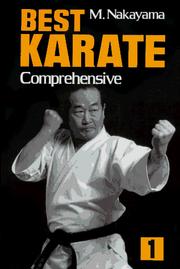
Nakayama's encyclopedic series distills JKA teaching into clear, photo-illustrated breakdowns; Volume 1 lays out the complete framework of basics and is the ideal companion to Funakoshi's Kyohan.
Sparring, Strategy & Combat Application
IntermediateTranslate trained techniques into live, adaptive fighting: understand distancing, timing, combination strategy, and the bridge between kata and real sparring.
▸ Study plan for this stage
Pace: 8–10 weeks, ~25–30 pages/day (alternating between both books; ~2 weeks per book with overlap for integration)
- Bunkai as systematic decoding of kata applications: moving from static form to dynamic, pressure-tested interpretation
- Distancing (ma-ai) and timing as foundational to effective technique application in live combat
- Combination strategy: chaining techniques fluidly rather than executing isolated moves
- The kata-to-sparring bridge: using kata as a laboratory for understanding principles that transfer to free fighting
- Adaptive response and reading your opponent: adjusting technique based on real-time feedback and positioning
- Principle-based thinking over rigid technique: understanding the 'why' behind movements so they work against varied opponents
- Pressure testing and realistic scenario training: validating bunkai against resistant, non-compliant partners
- How does bunkai differ from rote kata performance, and why is systematic decoding essential for combat application?
- What is ma-ai (distancing) and how does it determine whether a technique will succeed or fail in sparring?
- How do you identify and chain techniques into combinations that flow naturally rather than appearing mechanical?
- What is the relationship between kata and sparring, and how can kata serve as a strategic training tool rather than just a form exercise?
- How do you adapt a bunkai application when your opponent doesn't cooperate or move as expected?
- What principles from Abernethy and Kane's work allow a technique to work against different body types, speeds, and fighting styles?
- Select one kata you know well. Using Abernethy's bunkai methodology, decode 3–5 applications from a single sequence, documenting the distance, timing, and defensive context for each
- Drill one bunkai application with a cooperative partner 20 times, then have the partner resist or move unpredictably; note what adjustments you must make to succeed
- Practice ma-ai drills: step in and out of range with a partner, identifying the exact distance at which your techniques land effectively vs. miss
- Record yourself performing a kata, then overlay notes on where distancing and timing are critical; compare your performance to the bunkai principles in the books
- Spar lightly (50% intensity) for 3–5 rounds and consciously apply one bunkai-derived combination per round; journal what worked, what didn't, and why
- Study a video of a bunkai demonstration from Abernethy's work, then teach it to a training partner and refine it based on their feedback
Next up: This stage transforms kata from a solo, memorized form into a strategic combat toolkit, equipping you with the principles and pressure-tested applications needed to enter the next stage—whether that focuses on advanced sparring tactics, tournament preparation, or teaching bunkai to others.
Abernethy is the leading modern voice on practical kata application; this book systematically decodes kata movements into realistic self-defense and kumite scenarios, bridging the gap between form and function.
Provides a rigorous framework for understanding how to extract and apply combat principles from any kata, deepening the intermediate student's ability to think analytically about sparring strategy.
Discipline, Mastery & Lasting Philosophy
ExpertInternalize the deeper mental, spiritual, and philosophical dimensions of karate — understanding what it means to pursue mastery as a lifelong practice and how martial training shapes character.
▸ Study plan for this stage
Pace: 8–10 weeks, ~25–35 pages/day. "Zen in the Martial Arts" (3–4 weeks, ~20 pages/day) followed by "The Book of Five Rings" (4–6 weeks, ~30 pages/day). Allocate 1–2 weeks for reflection and integration work between books.
- The mind-body unity principle: how mental clarity and physical technique become inseparable through sustained practice
- Zen presence and 'no-mind' (mushin): achieving spontaneous, unthinking action where technique flows without conscious deliberation
- The Way as lifelong discipline: viewing martial training as a path to character development and self-mastery rather than mere combat skill
- Musashi's five elements (earth, water, fire, wind, void): understanding how each element represents different strategic principles and mental states applicable beyond combat
- Emptiness and adaptability: the capacity to remain formless and responsive, mirroring the opponent or circumstance without rigid attachment to a single approach
- Warrior philosophy and virtue: how discipline, humility, and continuous self-examination forge integrity and wisdom over decades of practice
- The integration of spiritual practice with martial technique: recognizing that physical training is inseparable from inner development
- What does Joe Hyams mean by 'Zen in the Martial Arts,' and how does the concept of 'no-mind' (mushin) relate to peak performance in both martial training and everyday life?
- According to Musashi's philosophy in 'The Book of Five Rings,' how do the five elements (earth, water, fire, wind, void) function as both strategic principles and reflections of mental states?
- How does the pursuit of mastery in karate, as described in these texts, differ from the pursuit of victory in a single match or competition?
- What role does emptiness or 'void' play in Musashi's teaching, and how does it enable adaptability and spontaneous response?
- How do Hyams and Musashi each describe the relationship between discipline, character development, and the attainment of wisdom through martial practice?
- What does it mean to view the martial Way as a lifelong practice, and what specific commitments or attitudes does this perspective demand from a practitioner?
- Daily meditation practice (10–15 minutes): Sit in seiza or a comfortable position and practice breath awareness, focusing on achieving the 'no-mind' state described in Hyams' work. Record observations about moments when thinking ceases and action flows naturally.
- Technique practice with mindfulness: Perform a familiar kata or technique sequence while consciously attempting to achieve mushin—let the body move without mental commentary. After practice, journal about the difference between deliberate, thinking practice and spontaneous, flowing practice.
- Element reflection journal: For each of Musashi's five elements (earth, water, fire, wind, void), write a 1–2 page reflection on how that element manifests in your own martial training and daily life. Identify a specific situation where you embodied or failed to embody each element.
- Strategic scenario analysis: Take 3–4 combat or life scenarios and analyze them through Musashi's five-element framework. How would earth-like stability, water-like adaptability, fire-like intensity, wind-like perception, and void-like emptiness each apply?
- Character audit: Identify three areas where martial discipline has (or could) shape your character—integrity, patience, humility, etc. For each, write how this virtue connects to the philosophical teachings in both books and commit to one concrete practice to deepen it.
- Teaching or mentoring practice: Explain one key concept from either book (e.g., 'no-mind' or 'the void') to a training partner or friend in your own words. Refine your explanation based on their questions—this deepens your own understanding.
Next up: This stage establishes the philosophical and spiritual foundation of karate as a lifelong path of character development; the next stage will likely translate these abstract principles into concrete, advanced technical mastery and the integration of philosophy into high-level competitive or teaching contexts.
A beautifully readable account of Zen principles applied to martial training through the author's own experiences with masters including Bruce Lee; it reframes discipline, ego, and failure in ways that transform daily practice.

The timeless strategic and philosophical treatise by Japan's greatest swordsman translates directly to karate's combat mindset — reading it at this stage, after technical grounding, unlocks its full depth.
Discussion
Keep reading
Paths that share books, cover the same subject, or open a related topic.