K-pop and Korean Popular Music: The Best Books to Read, in Order
K-pop is unusual among popular musics in that it was substantially engineered — a trainee system, a small number of vertically integrated agencies, and a state that treated cultural export as industrial policy. This path starts with readable popular histories of that push, moves to the academic anchor, then to studies of the music as a performance and dance system, and ends with the fandom and export scholarship that explains the global breakout. Note that the English-language literature is thin and skews academic, so a few well-known fan-facing titles are simply not catalogued.
The popular histories
BeginnerGet the narrative of how a small national industry was deliberately built for export.
▸ Study plan for this stage
Pace: 3 weeks for about 620 pages, all of it trade non-fiction rather than scholarship. Y. Euny Hong's The Birth of Korean Cool (267 pages) is a week — journalistic, anecdotal and partly memoir, since Hong grew up in Seoul as a Korean-American and writes from inside that experience. Mark James Russell's P
- Cultural export as deliberate industrial policy: the state's response to the 1997 financial crisis included treating cultural production as a strategic sector
- The trainee system — years of contracted training in singing, dance and language before debut — as the industry's defining institution
- Vertical integration and the 'Big Three' agency structure, in which one company handles casting, training, production, management and promotion
- The Hallyu periodisation: first wave driven by television drama and film, second by music and social media
- Seo Taiji and Boys as the usual origin point for Korean popular music in its modern form, and what preceded them
- Generational labelling of idol groups, and why the industry itself uses it
- Gangnam Style as the event that ended one phase of the story and began another, and why Hong's book is shaped by having been written around it
- What did the Korean state actually do to promote cultural export, and which of Hong's claims about it are documented rather than asserted?
- Russell was writing from inside the industry in the 2000s. What does he report that Hong's later narrative leaves out?
- How does the trainee system change what kind of product an agency can make, compared with a Western label signing an existing act?
- Both Hong and Russell tell a story of intentional design. Where do you suspect the design is being read backwards into events that were contingent?
- Using K-POP Now!, can you name the major agencies and place ten significant groups with the right one and the right generation?
- Build an agency chart from K-POP Now! — company, founder, flagship groups, generation — and keep it; every later book on this path assumes it
- Make a listening timeline: one representative track per year from Seo Taiji and Boys to Psy, and note what changes in production, language mix and visual presentation
- For any three claims Hong makes about government policy, try to find a primary source or a news report; write down which you could confirm and which you could not
- Read Russell's chapters on film and television alongside his music chapters and write a paragraph on what the three sectors shared structurally
- Watch one late-1990s idol music video and one from the mid-2010s and list every difference in choreography, camera work and English usage; this is the raw material the later books analyse
Next up: The popular histories give you the narrative, the names and the chronology; the next stage replaces the narrative with scholarship that disputes what the phenomenon actually is.
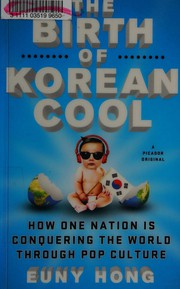
A Korean-American journalist's account of the state-backed culture push, from the 1997 financial crisis to Gangnam Style. The most readable entry point and the book that framed the story for most English-language readers.

Written from inside the Seoul entertainment industry in the 2000s, covering film, television and music together. Read it second for the industrial detail Hong's narrative skips.

A shorter, more visual survey of the groups and agencies. Useful as a reference for names and label affiliations before the academic books, which assume you know them. Catalogued as K-POP Now!.
The academic anchor
IntermediateMove to scholarship, and to the argument about what K-pop actually is.
▸ Study plan for this stage
Pace: 4 weeks for about 470 pages, and the pages-per-week drop is deliberate — this is where the path changes register. John Lie's K-Pop (248 pages), published with the subtitle Popular Music, Cultural Amnesia, and Economic Innovation, is academic sociology: it argues a thesis, engages a literature and ex
- Lie's thesis: K-pop as an export product shaped by South Korean national identity and economic strategy rather than as an organic popular tradition
- 'Cultural amnesia' — Lie's argument that the genre's own history is systematically forgotten, and what that forgetting accomplishes
- The relationship between national branding and a commercial genre, and whether soft power is a useful analytical category or a policy slogan
- Jin's platform argument: YouTube, social media and streaming replacing broadcast television as the mechanism of export in the second wave
- Digital Korea as infrastructure — high broadband penetration and domestic platform competition as preconditions, not consequences
- Cultural imperialism and its reversal: whether Hallyu is a counter-flow or a local instance of the same global commercial logic, which both authors address directly
- How an academic monograph differs from a trade history in what it must prove — Lie cites, argues and anticipates objections, and Hong does not
- State Lie's argument in three sentences. What would count as evidence against it?
- What is being forgotten, in Lie's account, and who benefits from the forgetting?
- Jin argues the export mechanism changed. What specifically changed, and what stayed the same in the production side?
- Does Lie's national-identity frame explain the music, the industry, or only the reception? Be precise about which.
- Where do Lie and Jin disagree, and is the disagreement about evidence or about what question is worth asking?
- Write a one-page abstract of Lie's book as if for a scholarly journal — thesis, evidence, method, contribution — which forces you to read it as an argument rather than a narrative
- Take three claims from Hong's book in stage one and check each against Lie's account; note where the popular history and the monograph diverge and which one gives a source
- Using Jin's framework, trace one group's international breakthrough through its actual distribution channels — official YouTube uploads, fan subtitling, streaming charts — and see whether the platform account fits
- Add a second layer to your listening timeline from stage one: for each track, note how a listener outside Korea would have heard it in that year
- List the terms Lie and Jin use that Hong and Russell do not, and define each one; this vocabulary is the entry cost for stages three and four
Next up: With the industrial and national arguments established, the next stage turns to what K-pop actually is as performance — the dimension the histories and the political economy both largely skip.

The standard academic treatment, arguing K-pop as a product of South Korean national identity and export strategy rather than an organic pop tradition. Published with the subtitle Popular Music, Cultural Amnesia, and Economic Innovation.

Jin's account of the second Hallyu wave, in which social media and digital platforms replaced television as the export channel. Catalogued as New Korean wave. Read it directly after Lie as the update.
The music as a performance system
IntermediateLook at what K-pop actually is on stage and on screen, which the industrial histories mostly leave out.
▸ Study plan for this stage
Pace: 4 weeks for about 480 pages. Suk-Young Kim's K-pop Live (288 pages) is performance studies — a scholarly monograph on concerts, fan meetings and mediated liveness, with a theoretical vocabulary from theatre and media studies; two weeks. Chuyun Oh's K-Pop Dance (194 pages) is dance scholarship and th
- Liveness as the analytic problem: a genre experienced mostly through screens, where the concert, the broadcast, the fancam and the livestream are all 'live' in different senses
- The fan meeting, the hi-touch and the video call as commodified intimacy, structured and priced
- Point choreography — a short, repeatable, camera-legible movement designed to be copied — as the genre's most exportable unit
- Cover dance as participatory circulation: the choreography is engineered so that amateurs can reproduce and re-upload it
- Formation and synchrony as aesthetic values, and what they demand of rehearsal and of the camera
- The trainee body as trained labour: years of physical conditioning, and the cost structure that sits underneath a three-minute performance
- Gender and the choreographed body — how movement vocabularies differ between girl groups and boy groups, and what each is presenting
- Why the industrial histories miss this: a book about agencies and policy cannot tell you what the product is when it is being consumed
- What does Suk-Young Kim mean by liveness, and how many distinct kinds of live experience does she distinguish?
- How is point choreography designed for reproduction, and what does that design constrain about the music itself?
- What does Oh's account of trainee physical labour add to the trainee system as described by Hong and Russell in stage one?
- Is cover dance fan activity, unpaid promotion, or both — and does Oh's account settle it?
- How does a performance-studies method reach conclusions that a political-economy method cannot?
- Pick one song and watch four versions — the official music video, a music-show broadcast stage, a single-member fancam and a live concert clip — then write down what each format shows and hides; this is Kim's argument tested directly
- Learn the point choreography of one chorus well enough to perform it, then read Oh's chapters on cover dance and describe what the learning process revealed about how the movement is constructed
- Take one performance and count the formation changes and the camera cuts separately, then compare the two counts; the relationship between them is the genre's visual grammar
- Watch a girl group and a boy group performing at the same tempo and list the differences in movement vocabulary, using Oh's terms rather than your own
- Attend or watch a recorded fan meeting or livestream and write down every transaction taking place — access, time, attention, money — as Kim's chapters describe them
Next up: Having seen what the product is on stage and on screen, the final stage asks who is receiving it, what it borrowed to exist, and how differently it lands in different places.

A performance-studies account of concerts, fan meetings and mediated liveness. The best book here on what the product is when it is being consumed rather than manufactured.

Choreography as the genre's core discipline, covering point choreography, cover-dance culture and the labour of the trainee body. The only sustained treatment of the dance in English.
Fandom, export and the global audience
IntermediateFinish with the scholarship on who is listening and what happens when the export lands.
▸ Study plan for this stage
Pace: 5 weeks for about 730 pages, with two of the three books being edited collections that you should read selectively rather than cover to cover. Crystal S. Anderson's Soul in Seoul (218 pages) is a single-authored cultural studies monograph on K-pop's debt to Black American popular music and how that
- Anderson's argument: K-pop's musical vocabulary is substantially derived from Black American R&B, hip-hop and soul, and the borrowing is both acknowledged and elided depending on audience
- Authenticity and appropriation as questions that differ by listener — Anderson takes Black American K-pop fans as her primary evidence rather than treating them as an anomaly
- The difference between musical influence, stylistic citation and appropriation, and why collapsing the three ends the argument prematurely
- Regional reception as genuinely different: Japan, China, Southeast Asia, Latin America and the Anglophone West received Hallyu on different terms and at different times
- Historical and political friction in reception — anti-Hallyu sentiment, and the way cultural export interacts with regional politics
- Fandom as organised labour: streaming coordination, chart manipulation, translation, and fan-funded promotion as unpaid infrastructure
- Transmedia and platform logic in the digital wave, where music, drama, variety content, webtoons and games circulate as one system
- The edited collection as a form — uneven, multi-authored, and best used by chapter rather than read straight through
- What is Anderson's evidence for K-pop's debt to Black American music, and how does she distinguish citation from appropriation?
- How do Black American K-pop fans in Anderson's account read the music differently from the way the industry presents it?
- Pick two regions covered in the Youna Kim collection: what accounts for the difference in how Hallyu was received in each?
- What does the Lee and Nornes collection add about platforms that Jin's monograph in stage two did not?
- Fandom does real promotional work for free. Is that participation, exploitation, or both — and which chapter here argues it best?
- Having finished the path: which single explanation of K-pop's global success do you now find strongest, and which book supplies it?
- Take three tracks from your listening timeline and, using Anderson's framework, identify the specific Black American musical sources each draws on — production style, vocal technique, rap delivery — and note whether the borrowing is credited anywhere in the release
- Find interviews in which Korean artists name their influences and compare them with what Anderson says the music itself shows
- Choose two regional chapters from the Youna Kim collection and write a comparison of their reception stories, then check both against your agency chart from stage one to see which companies were active where
- Trace one recent release across every medium it touched — music video, variety appearance, streaming platform, fan-community post, merchandise — as an application of the transmedia argument in Hallyu 2.0
- Close the path by writing a 500-word answer to 'what is K-pop' that cites at least one book from each of the four stages and marks which claims are contested
Next up: This ends the path, with the industry, the scholarship, the performance system and the reception all in place, and Anderson's account of the music's sources standing against the national-branding story you started with.

K-pop's debt to Black American popular music and how that borrowing is received. The sharpest critical book on this path and the one most likely to change your reading of everything above.
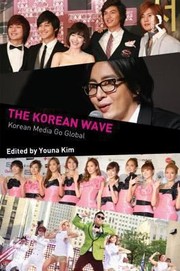
An edited collection on Hallyu across media and regions, catalogued under its full subtitle. Read it as the survey of where the wave landed and how differently it was received in Japan, China and the West.

Lee and Nornes's collection on the digital-era Korean wave, including the transmedia and platform dimensions. Read last: it is the most current and assumes the whole path behind it.
Discussion
Keep reading
Paths that share books, cover the same subject, or open a related topic.