Judo for beginners: the best books to master throws and groundwork
This curriculum takes you from your first steps on the mat to confident, skilled grappling by building knowledge in a deliberate order: first the culture and fundamentals, then throwing technique, then groundwork, and finally the strategic and competitive depth that separates good judoka from great ones. Each stage assumes the vocabulary and physical intuition built in the stage before it, so reading in order will feel like a natural progression rather than a jump in the deep end.
The Mat, the Bow, and the Basics
BeginnerUnderstand judo's philosophy, etiquette, history, and core vocabulary so that every subsequent technical book makes immediate sense.
▸ Study plan for this stage
Pace: 4–5 weeks, ~25–30 pages/day. Start with "Judo in Action" (1–2 weeks), then move to "Kodokan Judo" (2–3 weeks). Allocate 2–3 days per week for reflection and practice.
- Judo as a martial art rooted in mutual benefit and personal development (Jita Kyoeei and Seiryoku Zenyo)—the philosophical foundation that distinguishes judo from mere fighting
- The role of etiquette (rei) and the bow (ojigi) as expressions of respect and essential elements of safe, disciplined practice
- The history and evolution of judo from jujutsu to Kodokan judo, including Jigoro Kano's innovations and the modernization of the art
- Core vocabulary and terminology (matte, shido, waza, etc.) that enables clear communication on and off the mat
- The structure of judo training: kata, randori, and shiai—their distinct purposes and how they build competence progressively
- The principle of maximum efficiency with minimum effort (Seiryoku Zenyo) as a technical and philosophical guide
- Safety protocols and the responsibility of both tori (the one executing technique) and uke (the one receiving) in preventing injury
- What is the philosophical foundation of judo, and how do the principles of mutual benefit (Jita Kyoeei) and maximum efficiency (Seiryoku Zenyo) shape its practice?
- Why is etiquette and the bow central to judo, and what do they communicate about the relationship between partners?
- How did Jigoro Kano transform jujutsu into judo, and what were the key innovations that made it safer and more systematic?
- What are the three main training methods in judo (kata, randori, shiai), and what is the specific purpose of each?
- What are the essential pieces of judo vocabulary you need to understand to follow instruction and communicate safely on the mat?
- How does the principle of maximum efficiency apply both to technique execution and to the broader philosophy of personal development in judo?
- Learn and practice the formal bow (ojigi) daily—perform it with intention before and after solo practice sessions, focusing on the angle, timing, and mental state of respect
- Create a glossary of 20–25 essential judo terms from both books (e.g., matte, shido, tori, uke, waza, randori, kata, shiai, seoi nage, o goshi) with definitions and context; review it weekly
- Watch 3–4 instructional videos of basic judo techniques (e.g., o goshi, seoi nage) from reputable sources, and identify how the principle of maximum efficiency is demonstrated in each
- If possible, attend 2–3 beginner judo classes and observe (or participate in) the etiquette rituals, partner dynamics, and how instructors use the vocabulary you've learned
- Write a 500–750 word reflection on how Kano's philosophy of mutual benefit differs from a purely competitive or combative mindset, using specific examples from the books
- Practice falling safely (ukemi) in a controlled environment 2–3 times per week, focusing on the role of uke in protecting both yourself and your partner—this embodies the etiquette principle in action
Next up: This stage equips you with the philosophical framework, historical context, and shared language necessary to understand technical instruction in subsequent books, so that when you encounter detailed breakdowns of throws, pins, and submissions, you'll recognize them not as isolated techniques but as expressions of judo's core principles and as part of a coherent system of safe, respectful practice.

A classic introductory text by a high-ranking Kodokan master that covers the spirit, etiquette, and foundational movements of judo — the perfect cultural and conceptual entry point before any technique study.
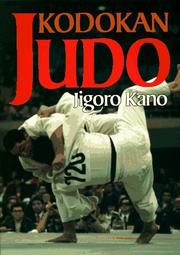
Written by judo's founder himself, this is the definitive source on judo's principles, philosophy, and complete technical syllabus; reading it early anchors everything else in the art's original intent.
Standing Strong — Grips and Throws
BeginnerBuild a working understanding of kumi-kata (gripping), balance-breaking (kuzushi), and the mechanics of the most essential throwing techniques.
▸ Study plan for this stage
Pace: 4–5 weeks, ~20–25 pages/day with 2–3 days per week for mat practice
- Kumi-kata (gripping): hand positions, sleeve and lapel grips, and how grip choice determines throwing options
- Kuzushi (balance-breaking): the mechanics of displacing your opponent's center of gravity before executing a throw
- Posture and footwork: maintaining shizentai (natural stance) and controlling distance and angle
- Throwing mechanics: the role of hip position, timing, and body rotation in executing throws with minimal strength
- Essential nage-waza (throwing techniques): the formal structure and progression of foundational throws
- Connection and leverage: how proper grip and body alignment create mechanical advantage over raw force
- What are the primary grip variations in kumi-kata, and how does each grip constrain or enable different throwing techniques?
- Explain the concept of kuzushi: why is breaking balance essential before throwing, and what are the main directions of balance-breaking?
- How does posture and footwork support both grip control and the execution of throws?
- Describe the mechanical principles behind one essential throw from Ōtaki's text: where does the power come from, and what role does the hip play?
- What is the relationship between grip, balance-breaking, and the actual throw—how do these three elements work together?
- Why does formal technique emphasize minimal strength and maximum leverage in throwing?
- Grip drills: practice establishing and maintaining sleeve and lapel grips (kumi-kata) on a partner or dummy without moving, focusing on hand position and pressure
- Balance-breaking solo: perform kuzushi movements without a partner—stepping and shifting to simulate displacing an opponent in each direction
- Grip-to-throw sequences: with a partner, establish a grip, break balance in a specific direction, then execute the corresponding throw from Ōtaki's text at slow speed
- Footwork and distance drills: practice maintaining shizentai while circling a partner, adjusting distance and angle without committing to a throw
- Throw repetition (uchikomi): perform 20–30 repetitions of one foundational throw per session, focusing on hip position and timing rather than power
- Video analysis: record yourself performing a throw and compare it to the formal descriptions and diagrams in Ōtaki's text, identifying deviations in posture or mechanics
Next up: Mastery of grips, balance-breaking, and formal throwing mechanics establishes the foundation for learning how to apply these techniques fluidly in randori (free practice) and shiai (competition), where timing, adaptability, and reading your opponent become paramount.

A thorough, step-by-step breakdown of the Gokyo (the classical 40 throws) with clear photos and biomechanical explanations — ideal as your first dedicated throwing reference after absorbing Kano's principles.
Mastery and Depth — The Advanced Judoka
ExpertRefine technical precision, explore the full classical kata system, and understand judo at the level needed to teach, compete at a high level, or pursue dan grades.
▸ Study plan for this stage
Pace: 8–10 weeks, ~40–50 pages/day with 2–3 days per week for mat practice and technique drilling
- Biomechanical principles of efficient judo: leverage, timing, and balance-breaking (kuzushi) as universal foundations across all techniques
- The complete classical kata system (Nage-no-kata, Katame-no-kata, Kime-no-kata) as a structured method for preserving and refining technique outside randori
- Tai-otoshi as a model throw: entry mechanics, hip placement, foot positioning, and the critical role of uke's momentum in execution
- Transition from sport-focused randori to kata-based refinement: how kata deepens understanding of technique that competition alone cannot provide
- Teaching methodology: how to break down complex techniques into teachable progressions and diagnose common errors in students
- Advanced gripping strategies and posture control as prerequisites for technical execution at the highest level
- The relationship between classical judo principles and modern competitive application
- What are the three fundamental elements of kuzushi (balance-breaking) and how does Inokuma's approach to balance differ from purely sport-focused methods?
- Explain the complete structure of Nage-no-kata and Katame-no-kata. Why is kata practice essential for dan-grade advancement and teaching?
- Describe the biomechanical sequence of tai-otoshi from entry through completion. What is the role of uke's forward momentum, and how do you control it?
- How would you teach tai-otoshi to an intermediate student? What are the three most common errors and how would you correct each one?
- What is the relationship between classical judo principles (as presented in Best Judo) and the modern competitive application of tai-otoshi?
- How do gripping, posture, and timing interact to make a throw effective? Give a specific example from tai-otoshi.
- Perform Nage-no-kata and Katame-no-kata at least twice weekly, focusing on precision, control, and understanding the purpose of each technique rather than speed
- Drill tai-otoshi entry mechanics 50+ times per session: practice the foot placement, hip positioning, and kuzushi without throwing, with a partner providing resistance
- Teach tai-otoshi to a less experienced judoka (or film yourself explaining it). Identify and correct at least three technical errors in their execution
- Analyze video footage of elite judoka performing tai-otoshi in competition. Identify how they adapt the classical form to modern randori and explain the variations
- Practice tai-otoshi against different body types and gripping styles: tall opponents, short opponents, aggressive grippers, defensive postures. Document how you adjust
- Conduct a randori session focused solely on setting up tai-otoshi: work on gripping, posture, and kuzushi without necessarily completing the throw
- Create a detailed technical breakdown of one throw from each book (one from Inokuma, one from Adams). Compare their biomechanical explanations and identify common principles
Next up: Mastery of classical kata and deep understanding of tai-otoshi mechanics positions you to either pursue dan-grade examinations (where kata and teaching ability are tested), develop a personal teaching curriculum, or specialize in advanced competitive strategy—each representing the next level of judo engagement beyond technical refinement.

Co-authored by two Olympic and World champions, this book presents elite-level technique with the detail and nuance that only becomes fully accessible after years of mat experience — a true advanced reference.

This series dives deep into specific high-percentage throws from the perspective of world-class competitors, giving advanced judoka the fine technical detail needed to polish and own their signature techniques.
Discussion
Keep reading
Paths that share books, cover the same subject, or open a related topic.