Johann Sebastian Bach: The Best Books to Read, in Order
Bach left almost no letters about his inner life, so the literature splits into three kinds of book: narrative lives built on circumstantial evidence, document collections that let you read the surviving paper trail yourself, and analytical studies of how the music is put together. This path takes them in that order — an accessible way in, then the standard modern biography, then the documents, then the analysis — so you always know which kind of claim you are reading.
One way in
BeginnerGet a working picture of Bach's life and world through books that pick a single thread and follow it.
▸ Study plan for this stage
Pace: 3–4 weeks for about 780 pages, but the reading is light. James R. Gaines's Evening in the Palace of Reason (368 pages) is popular narrative history and moves at 40–50 pages a session; Eric Siblin's The Cello Suites (328 pages) is a journalist's braided memoir and reads faster still. Malcolm Boyd's B
- The 1747 Potsdam meeting with Frederick the Great and the royal theme that became The Musical Offering — the one dramatic scene Bach's life reliably supplies
- Counterpoint versus galant style as a genuine aesthetic conflict, not just a change of fashion, which is the frame Gaines builds his dual narrative on
- Bach as a working municipal employee — cantor, organist, examiner of instruments, litigant against town councils — rather than a freelance artist
- How a work leaves the repertoire and comes back: Siblin's account of the cello suites going from teaching exercises to Casals to the concert hall
- The Master Musicians format Boyd is writing in: a life-and-works survey that divides the catalogue by genre and period, which is how you will navigate everything later
- BWV numbering and the standard genre divisions — cantatas, passions, keyboard, organ, chamber, orchestral — as the vocabulary the biographies assume
- How little Bach said about himself: almost no letters about his inner life, which is why popular accounts reach for a meeting, a work, or a performer instead
- What is actually documented about the Potsdam visit, and where does Gaines's dual narrative start doing interpretive work on top of the record?
- Siblin's book is partly memoir. Which of its claims about Bach and Casals rest on evidence, and which on the author's own enthusiasm?
- Using Boyd, can you place Bach's major works in the right period and the right job — Weimar, Köthen, Leipzig — without looking anything up?
- Why does the cello-suite story work as a miniature of Bach's whole reception, and what does it leave out?
- What kind of book would you have to read to answer a question these three cannot — and what does that tell you about their limits?
- Listen to the Musical Offering ricercars while reading Gaines's Potsdam chapters, and write down which of his claims about the music you can hear and which you are taking on trust
- Take Boyd's genre chapters and build a one-page timeline that puts each of Bach's posts alongside the works written there; keep it, because you will check Christoph Wolff and John Eliot Gardiner against it
- Pick one cello suite, listen to a Casals recording and a modern period-instrument recording of the same movement, and write down what Siblin's narrative did and did not prepare you to hear
- List the three or four biographical anecdotes all three books repeat, and note which one, if any, gives a source for them
- Write a 200-word account of Bach's life from these three books alone, then seal it — you will reread it after Wolff to see what a popular account got wrong
Next up: These three give you the chronology, the vocabulary and one good story; the next stage replaces all of that with the two modern biographies that actually argue about who Bach was.
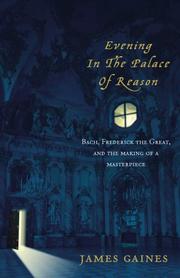
A dual narrative of Bach and Frederick the Great converging on the 1747 Potsdam meeting that produced The Musical Offering. A popular history, and the least demanding entry point on this path.
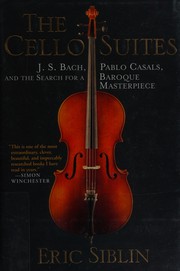
A journalist's braided account of Bach, Pablo Casals and the author's own obsession with the six suites for unaccompanied cello. It shows how one work travelled from obscurity to canon, which is the story of Bach's reputation in miniature.

A compact single-volume life-and-works survey from the Master Musicians series. Read it third as the short reference that organises what the two narratives above gave you piecemeal.
The standard life
IntermediateMove to the two full-scale modern biographies and understand why they disagree.
▸ Study plan for this stage
Pace: 6–8 weeks for roughly 1,290 pages, and this is the heaviest stage on the path. Christoph Wolff's Johann Sebastian Bach (621 pages, catalogued under the bare title, so do not confuse it with Boyd's Bach) is the scholarly standard — budget three to four weeks at 25–30 pages a session, because the chap
- Wolff's central thesis: Bach as a systematic 'musical scientist' exploring the exhaustive possibilities of a compositional idea, with the late collections as research programmes
- Gardiner's counter-portrait: a turbulent, abrasive, physically violent milieu and a composer whose sacred music is driven by an unresolved relationship with death and judgement
- How each author reads the same silence — the absence of personal letters — as evidence for opposite characters
- The Cantata Pilgrimage as method: Gardiner performed the surviving church cantatas across the liturgical year, and his conclusions come from rehearsal-room experience rather than the archive
- The Leipzig conflicts — the town council, the Thomasschule, the rector disputes — and how differently the two books weigh them
- Chronology as argument: the twentieth-century redating of the cantatas, which reorganised the whole picture of the Leipzig period
- The distinction between what the documents support, what performance practice suggests, and what a biographer infers to make a person
- State Wolff's thesis and Gardiner's in one sentence each, and identify the specific evidence each relies on that the other discounts
- Which of Gardiner's claims about Bach's character come from documents, and which come from the experience of conducting the music?
- Why does the redating of the Leipzig cantatas matter so much, and what did it do to the older picture of a composer steadily producing cantatas for decades?
- Where does Wolff's 'musical scientist' framing seem to strain — which works or episodes does it explain least well?
- Is a performer's biography a different kind of book from a scholar's, or a worse one? Argue it with a specific passage from each.
- Open the sealed 200-word life you wrote in stage one and mark every sentence Wolff corrects, qualifies or contradicts
- Take a single event both books cover — the Potsdam visit, the Arnstadt fight with Geyersbach, or the 1723 Leipzig appointment — and set Wolff's and Gardiner's accounts side by side, listing what each includes that the other omits
- Read Gardiner on one specific cantata while listening to his own recording of it, and note where the interpretation in the book is audibly the interpretation in the performance
- Add Wolff's chronology to the timeline you built from Boyd, correcting it where Boyd's short survey was compressed or out of date
- Write down five claims about Bach's personality that you now hold, and next to each write which book it came from and whether it is document-backed
Next up: You have two biographers disagreeing about the same man; the next stage puts the surviving paper in your own hands so you can see what they were both working from.
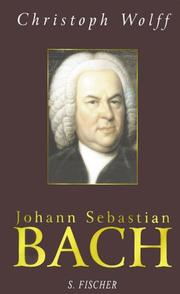
The standard scholarly biography, arguing Bach as a systematic musical scientist. Open Library files it under the bare title Johann Sebastian Bach. This is the book every later study argues with, so read it before anything analytical.

A conducting biography by the man who performed the complete surviving church cantatas in one year, published in the US as Bach: Music in the Castle of Heaven. Read it against Wolff: Gardiner hears a turbulent, difficult man where Wolff sees a methodical one.
The documents and the older scholarship
IntermediateRead the surviving evidence directly, and see how the picture of Bach has changed over a century.
▸ Study plan for this stage
Pace: 6–8 weeks for about 1,780 pages, and it is the stage where reading style has to change. The New Bach Reader (608 pages), edited by Hans T. David and Arthur Mendel and revised by Christoph Wolff, is a document collection — letters, contracts, obituaries, complaints, town-council minutes, early biogra
- Primary source versus narrative: what the Obituary, the Entwurff memorandum and the council minutes actually say, before anyone shaped them into a life
- The Bach family's own account of itself — the genealogy and the Obituary written by C. P. E. Bach and Agricola — as an interested source, not a neutral one
- Reading a complaint: the Leipzig disputes look entirely different in the council's minutes than in either modern biography's summary
- Why Geiringer's picture is wrong in specific, datable ways — the pre-1950s cantata chronology assumed decades of steady production that the redating collapsed
- Schweitzer's theory of musical symbolism: recurring figures for grief, joy, steps, wandering, and the claim that the vocal works are built from them
- Why symbolism is contested — the difficulty of distinguishing an intended sign from an ordinary idiom of the style, and the risk of unfalsifiable reading
- Reception as sediment: each of these three books is also evidence about the period that produced it
- Pick any episode Wolff narrates and find its documents in the New Bach Reader — what did he add, and what did he leave out?
- The Obituary was written by Bach's son and a pupil. Which of its claims would you accept, and which would you flag as family self-presentation?
- Name two specific things Geiringer states that later chronology work overturned, and explain what changed the evidence
- Is Schweitzer's symbolic vocabulary testable? What would count as evidence against it?
- After reading the documents yourself, whose narrative — Wolff's or Gardiner's — do you now think is doing more inference?
- Choose three episodes from your timeline, find each one in the New Bach Reader, and write a paragraph on how the primary document differs in tone and content from the biographers' retelling
- Read the Entwurff — Bach's 1730 memorandum to the Leipzig council on what a well-appointed church music requires — and then reread Gardiner's and Wolff's use of it, noting who quotes which half
- Take one Schweitzer symbolic figure, find the passage he cites, listen to it, and then find a passage in a secular Bach work where the same figure appears without the claimed meaning
- Read Geiringer's account of the Leipzig cantata production alongside Wolff's, and list the concrete factual differences that follow from the redating
- Pull the earliest and latest documents in the New Bach Reader and write down how the language about Bach changes between them — this is reception history in raw form, and it sets up the last stage
Next up: With the documents read and a century of shifting scholarship in view, you are ready for the two books that stop asking who Bach was and start asking how the music works and why it never went away.
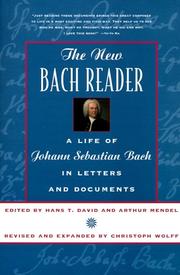
The essential document collection — letters, obituaries, contracts, complaints, town-council minutes — edited by David and Mendel and revised by Christoph Wolff. Read it after Wolff's biography so you can check his narrative against the paper.
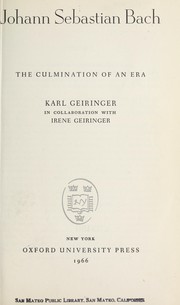
A mid-twentieth-century life-and-works that predates the chronology revisions of the 1950s. Included to show what changed, not as a current authority.
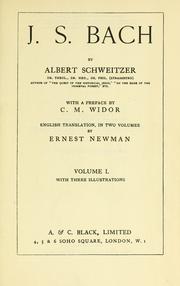
Schweitzer's 1905 study, which argued that Bach's vocal music is built on a vocabulary of pictorial musical figures. Historically enormous, methodologically contested, and best read once you can push back on it.
How the music is made, and why it lasted
IntermediateTake on the analytical literature and the reception history.
▸ Study plan for this stage
Pace: 4–5 weeks for about 790 pages, but the two halves are nothing alike. Laurence Dreyfus's Bach and the Patterns of Invention (279 pages) is the hardest book on this path — a close analytical study that assumes you can read a score, follow a fugal exposition and hear a subject inverted; budget two to t
- Dreyfus's thesis: Bach composed by inventing a mechanism and then systematically working out its implications, which reverses the romantic image of effortless divine craft
- Invention, elaboration and the rhetorical categories Dreyfus borrows to describe compositional process rather than finished form
- The difference between analysing a piece and reconstructing how it was made — Dreyfus's subject is process, and that is why score-reading is unavoidable
- Elie's argument that Bach's twentieth-century ubiquity is a technological fact: the phonograph, the LP, the studio and the tape edit made this repertoire portable
- Key figures in the reception chain — Schweitzer's organ recordings, Casals and the cello suites, Stokowski's orchestrations, Gould's 1955 and 1981 Goldbergs
- Two answers to 'why Bach': structural (the music rewards analysis inexhaustibly) and material (the recording industry chose it), and the fact that both can be true
- How reading Dreyfus retroactively judges Wolff — the 'musical scientist' portrait looks different once you have watched an actual invention be worked out
- State Dreyfus's account of invention in your own words, and apply it to one fugue you can follow in score
- What background does Dreyfus assume that Elie does not, and what would you have to learn to read Dreyfus's hardest chapter properly?
- Does Elie's technological explanation of Bach's dominance actually compete with a musical explanation, or are they answering different questions?
- How does Dreyfus's reading of compositional process confirm or undermine Wolff's 'systematic musical scientist'?
- Having finished the path: what is the strongest evidence-based statement you can make about Bach's working method, and where does the record simply run out?
- Take one of Dreyfus's worked analyses, get the score, and follow his argument bar by bar; write down the point at which you lose it, and what specific skill you were missing there
- Apply Dreyfus's invention-then-elaboration frame to a piece he does not analyse — a two-part invention or a Well-Tempered Clavier fugue — and see whether it holds
- Listen to Gould's 1955 and 1981 Goldberg Variations back to back while reading Elie's chapters on them, and write down what the recordings tell you that the prose does not
- Set Schweitzer's symbolic reading from the previous stage against Dreyfus's process reading of comparable material, and describe what kind of question each is answering
- Reread the 200-word life you wrote after stage one one last time and rewrite it with everything from the whole path, marking each sentence with the book that authorises it
Next up: This closes the path: you have a life from narrative, the evidence behind it, a century of shifting interpretation, an account of how the music was actually built, and an explanation of why it became inescapable.
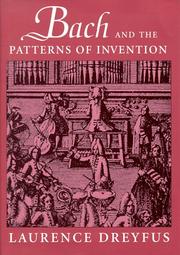
A close analytical study arguing that Bach composed by working out the implications of an invented idea, against the received image of effortless craft. The most technically demanding book here; it assumes you can follow a score.

A reception history running from Schweitzer's organ recordings through Casals, Stokowski and Glenn Gould to the recording studio. Read last, as the answer to why this particular composer became inescapable.
Discussion
Keep reading
Paths that share books, cover the same subject, or open a related topic.