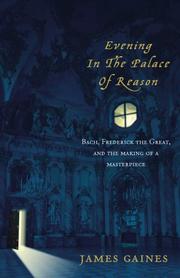
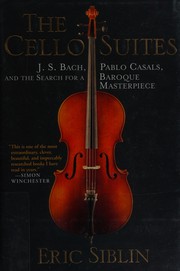
If you want the single authoritative life, it is Christoph Wolff's Johann Sebastian Bach, a 621-page scholarly biography from 2000 that argues Bach as a systematic musical scientist. If you want an easier door into the subject first, start with James R. Gaines and Evening in the Palace of Reason, a dual narrative of Bach and Frederick the Great converging on the 1747 Potsdam meeting that produced The Musical Offering.
The reason order matters here is that Bach left almost nothing about his inner life — no diary, barely a personal letter — so the literature splits into three kinds of book that make three different kinds of claim. There are narrative lives assembled from circumstantial evidence, document collections that let you read the surviving paper yourself, and analytical studies of how the music is put together. Read them in that order and you always know which sort of claim you are looking at.
Three ways in, and a note on the titles
Evening in the Palace of Reason is popular history and the least demanding book on this path. The cello suites is Eric Siblin's braided account of Bach, Pablo Casals and the author's own obsession with the six suites for unaccompanied cello — the story of Bach's reputation in miniature, since those works went from near-obscurity to canon inside a century.
Third is Malcolm Boyd's Bach, a compact life-and-works survey. Take care buying it: our catalogue record is a brief illustrated 1967 Barrie and Jenkins edition of a few dozen pages, not Boyd's later and much fuller Master Musicians volume, which is the one most readers mean. Both are by the same author and both are simply called Bach.
The standard life, and the argument with it
Wolff's Johann Sebastian Bach is filed in our catalogue under that bare title, so do not confuse it with Karl Geiringer's Johann Sebastian Bach; the culmination of an era, which is a different book from three decades earlier. Wolff is the one every later study argues with; read it before anything analytical.
Then read John Eliot Gardiner's Music in the Castle of Heaven against it. Gardiner conducted the complete surviving church cantatas in a single year, and he hears a turbulent, difficult, sometimes violent man where Wolff sees a methodical one. They are working from largely the same thin evidence and reaching different portraits, which tells you something useful about how much of any Bach biography is inference.
The documents, and the older scholarship
New Bach Reader is the essential document collection — letters, obituaries, contracts, complaints, town-council minutes — edited by Hans T. David and Arthur Mendel and revised by Wolff himself. Read it after Wolff so you can check the narrative against the paper it rests on. It is a reference volume, not a book you finish.
Johann Sebastian Bach; the culmination of an era is Geiringer's mid-century life-and-works, written before the chronology revisions of the 1950s reordered much of the Leipzig output. Read it to see what changed, not as a current authority. Albert Schweitzer's J. S. Bach is the 1905 study that argued Bach's vocal music is built on a vocabulary of pictorial musical figures. It was enormously influential, its method is contested, and it is best read once you can push back on it. One buying warning: the edition our catalogue links is a German-language Breitkopf und Härtel printing, so look for the Ernest Newman English translation if you need it in English.
How the music is made, and why it lasted
Bach and the patterns of invention is Laurence Dreyfus arguing that Bach composed by working out the implications of an invented idea, against the received image of effortless craft. This is the most technically demanding book here and it assumes you can follow a score. Reinventing Bach is Paul Elie's reception history, running from Schweitzer's organ recordings through Casals, Stokowski and Glenn Gould into the recording studio — the answer to why this particular composer became inescapable. Read it last.
Follow the ordered path for the stage-by-stage plan, or browse more music reading at /discover.
Follow the full ordered path here: Best Books on Johann Sebastian Bach, in Reading Order.