Classical composers: books to understand and love the music
This curriculum takes you from enthusiastic newcomer to deeply informed listener, moving through four carefully sequenced stages. You begin by building a broad map of classical music history and its key figures, then zoom in on individual composers through acclaimed biographies, before tackling more analytical and stylistically rich works that sharpen your ear and critical understanding from the Baroque era through the 20th century.
The Big Picture: Classical Music from 30,000 Feet
BeginnerBuild a mental map of Western classical music history, understand the major periods (Baroque, Classical, Romantic, Modern), and get comfortable with the names, styles, and significance of the great composers before diving into individual biographies.
▸ Study plan for this stage
Pace: 4–5 weeks, ~25–30 pages/day (alternating between the two books; approximately 2 weeks per book with overlap)
- The four major periods of Western classical music (Baroque, Classical, Romantic, Modern) and their defining characteristics, timeline, and cultural contexts
- The role of form and structure in classical music: sonata form, symphony, concerto, and how these evolved across periods
- Key composers as representatives of their era: Bach and Handel (Baroque), Mozart and Beethoven (Classical), Brahms and Wagner (Romantic), Debussy and Stravinsky (Modern), and their major contributions
- How to actively listen for compositional techniques, instrumentation, and emotional intent rather than passively hearing music
- The relationship between historical events, patronage systems, and the development of classical music genres and styles
- The orchestra's evolution: instruments, ensemble size, and role in different periods
- Practical listening strategies: identifying themes, recognizing form, and understanding why certain pieces matter in the canon
- What are the defining musical and historical characteristics of the Baroque, Classical, Romantic, and Modern periods, and what major composers represent each?
- How did sonata form develop and why was it central to Classical and Romantic music?
- What is the difference between a symphony, concerto, and chamber work, and how did these forms evolve across periods?
- How did historical events (patronage, industrialization, nationalism) shape the development of classical music?
- What specific listening techniques can you use to identify a composer's style or period when hearing an unfamiliar piece?
- Why are certain composers (Bach, Mozart, Beethoven, Brahms) considered canonical, and what did each contribute to the tradition?
- Create a visual timeline (poster, digital document, or mind map) showing the four major periods, key composers, and 2–3 representative works per period; update it as you read
- Listen to one 'anchor piece' per period (e.g., Bach's Brandenburg Concerto No. 3, Mozart's Symphony No. 40, Beethoven's Symphony No. 5, Brahms's Symphony No. 1, Debussy's Prélude à l'après-midi d'un faune) and write 1–2 paragraphs describing what you hear and how it reflects its era
- Create comparison charts for three pairs: Baroque vs. Classical orchestration, Classical vs. Romantic melody and harmony, Romantic vs. Modern tonality—use specific examples from the books
- Listen to a 'mystery piece' (unfamiliar work by a canonical composer) and attempt to identify the period, composer, and form using the listening strategies from Greenberg's book; write your reasoning
- Read one composer biography section from Libbey's encyclopedia (e.g., Mozart, Beethoven, or Wagner) and write a one-page summary connecting their life, historical context, and musical innovations
- Attend or watch a live or recorded performance of a symphony or concerto from each period; take notes on instrumentation, form, and emotional arc
Next up: This stage equips you with a coherent historical framework and active listening vocabulary, enabling you to approach individual composer biographies and deep-dive analyses with context and confidence in the next stage.
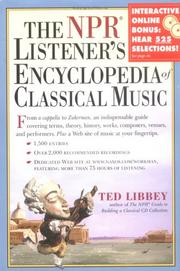
A beautifully organized A-to-Z reference that introduces every major composer with context about their life, style, and essential works — perfect as a first companion to read alongside your listening.

Adapted from Greenberg's legendary lecture series, this book demystifies musical form, harmony, and structure so you can hear what is actually happening in a piece — essential vocabulary before reading deeper biographies.
Foundations: Bach, Mozart & Beethoven
BeginnerGet to know the three towering figures of the Baroque and Classical periods through accessible, narrative-driven biographies that bring their music and personalities vividly to life.
▸ Study plan for this stage
Pace: 8–10 weeks, ~40–50 pages/day (approximately 2–3 weeks per book, with 1 week for integration and listening)
- Bach's mathematical genius and the Baroque contrapuntal tradition: how fugues and canons reveal a mind obsessed with order and spiritual expression
- Mozart's prodigious talent, psychological complexity, and the tension between court patronage and artistic freedom in the Classical era
- Beethoven's revolutionary deafness and how it paradoxically intensified his creative vision, bridging Classical form with Romantic expression
- The historical and social contexts that shaped each composer: the transition from Baroque to Classical, the role of the church, aristocratic patronage, and emerging concert culture
- How each composer's personality, struggles, and life circumstances directly influenced their compositional choices and legacy
- The musical evolution across these three figures: from Bach's polyphonic mastery through Mozart's elegant synthesis to Beethoven's structural innovation and emotional depth
- The concept of 'genius' itself: how these three composers were perceived in their time versus how we understand their contributions today
- What was the 'Musical Offering' and what does the story of its creation (as told in 'Evening in the Palace of Reason') reveal about Bach's character and artistic principles?
- How did Mozart's childhood as a prodigy performer shape his adult struggles with financial independence and artistic autonomy?
- What role did Beethoven's deafness play in his compositional development, and how did it affect his relationship with society and his own music?
- How did the shift from Baroque to Classical musical language reflect broader changes in European society and patronage systems during this period?
- What were the key differences in how Bach, Mozart, and Beethoven approached the relationship between form and emotion in their music?
- How did each composer's relationship with their patrons (or lack thereof) influence the music they created?
- Create a timeline mapping the lives of Bach, Mozart, and Beethoven alongside major historical events (wars, revolutions, technological changes) to understand their contexts
- Listen to Bach's 'The Art of Fugue' while reading Gaines's descriptions of Bach's mathematical approach; annotate what you hear that matches Gaines's narrative
- Compile a 'personality profile' for each composer based on biographical details from the three books, noting contradictions and complexities (e.g., Mozart's humor vs. his financial desperation)
- Compare Mozart's letters (referenced in Solomon's biography) with Beethoven's conversation books and Bach's documented statements to identify how each expressed themselves outside their music
- Listen to one major work by each composer (e.g., Bach's 'Goldberg Variations,' Mozart's Piano Concerto No. 21, Beethoven's Symphony No. 9) and write a short reflection on how the biographical details you've learned illuminate the music
- Create a visual chart comparing the three composers across categories: patronage system, family background, approach to form, relationship to emotion, and legacy—identify patterns and divergences
Next up: This stage establishes the three foundational pillars of Western classical music and the historical arc from Baroque order to Classical balance to Romantic passion, preparing you to understand how later composers either built upon or rebelled against these models.
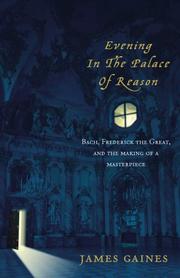
A gripping dual narrative centered on J.S. Bach that also illuminates the Baroque era's collision of faith and reason — an ideal, story-driven entry point into the oldest repertoire on this list.
The definitive scholarly yet readable Mozart biography; reading it after Bach lets you feel the leap from Baroque counterpoint to Classical elegance and understand what made Mozart's genius so unprecedented.
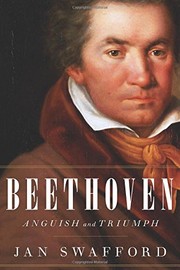
A monumental, deeply researched biography that traces Beethoven's transformation of the Classical style into something heroic and personal — the perfect capstone to this foundational trio.
The Romantic Century: Schubert to Brahms
IntermediateExplore the rich diversity of the Romantic era through focused composer portraits, understanding how each figure expanded musical language, emotion, and form in their own distinct direction.
▸ Study plan for this stage
Pace: 4–5 weeks, ~40–50 pages/day (approximately 200–250 pages total)
- Brahms's synthesis of Classical form with Romantic expression—how he honored tradition while expanding emotional depth
- The development of Brahms's compositional voice across different genres (symphonies, chamber music, lieder, choral works)
- Brahms's relationship to his predecessors (Beethoven, Schubert) and contemporaries (Wagner, Liszt) in shaping Romantic aesthetics
- The role of German folk tradition and literary culture in Brahms's artistic identity
- Brahms's approach to orchestration, harmonic language, and structural innovation within the Romantic period
- The biographical context of 19th-century Vienna and how historical events shaped Brahms's creative output
- Brahms's influence on later composers and the legacy of his 'conservative' yet progressive musical philosophy
- How did Brahms balance his reverence for Classical forms (especially Beethoven) with the emotional and harmonic innovations of the Romantic era?
- What role did German folk music and literature play in shaping Brahms's compositional aesthetic?
- How did Brahms's approach to orchestration and harmonic language differ from his Romantic contemporaries like Wagner and Liszt?
- What are the key characteristics of Brahms's work in different genres (symphonies, chamber music, lieder), and how did he evolve within each?
- How did Brahms's biographical experiences—his relationships, his time in Vienna, his artistic struggles—influence his compositional development?
- What was Brahms's lasting influence on later composers, and why was he sometimes viewed as both conservative and progressive?
- Listen to Brahms's four symphonies in order while reading Geiringer's analysis of each; note how the structural and emotional arc evolves across the cycle
- Compare a Brahms chamber work (e.g., Piano Trio Op. 8) with a Beethoven equivalent; identify which Classical elements Brahms retained and which Romantic features he added
- Read and analyze 3–4 Brahms lieder (e.g., from his Magelone Romanzen cycle) alongside the poetry; discuss how Brahms's music illuminates the text
- Create a timeline mapping Brahms's major compositions against key biographical events and historical moments in 19th-century Vienna
- Listen to a Wagner opera excerpt and a Brahms symphonic work back-to-back; write a short comparison of their harmonic language, orchestration, and emotional expression
- Transcribe or sketch out the opening theme of Brahms's Symphony No. 1 and analyze its relationship to Beethoven's Ninth Symphony
Next up: This deep dive into Brahms's life and work establishes a model of how a Romantic composer could honor Classical tradition while expanding musical language—a tension that will illuminate your understanding of other Romantic figures and how they each resolved the relationship between past and present differently.
Newbould's authoritative study of Schubert bridges the Classical and Romantic worlds and is best read now that you have a firm grounding in both — his song cycles and chamber music will suddenly make deep sense.
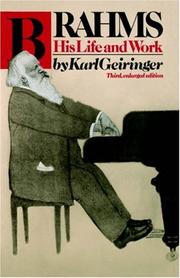
A classic, concise biography of the great conservative Romantic; reading Brahms after Wagner perfectly illustrates the era's central debate between tradition and radical innovation.
Into the Modern: Debussy, Mahler & Stravinsky
ExpertUnderstand how the tonal language of the Romantic era dissolved and fractured into Impressionism, late Romanticism, and Modernism — and develop the analytical ear to appreciate music that no longer follows familiar rules.
▸ Study plan for this stage
Pace: 8–10 weeks, ~40–50 pages/day (accounting for dense musical analysis and score study)
- Debussy's dissolution of functional harmony: whole-tone scales, parallel chords, and the rejection of traditional cadential closure
- Impressionism as a sonic philosophy: timbre and color as structural elements rather than ornament
- Mahler's expansion of the symphonic form: integration of folk material, song cycles, and psychological fragmentation within Romantic structures
- The tension between Romantic expression and modernist fragmentation in late 19th-century Vienna
- Stravinsky's rhythmic revolution and metric displacement: how rhythm becomes the primary organizational force in early modernism
- Primitivism and neoclassicism as compositional strategies: Stravinsky's radical rejection of Romantic organicism
- The analytical ear: recognizing non-functional harmony, polytonality, and structural principles beyond sonata form
- How does Debussy's use of parallel chords and whole-tone scales fundamentally differ from Romantic harmonic practice, and what does Walsh argue about Debussy's relationship to impressionist painting?
- What role does orchestral timbre play in Debussy's compositional method, and how does it replace traditional harmonic progression as a structural device?
- How does Mahler reconcile Romantic symphonic ambitions with modernist fragmentation, and what does Carr identify as the psychological or philosophical underpinnings of this tension?
- Analyze the relationship between folk material and symphonic development in Mahler's symphonies: how does he transform folk idioms into complex modernist structures?
- What is Stravinsky's 'creative spring,' and how do works like The Rite of Spring represent a fundamentally different approach to rhythm, meter, and orchestration than Debussy or Mahler?
- How do Debussy, Mahler, and Stravinsky each solve the 'problem' of tonality in the early 20th century, and what does this reveal about different paths into modernism?
- Score study: Compare a Debussy prelude (e.g., 'Voiles' or 'La Cathédrale engloutie') with a Chopin nocturne. Identify specific harmonic moments where Debussy abandons functional harmony and map how color/timbre compensates.
- Listening analysis: Listen to Debussy's La Mer while following the score, marking moments where traditional form dissolves and noting how orchestral texture creates coherence instead.
- Harmonic reduction: Take a passage from Mahler's First or Fifth Symphony and reduce it to a harmonic skeleton; then analyze what Mahler adds (orchestration, counterpoint, folk melody) and why.
- Comparative listening: Hear Mahler's use of a folk tune (e.g., from Symphony No. 1) in its original form, then trace how it is fragmented, inverted, and recontextualized throughout the movement.
- Rhythmic transcription: Transcribe the opening of The Rite of Spring (Augurs of Spring) into conventional notation, then compare to Stravinsky's score to understand how metric displacement creates the sense of 'primitive' energy.
- Analytical essay: Write a 2–3 page analysis of one work from each composer (e.g., Debussy's Prélude à l'après-midi d'un faune, Mahler's Kindertotenlieder, Stravinsky's Petrushka), explaining which modernist strategy each employs and why.
- Ear training: Practice identifying whole-tone scales, parallel fifths/octaves, and polytonality in listening examples from all three composers without the score.
- Composition sketch: Write an 8–16 bar passage using Debussyist whole-tone harmony or Stravinskian metric displacement, then perform or have it played to internalize the sound.
Next up: This stage equips you to hear and understand the radical compositional choices of the early 20th century, preparing you to engage with the even more systematic and abstract modernisms of the Second Viennese School (Schoenberg, Berg, Webern) and the post-war avant-garde, where the dissolution of tonality becomes complete and deliberate.

Walsh's elegant biography of Debussy is the ideal bridge from Romanticism to Modernism, showing how color, atmosphere, and non-functional harmony opened entirely new sonic worlds.

A lucid and moving account of Mahler's life and symphonies; by this stage you can fully appreciate how he stretched the Romantic orchestra to its breaking point while looking backward and forward simultaneously.

The first volume of Walsh's definitive two-volume Stravinsky biography covers the Russian ballets through the neoclassical turn — the perfect endpoint that shows how one composer contained the entire arc from Romantic tradition to 20th-century revolution.
Discussion
Keep reading
Paths that share books, cover the same subject, or open a related topic.