Jack Reacher Reading Order: Publication or Chronological?
This curriculum guides a brand-new reader into the Jack Reacher series by Lee Child (and co-author Andrew Child), starting with the two most universally recommended entry points, then branching into both the publication-order classics and the chronological (in-universe timeline) path, before finishing with a deeper dive into the later novels. Each stage builds familiarity with Reacher's voice, world, and recurring themes so that by the end the reader can navigate the full 28+ book series with confidence.
The Best Starting Points
BeginnerGet hooked on Reacher's character, voice, and style with the two books most recommended for new readers — one from early in the publication order, one a standalone thriller.
▸ Study plan for this stage
Pace: 6–8 weeks total: Weeks 1–4 cover "Killing Floor / Die Trying / Tripwire" (~25–30 pages/day, reading all three back-to-back to absorb Reacher's early evolution); Weeks 5–6 cover "One Shot" (~40 pages/day), a tighter standalone that consolidates everything learned.
- Reacher's lone-wolf identity: no home, no phone, no ties — understanding how his rootlessness is a feature, not a flaw, and how it drives every plot
- First-person vs. third-person voice: 'Killing Floor' is told in first person (Reacher narrates), while 'One Shot' uses third person — noticing how Child adapts intimacy and tension across both modes
- The 'wrong place, right man' hook: each book opens with Reacher stumbling into a crisis purely by chance, establishing the series' signature premise
- Reacher's moral code: he is not a vigilante by ideology but by circumstance — tracing how he decides when to intervene, when to walk away, and what lines he won't cross
- Lee Child's pacing architecture: short chapters, cliffhanger sentence endings, and relentless forward momentum — identifying these craft techniques on the page
- Physical and tactical detail as characterization: Reacher's size, military training, and methodical problem-solving are shown through action, not exposition
- The small-town conspiracy template (Killing Floor / Die Trying / Tripwire): how Child uses isolated or controlled environments to trap Reacher and raise the stakes
- The standalone thriller structure (One Shot): how a single contained case — a sniper shooting — can introduce the full Reacher experience without requiring prior series knowledge
- After reading 'Killing Floor,' can you explain in your own words why Reacher happened to be in Margrave, Georgia, and how that accidental arrival sets the tone for the entire series?
- How does Child use Reacher's internal monologue differently in the first-person 'Killing Floor' compared to the third-person narration of 'One Shot' — and which did you find more gripping, and why?
- In 'Die Trying,' Reacher is physically constrained for much of the book. How does Child maintain tension and keep Reacher feeling powerful even when he is literally tied up?
- What specific details from Reacher's military background (rank, unit, skills) are introduced across 'Killing Floor,' 'Die Trying,' and 'Tripwire,' and how do they pay off in 'One Shot'?
- In 'One Shot,' Reacher arrives to argue AGAINST the accused sniper — then the case flips. How does Child use this reversal to demonstrate Reacher's commitment to truth over convenience?
- By the end of these four books, what would you say is Reacher's defining moral principle, and can you cite one scene from each book that illustrates it?
- Voice journal: After finishing 'Killing Floor,' write one page in Reacher's first-person voice describing a mundane event (e.g., ordering coffee). Then after 'One Shot,' rewrite the same scene in third person. Compare what is gained and lost in each mode.
- Chapter autopsy: Pick any single chapter from 'Die Trying' and map its structure — opening hook, escalation beats, and closing line. Identify exactly where and how Child creates the urge to turn the page.
- Character fact-sheet: As you read all four books, keep a running log of every concrete detail revealed about Reacher (height, weight, habits, backstory, skills). By 'One Shot,' you should have 20+ entries — notice which facts Child repeats and why.
- Conspiracy map: For 'Killing Floor' and 'Tripwire,' draw a simple diagram of the criminal conspiracy at the heart of each plot — who is behind it, what they want, and how Reacher dismantles it layer by layer. Compare the two diagrams for structural similarities.
- The 'One Shot' reversal analysis: Re-read the chapter in 'One Shot' where Reacher realizes the sniper may be innocent. Write a short paragraph (150–200 words) explaining what clue Child planted earlier that makes this reversal feel earned rather than cheap.
- Reader-response log: After each book, write three sentences — one on plot, one on character, one on style — capturing your immediate gut reaction. Review all four entries together at the end of the stage to track how your reading eye is sharpening.
Next up: Having experienced Reacher's origin, his early evolution across three novels, and the polish of a standalone thriller, the reader is now ready to dive deeper into the full publication sequence — exploring how Child develops Reacher's world, recurring relationships, and increasingly complex antagonists across the broader series.

The very first published Reacher novel (1997) — it introduces Jack Reacher from scratch, establishes his lone-drifter premise, and won the Anthony Award. Starting here means you experience exactly what original readers did.

Publication #9 and the basis for the first Tom Cruise film, this book is self-contained and widely cited as the single best entry point for readers who want a tight, standalone taste of Reacher before committing to the full series.
Publication Order — The Early Classics
BeginnerRead the next celebrated novels in the order Lee Child wrote them, building intuition for Reacher's moral code, fighting style, and episodic structure.
▸ Study plan for this stage
Pace: 8–10 weeks total; roughly 25–35 pages per day. Suggested pacing: Die Trying (weeks 1–2), Tripwire (weeks 3–4), Running Blind (weeks 5–6), Echo Burning (week 7), Without Fail (weeks 8–9), with week 10 as a review and reflection buffer.
- Reacher's Moral Code: understanding his self-appointed role as a roving arbiter of justice — when he intervenes, why, and the personal cost
- Escalating Stakes and Threat Architecture: how each novel raises the danger level (Die Trying's militia siege, Tripwire's buried-past antagonist, Without Fail's Secret Service threat) to sustain tension
- Fighting Style and Physical Logic: Child's precise, almost clinical description of Reacher's combat — size, leverage, pre-emption, and economy of violence
- Episodic / Stand-alone Structure: how each book resets Reacher's location, supporting cast, and situation while maintaining character continuity
- The Reluctant Hero Pattern: Reacher is always pulled into conflict rather than seeking it — tracking how each novel engineers that pull
- Supporting Character Function: how temporary allies and love interests (e.g., Holly Johnson in Die Trying, Jodie Garber in Tripwire, M.E. Froelich in Without Fail) illuminate different facets of Reacher's personality
- Setting as Character: rural Montana, New York City, the Texas Hill Country, and Washington D.C. each shape plot mechanics and thematic tone
- Child's Prose Rhythm: short declarative sentences, real-time pacing, and the use of technical/procedural detail to build authenticity
- In Die Trying, what specific elements of the militia's ideology and Holly Johnson's FBI identity force Reacher to act, and how does his military background shape his tactical response to the siege?
- Tripwire revisits Reacher's past more directly than the earlier novels — what does the excavation of his history reveal about his vulnerability, and how does the antagonist Hobie exploit it?
- Running Blind introduces a serial-killer mystery with no apparent cause of death — how does Child use procedural ambiguity to sustain suspense, and what does Reacher's investigative method reveal about his mind?
- Echo Burning is set almost entirely in the Texas heat — how does Child use the oppressive environment and the Greer family's situation to test Reacher's moral code against competing loyalties?
- Without Fail places Reacher inside the Secret Service's world — how does working within an institution, rather than outside one, create friction with his lone-wolf identity, and how is that tension resolved?
- Across all five novels, what consistent pattern governs how Reacher decides to use lethal versus non-lethal force, and can you cite a specific scene from at least three books to support your answer?
- Moral Code Tracker: Keep a running log as you read each book. Each time Reacher makes a significant ethical decision, write one sentence on what rule or principle seems to be driving him. At the end of the stage, compare your five logs and draft a 'Reacher Code' in your own words.
- Fight Scene Breakdown: Choose one fight scene from each of the five books. Sketch a brief diagram or bullet-point sequence of the fight's steps, noting where Reacher uses size, pre-emption, environment, or improvised weapons. Look for recurring tactics across books.
- Setting Mood Map: For each novel, write a short paragraph (3–5 sentences) describing how the primary setting (Montana wilderness, NYC, a Texas ranch, Washington D.C.) influences the plot's tone and Reacher's options. Compare how Child adapts his formula to radically different geographies.
- Antagonist Profile Cards: Create a one-page profile for the main villain of each book (the militia leader in Die Trying, Hobie in Tripwire, etc.), covering: motivation, method, what they underestimate about Reacher, and how they are ultimately defeated. Note any thematic pattern across villains.
- Chapter-One Hook Analysis: Re-read only the opening chapter of each of the five books after finishing them all. Write a short note on what narrative hook Child uses and how it differs or repeats across the series — this sharpens awareness of his structural craft.
- Comparative Reflection Essay (500–700 words): After finishing Without Fail, write an informal essay answering: 'How has your understanding of Reacher's character deepened from Die Trying to Without Fail?' Use at least one specific scene from each book as evidence.
Next up: Mastering these five novels cements the core Reacher formula — moral code, combat logic, and episodic reset — giving you the interpretive baseline needed to appreciate how later entries in the series begin to experiment with, subvert, or deepen those established conventions.

Publication #2, directly following Killing Floor — it escalates the stakes dramatically and deepens Reacher's character as a reluctant hero caught in a survivalist conspiracy.

Publication #3 and the first book where someone comes looking for Reacher, flipping the dynamic. It introduces recurring character Jodie Garber and adds emotional depth to the series.
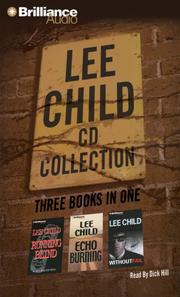
Publication #5 and a fan-favorite set in the Texas heat — praised for its plotting and moral complexity, it shows Child at the height of his early craft.
Chronological Order — Reacher's Past
IntermediateExplore the in-universe timeline by reading books set during Reacher's Army years, understanding how his backstory enriches the present-day novels you've already read.
▸ Study plan for this stage
Pace: 4–5 weeks total: Week 1–2 — Read "The Enemy" (~530 pages, ~35–40 pages/day); Week 3–4 — Read "Night School" (~400 pages, ~30–35 pages/day); Week 5 — Review, reflection, and complete exercises.
- Reacher as an MP officer: In 'The Enemy,' Reacher operates within the institutional constraints of the U.S. Army's Criminal Investigation Division, revealing how his sense of justice was shaped before he became a lone drifter.
- Military hierarchy vs. personal ethics: Both books dramatize the tension between following orders and doing what is right — a core Reacher theme that gains new depth when seen from inside the chain of command.
- Reacher's family and origin: 'The Enemy' introduces his mother and brother Joe in pivotal ways, grounding his emotional backstory and explaining the stoic, self-reliant persona seen in the present-day novels.
- Cold War and geopolitical context: 'Night School,' set in 1996 Hamburg, immerses Reacher in a world of intelligence agencies, international terrorism, and post-Cold War power vacuums — showing the macro forces that shaped his worldview.
- Institutional corruption and cover-up: Both novels feature conspiracies that reach high into the military establishment, teaching Reacher (and the reader) that rank and authority are no guarantee of integrity.
- Reacher's investigative method in a structured setting: Seeing Reacher use his deductive reasoning, physical dominance, and moral clarity while still wearing a uniform clarifies which traits are innate versus which were forged by civilian life.
- Loyalty and betrayal within a unit: Both books explore how trust functions (and fails) among soldiers and intelligence operatives, adding layers to Reacher's later distrust of institutions.
- The transition point — why Reacher leaves the Army: 'The Enemy' in particular foreshadows the conditions that make Army life untenable for someone of Reacher's character, making his eventual discharge feel inevitable rather than arbitrary.
- In 'The Enemy,' what specific case does Reacher investigate, and how does the Army's attempt to suppress the truth reflect the theme of institutional corruption?
- How does Reacher's relationship with his mother and brother Joe in 'The Enemy' reframe your understanding of his emotional detachment in the present-day novels you've already read?
- In 'Night School,' what is the nature of the threat Reacher is tasked with neutralizing in Hamburg, and how does working alongside CIA and FBI agents change the dynamic compared to a purely military investigation?
- Across both books, how does Reacher's approach to authority figures — superiors, politicians, intelligence handlers — remain consistent, and what does that consistency reveal about his core character?
- Both novels are set in specific historical moments (early 1990s and 1996 respectively). How does each book use its geopolitical backdrop to create stakes that feel larger than a single crime?
- After reading both books, can you articulate the key reasons — professional, personal, and ethical — that make Reacher's eventual departure from the Army feel like the only logical outcome for his character?
- Timeline mapping: Create a hand-drawn or digital timeline placing the events of 'The Enemy' and 'Night School' against real-world historical events (Gulf War drawdown, Cold War end, 1996 global terrorism landscape). Annotate how each event pressures Reacher's choices.
- Character contrast journal: After finishing 'The Enemy,' write a one-page comparison of 'Army Reacher' vs. 'civilian drifter Reacher' as you knew him from previously read present-day novels. Revisit and update this journal after 'Night School.'
- Corruption anatomy exercise: For each book, chart the conspiracy — who is involved, what they are hiding, and at what level of the hierarchy the rot begins. Compare the two charts: what structural similarities do you notice in how Child constructs institutional villainy?
- Reacher's rules list: As you read, keep a running list of every moment Reacher articulates or demonstrates a personal rule or code (e.g., about loyalty, violence, fairness). After both books, group them into categories and reflect on which rules appear to be Army-forged vs. innate.
- Reread a key scene: Go back to a confrontation scene from a present-day Reacher novel you've already read and reread it after completing this stage. Write 3–5 sentences on how the Army backstory from 'The Enemy' or 'Night School' changes or deepens your reading of that scene.
- Debate prompt: Write a short (300–400 word) argument for or against this statement — 'The Army made Reacher; it did not constrain him.' Use specific evidence from both books to support your position.
Next up: By understanding the institutional world Reacher escaped and the moral code he forged inside it, readers are now equipped to appreciate the full weight of his freedom and vigilante justice in the present-day standalone novels that follow.

Set in 1990 during Reacher's active military service — chronologically the earliest full novel in the series. Reading it now (after you know Reacher well) makes the origin story land with much greater impact.

Set in 1996, just before Reacher leaves the Army — a Cold War-era thriller that bridges his military past and civilian wandering life, and is considered one of the strongest entries in the entire series.
Peak Publication Order — The Fan Favorites
IntermediateRead the novels most frequently cited by fans and critics as the series' best work, now that you have full context for Reacher's world.
▸ Study plan for this stage
Pace: 6–8 weeks total; roughly 1 book per 2 weeks at ~25–30 pages/day. Suggested breakdown: Week 1–2 = Without Fail, Week 3–4 = Bad Luck and Trouble, Week 5–6 = 61 Hours, with Week 7–8 reserved for reflection, re-reading key chapters, and completing exercises.
- Reacher as a protector of institutions vs. a lone outsider — Without Fail explores his relationship with the Secret Service and the tension between systemic security and individual brilliance
- The 'old unit' dynamic and loyalty among former military colleagues — Bad Luck and Trouble reunites Reacher with his old 110th MP unit, foregrounding themes of brotherhood, betrayal, and collective identity
- Lee Child's use of arithmetic and logical deduction as a narrative device — Reacher's step-by-step reasoning (most explicit in 61 Hours) functions almost as a character in itself
- Escalating stakes and the 'ticking clock' structure — 61 Hours is Child's most disciplined use of countdown tension, with each chapter explicitly marking time
- Reacher's moral code under extreme pressure — all three novels test whether his ethics bend when the people or causes he cares about are threatened
- The role of setting as antagonist — the brutal South Dakota winter in 61 Hours and the Washington D.C. power corridors in Without Fail are not mere backdrops but active forces shaping plot and character
- Evolution of secondary characters — M.A. Turner's absence/presence arc, Frances Neagley's competence and loyalty in Bad Luck and Trouble, and the ensemble cast dynamics across all three books
- Child's prose economy and chapter-ending hooks — studying how micro-cliffhangers and short declarative sentences manufacture momentum across these fan-favorite entries
- In Without Fail, how does Reacher's personal connection to the assignment (his brother Joe's former role) complicate his professional objectivity, and what does this reveal about his emotional limits?
- Bad Luck and Trouble is built around the 110th MP Special Investigators as a team — how does Child use each returning member to reflect a different facet of Reacher's own character and values?
- 61 Hours employs an explicit countdown structure chapter by chapter — how does this formal device change the reader's experience of suspense compared to the more open-ended pacing of Without Fail and Bad Luck and Trouble?
- Across all three novels, how does Reacher's relationship with institutional authority (the Secret Service, the Army network, local law enforcement) shift, and what consistent attitude emerges?
- How does the physical environment of each book — D.C. power structures, a desert Southwest operation, a frozen South Dakota town — function thematically to reinforce each story's central conflict?
- 61 Hours ends on a cliffhanger. Based on everything Child has established about Reacher's character across these three novels, what narrative and thematic promises does that ending make to the reader?
- **Reacher Logic Journal:** While reading 61 Hours, pause at the end of each 'countdown' chapter and write down Reacher's current deductive chain in your own words. Then predict his next move before reading on — this trains you to internalize Child's reasoning style.
- **Comparative Loyalty Map:** After finishing Bad Luck and Trouble, draw a relationship web of the 110th unit members. Annotate each connection with the nature of the loyalty (professional, personal, moral debt) and note which connections are tested or broken by the plot.
- **Setting-as-Antagonist Essay (300–400 words):** Choose one of the three novels and write a short analysis of how its physical setting actively works against Reacher achieving his goal — go beyond description to argue a thematic point.
- **Chapter Hook Audit:** Select any 10 consecutive chapters from Without Fail and write down the final sentence of each. Identify the technique Child uses (unanswered question, physical threat, revelation, irony) and discuss in a short paragraph how these hooks collectively build momentum.
- **'What Would the Institution Do?' Contrast Exercise:** For a key decision Reacher makes in Without Fail (e.g., his unorthodox approach to testing Secret Service vulnerabilities), write a one-page alternative scene in which a by-the-book agent makes the opposite choice — then reflect on what is lost and gained narratively.
- **Fan-Critic Dialogue:** Find two fan reviews and one critical essay or interview about any of these three books online. Write a half-page synthesis: where do fan responses and critical analysis agree, and where do they diverge? What does that gap tell you about what makes these novels 'favorites'?
Next up: Mastering these three novels — Child's tightest plotting, most beloved ensemble work, and boldest structural experiment — equips the reader to engage with the later, more ambitious entries in the series where Child pushes Reacher's world into darker moral territory and more complex narrative forms.
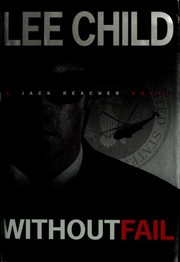
Publication #6 — a Secret Service thriller and one of the tightest plots in the series. It also reintroduces Frances Neagley, Reacher's most important recurring ally.

Publication #11 — the definitive 'Reacher and his old Army unit' story, bringing back Neagley and the Special Investigators team for a high-stakes reunion thriller.

Publication #14 and the start of a two-book arc — widely regarded as one of Child's most suspenseful novels, with a legendary cliffhanger ending that makes the next book essential.
The Modern Era — Andrew Child and Beyond
ExpertTransition into the co-authored and solo Andrew Child era of the series, understanding how the voice and style evolved while Reacher's core identity remained intact.
▸ Study plan for this stage
Pace: 2–3 weeks, ~25–30 pages/day; read each novel back-to-back to keep the comparative lens fresh, with a dedicated reflection day between the two books
- The co-authorship transition: understanding how Lee and Andrew Child divided creative responsibilities and what that means for prose texture, pacing, and dialogue rhythm in The Sentinel and Better Off Dead
- Voice continuity vs. stylistic drift: identifying which hallmarks of classic Reacher prose (short declarative sentences, internal logic chains, precise physical description) are preserved, and where subtle shifts in cadence or word choice signal a new hand
- Reacher's core identity as an anchor: how the character's moral code, physical self-sufficiency, lone-wolf philosophy, and instinctive justice remain the fixed point around which new stylistic elements orbit
- Contemporary threat landscapes: both books update Reacher's adversaries to reflect modern anxieties — ransomware and cyber-infrastructure attacks in The Sentinel, cartel and border-zone violence in Better Off Dead — and how this modernization affects plot architecture
- Supporting character dynamics in the new era: analyzing how Reacher's relationships with Amos (The Sentinel) and Abby (Better Off Dead) are written compared to classic-era companions, and what this reveals about evolving series priorities
- Structural pacing and chapter length: comparing the chapter-break strategy and cliffhanger mechanics in these two books against earlier Child novels the reader has already studied
- Thematic evolution — isolation vs. community: tracing how both novels test Reacher's instinct to move on against situations that demand sustained commitment to a place and its people
- Reader-contract maintenance: how the co-authored books manage fan expectations, delivering familiar satisfactions (the fight, the reveal, the walk-away ending) while introducing fresh narrative wrinkles
- In The Sentinel, how does the ransomware plot function as a modern stand-in for classic Reacher threats (corrupt officials, organized crime), and does the cyber element strengthen or dilute the series' trademark visceral tension — and why?
- Compare Reacher's relationship with Amos in The Sentinel to his relationship with Abby in Better Off Dead: what do the differences in dynamic, trust-building, and romantic undertone reveal about how the co-authored era is handling Reacher's emotional range?
- Identify three specific passages — one from each book plus one from any earlier-stage book you've read — where the prose style feels distinctly different. What linguistic or structural features mark the difference, and can you attribute them to the co-authorship shift?
- Better Off Dead is set largely in a border environment with cartel antagonists. How does this setting challenge or reinforce Reacher's established worldview about law, authority, and personal justice?
- Both novels end with Reacher moving on. How does the emotional register of those endings compare to classic-era walk-away conclusions — is the reader meant to feel the same sense of rightness, or has the tone shifted?
- Having read both books, make an argument for or against this claim: 'The Andrew Child co-authored novels are a successful continuation of the series rather than a reboot.' Use specific textual evidence from The Sentinel and Better Off Dead.
- Voice dissection exercise: Select one action sequence from The Sentinel and one from Better Off Dead. Rewrite a single paragraph from each in what you consider the 'classic Lee Child voice' based on earlier books you've studied. Then write a short paragraph explaining exactly what you changed and why — this forces conscious articulation of stylistic difference.
- Threat-modernization mapping: Draw a two-column chart for each book — on the left, list the modern threat element (ransomware, cartel infrastructure, digital surveillance); on the right, map it to its closest classic-era Reacher equivalent (local corruption, mob muscle, government cover-up). Annotate where the mapping feels seamless and where it strains.
- Character relationship timeline: For both Amos and Abby, build a scene-by-scene trust arc — note the exact moment Reacher decides each person is an ally, what evidence he uses, and how the co-authors signal this to the reader. Compare your two timelines and write a 200-word reflection on what they share.
- Chapter-length and pacing audit: Record the word-count or page-count of every chapter in The Sentinel. Plot it as a simple bar graph. Do the same for Better Off Dead. Compare both graphs to a chapter-length audit you did (or now do) for one earlier-era Reacher novel. Write three observations about structural rhythm.
- The walk-away close-read: Read the final three chapters of each book slowly, annotating every sentence that signals closure, emotional resolution, or Reacher's re-assertion of his nomadic identity. Then write a 300-word comparative essay on how the co-authored era handles the series' most iconic structural moment.
- Debate prep — continuation or reboot?: Write a one-page position paper arguing the opposite of your genuine opinion about whether these books successfully continue the series. Forcing yourself to steelman the other side will sharpen your critical reading of exactly what the co-authored era does and does not achieve.
Next up: By mapping exactly where the co-authored voice diverges from and converges with the classic era, the reader is primed to evaluate Andrew Child's fully solo work with a calibrated critical lens, asking whether the series identity holds when Lee Child's direct involvement is removed entirely.

Publication #25 (2020) and the first co-authored novel with Andrew Child (Lee's brother) — the ideal bridge book to see how the series transitioned while remaining true to its roots.

Publication #26, fully co-authored with Andrew Child — a fast-paced, well-reviewed entry that confirms the series' continued quality and sets the tone for its future direction.
Discussion
Keep reading
Paths that share books, cover the same subject, or open a related topic.