Ismail Kadare Reading Order: Where to Start
Kadare wrote most of his major novels inside Enver Hoxha's Albania, which means the books are simultaneously folkloric and coded — a novel about a medieval blood feud is also a novel about a modern police state. This order starts with the shortest and most immediately gripping, moves to the three books that define his range, then to the parables of surveillance and empire, and ends with the harder late-translated work. Every title here is a standalone; the sequence is about how much political ventriloquism you can hear.
Start here
BeginnerMeet Kadare's blend of highland folklore and administrative menace in the shortest and most propulsive of his novels.
▸ Study plan for this stage
Pace: One week for 232 pages. Broken April is short, propulsive and reads at 40 pages a sitting, but resist finishing it in a night: the two storylines alternate deliberately and the effect depends on feeling the thirty-day clock run down rather than sprinting past it.
- The Kanun of Lekë Dukagjini — the highland customary code governing blood feud, hospitality and the thirty-day truce — is treated as an operating system rather than as local colour. Kadare explains exactly as much of it as the plot needs, so you can read this with no prior knowledge of Albania.
- The novel runs two tracks: a man inside the code with thirty days to live, and a writer from the capital who has come to admire the code as folklore, with his new wife beside him. The distance between the two is the book's argument.
- Kadare wrote most of his major work inside Enver Hoxha's Albania, and the doubleness starts here: a novel about an ancient code that collects a tax on every killing is also a novel about a modern state that administers death by paperwork.
- The blood-tax office at Orosh is the single image to hold on to. An accountancy of murder, kept in ledgers, staffed by clerks — that bureaucratic chill is what he will do for the rest of his career.
- The landscape does structural work. The highlands are described as a closed system with its own weather and its own logic, and the outsiders' car crossing into them is the novel's only real event before the ending.
- Almost all of Kadare's English editions came into English through French rather than directly from the Albanian, because his French translations were the route by which he reached Western readers at all. Later editions of several titles are translated directly from Albanian. The prose you meet in En
- This is a standalone, like everything else on this path. There is no series and no chronology to respect; the ordering here is about how much political ventriloquism you can hear.
- What does the Kanun actually require of Gjorg, and at which points could he have refused?
- What does the writer from the capital want from the highlands, and what does the novel think of that want?
- What is the blood tax for, institutionally speaking — who benefits and how is it justified?
- The two storylines touch only glancingly. Why does Kadare refuse them a proper meeting?
- Read as a book about the Albania of 1978 rather than about a medieval code: what is it saying?
- Write down the rules of the truce as the novel gives them — thirty days, the conditions, what ends it. Being able to state them makes the last fifty pages far more tense.
- Mark the passages where the code is described admiringly and the passages where it is described as machinery. Kadare does both and never reconciles them.
- Note the moment the honeymoon couple's marriage changes. It happens in a single scene and it is easy to read past.
- Afterwards, write one sentence on what the book is about literally and one on what it is about politically. Keep both; you will use the same exercise on every later title.
Next up: You have the method — folklore as a mask fitted over a modern state — and the next three novels apply it at full strength.
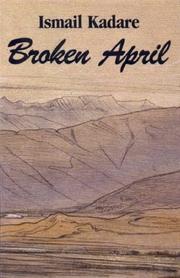
A young man in the northern Albanian highlands has thirty days to live under the blood-feud code of the Kanun. Short, hypnotic and entirely self-explaining — the best doorway into everything else he wrote.
The core three
IntermediateCover the novels that define Kadare's reputation — the bureaucratic nightmare, the childhood memoir-novel, and the debut — and start hearing the double meanings.
▸ Study plan for this stage
Pace: Four to five weeks for 769 pages: The Palace of Dreams 205, Chronicle in Stone 301, The General of the Dead Army 263. Palace of Dreams reads quickly and hypnotically; Chronicle in Stone is the slowest of the three because it is episodic and has no plot to pull you along, so allow it two full weeks;
- The Palace of Dreams is the clearest statement of Kadare's subject: an imperial ministry that collects, files and interprets the dreams of every subject in search of the one dream that reveals the empire's fate. It was banned in Albania, which tells you the coding was legible at the time.
- The Tabir Sarrail is described as an office — corridors, sections, promotions, filing — and the horror is administrative rather than supernatural. Nothing in it is fantastical except the premise, which is precisely the Kafka move Kadare is making in a Balkan register.
- Mark-Alem belongs to a powerful Albanian family inside the Ottoman apparatus, and the novel is as much about a dynasty surviving the state as about the state itself. Kadare drew that family from real Ottoman-Albanian history.
- Chronicle in Stone shows the same authoritarian machinery from underneath, at a child's height, as occupying armies rotate through a stone city in the Second World War. Italians, Greeks and Germans arrive and leave, and the boy narrator registers each as a change in the smell and sound of the street
- Its structure is a mosaic of episodes and gossip rather than a plot, interleaved with fragments of a town chronicle. Read it as a novel about how a place remembers rather than about what happens in it.
- The city is Gjirokastër, which was also Hoxha's birthplace, and the book is careful about that fact in a way that repays attention.
- The General of the Dead Army was the debut that made him internationally known: an Italian general and a priest travel Albania two decades after the war, exhuming their country's dead by list and by height. It is a novel of rain, mud, ledgers and diminishing purpose.
- Placed third, the debut becomes legible. The obsessions you have already met — the archive, the accountancy of death, the foreigner who cannot read the country he is standing in — are all present here in first draft form.
- How does one get promoted inside the Palace of Dreams, and what does the promotion structure tell you about what the institution is really for?
- What is the Master-Dream, and does the novel ever let you know whether the interpretation was correct?
- In Chronicle in Stone, what does the boy understand and what does he only report? Find a passage where the gap is the whole effect.
- Why does Kadare interleave the town chronicle fragments with the boy's narration?
- What does the general believe he is doing, and at what point does the reader stop believing it with him?
- All three books feature an institution that processes people into records. What varies between them?
- Diagram the departments of the Tabir Sarrail as Mark-Alem learns them — Selection, Interpretation, and the rest. The building is the novel's real character.
- In Chronicle in Stone, keep a list of the occupying forces in order and what changes with each. The town's indifference to the difference is the point.
- Read the general's lists and measurements attentively rather than skimming them. The book's bleakest effects are in the arithmetic.
- After all three, put them in the order Kadare wrote them — 1963, 1971, 1981 — and see what changed. The archive gets more explicit and more dangerous each time.
- Take a paragraph from any of the three and read it aloud. Then remember it has been through at least one intermediate language, and ask what you can and cannot fairly judge about the prose.
Next up: With the method established in the present and the recent past, the next stage takes it into the Ottoman centuries where the allegory runs thickest.
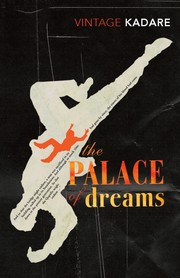
A ministry that collects and interprets the dreams of an entire empire. It was banned in Albania, and it is the clearest statement of his subject: the state reaching into the part of you that is not awake.

Gjirokastër in the Second World War, seen by a boy as the occupying armies rotate through. Read after The Palace of Dreams to see the same authoritarian machinery from underneath, at child's-eye height.
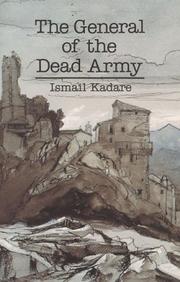
The debut that made him internationally known: an Italian general digs up his country's war dead from Albanian soil. Placed third because knowing his later obsessions makes the early ones legible.
Empire, archive and the deeper cuts
IntermediateFollow Kadare into his Ottoman and archival novels, where the political allegory is thickest and the Balkan setting does the most work.
▸ Study plan for this stage
Pace: Five to six weeks for 848 pages: The Three-Arched Bridge 180, The File on H. 197, The Siege 264, The Successor 207. The first two are quick. The Siege is the densest and most demanding here — many narrators, an unfamiliar military vocabulary, and long technical passages — so give it two weeks alone.
- The Three-Arched Bridge is the purest fusion of Balkan legend and creeping Ottoman power: a bridge built over a river in 1377, a rival ferry company, a man immured in the masonry, and a monk narrating while an empire moves closer every year.
- The immurement story it draws on is a real and widespread Balkan legend about a builder walling a living person into a construction so it will stand. Kadare treats the legend as something the characters know and can therefore be manipulated with, which is the sharpest thing in the book.
- The File on H. is the comic entry and the easiest read here: two Irish-American scholars arrive with a tape recorder to record Albanian oral epic, and the local authorities immediately conclude they are spies. It is funny in a way nothing else on this path is.
- Underneath the comedy it is a serious book about the Homeric question — whether epic is composed or remembered — and it pairs directly with the bridge novel, which is itself about a legend being made in real time.
- The Siege puts you in the besiegers' camp before a fifteenth-century Albanian fortress, so the Albanian defenders are almost never seen. Writing a national epic entirely from the invader's side is the boldest formal decision in his work.
- It rotates through a chronicler, a quartermaster, a pasha and others, and each sees a different war. Note how much of the book is logistics, engineering and disease rather than battle.
- This novel has appeared in English under more than one title, which causes real confusion when you go looking for it. If you meet an Elizabethan-sounding alternative title attached to the same fifteenth-century siege, it is this book.
- The Successor drops the historical mask: a designated heir found dead in a paranoid one-party state, drawn from the real death of Mehmet Shehu in Hoxha's Albania. Read once the coded versions are familiar, so you can feel what changes when the code comes off.
- The Successor's narration is deliberately unstable, including a section given to a voice that should not be able to speak. It is the most formally modern thing on this path.
- In The Three-Arched Bridge, who actually benefits from the immurement, and how is the legend used as a tool?
- What does the monk narrator understand about what is coming, and what does he only sense?
- In The File on H., what do the scholars get right about oral epic, and what do they miss about the country they are in?
- The Siege never shows you the defenders. What does that absence do to a reader who knows the outcome?
- Which of The Siege's narrators is closest to Kadare's own position, and how can you tell?
- In The Successor, why does the uncertainty about the death matter more to the regime than the death itself?
- Read the bridge legend passages of The Three-Arched Bridge twice — once as folklore, once as a plot device. It works completely differently each time.
- In The File on H., mark every scene reported through official surveillance. The novel is partly a comedy about bad reporting.
- Keep a note of what the Ottoman camp lacks in The Siege — water, engineers, intact cannon, unbroken morale. The book is an inventory of failure and reading it as one makes its length sensible.
- Set The Successor beside The Palace of Dreams. Same regime, twenty years and one revolution apart, one coded and one direct. Deciding which is the better novel is the most useful argument this path can give you.
- Check the title and the translation route on whichever edition of The Siege you obtain, so you know what you are holding.
Next up: Having heard the allegory at its subtlest and at its most direct, the final stage takes the outliers and the book about being a writer inside the machine.
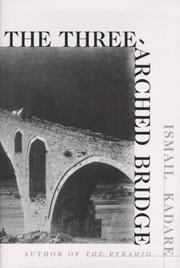
A bridge is built over a Balkan river in 1377, and someone is immured in its wall. The purest fusion of Balkan legend and creeping Ottoman power.
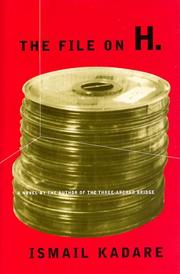
Two Irish-American scholars arrive to record Albanian oral epic and are immediately taken for spies. The comic entry in the sequence, and a sly commentary on Homer that pairs with the bridge legend.
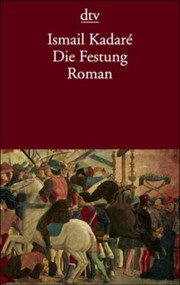
A fifteenth-century Ottoman army before an Albanian fortress, narrated largely from the besiegers' camp. Read after the two above for the fullest picture of his Ottoman material.
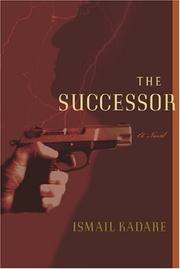
The death of a designated heir in a paranoid one-party state, drawn from the real Mehmet Shehu case. The most direct treatment of Hoxha's regime, and best read once the coded versions are familiar.
The completist tail
IntermediateRead the later translations and the satirical outliers, and be able to place Kadare's own contested position under and after the dictatorship.
▸ Study plan for this stage
Pace: Three to four weeks for 580 pages: The Pyramid 158, The Traitor's Niche 208, Twilight of the Eastern Gods 214. All three are short. The Pyramid is a single sustained image and reads in two sittings; The Traitor's Niche is grimmer and slower; Twilight of the Eastern Gods is loose and episodic and is
- The Pyramid is the most schematic thing he wrote: Cheops is advised to build a pyramid not to house his body but to exhaust, occupy and subdue an entire population. The allegory is completely undisguised, which is why it belongs last rather than first.
- It works precisely because you have already seen him do this subtly. Read cold it looks crude; read after The Palace of Dreams and The Siege it reads as an author dropping the pretence on purpose.
- The Traitor's Niche turns on one of his strongest images: a niche in the imperial capital where the severed heads of rebels are publicly displayed, and the functionary whose job is to carry them there intact across a continent.
- It is an early novel that reached English very late, and it belongs with the Ottoman books of the previous stage in subject even though it arrives last in translation. The central bureaucratic apparatus here is an office for the systematic erasure of national memory — Kadare's archive obsession stat
- Twilight of the Eastern Gods is autobiographical fiction about his years at the Gorky Institute in Moscow, a school for writers, at the moment the Pasternak affair broke and the Soviet literary establishment turned on one of its own.
- It is the right closing book because it is Kadare writing directly about being a writer inside the system: the workshops, the informers, the drink, the campaign against a novelist, and an Albanian watching the alliance between his country and the Soviet Union come apart.
- It also sets up the question this path leaves you with. Kadare lived and published inside Hoxha's Albania for decades with real privileges, wrote work that flattered as well as work that was banned, and left for France in 1990. Whether he was a dissident, a tolerated critic or a beneficiary is genui
- Read across all twelve books, the constant is not Albania but the file: the ledger, the archive, the niche, the dream register, the list of the dead. Every institution he invents exists to record people.
- In The Pyramid, what is the stated purpose of the construction and what is the actual one? Where is the switch made explicit?
- Does The Pyramid gain or lose by abandoning ambiguity?
- What is the function of the traitor's niche as the empire understands it, and what does the courier's job reveal about the cost of maintaining it?
- In Twilight of the Eastern Gods, what does the narrator risk by his response to the Pasternak affair, and what does he actually do?
- Which of these three tells you most about how Kadare survived where he was writing?
- Having read all twelve: what is the recurring institution across his work, and what is he saying it does to people?
- Read The Pyramid immediately after rereading twenty pages of The Palace of Dreams. The contrast in method is the whole reason it is placed here.
- In The Traitor's Niche, follow the head's journey as a piece of logistics — preservation, transport, display. Kadare's horror is always procedural.
- While reading Twilight of the Eastern Gods, keep the dates in mind: the late 1950s, the Soviet-Albanian split just ahead. The novel is written from inside a friendship about to end.
- Make a list of every archive, register or ledger across all twelve novels. It is longer than you expect and it is the shortest possible summary of his career.
- Finally, read a short account of the debate over Kadare's position under the regime, after the novels rather than before. Forming your own view first, then testing it, is the only honest order.
Next up: You have his highland, Ottoman, wartime and Soviet registers, which is enough to pick up any remaining translation without needing a guide.

Cheops builds a pyramid explicitly to exhaust and subdue his people. The most schematic of the allegories — effective, but only after you have seen him do it subtly.

The Ottoman capital keeps a niche where the heads of rebels are displayed. A late English translation of an early novel, and one of his strongest images.

Autobiographical fiction about his time at the Gorky Institute in Moscow during the Pasternak affair. The right closing book: it is where Kadare writes about being a writer inside the system.
Discussion
Keep reading
Paths that share books, cover the same subject, or open a related topic.