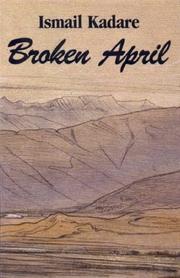
Start with Broken April. It is 232 pages, propulsive, and it asks nothing of you in advance: the highland customary code governing blood feud and the thirty-day truce is explained exactly as much as the plot needs. A man inside the code has thirty days to live; a writer from the capital has come to admire that code as folklore, with his new wife beside him. The distance between the two tracks is the book's argument.
The obvious alternative is The General of the Dead Army, the 1963 debut that made his name internationally. Read it third. It contains everything Kadare would spend a career refining — the archive, the accountancy of death, the foreigner who cannot read the country he is standing in — but in first-draft form, and it is much more legible once you know what the obsessions are.
There is no series and no chronology to respect here; every book is a standalone. The order below is arranged by how much political ventriloquism you can hear. Kadare wrote most of his major work inside Enver Hoxha's Albania, and Broken April is already double: a novel about an ancient code that collects a tax on every killing is also a novel about a modern state that administers death by paperwork.
A translation note before you buy
Almost all of Kadare's English editions came into English through French rather than directly from the Albanian, because his French translations were the route by which he reached Western readers at all. Later editions of several titles are translated directly. The prose you meet in English is therefore a step or two removed, which is worth knowing before you form a view of his style. Separately, The Siege has appeared in English under more than one title — if you find a differently-titled book about the same fifteenth-century siege, it is this one, and buying both gets you the same novel twice.
The core three
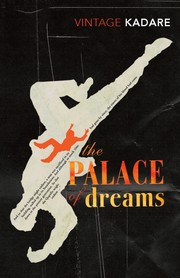
The Palace of Dreams, Chronicle in Stone, The General of the Dead Army. The Palace of Dreams is the clearest statement of his subject: an imperial ministry that collects, files and interprets the dreams of every subject in search of the one dream that reveals the empire's fate. It was banned in Albania, which tells you the coding was legible at the time, and its horror is administrative rather than supernatural. Chronicle in Stone shows the same machinery from underneath, at a child's height, as Italian, Greek and German armies rotate through a stone city; it is episodic with no plot to pull you along, so allow it two full weeks.
Empire, archive and the deeper cuts
The Three-arched Bridge fuses Balkan legend with creeping Ottoman power — a bridge built in 1377, a rival ferry company, and a man immured in the masonry. The File on H. is the comic entry and the easiest read here: two Irish-American scholars arrive with a tape recorder to record Albanian oral epic and the authorities immediately conclude they are spies. The Siege is the densest book on this path — many narrators, unfamiliar military vocabulary, long technical passages — and it puts you in the besiegers' camp so the Albanian defenders are almost never seen, which is the boldest formal decision in his work. The Successor drops the historical mask entirely: a designated heir found dead in a paranoid one-party state, drawn from the real death of Mehmet Shehu.
The completist tail
The Pyramid is the most schematic thing he wrote — Cheops advised to build not to house his body but to exhaust and subdue a population — and it belongs last precisely because the allegory is undisguised. Read cold it looks crude; read after The Palace of Dreams and The Siege it reads as an author dropping the pretence on purpose. The Traitor's Niche is an early novel that reached English very late and belongs with the Ottoman books in subject. Twilight of the Eastern Gods closes the path because it is Kadare writing directly about being a writer inside the system, at the Gorky Institute in Moscow as the Pasternak affair broke.
The question the path leaves you with
Kadare lived and published inside Hoxha's Albania for decades with real privileges, wrote work that flattered as well as work that was banned, and left for France in 1990. Whether he was a dissident, a tolerated critic or a beneficiary is genuinely contested, in Albania as much as abroad. Read the novels first and the debate afterwards. More ordered routes are on Discover.
Follow the full ordered path here: Ismail Kadare Reading Order: Where to Start.
Ready to learn something deeply?
Build a reading path — free