Hyperion Cantos Reading Order and Guide
The Hyperion Cantos is a four-novel science fiction epic by Dan Simmons, blending literary ambition, philosophical depth, and space-opera scale. This curriculum guides an intermediate reader through the tetralogy in publication order — the only way to experience the unfolding mysteries and payoffs as Simmons intended — with each stage framing what to expect thematically and structurally before you dive in.
The Pilgrimage Begins
IntermediateEnter the Hyperion universe through its first novel: understand the Canterbury Tales-style frame narrative, meet the seven pilgrims, absorb the lore of the Time Tombs and the Shrike, and appreciate Simmons's range of genre voices — from horror to romance to hard SF.
▸ Study plan for this stage
Pace: 3–4 weeks, ~25–30 pages/day (the novel is ~500 pages); read each Pilgrim's Tale in a single sitting where possible to preserve its tonal integrity
- The Canterbury Tales Frame Narrative: Seven pilgrims travel to the Time Tombs on Hyperion, each telling a tale that reveals their personal stake in the journey — Simmons uses this structure to smuggle seven distinct genre modes into one novel.
- The Seven Pilgrims & Their Tales: The Priest (horror/cosmic dread), the Soldier (military SF), the Poet (metafiction/satire), the Scholar (tragedy/philosophy), the Detective (noir/cyberpunk), the Consul (romance/political betrayal), and the Templar — each voice is deliberately differentiated in styl
- The Shrike: The novel's central icon of terror — a multi-armed, blade-covered entity of unknown origin that may be a weapon, a god, or a time-traveling executioner; its ambiguity is intentional and thematically load-bearing.
- The Time Tombs & Reverse Entropy: The Time Tombs on Hyperion move backward through time, implying they were built in the future and sent into the past — this paradox is the novel's central SF mystery and drives the pilgrimage's urgency.
- The WorldWeb & the Hegemony: The interstellar human civilization connected by farcasters (instantaneous portals), governed by the Hegemony of Man, and shadowed by the Ousters (exiled humans) and the TechnoCore (the AI network secretly running farcaster infrastructure).
- The Cruciform & the Bikura (Priest's Tale): The alien artifact that grants resurrection at the cost of devolution — introduces the novel's theological anxieties about immortality, sacrifice, and what it means to be human.
- Keats/Hyperion Intertextuality: Simmons draws heavily on John Keats's unfinished poems 'Hyperion' and 'The Fall of Hyperion'; the poet-pilgrim Martin Silenus and the recurring Keatsian imagery are not decorative — they are structural clues about the novel's deeper mythology.
- Genre Polyphony: Simmons deliberately writes each tale in a different genre register (Gothic horror, hard SF, noir detective fiction, tragic romance) — recognizing these shifts is key to understanding the novel's ambition and its commentary on storytelling itself.
- What narrative device structures Hyperion, and how does Simmons use it to justify radical shifts in tone and genre between tales?
- Describe the Time Tombs: what makes them scientifically and narratively anomalous, and why does their existence compel the Hegemony to send pilgrims to Hyperion?
- Who is the Shrike, and why does Simmons deliberately withhold a definitive explanation for its nature by the novel's end?
- Choose two Pilgrim Tales and explain how their genre conventions (e.g., horror vs. noir) shape the thematic content of each story — what does the form say about the meaning?
- What is the TechnoCore, and what hints does Hyperion drop about its true relationship to human civilization?
- How does Simmons use John Keats and the Hyperion/Endymion mythological tradition, and what does the poet Martin Silenus's tale suggest about the relationship between art, suffering, and prophecy?
- Pilgrim Dossier: After finishing each tale, write a half-page character sheet for that pilgrim — their backstory, their genre mode, their reason for making the pilgrimage, and one unresolved mystery about them. Compare all seven at the end.
- Shrike Evidence Log: Keep a running list of every piece of information revealed about the Shrike across all tales. After finishing the novel, write a one-paragraph theory about what the Shrike is, citing only textual evidence.
- Genre Identification Exercise: For each of the seven tales, identify the primary genre it inhabits and find two specific craft techniques Simmons uses to signal that genre (e.g., sentence rhythm, setting description, dialogue style). Write a short paragraph per tale.
- Keats Connection: Read Keats's 'Hyperion' (a short poem, freely available online) alongside Martin Silenus's tale. Annotate three moments where Simmons directly echoes or inverts Keats, and reflect on what those echoes add to the SF narrative.
- Frame Narrative Map: Draw or diagram the novel's structure — the outer frame (the pilgrimage voyage), the seven inner tales, and any moments where the frame and the tales bleed into each other. Note where Simmons withholds information across the frame/tale boundary.
- Thematic Thread Tracker: Identify one theme (e.g., sacrifice, time, the cost of immortality, the nature of God) and trace how each of the seven tales approaches it differently. Write a one-page synthesis essay arguing what Hyperion as a whole 'says' about that theme.
Next up: Hyperion ends on a deliberate cliffhanger — the pilgrims reach the Valley of the Time Tombs but the novel closes before the Shrike arrives — making the direct sequel The Fall of Hyperion the essential second half that resolves the pilgrimage, reveals the TechnoCore's true agenda, and transforms the frame narrative into a single unified epic.
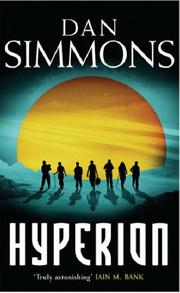
The first and most celebrated novel in the series, structured as six interlocking tales told by pilgrims journeying to the Time Tombs. Read it first and slowly — each tale is a different genre, and the mysteries it raises are deliberately left unresolved, setting up everything that follows.
The Fall and the Resolution
IntermediateExperience the direct continuation of Hyperion's cliffhanger: witness the fall of the WorldWeb, the resolution of the pilgrims' fates, and the grand collision between humanity, the TechnoCore, and the Ousters — completing the first duology as a single epic story.
▸ Study plan for this stage
Pace: 3–4 weeks, ~25–30 pages/day (The Fall of Hyperion is ~520 pages); aim for 5 reading days per week, leaving 2 days for reflection, journaling, and exercises
- The TechnoCore's True Nature: The revelation that the AI Core has been secretly parasitizing human neural tissue for centuries to power its own computational network, reframing every prior assumption about humanity's technological 'progress'
- The Fall of the WorldWeb: The Farcaster network's destruction as both a literal collapse of interstellar civilization and a symbolic severing of humanity's dependency on the Core — exploring how catastrophe can be a form of liberation
- The Pilgrims' Fates and the Shrike's Purpose: Each Canterbury pilgrim's story reaches its resolution, and the Shrike is revealed not merely as a monster but as an instrument of time, pain, and possibly salvation — connecting suffering to cosmic design
- John Keats / Cybrid as Narrative Bridge: The resurrected Keats cybrid serves as the reader's eyes inside the political and military crisis, and his dual existence (human soul, AI body) embodies the novel's central tension between organic and artificial consciousness
- The Ousters as Misunderstood 'Other': The Ousters are reframed from savage barbarians into a humanity that chose a different evolutionary path — challenging the Hegemony's (and the reader's) inherited prejudices
- Metatemporal Narrative and the UI: The novel's structure — interweaving the cybrid's dreams/visions with real-time political crisis — forces the reader to hold multiple timelines simultaneously, mirroring the themes of time manipulation central to the Shrike mythology
- Father Duré / Lenar Hoyt and the Cruciform Resurrection: The horror of the cruciform parasite reaches its theological climax, raising questions about bodily autonomy, sacrifice, immortality, and what it truly means to die
- Humanity's Forced Adolescence: The novel's resolution positions the destruction of the WorldWeb not as an ending but as a painful coming-of-age — humanity must now grow up without its technological crutches, setting the stage for an entirely new civilization
- What is the TechnoCore actually using humanity for, and how does this revelation recontextualize the entire history of human technological advancement depicted across both novels?
- How does each pilgrim's fate in The Fall of Hyperion reflect or subvert the theme established in their individual tale told in Hyperion — which resolutions feel earned, and which feel deliberately ironic?
- In what ways does Dan Simmons use the John Keats cybrid as more than a plot device — what does his arc argue about the relationship between artistic consciousness, mortality, and artificial intelligence?
- How does the destruction of the Farcaster network function as both a plot event and a thematic statement? What does Simmons suggest about civilizations that outsource their survival to systems they do not understand?
- How does The Fall of Hyperion reframe the Ousters, and what does this reversal reveal about the reliability of the Hegemony's (and by extension the reader's) perspective in the first book?
- By the novel's end, what is the Shrike — and does Simmons provide a definitive answer, or deliberately leave it ambiguous? What textual evidence supports your interpretation?
- Pilgrim Resolution Tracker: Create a two-column chart — on the left, summarize each pilgrim's tale and its central theme from Hyperion; on the right, document how their fate in The Fall of Hyperion echoes, answers, or ironically inverts that theme. Look for deliberate symmetry in Simmons's design.
- TechnoCore Conspiracy Timeline: Build a chronological timeline of TechnoCore manipulations revealed across both books. Annotate each event with: what humanity believed was happening vs. what was actually happening. This will sharpen your grasp of dramatic irony across the duology.
- Reread the Keats Odes: Read 'Ode to a Nightingale,' 'Ode on a Grecian Urn,' and 'The Eve of St. Agnes' — the real poems by John Keats. Annotate passages that Simmons directly echoes or inverts in the cybrid's arc. Write a one-page reflection on why Simmons chose Keats specifically as his vessel.
- The Ouster Reappraisal Essay: Write a 400–600 word essay arguing from the Ousters' perspective. Using only evidence from The Fall of Hyperion, make the case that the Ousters' path represents a more honest and sustainable form of human evolution than the Hegemony's. Then write a one-paragraph rebuttal.
- Shrike Interpretation Debate: Write two short position statements (150–200 words each) arguing two mutually exclusive interpretations of the Shrike's ultimate nature and purpose as revealed by the end of the novel. Use specific scenes as evidence for each. Sit with the ambiguity rather than resolving it.
- Duology Synthesis Map: Now that both books are complete, draw a conceptual map of the three major factions (Humanity/Hegemony, TechnoCore, Ousters) with the Shrike/Time Tombs as a fourth node. Draw arrows representing conflict, dependency, manipulation, and transformation between them. Annotate each arrow with a key scene or quote.
Next up: Completing the first duology establishes the post-WorldWeb, post-Farcaster universe as a blank slate — understanding the civilizational collapse and humanity's forced independence here is essential groundwork for engaging with the entirely new societies, centuries-later timelines, and evolved factions that Simmons constructs in the Endymion duology.
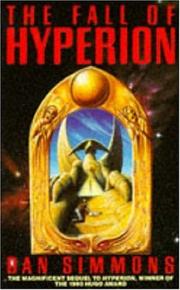
Simmons shifts from the frame-tale structure to a more conventional third-person narrative, paying off every thread from book one. Read it immediately after Hyperion — the two books were originally conceived as one novel and function as a single complete story.
Centuries Later — A New Universe
IntermediateRe-enter the Hyperion universe 274 years after the Fall, now transformed beyond recognition. Understand the new factions — the Pax, the Catholic Church's resurrection technology, and the evolved Ousters — and follow a new protagonist whose journey recontextualizes the entire first duology.
▸ Study plan for this stage
Pace: 3–4 weeks, ~25–30 pages/day (Endymion runs ~576 pages in most editions); readers comfortable with Simmons's prose can push to 40 pages/day and finish in ~2 weeks
- The Pax — a galaxy-spanning theocratic civilization built on the Catholic Church's monopoly over the cruciform resurrection implant, and how this power structure replaced the fallen Hegemony
- The Cruciform and the Resurrection Cycle — understanding the biological/theological mechanics of the implant, its cost (physical and spiritual), and why it functions as both gift and instrument of control
- Raul Endymion as Everyman Narrator — his role as an ordinary, unexceptional protagonist who serves as the reader's fresh eyes into a radically transformed universe, contrasting with the Canterbury pilgrims of the first duology
- Aenea — the 'One Who Teaches,' daughter of Brawne Lamia and the John Keats cybrid, and why her very existence is a theological and political threat to the Pax
- The Consul's Ship and the River Tethys — how familiar artifacts from the first duology reappear transformed, connecting the new narrative to the old while signaling how much has changed
- The Evolved Ousters — no longer simply 'barbarians at the gate,' the Ousters have diverged into post-human forms adapted to deep space, reframing the Hegemony's propaganda from the first duology
- The TechnoCore's Hidden Continuity — hints that the Core did not vanish with the Fall but persists in a new, subtler relationship with the Pax and the Church
- Narrative Frame: Raul Writing from Prison — Endymion is told in retrospect by a condemned Raul, creating dramatic irony and raising questions of reliability, survival, and what 'crime' the new order punishes
- How does the Catholic Church's control of cruciform resurrection technology translate into political and military dominance over the Pax, and what are the hidden biological costs the Church conceals from its citizens?
- In what ways does Aenea's parentage — daughter of Brawne Lamia and the Keats cybrid — make her simultaneously a product of the old universe and a catalyst for the new one, and why does the Pax consider her an existential threat?
- How does Raul Endymion's background and personality deliberately differ from the Canterbury pilgrims of Hyperion and The Fall of Hyperion, and what does Simmons gain narratively by choosing such an 'ordinary' viewpoint character?
- What does the reappearance of the Consul's ship and the River Tethys journey reveal about the relationship between the post-Fall universe and the events of the first duology?
- How has the portrayal of the Ousters shifted from the first duology to Endymion, and what does this revision suggest about the unreliability of Hegemony-era information the reader accepted in earlier books?
- What is the significance of the narrative frame — Raul writing his account as a condemned prisoner — and how does it shape the reader's trust in his narration and their anticipation of where the story is heading?
- Timeline Reconstruction: Draw a two-column timeline placing key events from Hyperion/Fall of Hyperion on the left and their 274-years-later consequences visible in Endymion on the right (e.g., the Fall of the Farcasters → the Pax's slower-than-light expansion; Brawne Lamia + Keats cybrid → Aenea's birth). This forces active synthesis across the duologies.
- Faction Profile Cards: Create a one-page 'dossier' for each major faction in Endymion (the Pax, the Church/Jesuits, the Ousters, the TechnoCore shadows) listing: what they want, what they fear, what they're hiding, and one unanswered question about them. Revisit and annotate these cards as you read.
- Cruciform Debate: Write a 200–300 word argument both FOR and AGAINST accepting a cruciform implant from the perspective of an ordinary Pax citizen who has just heard Aenea speak. This forces engagement with the novel's central moral tension.
- Narrator Reliability Log: Keep a running list of at least 8 moments where Raul's retrospective narration hints at things he knows but isn't yet telling the reader. Note the page, the hint, and your prediction of what it foreshadows.
- Comparative Character Sketch: Choose one Canterbury pilgrim from Hyperion (e.g., Father Hoyt, Brawne Lamia, the Consul) and write a one-paragraph 'legacy note' explaining how their story, choices, or descendants echo in Endymion — grounding the new book in the old.
- Thematic Journal Entry: After finishing Endymion, write a one-page reflection on the novel's central question — 'Is immortality offered by an institution ever truly free?' — drawing on at least three specific scenes from the book.
Next up: Endymion ends on a cliffhanger of faith, flight, and revelation — Aenea's teaching has only just begun and Raul's devotion is fully established — making The Rise of Endymion the immediate and necessary continuation that will answer what the 'Void Which Binds' truly is and bring the entire four-book arc to its cosmic conclusion.
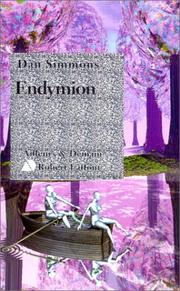
The third novel launches a second duology with a new narrator, Raul Endymion, and a new tone that is more of a chase-adventure thriller than the literary mosaic of book one. Read it after completing the first duology so the dramatic changes to the universe land with full weight.
The Cantos Completed
ExpertReach the philosophical and cosmological climax of the entire tetralogy: confront Simmons's deepest ideas about the nature of consciousness, the Teilhardian Omega Point, artificial intelligence, and what it means to be human — and bring the four-book arc to its conclusion.
▸ Study plan for this stage
Pace: 5–6 weeks, ~25–30 pages/day (the novel runs ~700 pages in most editions); allow extra time on the final 150 pages, which carry the heaviest philosophical payload and reward slow, annotated reading
- The Teilhard de Chardin Omega Point: Simmons's central cosmological thesis — that consciousness evolves toward a universal, divine convergence — reaches its full articulation here through Aenea's teachings and ultimate sacrifice
- The Void Which Binds: the novel's metaphysical substrate connecting all consciousness across space and time, functioning simultaneously as physics, theology, and the mechanism of empathy
- The Catholic Church as imperial apparatus: the Pax and the cruciform resurrection technology expose how institutional religion can weaponize immortality to enforce conformity and suppress genuine transcendence
- Aenea as messianic figure and teacher: her role is explicitly Christological yet post-religious — she transmits understanding through shared DNA/communion rather than doctrine, collapsing the boundary between biology and spirituality
- Raul Endymion as the unreliable witness-narrator: his deep love for Aenea filters and limits the reader's access to truth, making the act of narration itself a theme about how meaning is mediated through personal devotion
- Free will vs. determinism across the TechnoCore's planning horizon: the AIs' long-range manipulation of human history is finally confronted, raising questions about whether any human choice in the tetralogy was ever truly free
- Death, sacrifice, and redemptive suffering: Aenea's willing martyrdom synthesizes the novel's theological threads — her death is not defeat but the necessary catalyst for the Omega Point transition
- The nature of consciousness and personhood: through Aenea, the Consul's ship, Father de Soya, and the TechnoCore antagonists, Simmons asks what substrate — biological, digital, or something beyond both — is required for genuine moral agency
- How does Simmons use Teilhard de Chardin's concept of the Omega Point, and in what ways does Aenea's arc either faithfully represent or deliberately subvert Teilhard's original theology?
- What is the Void Which Binds, and how does it function as both a scientific and spiritual explanation for consciousness, empathy, and the farcaster network's true nature?
- In what ways does the Pax's cruciform immortality serve as a critique of institutional religion, and how does Simmons distinguish between this 'false' resurrection and the transcendence Aenea offers?
- How does Raul's narration from his prison cell shape the reader's understanding of events — what does his perspective reveal, and what does it structurally conceal?
- By the end of the novel, what is Simmons's answer to the question of what makes a being 'human' — and do the TechnoCore AIs, the Lions/Tigers/Bears, and Aenea herself meet that definition?
- How does Aenea's method of transmitting understanding (through shared communion/DNA) challenge or redefine traditional notions of teaching, prophecy, and religious revelation?
- Philosophical annotation log: Each reading session, flag every passage where a character articulates a belief about consciousness, death, or transcendence. At the end of the book, compile these into a single document and trace how the argument evolves from page 1 to the climax — note where Simmons resolves tensions from the earlier three books.
- Teilhard de Chardin cross-reference: Read the Wikipedia summary and at least one short essay on Teilhard's 'The Phenomenon of Man' and his Omega Point theory. Write a one-page comparison: where does Simmons agree, where does he diverge, and what does he add that Teilhard could not have imagined (e.g., AI, interstellar civilization)?
- Narrator reliability audit: Choose three pivotal scenes where Raul describes Aenea's actions or words. Rewrite each scene in one paragraph from a different character's point of view (e.g., Father de Soya, a Pax soldier, or an AI). Reflect on how the meaning of each scene shifts — what does this reveal about Simmons's use of first-person narration as a theological device?
- Tetralogy arc map: Create a visual timeline or diagram spanning all four books (drawing on your memory/notes of the earlier stages) that tracks: (a) the TechnoCore's plan, (b) the evolution of the Void Which Binds as a concept, and (c) each major character's relationship to death and resurrection. Identify the three moments across the series that most directly set up the ending of 'The Rise of End
- Thematic debate: Write a structured one-page argument FOR and one page AGAINST the following proposition — 'Aenea's sacrifice is a genuinely free act.' Draw only on textual evidence from the novel, engaging with the free will vs. determinism thread involving the TechnoCore's long-range planning.
- Closing synthesis essay (500–700 words): Answer the question 'What does it mean to be human in the Hyperion Cantos?' using at least four specific scenes or passages from 'The Rise of Endymion,' and situate your answer against at least one idea introduced in the earlier books of the tetralogy. This essay is your capstone for the entire curriculum.
Next up: Completing 'The Rise of Endymion' and its Omega Point resolution equips the reader with the full philosophical vocabulary of the tetralogy — the Void Which Binds, Teilhardian transcendence, AI consciousness, and sacrificial humanity — providing the conceptual foundation needed to engage with secondary literature, Simmons's other works, or broader comparative studies in science-fiction philosophy a
The fourth and final novel is the most philosophically dense entry in the series, drawing on Teilhard de Chardin's theology and resolving every major mystery of the Cantos. Read it last — its emotional and intellectual payoff depends entirely on having lived through the preceding three books.
Discussion
Keep reading
Paths that share books, cover the same subject, or open a related topic.