Keep houseplants gloriously alive
This curriculum takes a complete beginner from "why do my plants keep dying?" to confidently managing a diverse home collection. Each stage builds on the last: first establishing core instincts for light, water, and soil; then developing plant-specific knowledge and diagnosis skills; and finally deepening understanding of plant biology and advanced propagation so the learner can troubleshoot anything independently.
Foundations: Keeping Plants Alive
BeginnerUnderstand the fundamental needs of houseplants — light, water, and soil — and build confident daily care habits for common species.
▸ Study plan for this stage
Pace: 3–4 weeks, ~15–20 pages/day — "How Not to Kill Your Houseplant" is a highly visual, digestible reference (~224 pages), so a relaxed daily pace allows time to pause, observe your own plants, and apply each lesson before moving on.
- Light requirements: understanding the difference between direct, bright indirect, and low light, and how to match each plant to the right spot in your home
- Watering fundamentals: the 'finger-test' method, the dangers of both overwatering and underwatering, and how pot material and drainage affect moisture retention
- Soil and potting basics: why well-draining compost matters, when and how to repot, and recognising when a plant is root-bound
- Reading plant distress signals: interpreting yellowing leaves, drooping, brown tips, and leggy growth as diagnostic clues rather than death sentences
- Humidity and temperature: identifying which common species need extra moisture in the air and which tolerate dry, centrally-heated rooms
- Feeding essentials: what fertiliser does, when to feed (growing season vs. dormancy), and the 'less is more' principle for beginners
- Species-specific care profiles: using Peerless's individual plant entries as a reference to understand that no single watering or light rule fits all houseplants
- Building a care routine: establishing a consistent weekly check-in habit — checking soil moisture, inspecting leaves, and rotating pots for even light exposure
- According to Peerless, what is the single most common way beginners kill their houseplants, and what simple test can you do before every watering to avoid it?
- How would you describe the light conditions in three different spots in your own home, and which types of plants does 'How Not to Kill Your Houseplant' suggest are best suited to each?
- What visual symptoms should prompt you to move a plant to a brighter location, and which symptoms suggest it is receiving too much direct sun?
- Why does pot choice (material and the presence of drainage holes) matter as much as watering frequency, according to the book's guidance?
- What is the difference between feeding a plant during its active growing season versus in winter dormancy, and why does Peerless caution beginners against over-fertilising?
- Pick any one plant featured in the book that you own or want to own — can you summarise its light, water, humidity, and repotting needs from memory?
- Light audit: Walk through your home with the book open to Peerless's light-level guide. Label three spots (e.g., windowsill, shelf 1 m from window, dark corner) with sticky notes indicating their light level, then identify one plant from the book suited to each spot.
- Watering diary: For two weeks, record the date, the result of the finger-test (dry / slightly moist / wet), and whether you watered for every plant you own. At the end, identify any overwatering or underwatering patterns.
- Distress diagnosis exercise: Photograph any imperfect leaves on your plants (yellowing, browning, drooping) and use Peerless's troubleshooting sections to write a one-sentence diagnosis and proposed fix for each.
- Repotting practice: Choose one plant that shows signs of being root-bound (roots escaping drainage holes, very fast water run-through). Follow the book's repotting steps, then journal what you observed about the root system.
- Species care card: For each plant you own, create a handwritten index card summarising its needs (light, water frequency, humidity, feeding schedule, common problems) using only the relevant entries in 'How Not to Kill Your Houseplant' as your source.
- Weekly care ritual: Design and commit to a 10-minute Sunday check-in routine — soil check, leaf inspection, quarter-turn rotation, and a quick note on any changes — and maintain it for the entire duration of this stage.
Next up: ">Mastering the core survival needs covered in Peerless's book — consistent light, water, and soil management — gives you the stable, healthy plants that are a prerequisite for the more nuanced skills ahead, such as propagation, pest management, and styling, which build directly on a plant that is already thriving.
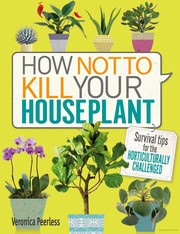
A highly visual, jargon-free introduction that teaches the absolute basics of light, watering, and soil through simple rules. Perfect first read to build intuition before anything else.
Introduces a light-first philosophy that reframes how beginners think about plant care. Reading this second cements a mental model that makes every future book easier to apply.
Diagnosis & Troubleshooting
IntermediateIdentify and fix common problems — pests, root rot, nutrient deficiencies, and environmental stress — before they kill a plant.
▸ Study plan for this stage
Pace: 5–6 weeks total: Week 1–2 — Read Plantopedia (~20–25 pages/day), focusing on each plant's dedicated "problems" and "care" sections; Week 3–5 — Read The Complete Houseplant Survival Manual (~25–30 pages/day), working through its systematic troubleshooting chapters; Week 6 — Review, cross-reference bo
- Symptom-first diagnosis: using Plantopedia's per-species problem profiles to match visible symptoms (yellowing, wilting, spotting, dropping leaves) to specific causes before assuming the worst
- Pest identification and life cycles: recognising the most common houseplant pests — fungus gnats, spider mites, mealybugs, scale, and aphids — as described in The Complete Houseplant Survival Manual, and understanding why life-cycle knowledge is essential for effective treatment
- Root rot vs. overwatering vs. underwatering: distinguishing these three commonly confused conditions using root inspection, soil moisture checks, and the symptom guides in both books
- Nutrient deficiency patterns: reading leaf colour and texture clues (interveinal chlorosis = iron/magnesium, overall pale yellow = nitrogen, purple undersides = phosphorus) as catalogued in The Complete Houseplant Survival Manual
- Environmental stress factors: diagnosing problems caused by incorrect light, humidity, temperature fluctuations, and draughts using Plantopedia's species-specific tolerance ranges as a baseline
- Integrated Pest Management (IPM) hierarchy: following The Complete Houseplant Survival Manual's escalating response framework — isolation, manual removal, biological controls, then chemical treatments as a last resort
- Soil and drainage assessment: evaluating whether a plant's current potting mix and container are contributing to chronic problems, drawing on both books' guidance on appropriate substrates per plant type
- Triage and prioritisation: deciding when a plant can be rehabilitated vs. when propagating healthy material and discarding the parent is the better course of action
- After examining a plant with yellowing lower leaves, mushy stems at the base, and soggy soil, what step-by-step diagnosis process — drawn from both Plantopedia and The Complete Houseplant Survival Manual — would you follow to confirm root rot, and what is your immediate treatment plan?
- A plant in your collection has fine webbing on the undersides of its leaves and stippled, bronzed foliage. Using The Complete Houseplant Survival Manual's pest section, which pest is most likely responsible, what conditions encouraged it, and what is the full treatment sequence?
- How does Plantopedia's species-specific format help you avoid misdiagnosis when the same symptom (e.g., leaf drop) can have five different causes depending on the plant?
- Using the nutrient deficiency guidance in The Complete Houseplant Survival Manual, how would you distinguish a magnesium deficiency from an iron deficiency, and what corrective action would you take for each?
- When should you isolate a plant, and what criteria from The Complete Houseplant Survival Manual determine whether isolation alone is sufficient or whether active treatment must begin immediately?
- A plant is showing signs of environmental stress rather than disease or pests. Using Plantopedia's care profiles as a reference, how do you systematically rule out light, humidity, temperature, and draught as causes?
- Symptom journal: For two weeks, photograph every imperfect leaf, discoloured stem, or stunted growth on your own plants. For each, write a one-paragraph diagnosis using Plantopedia's problem section for that species, then cross-check your conclusion against The Complete Houseplant Survival Manual's symptom index.
- Pest patrol drill: Conduct a full inspection of every plant you own using a magnifying glass. For each plant, record what you find (or confirm the absence of pests), then look up that plant in Plantopedia to see which pests it is most susceptible to — note any mismatches between what you expected and what you found.
- Root inspection exercise: Unpot one plant you suspect may be struggling (slow growth, persistent wilting). Examine the roots, photograph them, and use The Complete Houseplant Survival Manual's root health guidance to classify them as healthy, bound, or rotted. Repot with corrective action and track recovery over four weeks.
- Deficiency simulation and correction: Select a plant showing any leaf discolouration, diagnose the likely deficiency using The Complete Houseplant Survival Manual's colour-coded symptom guide, apply the recommended amendment (e.g., Epsom salt for magnesium, balanced liquid feed for nitrogen), and document changes every seven days for a month.
- Triage decision exercise: Choose three struggling plants from your collection (or source photos from a plant community online). For each, write a structured triage report — diagnosis, severity rating (recoverable / borderline / propagate-and-discard), and a step-by-step action plan — citing specific pages from both books to justify your decisions.
- Cross-book comparison chart: Create a two-column reference sheet for five common problems (e.g., overwatering, spider mites, leggy growth, brown leaf tips, sudden leaf drop). In column one, record what Plantopedia says for a specific species; in column two, record The Complete Houseplant Survival Manual's general guidance. Highlight where the advice aligns and where species-specific needs override
Next up: Mastering diagnosis and troubleshooting builds the observational precision and plant-reading confidence needed to move into more advanced topics — such as propagation, repotting strategy, and long-term collection management — where proactively understanding a plant's health baseline is the prerequisite for every successful intervention.

Organized by light environment, this book bridges care profiles with problem-solving, helping the learner diagnose issues by connecting symptoms back to conditions.
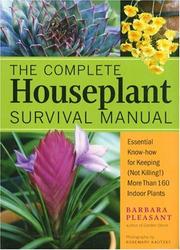
Dedicated troubleshooting sections on pests, diseases, and cultural problems make this the go-to diagnostic guide; best read once you already know your plants well enough to notice something is wrong.
Soil, Roots & Growing Media
IntermediateUnderstand soil science at a practical level — drainage, aeration, pH, and amendments — so you can mix custom substrates for any plant.
▸ Study plan for this stage
Pace: 2–3 weeks, ~20–25 pages/day — LeHoullier's book is richly illustrated and detail-dense, so a measured pace allows you to absorb the soil and growing-media sections without rushing past the varietal context that frames them.
- Soil structure and texture: how the balance of sand, silt, clay, and organic matter affects drainage and aeration in container and garden beds, as illustrated through LeHoullier's tomato-growing recommendations
- Drainage vs. water retention: understanding why tomatoes (and by extension many houseplants) demand well-draining media, and how compaction or poor drainage leads to root rot and anaerobic conditions
- Aeration and root health: how air pockets in the growing medium supply oxygen to roots, and why LeHoullier emphasizes loose, friable soil for vigorous tomato root systems
- Soil pH and nutrient availability: the practical pH range LeHoullier targets for tomatoes (~6.0–6.8) and how pH shifts lock out or release key nutrients — a principle directly transferable to houseplant substrates
- Organic amendments: the role of compost, aged manure, and other organic matter in improving soil biology, nutrient cycling, and moisture management as discussed in the book's growing guidance
- Fertilization philosophy: LeHoullier's approach to feeding — balancing nitrogen, phosphorus, and potassium across growth stages — as a model for understanding macronutrient roles in any plant substrate
- Container vs. in-ground media: lessons from LeHoullier's container-tomato sections on why standard garden soil fails in pots, pointing toward the need for custom, lightweight, fast-draining mixes
- Reading plant signals: using leaf color, growth rate, and root appearance (as LeHoullier describes for diagnosing tomato problems) to infer soil and nutrient deficiencies in any plant
- According to LeHoullier's growing guidance, what soil characteristics does a tomato plant need to thrive, and how do those same characteristics apply to houseplant growing media?
- How does poor drainage manifest in tomato plants as described in the book, and what amendments or structural changes does LeHoullier suggest to correct it?
- What pH range does LeHoullier recommend for tomatoes, why does it matter for nutrient uptake, and how would you adjust pH up or down in a custom substrate?
- How does LeHoullier differentiate between growing tomatoes in the ground versus in containers, and what does that reveal about the limitations of unamended garden soil in pots?
- Which organic amendments does LeHoullier reference, what specific benefit does each provide (drainage, nutrition, water retention), and how could you apply those same amendments to a tropical houseplant mix?
- Using the plant-problem diagnosis sections of the book, what visual root and foliage symptoms indicate a soil or nutrient issue, and what is the corrective action at the substrate level?
- Soil jar test: collect soil from your garden or a bag of potting mix, shake it in water in a clear jar, and let it settle for 24 hours to visually identify the sand/silt/clay ratio — compare your result to the loose, loamy ideal LeHoullier describes.
- pH testing lab: use an inexpensive pH meter or test strips to measure the pH of three different media (standard potting mix, garden soil, and a homemade mix with added perlite and compost); record results and practice adjusting pH with lime (raise) or sulfur/peat (lower) toward the 6.0–6.8 tomato-friendly range.
- Custom mix formulation: using LeHoullier's soil preferences as a blueprint, design two houseplant substrate recipes on paper — one for a moisture-loving plant and one for a drought-tolerant plant — listing each ingredient, its purpose (aeration, drainage, water retention, nutrition), and its approximate proportion.
- Drainage timing test: fill three identical pots with (a) straight garden soil, (b) commercial potting mix, and (c) your custom mix; water each to saturation and time how long it takes for water to stop draining from the bottom — use LeHoullier's drainage principles to interpret the results.
- Amendment deep-dive journal: choose three amendments mentioned or implied in the book (e.g., compost, perlite, aged manure) and write a one-paragraph profile for each covering: what it is, how it changes soil structure, its effect on pH, and which houseplants would benefit most.
- Root inspection exercise: unpot a houseplant you already own, gently wash the roots, and evaluate root color, firmness, and spread against LeHoullier's descriptions of healthy vs. stressed root systems — then repot using an improved substrate based on what you observed.
Next up: Mastering how soil structure, pH, and amendments interact through LeHoullier's practical tomato lens gives you the diagnostic vocabulary and hands-on mixing confidence needed to tackle the next stage, where you'll apply those substrate principles directly to specific houseplant families and their specialized growing requirements.

While vegetable-focused, this book contains some of the clearest lay explanations of soil structure, amendments, and container media available — building transferable intuition for any potted plant.
Advanced Mastery: Propagation & Plant Science
ExpertPropagate plants confidently, understand the underlying biology driving all care decisions, and manage a large, diverse home collection sustainably.
▸ Study plan for this stage
Pace: 2–3 weeks, ~20–25 pages/day (the book is ~180 pages); read one chapter per sitting, pausing to journal observations about your own plants before moving on
- Plant sensory biology: how plants perceive light (photoreceptors, phototropism, photoperiodism) and why this directly governs placement and flowering triggers in your home collection
- Plant 'smell' and volatile organic compounds (VOCs): how plants detect and respond to airborne chemical signals, including ethylene's role in ripening and stress responses
- Plant 'touch' and mechanosensing: thigmotropism and thigmomorphogenesis — how physical contact and air movement shape growth, with direct implications for staking, pruning, and air circulation
- Plant 'taste' and chemical sensing: how roots detect and navigate toward nutrients and water in the soil, underpinning fertilization strategy and watering technique
- Plant memory and epigenetics: how plants record and respond to past environmental experiences (e.g., vernalization), informing seasonal care adjustments
- The unified biology of stress responses: how all sensory inputs feed into hormonal cascades (auxin, ethylene, abscisic acid, cytokinins) that govern growth, dormancy, and propagation readiness
- Propagation science: the biological basis of vegetative reproduction — why wounding triggers callus formation, how auxin gradients drive root initiation in cuttings, and what conditions optimize success
- Connecting science to practice: translating each sensory/biological system described by Chamovitz into a concrete, evidence-based rationale for every major care decision (light, water, soil, humidity, pruning)
- According to Chamovitz, what specific photoreceptors do plants use to detect light quality and duration, and how should this knowledge change how you position or light your houseplants?
- How do volatile compounds like ethylene function as inter-plant signals, and what practical steps can you take in a dense home collection to leverage or mitigate these effects?
- What is the biological mechanism behind a cutting forming roots, and which environmental and hormonal factors can you manipulate to improve propagation success rates?
- How does a plant's 'memory' of past conditions (such as a cold period) explain why some houseplants fail to rebloom, and what does this mean for your seasonal care routine?
- In what ways does mechanosensing suggest that the physical environment of your plant — airflow, handling, pot stability — is as important as light and water?
- How does understanding root-level chemical sensing reframe your approach to fertilizing and watering — moving from a fixed schedule to a responsive, biology-driven practice?
- Sensory audit of your collection: After each chapter, walk through your plants and identify one care decision (placement, watering frequency, fertilizer type) that you can now justify — or revise — using the biological principle just covered. Write it down.
- Propagation experiment with a control: Take cuttings from the same parent plant and create two groups — one treated with a rooting hormone (auxin) and one without. Track callus formation and root emergence daily, applying Chamovitz's explanation of auxin gradients to interpret what you observe.
- Ethylene watch: Place a ripening fruit near one plant and keep an identical plant isolated. Over 1–2 weeks, observe and photograph any differences in leaf drop, accelerated flowering, or stress signs, connecting your findings to the VOC chapter.
- Light-quality journal: Using Chamovitz's photoreceptor framework, map every plant in your home to its light environment (intensity, duration, spectrum from window vs. grow light). Identify at least two plants that are misplaced according to their photoreceptor needs and relocate them, then track changes over 4 weeks.
- Mechanosensing simulation: Gently brush or lightly fan a group of seedlings or young cuttings for 60 seconds daily for two weeks; leave a sibling group untouched. Compare stem thickness, height, and overall robustness, then write a short explanation grounded in the book's mechanosensing section.
- Biology-to-care translation sheet: Create a one-page reference document that maps each plant-sense or biological system from the book (light, smell, touch, taste, memory, gravity) to a specific, actionable care rule for your own collection — this becomes a living document you refine as your collection grows.
Next up: By internalizing the sensory biology and hormonal logic behind plant growth, the reader now has the scientific foundation to approach any new plant, propagation challenge, or collection-management problem from first principles — making all future learning self-directed and evidence-based rather than rule-following.

A plant biologist explains how plants sense light, water, touch, and stress at a cellular level. Reading this last transforms intuitive care habits into genuine understanding, making the learner a true expert troubleshooter.
Discussion
Keep reading
Paths that share books, cover the same subject, or open a related topic.