Horror Cinema: The Best Books to Read, in Order
Writing on horror cinema comes in four distinct kinds, and mixing them up is why the field looks incoherent from outside: the fan-critical survey, the social history, the film-theory monograph, and the interview book. This path reads one of each in that order. The surveys give you the films, the histories explain what the cycles were reacting to, the theory books are where horror studies became a real academic subject in the 1980s and 1990s, and the last stage moves outside Hollywood and into one filmmaker's own account.
The Readable Surveys
BeginnerBuild a working film list and a sense of the major cycles, from a critic's rather than a scholar's point of view.
▸ Study plan for this stage
Pace: About four weeks for roughly 1,000 pages, but they are three different kinds of book and should not be read at the same pace. Danse Macabre (479 pages) is a novelist's opinionated survey of horror in film, fiction and radio between 1950 and 1980 — read it in long sittings, a chapter an evening. Nigh
- King's ladder in Danse Macabre — terror, then horror, then the gross-out — and his willingness to say he will go for the gross-out if the first two fail
- King's three archetypes: the Vampire, the Werewolf and the Thing Without a Name, and the claim that most horror films are a variation on one of the three
- The difference between a critic writing for readers who will watch the films (Newman) and a novelist writing about his own formation (King)
- Horror as a cyclical genre — cycles begin with one commercially successful film and end when the imitators exhaust it — which is Newman's organising principle
- The 1970s as a discontinuity rather than a continuation: Zinoman's argument that Carpenter, Craven, Hooper, Friedkin and O'Bannon broke with the Universal and Hammer traditions rather than extending them
- The interview as evidence, and its limits — Shock Value is built on what the directors say about themselves decades later
- What a survey is for: a viewing list and a chronology, not an argument. None of these three is scholarship and none claims to be
- Name King's three archetypes and place five films from Newman's book under them. Which films refuse to fit, and what does that tell you about the taxonomy?
- Newman and King both write about the same early-1970s films. Where do their judgements diverge, and is the difference one of taste or of what each book is trying to do?
- What, according to Zinoman, did the 1970s directors reject about the horror film they inherited?
- Which cycles does the 1985 Nightmare Movies not cover at all, and why is knowing its cut-off date part of using it?
- Danse Macabre spends chapters on radio and television. What does horror in those media do that the cinema chapters do not explain?
- Build a viewing list straight out of Danse Macabre's appendix and King's running recommendations, then cross it against Newman's decade chapters and mark every film Newman rates that King does not mention. That gap is roughly the difference between an American novelist's taste and a British critic's coverage.
- Take one film all three books discuss — The Texas Chain Saw Massacre is the easiest — and write out King's account, Newman's paragraph and Zinoman's chapter side by side. Note which of the three tells you what the film means, which tells you what it does, and which tells you how it got made.
- Read Zinoman's chapter on Dan O'Bannon and then check what Newman's 1985 text says about Alien. Zinoman is writing with hindsight and access; Newman was writing close to the event.
- Pick any five consecutive years in Newman's book and list the films he names as beginning and ending a cycle. Then ask whether the same shape holds for a cycle after 1985 that you know from viewing but Newman could not cover.
Next up: You now have the films and a rough chronology from writers whose method is taste; the next stage replaces taste with historical explanation, asking what each cycle was reacting to.

King's 1981 non-fiction survey of horror in film, fiction and radio between 1950 and 1980 — opinionated, personal and still the most enjoyable way in. Read it first for the enthusiasm and the viewing list, not for the scholarship.
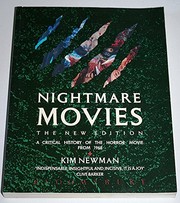
A critic's decade-by-decade guide to horror since 1968, exhaustive on the films most histories skip. Second because it fills in everything King's personal taste leaves out.
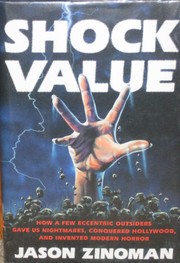
A journalistic account of the 1970s directors — Carpenter, Craven, Hooper, Friedkin, O'Bannon — who remade the genre. Note that Open Library's record for this one carries a garbled year and an extra name in the author field; the book is Zinoman's 2011 history.
The Social Histories
BeginnerLearn to read a horror cycle as a response to its moment — Depression-era gothic, Cold War invasion, post-Vietnam nihilism — rather than as a run of similar films.
▸ Study plan for this stage
Pace: Four to five weeks. Hollywood Gothic (306 pages) is a single-property case study and the lightest read here — a fortnight at most. The Monster Show (432 pages) is a full cultural history of the American twentieth century and wants three weeks; it is also the book to slow down on. The Horror Film (25
- The adaptation chain in Hollywood Gothic: Stoker's novel to the Deane and Balderston stage play to the 1931 Universal film, with the play — not the novel — supplying most of what the film does
- Copyright and property as forces shaping a horror text, which is Skal's least obvious and most useful point
- Skal's central claim in The Monster Show: horror cycles track specific bodily anxieties of their moment rather than a timeless fear of death
- The distinction between a social history (Skal — what the culture was frightened of) and a critical survey (Hutchings — what critics have said about the genre)
- Hutchings's organisation by approach — psychoanalytic, ideological, genre-historical — which is a map of the arguments the next stage makes at book length
- Reading a cycle rather than a film: Depression-era gothic, Cold War invasion, post-Vietnam nihilism as units of analysis
- The risk in the method: a social reading is always available, so ask what would count as evidence against Skal's account of a given cycle
- What does the 1931 Dracula take from the stage play that it could not have taken from the novel, and what does that change?
- Choose one cycle Skal explains through a historical anxiety and state what evidence he offers beyond the coincidence of dates. Is it enough?
- Hutchings names several critical approaches to horror. Which one does Skal's method belong to, and how would a critic from a different approach read The Monster Show?
- Skal ties particular monsters to disability and disfigurement. Where is that argument strongest, and where does it depend on a resemblance rather than a documented link?
- After Hutchings, what is the actual question a horror-studies monograph is trying to answer? Name three different ones.
- Take the 1931 Dracula and mark, from Hollywood Gothic, every element traceable to the stage play. Then read Skal's account of the Spanish-language version shot on the same sets and write down what that comparison proves about directorial choice versus material constraint.
- Pick a cycle Skal covers and one he does not — anything after his cut-off will do — and write a page of The Monster Show he did not write, using his method. Then mark the places where you had to reach for the resemblance rather than the record. That is the method's failure mode.
- Use Hutchings's chapter structure as a checklist and file each of the three surveys from the previous stage under the approach it implicitly uses. King and Newman do not name their method; Hutchings will let you name it for them.
- Read Skal's treatment of Tod Browning's Freaks alongside Hutchings's discussion of the genre's relationship to the body, and note where a historical explanation and a critical one give different answers about the same film.
Next up: Hutchings has named the arguments; the next stage reads the three books that made them, in the form in which the field actually argues about them.
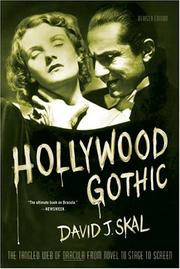
Skal's study of how Dracula travelled from novel to stage to the 1931 Universal film, and the single best case study of a horror property being reshaped by each medium it passes through. Its catalogue record lists several Spanish translators alongside Skal; the book is his.
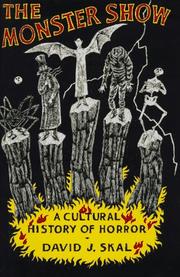
Skal's cultural history of American horror across the twentieth century, tying the monsters to war, disease and economic collapse. Read it after Hollywood Gothic, which is effectively its opening chapter written at length.
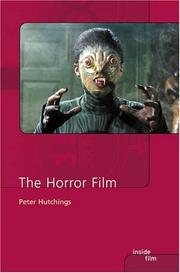
A short academic survey that organises the genre by critical approach rather than chronology. Placed here as the bridge from popular history to theory: it names the arguments the next stage makes at book length.
The Theory That Reframed the Genre
IntermediateEngage with the three arguments that turned horror from a disreputable genre into a research field: identification and gender, the paradox of enjoying fear, and the pleasures of the postmodern horror film.
▸ Study plan for this stage
Pace: Five to six weeks for about 710 pages, because these read far slower than their length suggests. Men, Women, and Chain Saws (279 pages) is a film-studies monograph that assumes you know the psychoanalytic vocabulary of identification and the gaze; if you do not, read Clover's introduction twice befo
- The Final Girl, and Clover's actual argument — not that she is a feminist figure, but that a largely male audience is made to identify with her, which is a claim about cross-gender identification rather than about representation
- The distinction Clover draws between the low-budget exploitation film and the prestige horror film, and her insistence that the disreputable end is where the genre's real work happens
- Carroll's definition of art-horror: a monster that is both threatening and impure, where impurity is category violation — the interstitial, the incomplete, the formless
- The paradox of horror as Carroll states it: how can we be pleased by what disgusts us? And his answer, which locates the pleasure in curiosity and the narrative of discovery rather than in the fear
- The known limit of Carroll's definition: it excludes horror without a monster, which is why Psycho is the standing counterexample to it
- Pinedo's five features of the postmodern horror film — violence as spectacle, boundary transgression, the questioning of rationality, the refusal of narrative closure, and the bounded experience she calls recreational terror
- Pinedo's disagreement with Clover: that female spectators take their own pleasure in horror, which Clover's male-identification model does not account for
- How a field argues: three books, one corpus, three incompatible frameworks, and none of them refuted by the others
- State Clover's Final Girl argument in two sentences without using the word empowerment. What is she actually claiming about the audience?
- Apply Carroll's definition to three films from the first stage's viewing list. Which of them is art-horror on his terms, and which is horror in every ordinary sense but fails his test?
- Why does Psycho cause trouble for The Philosophy of Horror, and what would Carroll have to give up to admit it?
- Where exactly does Pinedo depart from Clover, and is it a disagreement about films, about audiences, or about method?
- All three books stop before the late 1990s. Name a development in horror since then that each would struggle with, and say why.
- Watch one slasher film Clover analyses and one she does not, and run her Final Girl criteria over both. Write down every place the second film fails the pattern — the failures are where the argument's edges are.
- Take Carroll's definition of the monster as threatening plus impure and test it against three cases he does not discuss: a ghost, a human serial killer, and a natural-disaster film. Record which term of the definition breaks first in each case.
- Read Pinedo's chapter on the female spectator directly after Clover's introduction, in one sitting, and list the specific claims of Clover's that Pinedo denies. Then decide what evidence would settle each of them.
- Return to the Hutchings survey from the previous stage and find his paragraph on each of these three books. Compare his one-paragraph summary against what you have now read; that gap is the difference between a survey and the thing surveyed.
- Pick one film all three books mention and write a paragraph on it in each of their three voices. The exercise is worthless if the three paragraphs come out saying the same thing.
Next up: These three books argue about gender, pleasure and definition; the next stage keeps the method and changes the category, asking what else the monster has been made to stand for.
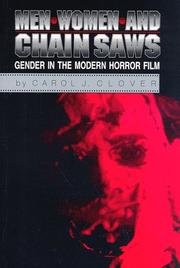
The book that reframed the slasher, arguing that the male audience identifies with the surviving female victim-hero rather than the killer. The most influential single monograph in horror studies and the one every later book argues with.

Catalogued under its full title, The Philosophy of Horror, or, Paradoxes of the Heart. Carroll's analytic-philosophy account of why we are drawn to fictions that frighten and disgust us, and of what makes a monster a monster. Read it second because Clover gives you the films his abstractions need.

A feminist study of the postmodern horror film and of women's pleasure in watching it, written partly against Clover. Third because it is the clearest demonstration of how the field argues with itself.
Who the Monster Stands For
BeginnerFollow the identity-focused strand of horror scholarship — queerness, race and the body — and see how the same films look under each reading.
▸ Study plan for this stage
Pace: Five weeks for about 810 pages. Monsters in the Closet (316 pages) is a film-history monograph and the most straightforwardly readable of the three — it moves chronologically and names films constantly. Horror Noire (272 pages) is also chronological and reported partly through industry history, and
- Benshoff's method: the monster as the culture's disowned category, made visible in a form that can be destroyed at the end of the reel
- The difference between a coded reading and a documented one — Benshoff works partly from production history and censorship records, not only from what the films look like
- Means Coleman's distinction between Black horror and blacks in horror: films made from within Black creative control versus Black presence inside films that are not about it
- The industrial history behind the aesthetic one — Blaxploitation horror as a production and distribution phenomenon, not only a set of images
- Halberstam's technology of monstrosity: the idea that the monster is not one meaning but a machine for condensing several — race, sexuality, class, nation — into a single body
- Skin as surface and as the site where difference is made legible, which is Halberstam's answer to why Gothic monsters are so often described rather than explained
- The common move across all three books, and its risk: any monster can be made to stand for any excluded category, so ask what constrains the reading
- What does Benshoff have that a purely symptomatic reading does not — that is, where does he cite evidence rather than resemblance?
- State Means Coleman's Black horror / blacks in horror distinction and sort five films by it. Which films sit awkwardly, and why?
- Halberstam argues the Gothic monster condenses several kinds of difference at once. Take Dracula and name them; then say what is lost if you read the novel as being about only one.
- All three books read the monster as standing for an excluded group. What would a film look like that resisted this method entirely?
- Horror Noire's history stops in 2011. What does its final chapter expect to happen next, and how does that reading look now?
- Take one Universal-era film Benshoff reads as coded and check his reading against what Skal's Hollywood Gothic and The Monster Show say about the same film's production. Where the two accounts agree on a fact, the coded reading is anchored; where Benshoff has only the image, it is not.
- Run Means Coleman's two categories over the horror releases of a single decade she covers and count them. The ratio is her argument, and doing the count yourself is the only way to feel its weight.
- Read Halberstam's chapter on The Silence of the Lambs immediately after Clover's discussion of the same film from the previous stage. Both are reading gender in one film with different machinery; write down what each one sees that the other cannot.
- Pick a horror film released after 2011 and write the page Horror Noire would now contain. Then say what in Means Coleman's framework had to change to accommodate it — that is the difference between a book dating and a book being wrong.
Next up: Four stages of critics have now explained what horror means; the last stage moves outside the Anglo-American frame and then lets a director answer back.
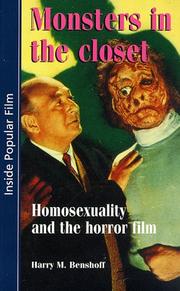
The standard study of homosexuality and the horror film, from the coded monsters of the 1930s onward. Read it first in this stage because it establishes the method the others also use: the monster as the culture's disowned category.
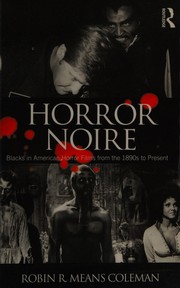
A history of Black representation in American horror from the silent era to the present, and the source book for the documentary of the same name. Second because it shows the same method applied to a much better-documented film history.
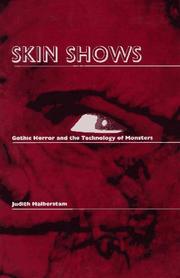
Halberstam's study of gothic and horror monstrosity as a technology for making difference visible on the body, running from Frankenstein to The Silence of the Lambs. The catalogue credits Jack Halberstam, the author's name today; it is the same 1995 book.
Outside Hollywood, and One Filmmaker Up Close
IntermediateBreak the Anglo-American frame and hear a major horror director account for his own work in his own words.
▸ Study plan for this stage
Pace: Three weeks. Nightmare Japan (231 pages) is an academic monograph in the same register as the theory stage — it applies contemporary film theory to Japanese horror and expects you to have the vocabulary from stage three. Cronenberg on Cronenberg is a Faber interview book: a long career-length conver
- J-horror on its own terms: the onryo, the vengeful ghost of Japanese folk and theatrical tradition, as a form with a history that predates any American remake
- McRoy's argument that the films respond to specifically Japanese conditions — economic collapse, changing family structure, technological saturation — rather than functioning as raw material for Hollywood
- The remake as a distortion mechanism: what is removed when Ringu becomes The Ring, and what that removal reveals
- Cronenberg's body horror as he describes it — a materialist position in which the body is the first fact, not a metaphor for something else
- The interview as a source: a director is an authority on his intentions and no authority at all on his film's meaning, and this book is useful precisely where the two come apart
- Cronenberg's own resistance to the readings the previous stages would produce, particularly the disease-as-metaphor reading of his early films
- What a national-cinema frame does to a genre history built entirely on English-language films
- What does McRoy say the J-horror ghost is doing that the Anglo-American monster of Carroll's definition is not?
- Take Ringu and its American remake. What changes, and which of McRoy's claims does that change support?
- Cronenberg rejects at least one standard critical reading of his own work in this book. Which, and is he right? Say what would settle it.
- How would Clover, Carroll and Halberstam each read Videodrome? Where does Cronenberg's own account cut across all three?
- Having read four stages of Anglo-American criticism and one book on Japan, what is the shape of the hole still left in your reading?
- Watch Ringu and Audition, then read McRoy's chapters on each. Write down what you would have said the films were about before reading him, and what the Japanese context added. The gap is the value of a national-cinema frame.
- Go through Cronenberg on Cronenberg film by film and mark every point where Cronenberg gives a reason for a choice that a critic would read as symbolic. Then check one of those films against Halberstam's chapter and decide, for that case, whether the director's reason or the critic's reading explains more.
- Use the interview book's chronology to build a second viewing list, then set it beside the list you built from Danse Macabre in the first stage. One is a novelist's canon of American horror to 1980; the other is a single director's career. Note how little they overlap, and what that says about the survey you started from.
- Write the paragraph on Japanese horror that the 1985 Nightmare Movies could not contain, using McRoy. Then decide whether it belongs in a genre history at all, or whether it needs its own.
Next up: This is the end of the path: you have the films, the histories, the three founding arguments, the identity-focused strand and one director's rebuttal, which is enough to read any new horror-studies monograph and place it.
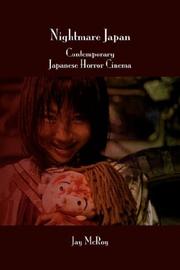
McRoy's monograph on contemporary Japanese horror — Ringu, Audition, the Ju-on films — read through Japan's own anxieties rather than as raw material for American remakes. The corrective to a syllabus that stops at the English-language cycles.

The Faber interview book, in which Cronenberg discusses his body-horror films at length with Rodley. Read it last: after four stages of critics explaining what horror means, it is worth hearing a director dismantle several of those readings himself. The catalogue record garbles Rodley's name as editor.
Discussion
Keep reading
Paths that share books, cover the same subject, or open a related topic.