Horror writing divides into two literatures. One is enthusiast criticism, written by journalists and novelists for people who already love the films. The other is academic film studies, written in the vocabulary of psychoanalysis, feminist theory and genre theory. Readers who start with the second usually bounce off it, because the theory is arguing with a canon it assumes you already know.
So the order that works is: get the canon and the production history first, then read the theory as a set of arguments about films you can picture. That is how this path is built, and it is also why the oldest books here still earn their place — they are not superseded, they are the ground the later arguments are fought over.
Start with the popular critics
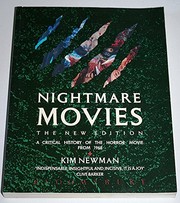
Danse Macabre is Stephen King writing in 1981, part memoir, part survey, part argument that horror is a conservative form that reassures more than it disturbs. It is not scholarship and does not claim to be, and its coverage stops dead around 1980 — but nothing else conveys as well what it felt like to consume this material as it appeared. Nightmare Movies is Kim Newman's critical survey of horror from 1968 onward; the revised edition extends the story into the 2000s and is the one to buy. It is opinionated, encyclopaedic, and the best single map of what exists.
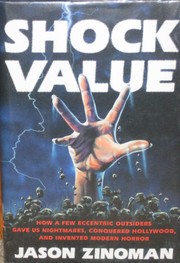
Shock value is Jason Zinoman's narrative history of the New Horror of roughly 1968 to 1980 — Romero, Craven, Hooper, Carpenter, Friedkin — built on interviews. Read it as journalism about a scene rather than as a general history. David J. Skal wrote two books here. Hollywood gothic traces one property, Dracula, from Stoker through the stage adaptations to the 1931 film, and is a production history. The monster show is his wider cultural history, reading American horror against wars, epidemics and economic panic. If you take only one, take the second; the first is for people who want the archival detail.
The theory
The horror film is Peter Hutchings' academic introduction, and the right bridge — it summarises the major theoretical positions and tells you who holds them before you read them at length.
Men, women, and chain saws is Carol J. Clover's 1992 study, the source of the term Final Girl and of the argument that slasher films invite male viewers to identify across gender with a female victim-hero. It is the most influential book in the field. It has also dated in a specific way: it was written before the self-aware slasher cycle that began with Scream in 1996 and before the 2000s torture films, and its heavy reliance on psychoanalytic identification is much less standard in film studies now than it was then. Read it as a landmark argument, not as the settled state of the question.
The philosophy of horror, or, Paradoxes of the heart is Noël Carroll doing analytic philosophy rather than film studies: what is the object that horror fiction represents, and why do audiences seek out an emotion they find unpleasant. His definition requires a monster that is both threatening and impure, which excludes a great deal of psychological horror — the most-argued-with claim in the book, and worth reading precisely because the objections are easy to see. Recreational terror is Isabel Cristina Pinedo's feminist account of what women get out of watching horror, written partly against the assumption that they are simply the genre's targets.
Reading horror through identity
Monsters in the Closet is Harry M. Benshoff's history of queer readings of horror and of horror's own coding of the monstrous as sexually deviant. Horror noire is Robin R. Means Coleman's history of Black representation in and behind horror film, from silent-era caricature through blaxploitation to the present; it also became a documentary, and the second edition extends past Get Out. Skin shows is Jack Halberstam's more theoretical study of the Gothic monster as a machine for producing meaning about bodies — the densest book here.
Nightmare Japan is Jay McRoy on Japanese horror cinema, which the Anglophone canon above largely omits. CRONENBERG ON CRONENBERG is a primary source: a book-length interview, so it is evidence about a director's intentions rather than an analysis of his films. Treat it accordingly. If world cinema is what pulled you here, Bollywood and Indian cinema is the neighbouring path.
Follow the full sequence rather than cherry-picking the theory; it is the popular criticism that makes the theory legible.
Follow the full ordered path here: The Best Books on Horror Cinema, in Reading Order.