Bollywood and Indian Cinema: The Best Books to Read, in Order
Two things trip up newcomers to this subject. The first is that Bollywood means the Hindi-language commercial industry based in Mumbai, which is one industry among many — Tamil, Telugu, Bengali, Malayalam and Kannada cinema are separate production systems with their own stars and traditions, and together they make India the largest film producer on earth. The second is that the masala form — three hours, six songs, an interval, a deliberate mixture of comedy, melodrama and action — is a coherent aesthetic with rules, not a failure to make a Hollywood film. This path establishes both, then goes to the art cinema of Ray and Ghatak, then to the academic readings that take the popular form seriously.
Getting the Map Right
BeginnerLearn what Bollywood is and is not, how the industry is structured, and the rough shape of Indian film history from the 1930s studios to the multiplex era.
▸ Study plan for this stage
Pace: 3-4 weeks. Rajadhyaksha's Indian Cinema: A Very Short Introduction is 148 pages and can be read in two sittings — do it first, so everything after has somewhere to sit. Ganti's Bollywood is 288 pages and is anthropological scholarship written accessibly, based on her own fieldwork inside the Hindi i
- Bollywood as the Hindi-language commercial industry based in Mumbai, and the Tamil, Telugu, Bengali, Malayalam and Kannada industries as separate production systems with their own stars, economics and traditions
- The scale fact that follows: India produces more films than any other country, and Hindi cinema is a minority of that output
- Industry structure in Ganti's account — financing, casting, distribution territories, and the informal networks that decide who works
- The periodisation: silent era, the 1930s-40s studio system, the 1950s golden age, the 1970s angry-young-man cycle, the 1990s diaspora turn, and 2000s corporatisation
- The 2000 grant of official industry status and what changed about financing after it
- Star power as the industry's principal financing instrument, which is why a star's name is the unit of a deal
- Rajadhyaksha's framing of Indian cinema against the nation-state, which is the political spine of the field
- Which industries make up Indian cinema, and roughly what share of output is Hindi-language?
- How is a Hindi film financed and distributed in Ganti's account, and who carries the risk?
- Name the main periods of Hindi cinema history from Bose and give one defining film or figure for each
- What changed when the industry received official status, and what did that do to who could invest?
- What does Rajadhyaksha mean by treating cinema as an institution of the nation rather than as a body of films?
- Draw a map of the Indian film industries with, for each, its language, principal production centre, and two names — director or star — you can attach to it; you should be able to do this from memory before leaving the stage
- Build a timeline from Bose with a decade-by-decade entry, then annotate it with the structural facts Ganti supplies about financing in each period
- Take Ganti's glossary of genre terms and write out what each one means, then find a film described with that term and check the description against the definition
- Trace one production in Ganti's fieldwork chapters from finance to release and list every decision point where a star's involvement changed the outcome
- Note every claim in Bose that Ganti's fieldwork contradicts or qualifies; the journalist and the anthropologist do not always agree and the disagreements are informative
Next up: With the industrial map established, the next stage goes inside the films themselves to see how the masala form is actually constructed.

Under 150 pages and the fastest way to get the whole field in proportion — all the language industries, the political history, the economics. Start here so that everything after has somewhere to sit.
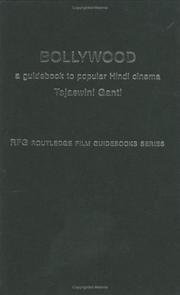
The best introduction to the Hindi industry specifically, by an anthropologist who did fieldwork inside it: how films are financed, cast and made, plus a genre glossary and capsule histories. Note that a later expanded edition exists as a separate record under the longer title Bollywood: A Guidebook to Popular Hindi Cinema — it is the same book, so buy one.

The popular narrative history, from silent cinema through the studio era, the 1970s angry-young-man period and the corporatisation of the 2000s. Read it after Ganti for the chronology her thematic account assumes.
How the Films Actually Work
BeginnerUnderstand the masala form from the inside — the song sequence, the interval, the star system — and read close accounts of two films and one star.
▸ Study plan for this stage
Pace: 3 weeks. Kabir's Talking Films is 150 pages of conversation with Javed Akhtar and reads in two evenings; Chopra's Sholay: The Making of a Classic is 194 pages on a single film; her King of Bollywood is 250 pages on Shah Rukh Khan and the industry's 1990s transformation. All three are industry books
- The masala form's rules: roughly three hours, an interval, six songs, and a deliberate mix of comedy, melodrama, action and romance in one film
- The interval as a structural device rather than a break, with its own act-break obligations
- The song sequence as narrative apparatus — compressing time, externalising interiority, and carrying what dialogue cannot
- Playback singing and the separation of voice from body, which is a production fact with aesthetic consequences
- Akhtar's account of how Salim-Javed constructed a script, including the dialogue-writing tradition and the pre-written 'dialoguebaazi' set pieces
- The angry young man as a specific 1970s figure and the political conditions Akhtar connects it to
- Sholay as an assembled object: the western sources, the casting, the rewrites, and the near-failure of its opening weeks
- The star as an analytical unit distinct from the actor, and the 1990s diaspora market that made Shah Rukh Khan's persona commercially necessary
- What are the formal rules of the masala film, and which of them are commercial constraints and which aesthetic choices?
- What does a song sequence do that a dialogue scene cannot, in the examples Akhtar and Chopra give?
- How did Salim-Javed build a script, according to Akhtar, and what came first?
- What is the angry young man, and what does Akhtar say produced him?
- What was Sholay's reception in its first weeks, and what changed?
- What is the difference between the star and the actor as Chopra uses the terms, and what does the diaspora market have to do with it?
- Watch Sholay with Chopra's book open and stop at each song, writing down what the film would have to do in dialogue to accomplish the same thing; this is the fastest possible argument against treating songs as interruptions
- Mark the interval point in Sholay and write out what the first half must resolve and what the second half must open — then check the same structure in one other Hindi film
- Take one of Akhtar's descriptions of how he constructed a scene and locate that scene in Sholay, noting what survived from his account into the finished film
- Chart Shah Rukh Khan's persona across the films Chopra discusses, listing what stays constant; the constancy is what makes it a star image rather than a series of roles
- Write out the six-song structure of one masala film by function — where each song falls and what it carries — and compare it to Sholay's
Next up: The commercial form now understood on its own terms, the next stage takes the art cinema that defined itself against it.
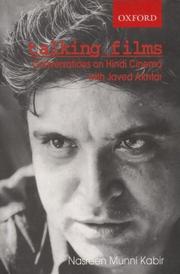
Conversations with Javed Akhtar, the screenwriter of the films that defined 1970s Hindi cinema, on how scripts, songs and dialogue are actually constructed. The single most useful book for understanding why the form is shaped the way it is.
One film, taken apart completely: the 1975 curry western that is arguably the most influential Indian film ever made. Read it directly after Akhtar's interviews — he co-wrote it, so this is his method demonstrated on a single object.
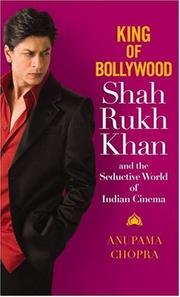
Shah Rukh Khan as the way into the star system, and into how the industry changed in the 1990s as it started selling to the diaspora. The star, not the actor, is the analytical unit here.
The Other Tradition
IntermediateRead the parallel cinema of Satyajit Ray and his contemporaries, and understand the art-versus-commercial split as a real institutional divide rather than a matter of taste.
▸ Study plan for this stage
Pace: 4 weeks. Ray's Our Films, Their Films is 219 pages of his own essays and is the filmmaker's statement — read it before any criticism about him. Robinson's Satyajit Ray: The Inner Eye is a 456-page standard biography and takes two weeks; it is strongest on the Bengali cultural world Ray came from. Ka
- Parallel cinema as an institutional formation — state funding, the Film Finance Corporation, the film society movement, international festivals — rather than merely a style
- Ray's own aesthetic argument in Our Films, Their Films, including what he took from Italian neorealism and what he rejected
- The Bengal Renaissance and the Brahmo Samaj background Robinson gives, which is what makes Ray's material legible
- Ritwik Ghatak as the counter-figure to Ray within the same tradition, working with melodrama and Partition rather than against them
- Guru Dutt as the case against a clean art-versus-commercial split: a filmmaker working entirely inside the commercial Hindi industry who made two of its most serious films
- The song sequence in Dutt's films, which is where the two traditions are hardest to keep apart
- The economics of the divide: who funded which films, who watched them, and what each side thought the other was doing
- What does Ray argue Indian cinema should be doing, in his own essays, and what does he say it does instead?
- What did Ray take from neorealism, and where does he say it does not apply?
- What institutional supports made parallel cinema possible, and what happened to them?
- How does Guru Dutt's position complicate the art-versus-commercial distinction?
- What does Robinson supply about Ray's background that changes how the Apu Trilogy reads?
- How does a song sequence in a Guru Dutt film differ in function from one in Sholay?
- Read Our Films, Their Films first and write down Ray's stated criteria for a good film, then apply them to Sholay from the previous stage; the exercise is to see the divide as an argument rather than a taste
- Watch one Apu Trilogy film against Robinson's chapter on it and list every cultural reference the biography explains that the film assumes
- Watch a Guru Dutt song sequence and a Sholay song sequence back to back and write out what each is doing narratively; the two traditions meet exactly here
- Take Kabir's interview material with Dutt's collaborators and note where accounts of the same production conflict
- Write a paragraph placing Ghatak against Ray using only what Ray's essays and Robinson's biography say about him, and note how partial that view is
Next up: The last stage takes the academic literature that reads the popular form as seriously as this stage's tradition read itself.

Ray's own essays on Indian and Western cinema, and the clearest statement of what the parallel-cinema position was arguing for. Read the filmmaker before the criticism about him.

The standard biography, and strong on the Bengali cultural world Ray came out of — which is what makes the Apu Trilogy legible rather than merely beautiful. Read it second.
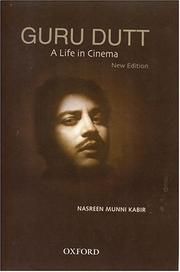
The other essential director, and the counter-example to a neat art-versus-commercial split: Dutt worked entirely inside the commercial Hindi industry and made two of its most serious films. Our catalogue shows the short title; the book is published as Guru Dutt: A Life in Cinema.
The Critical Readings
BeginnerEngage with the academic literature on Hindi cinema as an ideological and urban form, and acquire the field's reference work.
▸ Study plan for this stage
Pace: 8-10 weeks, and this is a different order of difficulty from everything before it. Prasad's Ideology of the Hindi Film is 258 pages of dense Marxist film theory and assumes Althusser, Gramsci and a working knowledge of film-studies vocabulary — it is the hardest book here and the argument the others
- Prasad's central claim: that the form of the commercial Hindi film — episodic structure, the handling of the couple, the frontal address — encodes a specific relation between state, capital and feudal authority
- The 'feudal family romance' as Prasad's category, and the historical conditions he attaches it to
- Mishra's reading of the films through the Indian epics, through diaspora, and through psychoanalytic theory
- Mishra's defence of the song sequence as constitutive rather than interruptive, which is the aesthetic complement to Prasad's politics
- Mazumdar's subject: Bombay itself as produced on screen — the slum, the street, the interior — and how the representation changed as the city liberalised
- Joshi's argument that the popular hit performs the work of imagining the nation that other institutions failed to do
- The encyclopaedia's function as a corrective: entries across every language industry, which is what stops any of these arguments being generalised from Hindi cinema alone
- How the four arguments relate — political form, aesthetic apparatus, urban space, public culture — as four readings of the same object
- State Prasad's thesis about the relation between film form and political form, and give the specific formal feature he anchors it to
- What is Mishra's account of why the song sequence is not an interruption, and how does it differ from the industry explanation in stage two?
- What does Mazumdar say changed in the cinematic representation of Bombay after liberalisation, and what evidence does she use?
- What does Joshi mean by public culture, and what work does she say the popular hit performs?
- Where do these four scholars disagree, and is the disagreement about the films or about the theory?
- What does the encyclopaedia show that a Hindi-cinema-only account would get wrong?
- Take Sholay, which you watched in stage two, and write four short readings of it — Prasad's, Mishra's, Mazumdar's and Joshi's — using each one's own vocabulary; the same film under four frames is the fastest way to see what each theory is for
- Extract Prasad's argument as a numbered chain and mark which steps are claims about film form and which are claims about Indian political history; the joins are where the book is contested
- Pick one film Mazumdar analyses, watch it, and list the spatial features she reads — where the camera goes in the city and where it does not
- Look up every film, director and studio named in one chapter of Prasad or Mishra in the encyclopaedia and note what the entry adds that the argument omitted
- Use the encyclopaedia to build a short list of significant Tamil, Bengali and Malayalam films from the same decade as the Hindi films these books analyse, and write a paragraph on what a Hindi-only account misses
Next up: This closes the path: the industrial map, the form from the inside, the parallel tradition, and the academic arguments that take the popular film as seriously as any of them.
The foundational political reading: Prasad argues that the form of the commercial Hindi film — its episodic structure, its handling of the couple — encodes a specific relationship between state, capital and feudal authority. Dense, and the argument the others respond to.
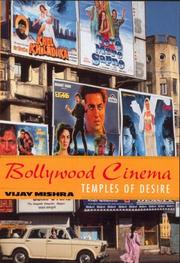
Mishra reads the films through the epics, the diaspora and psychoanalysis, and is particularly good on why the song sequence is not an interruption. Read it after Prasad as the aesthetic complement to his political account.
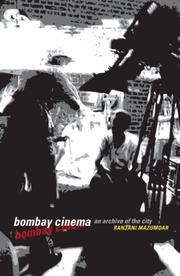
The city itself as the subject — how Bombay's slums, streets and interiors are produced on screen, and how that changed as the city liberalised. The most vivid of the academic books on this path.

Joshi treats the popular hit as public culture, arguing that these films do the political work of imagining the nation that other institutions failed to do. Read it last of the arguments; it is the most recent and the most generous to the material.
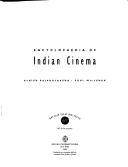
Rajadhyaksha and Willemen's reference volume, covering every language industry with entries on films, directors, studios and technicians. Not a book to read — the book to have open beside everything else, and the corrective to any account that treats Hindi cinema as the whole of Indian cinema.