Hornblower Reading Order: Publication or Chronological?
This curriculum guides a newcomer through C.S. Forester's Hornblower saga by first experiencing the novels in the order Forester wrote and published them — the way the world first met Hornblower — and then revisiting the saga in Hornblower's own internal chronology to see how the full arc of his life coheres. A final stage adds context through Forester's own memoir of how the series was created, deepening appreciation of both orderings.
Meet Hornblower: Publication Order, Part I
BeginnerExperience Hornblower as the world first did — as a seasoned commander — and get hooked on Forester's voice, naval action, and the character's psychology before worrying about chronology.
▸ Study plan for this stage
Pace: 6–8 weeks total: ~2–3 weeks per book at a relaxed pace of 20–25 pages/day. Beat to Quarters (roughly 240 pp): weeks 1–2; A Ship of the Line (roughly 230 pp): weeks 3–4; Flying Colours (roughly 230 pp): weeks 5–6. Allow a buffer week at the end for review, journaling, and exercises.
- Hornblower's psychological complexity: his crippling self-doubt and impostor syndrome exist alongside genuine tactical brilliance — notice how Forester keeps both in tension throughout all three books.
- The 'Age of Sail' command structure: understanding the chain of authority from Admiralty orders down to the captain, and how Hornblower's near-total autonomy on distant stations (Beat to Quarters) shapes every decision he makes.
- Naval tactics and ship-to-ship combat: Beat to Quarters and A Ship of the Line are masterclasses in broadside gunnery, weather gauge, and the brutal arithmetic of wood, cannon, and crew.
- Forester's narrative voice: close third-person limited, ironic, and restrained — the reader often knows more about Hornblower's worth than Hornblower himself does.
- The arc from triumph to catastrophe to survival: the trilogy moves from lone-wolf victory (Beat to Quarters) to fleet action and defeat (A Ship of the Line) to escape and psychological recovery (Flying Colours), modeling how Forester structures dramatic tension across a multi-book arc.
- Lady Barbara Wellesley and the theme of duty vs. desire: her presence in Beat to Quarters and Flying Colours introduces the central romantic tension that will recur throughout the series, always subordinated to Hornblower's sense of professional obligation.
- The Napoleonic Wars as backdrop: understanding that Britain's naval supremacy was existential — not merely strategic — gives weight to every order Hornblower receives and every risk he takes.
- Prize money, logistics, and the economics of the Royal Navy: A Ship of the Line grounds the reader in the material realities (stores, water, repairs, prize courts) that constrain even a brilliant captain.
- By the end of Beat to Quarters, what has Hornblower achieved against the Natividad, and why does he feel no lasting satisfaction in the victory? What does this reveal about his character?
- In A Ship of the Line, how does Forester use the shift from independent command to fleet service under Admiral Leighton to heighten Hornblower's sense of constraint and frustration? What goes catastrophically wrong, and why?
- How does Flying Colours function as both a literal escape narrative and a psychological one? In what ways does Hornblower's time in France change — or fail to change — his inner life?
- Across all three books, how does Lady Barbara serve as a mirror for Hornblower's emotional repression? Trace her role from their first meeting aboard Lydia to the close of Flying Colours.
- Forester published these three books first (1937–1938), yet they fall in the middle of Hornblower's chronological life. What advantages does this 'in medias res' entry point give a new reader in terms of character establishment and dramatic stakes?
- How does Forester use the physical details of ships — rigging, gunnery, damage, weather — not just for authenticity but as expressions of Hornblower's emotional and moral state?
- Keep a 'Captain's Log' reading journal: after each chapter, write 2–3 sentences in Hornblower's voice recording the day's events and his private doubts. This forces you inside his psychology and sharpens your feel for Forester's ironic distance.
- Draw a rough sketch map for each book: the Pacific coast of Central America for Beat to Quarters, the Spanish Mediterranean coast for A Ship of the Line, and the French interior for Flying Colours. Mark key locations as you encounter them — this makes the geography visceral and the stakes concrete.
- After finishing Beat to Quarters, write a one-page 'Admiralty Report' as if you are Hornblower summarizing his mission against the Natividad. Then write a second paragraph of what he would never admit in an official report. Compare the two.
- Identify one moment per book where Hornblower makes a decision under incomplete information. Write a short paragraph analyzing what he knew, what he didn't, and whether you think he chose correctly. This builds the habit of evaluating command decisions that will serve you in later, more complex books.
- After completing Flying Colours, write a brief character sketch (one page) of Hornblower as you now understand him — his strengths, his blind spots, his relationship to duty and to feeling. Seal it in an envelope. You will return to it at the end of the full curriculum to see how your understanding has deepened.
- Host or simulate a 'wardroom discussion': pick one major tactical decision from A Ship of the Line and argue both sides — what Hornblower did, and what a more cautious or more reckless captain might have done instead. If reading solo, write both sides as a dialogue.
Next up: Having met Hornblower at the height of his powers and lived through his greatest defeat and escape, the reader is now emotionally invested enough to follow him backward in time — the next stage will reveal the younger, even more uncertain man who became the commander you've already come to admire.
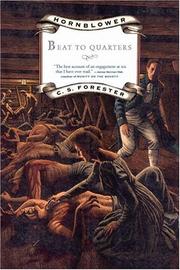
The very first Hornblower novel published (1937), introducing Captain Hornblower in the Pacific at the height of his powers. Starting here mirrors the experience of every original reader and establishes the benchmark character you will later trace back to his origins.

Published second (1938), this direct sequel raises the stakes immediately and ends on a cliffhanger — it cements the habit of reading on and shows how Forester built suspense across volumes.
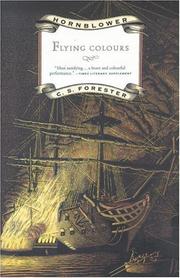
The third published novel (1938) resolves the cliffhanger and completes the first trilogy. Finishing this trio gives you a satisfying narrative unit and a firm grasp of Forester's style before moving to the origin stories.
Back to the Beginning: Hornblower's Chronological Origins
BeginnerNow read the prequels Forester wrote later in his career to understand where Hornblower came from — his midshipman years, early commands, and the formative experiences that shaped the man you already admire.
▸ Study plan for this stage
Pace: 10–12 weeks total: ~3–4 weeks per book at a relaxed beginner pace of 15–20 pages/day. "Mr. Midshipman Hornblower" (362 pp): weeks 1–4; "Lieutenant Hornblower" (306 pp): weeks 5–8; "Hornblower and the Atropos" (325 pp): weeks 9–12. Reserve the final 2–3 days of each book for reflection and exercises
- Hornblower's origin story: how the awkward, seasick, self-doubting midshipman of 'Mr. Midshipman Hornblower' contains the seeds of every strength and flaw seen in later books
- The episodic structure of 'Mr. Midshipman Hornblower' — each chapter is a near-standalone adventure — and how Forester uses these vignettes to build character incrementally
- The rigid hierarchy of the Georgian Royal Navy: the roles of midshipman, lieutenant, and commander, and how rank shapes every relationship and decision across all three books
- Hornblower's chronic self-criticism and impostor syndrome: recognising how his internal monologue consistently underestimates his own competence, a trait on full display from his very first duel-avoidance gambit in 'Mr. Midshipman Hornblower'
- Leadership under constraint in 'Lieutenant Hornblower': the novel is narrated entirely through Bush's eyes, forcing the reader to infer Hornblower's genius indirectly — a masterclass in showing rather than telling
- Prize-taking, naval law, and the economics of the sailing navy: how prize money, Admiralty politics, and court-martial culture drive plot and character motivation across all three books
- The transition from junior officer to independent command in 'Hornblower and the Atropos': managing a small ship, a state funeral barge, and a Mediterranean salvage operation simultaneously tests every skill accumulated in the earlier books
- Forester's historical authenticity: the Napoleonic Wars as backdrop, the real constraints of wind, tide, gunnery, and disease that make the fiction feel documentary
- In 'Mr. Midshipman Hornblower,' how does the opening chess/card-game episode with Simpson immediately establish Hornblower's analytical mind and moral courage, and why does Forester choose this as the very first scene?
- Why does Forester narrate 'Lieutenant Hornblower' entirely from Bush's point of view rather than Hornblower's own, and what effect does this external perspective have on how we understand Hornblower's leadership style?
- How does the court-martial subplot in 'Lieutenant Hornblower' illustrate the dangers and injustices of the Georgian naval hierarchy, and what does Hornblower's conduct during it reveal about his character?
- In 'Hornblower and the Atropos,' what specific logistical and diplomatic challenges does the state funeral of Lord Nelson's body present, and how does Hornblower's handling of them demonstrate his growth from the midshipman we first met?
- Across all three books, how does Hornblower's relationship with money and prize wealth reflect his broader psychology — his insecurities, his sense of duty, and his complicated relationship with ambition?
- By the end of 'Hornblower and the Atropos,' what personal and professional losses has Hornblower suffered, and how do they set up the emotional stakes of his later career?
- **Character timeline:** As you read 'Mr. Midshipman Hornblower,' keep a running one-page log of each episode — date, ship, key challenge, and one sentence on what Hornblower learns or reveals about himself. By the end you will have a visual map of his formative years.
- **Bush's lens exercise:** While reading 'Lieutenant Hornblower,' pause after each chapter and write 2–3 sentences describing the same scene as Hornblower himself might have recorded it in a private journal. Compare your version with what Bush observed — notice the gap between Hornblower's self-perception and his actual impact.
- **Naval rank explainer:** Draw a simple ladder diagram of Royal Navy ranks from midshipman to captain. Annotate each rung with the name of a character from these three books who occupies or aspires to that rank, and note one plot event driven by that rank dynamic.
- **Prize-money maths:** Using the prize-money episodes in 'Mr. Midshipman Hornblower' and 'Hornblower and the Atropos,' research (briefly) how Georgian prize shares were divided by rank. Write a short paragraph explaining how the prize system both motivates and corrupts the characters around Hornblower.
- **Comparative character sketch:** After finishing all three books, write a one-page 'before and after' portrait of Hornblower — who he is at the start of 'Mr. Midshipman Hornblower' versus who he has become by the final page of 'Hornblower and the Atropos.' Use specific scenes and quotes as evidence.
- **Map the voyages:** Sketch or print a blank map of the Atlantic, Caribbean, and Mediterranean. Plot the major geographic settings of all three books with brief labels. This grounds the naval manoeuvres in real space and prepares you for the wider strategic canvas of later stages.
Next up: Having traced Hornblower from fumbling midshipman to tested commander, you now possess the biographical and psychological foundation to fully appreciate the higher-stakes fleet commands, diplomatic crises, and wartime triumphs that await in the core novels of his career — every future hardship will resonate more deeply because you have seen exactly where he started.
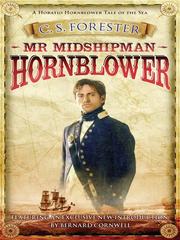
Published in 1950 but set at the very start of Hornblower's career, this is the natural 'chapter one' of his life. Reading it after the first trilogy makes every episode resonate — you recognise the seeds of the captain you already know.
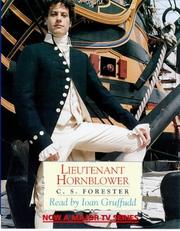
Covers Hornblower's lieutenant years and is unique in being narrated largely through a shipmate's eyes, offering a fresh perspective on the hero's rise. It bridges the midshipman stories to his first command.
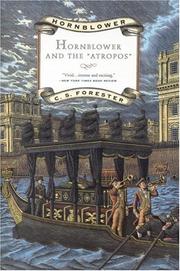
Chronologically follows the lieutenant years and shows Hornblower's first independent command on a small sloop, filling in the gap between his early career and the Pacific captain of Beat to Quarters.
Publication Order, Part II: The Later Novels
IntermediateContinue through the remaining novels in the order Forester published them, covering Hornblower's rise to admiral and his Baltic and wartime diplomacy — experiencing the saga as it unfolded for mid-20th-century readers.
▸ Study plan for this stage
Pace: 6–8 weeks total; roughly 20–25 pages per day. Suggested breakdown: Weeks 1–2 for "Commodore Hornblower" (~300 pp.), Weeks 3–4 for "Lord Hornblower" (~300 pp.), Weeks 5–6 for "Admiral Hornblower in the West Indies" (~275 pp.), with Weeks 7–8 reserved for review, re-reading key chapters, and completin
- Hornblower's evolution from captain to flag officer — how command at the commodore and admiral level differs from shipboard command, and how Forester dramatizes the loneliness and bureaucratic weight of high rank
- Baltic geopolitics and Napoleonic-era diplomacy: in 'Commodore Hornblower,' understanding Sweden, Russia, and the shifting alliances that made the Baltic a crucial strategic theater in 1812
- The moral and psychological cost of command: 'Lord Hornblower' forces Hornblower to suppress a mutiny, collaborate with French royalists, and witness the collapse of the Napoleonic order — tracing how these events strain his conscience
- The tension between duty and personal desire, most acutely in 'Lord Hornblower,' where Hornblower's affair with the Countess de Gracay and his relationship with Barbara represent competing pulls on his identity
- Post-war imperial policing and the limits of naval power: 'Admiral Hornblower in the West Indies' shifts from open warfare to ambiguous peacetime missions — piracy, slave-trading, and revolutionary movements — showing how the Navy's role transforms after 1815
- Forester's narrative structure in the later novels: episodic, almost short-story-like chapters (especially in 'West Indies') versus the sustained campaign arcs of earlier books — recognizing this as a deliberate late-career stylistic choice
- The arc of Hornblower's public reputation versus his private self-doubt: by the admiral stage, external honors multiply while internal anxieties persist, and Forester uses this irony as a central theme
- Historical authenticity and research: identifying the real events, figures, and geography (the Baltic campaign of 1812, the Hundred Days, Caribbean independence movements) that underpin each novel's plot
- In 'Commodore Hornblower,' what are the primary strategic objectives of Hornblower's Baltic mission, and how do the competing interests of Sweden and Russia complicate his ability to achieve them?
- How does Forester use the mutiny episode in 'Lord Hornblower' to test Hornblower's command philosophy, and in what ways does Hornblower's resolution of the crisis reflect — or contradict — his established character?
- What does the fall of Napoleon and the end of the Napoleonic Wars mean for Hornblower personally and professionally as depicted in 'Lord Hornblower,' and how does Forester signal that an era is closing?
- In 'Admiral Hornblower in the West Indies,' how do the episodic missions (piracy, slave trade, Caribbean revolts) collectively build a portrait of post-war imperial anxiety, and what moral ambiguities does Hornblower navigate that would have been absent in wartime?
- How does Hornblower's relationship with Lady Barbara evolve across these three novels, and what does Forester suggest about the compatibility of a naval hero's public life with domestic happiness?
- Comparing the three novels as a group: how does Forester's prose style, pacing, and narrative focus shift from the Baltic campaign novel to the episodic West Indies adventures, and what does this suggest about his intentions for the series' conclusion?
- Diplomatic map exercise: Using 'Commodore Hornblower' as your source, draw or annotate a map of the Baltic region marking Hornblower's route, the ports he visits, and the allegiances of each nation at that moment in 1812. Add brief notes on how each stop advances or complicates his mission.
- Mutiny tribunal journal: After reading the mutiny chapters in 'Lord Hornblower,' write a 400–600 word first-person journal entry from Hornblower's perspective the night after he resolves the crisis — capturing his doubts, justifications, and emotional state in his characteristic self-critical voice.
- Timeline of the Napoleonic endgame: Create a side-by-side timeline with two columns — historical events (the Hundred Days, Napoleon's abdication, the Congress of Vienna) and the corresponding plot events in 'Lord Hornblower' — to see how closely Forester tracks real history and where he takes fictional liberties.
- Episode comparison chart for 'West Indies': For each of the major episodes in 'Admiral Hornblower in the West Indies,' fill in a simple table with columns for: the mission/threat, the moral dilemma Hornblower faces, the action he takes, and the outcome. Then write two sentences on whether each resolution feels consistent with the Hornblower you've followed across the whole stage.
- Character arc essay (500–700 words): Write a short analytical essay arguing whether Hornblower is, by the end of 'Admiral Hornblower in the West Indies,' a fundamentally changed man from the commodore of the Baltic mission, or essentially the same man in a different uniform. Use specific scenes from all three novels as evidence.
- Reader-response comparison: Find a contemporary (1940s–1950s) review of any one of these three novels — library databases or archived newspaper collections are good sources — and write a paragraph comparing that original reader's reaction to your own. What did mid-20th-century readers emphasize that you noticed differently, and vice versa?
Next up: Completing these three later novels — and seeing Hornblower's full public arc from commodore to admiral — prepares the reader to revisit the chronological early novels with fresh eyes, understanding exactly what the young, insecure lieutenant of "Mr. Midshipman Hornblower" is destined to become and appreciating Forester's deliberate dramatic irony in writing the beginning after the end.

Published in 1945, this novel sends Hornblower to the Baltic during Napoleon's 1812 campaign. It marks a shift from pure sea-fighting to strategic and diplomatic complexity, reflecting Forester's own wartime perspective.

Published in 1946, this follows directly and brings Hornblower through the fall of Napoleon to a deeply personal crisis — the most emotionally rich novel in the series and a fitting climax to the wartime arc.
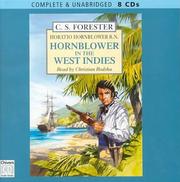
The last novel Forester published in the main sequence (1958), set after Waterloo. Reading it here, in publication order, delivers the sense of an era closing — which prepares you to appreciate the chronological re-read.
Completing the Chronology: The Remaining Novels in Story Order
IntermediateSlot in the novels not yet read to walk Hornblower's full life in strict chronological sequence, appreciating how Forester filled gaps and deepened the saga over two decades of writing.
▸ Study plan for this stage
Pace: 2–3 weeks, ~25–30 pages/day — the novel runs roughly 320 pages, so a relaxed but consistent pace allows time for reflection, map-checking, and journal entries without rushing the dense naval action sequences.
- The 'gap-filling' function of Hotspur: Forester wrote this novel late in his career (1962) specifically to bridge Hornblower's early lieutenant years to his post-captain period, so readers should notice how it slots seamlessly into the chronology while bearing the craft of a mature author.
- Hornblower's transition from lieutenant to commander to acting-captain: tracking the precise mechanics of Royal Navy promotion — interest, patronage, vacancy, and merit — as dramatized through Hornblower's command of the sloop Hotspur.
- The opening of the Napoleonic Wars at sea (1803): the rupture of the Peace of Amiens and Britain's return to war form the political backdrop; readers should connect fleet dispositions and strategic anxieties to Hornblower's tactical decisions.
- Blockade duty as the unglamorous backbone of British sea power: Hotspur is largely a blockade novel, and Forester uses it to show the grinding, weather-beaten, logistically demanding reality behind the 'wooden walls' mythology.
- Hornblower's domestic life and the Maria subplot: the novel develops his unhappy first marriage in real time, adding psychological and social texture that purely action-focused earlier readings may have underweighted.
- Seamanship and ship-handling under sail in confined waters: the Goulet of Brest, tidal races, and night approaches are rendered with technical precision — readers should engage with the nautical vocabulary and consult period diagrams where possible.
- Forester's retrospective world-building: written after most of the saga, Hotspur consciously echoes and foreshadows events in other novels; identifying these intertextual threads rewards readers who have already encountered later books.
- The moral weight of independent command: Hornblower must make life-and-death decisions without recourse to a superior officer, and the novel probes the loneliness, self-doubt, and ethical calculus that define his character arc across the whole saga.
- How does the Peace of Amiens collapse shape the opening chapters of Hotspur, and what does Hornblower's immediate deployment reveal about Admiralty priorities in 1803?
- Trace Hornblower's promotions through the novel: what combination of merit, luck, and patronage drives each step, and how does Forester use these moments to comment on the Royal Navy's social structure?
- What does blockade duty off Brest demand of Hotspur and her crew, and how does Forester use weather, supply shortages, and morale to convey the strategic importance — and human cost — of the close blockade?
- How does Hornblower's relationship with Maria develop during the novel, and in what ways does his domestic situation create tension with or parallel his professional identity?
- Identify two or three specific ship-handling or navigational episodes in the novel. What seamanship principles do they illustrate, and how do they reflect Hornblower's command style?
- Knowing that Forester wrote this novel decades after the earlier-published books: where in Hotspur can you detect the hand of a mature author 'filling in' the saga — in characterization, thematic depth, or narrative callbacks?
- Chronological placement map: draw or annotate a simple timeline of the entire Hornblower saga and physically place Hotspur on it, noting which previously-read novels it precedes and follows; jot one sentence on what narrative 'gap' it fills.
- Nautical chart exercise: find a period or modern chart of the Goulet de Brest and the Iroise Sea. Trace at least two of Hotspur's operational passages described in the novel, noting hazards (rocks, tidal streams, shore batteries) that Forester mentions.
- Promotion dossier: keep a running log of every rank change, commendation, or official mention Hornblower receives in the novel, recording the page, the circumstance, and who (if anyone) advocates for him — then compare this to what you know of his career trajectory in other books.
- Maria character study: write a one-page character sketch of Maria as she appears in Hotspur, focusing on how Forester uses her to humanize and complicate Hornblower; consider what her presence adds that a purely naval narrative would lack.
- Authorial-craft annotation: as you read, flag (with sticky notes or margin marks) any passage that feels like it was written with knowledge of the broader saga — a foreshadowing, a retrospective irony, or a deliberate echo — and compile a short list with brief explanations.
- Comparative weather log: Forester is famous for precise meteorological detail. Keep a brief log of the weather conditions in each major episode of Hotspur, then reflect in a short paragraph on how weather functions as both a tactical factor and a mood-setting device throughout the novel.
Next up: Completing Hotspur gives the reader a fully walked, chronologically coherent picture of Hornblower's formative years and early command, providing the biographical and thematic foundation needed to appreciate how the saga's later stages — whether revisiting familiar novels with fresh eyes or exploring Forester's craft at the series level — build upon everything established in strict story order.
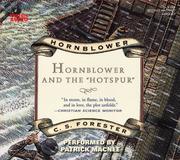
Chronologically bridges the lieutenant years and Beat to Quarters, covering the renewal of war in 1803. Published in 1962, it was one of Forester's last novels and rewards readers who already know the full saga.
Behind the Saga: Forester on Hornblower
ExpertUnderstand how and why Forester created Hornblower, compare the two reading orders consciously, and appreciate the craft decisions that make the publication order and the chronological order each tell a different story.
▸ Study plan for this stage
Pace: 2–3 weeks, ~20–25 pages/day — The Hornblower Companion is a shorter, richly illustrated volume best read slowly and reflectively, with time set aside for re-reading key passages and cross-referencing notes from earlier stages of the curriculum.
- Forester's creative genesis: how Hornblower was conceived as a character and why Forester chose the Napoleonic naval era as his canvas
- The autobiographical and psychological distance Forester maintained between himself and Hornblower, and what that deliberate gap reveals about authorial craft
- Publication order vs. chronological order as two distinct narrative architectures — each producing a different emotional and thematic journey for the reader
- Forester's use of maps, geography, and historical research as structural scaffolding for the novels, as revealed in the Companion's atlas section
- The evolution of Hornblower's character across the writing of the series — how Forester's own maturing perspective reshaped the hero over decades
- Craft decisions around gaps and silences: why Forester left certain periods of Hornblower's life unwritten, and what those omissions communicate
- The role of historical authenticity vs. dramatic license — how Forester balanced fidelity to naval history with the demands of compelling fiction
- The Companion as a meta-text: reading an author's self-commentary as a critical tool for deeper engagement with a long-form series
- According to Forester in The Hornblower Companion, what were the original imaginative sparks or circumstances that led to Hornblower's creation, and how did the character's conception change over time?
- How does Forester himself describe the difference between writing the earlier-published novels versus the prequels and later entries — and what does this reveal about the challenges of retrofitting a chronology onto a series born out of sequence?
- What does The Hornblower Companion reveal about Forester's research and geographical planning process, and how do the maps reframe your understanding of the action in the novels?
- In what ways does reading the series in publication order tell a fundamentally different 'story' than reading it chronologically, and which structural choices does Forester's own commentary illuminate most clearly?
- How does Forester characterize Hornblower's inner life and psychology — and to what extent does the Companion suggest those traits were consciously engineered versus organically discovered during writing?
- What craft lessons from The Hornblower Companion are transferable to understanding long-form historical fiction more broadly — for example, regarding series continuity, character consistency, and the management of a reader's expectations across many volumes?
- Create a dual-column timeline: on one side list the novels in publication order with their real-world writing dates; on the other, arrange them in Hornblower's chronological life order. Annotate each entry with one insight from The Hornblower Companion that explains or complicates that placement.
- Write a 500–700 word personal essay comparing your experience of the series in the order you read it against the alternative order — using Forester's own commentary from the Companion as evidence to support or challenge your reaction.
- Select one naval engagement or geographic passage from any novel in the curriculum and use the maps in The Hornblower Companion to trace it precisely. Write a short paragraph on how the map changes (or deepens) your reading of that scene.
- Identify three moments across the series where you can now detect, with the Companion's help, a seam between Forester's original conception and a later retrofit — a place where publication-order logic and chronological-order logic visibly pull against each other. Annotate each with a brief explanation.
- Draft a 'craft memo' as if you were Forester's editor, using evidence from the Companion to argue for either the publication order or the chronological order as the 'canonical' reader experience — and defend your recommendation with at least three specific craft-based reasons.
- Re-read the introduction or preface of any one novel from the curriculum and annotate it afresh in light of The Hornblower Companion, noting where Forester's stated intentions align with or diverge from what he actually achieved on the page.
Next up: By internalizing Forester's own account of how and why the Hornblower saga was built, the reader is now equipped to move beyond consumption into critical analysis — ready to engage with broader historical fiction craft, comparative naval literature, or scholarly commentary with the authorial blueprint firmly in hand.

Forester's own illustrated guide to the saga, including charts, maps, and his personal essay on how Hornblower came to life. Reading this last transforms everything you have read into a conscious study of authorial craft and the two-order question.
Discussion
Keep reading
Paths that share books, cover the same subject, or open a related topic.