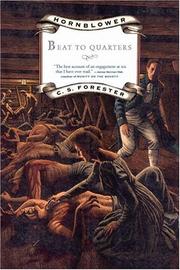
Start with Beat to Quarters, published in Britain as The Happy Return. It was written first, in 1937, and it is the best Hornblower novel: a captain alone in the Pacific with impossible orders, an unwinnable single-ship action, and an inner life of self-doubt that was genuinely new in naval fiction. Everything Forester later wrote about the character is an attempt to explain the man in this book.
The alternative is to begin chronologically with Mr. Midshipman Hornblower, and a lot of guides recommend it. It is a good book, but it is an episodic collection of set pieces about a seasick teenager, written more than a decade later once the formula was established. Starting there gives you the weaker Forester and, worse, drains the mystery from the character before you meet him at his height.
The original trilogy, first
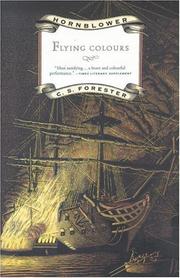
Beat to Quarters, then A ship of the line, then Flying Colours. These three were written in quick succession as one arc and they are far and away the strongest run in the series — the Pacific command, the Mediterranean disaster, the escape across France. Flying Colours is the most purely enjoyable of the whole set.
Read these first, in this order, whatever you decide about the rest.
Then go back and run chronologically
Now start at the beginning of Hornblower's life: Mr. Midshipman Hornblower, Lieutenant Hornblower, Hornblower and the "Hotspur", then Hornblower And The Atropos.
Lieutenant Hornblower is the best of the prequels by a distance, because Forester does something clever with it — the whole book is narrated from the viewpoint of Lieutenant Bush, so you watch Hornblower from outside and never quite get inside his calculations. Hornblower and the "Hotspur" is the most technically satisfying, a blockade novel where very little happens gloriously.
Then the sequels
Commodore Hornblower, Lord Hornblower, then Admiral Hornblower in the West Indies. These follow the trilogy chronologically: the Baltic command, the mutiny and the peace, and finally a middle-aged flag officer dealing with slavers, pirates and a changing world. Admiral Hornblower in the West Indies is the elegiac one, and it works best when you have watched the man arrive at it.
Forester also left an unfinished final volume, Hornblower and the Crisis, which is not on this path and is a fragment rather than a novel. You are not missing a conclusion.
The two cases, laid out
The chronological case is straightforward: read a life in the order it was lived, watch the officer grow from terrified midshipman to admiral, and never encounter a spoiler. It genuinely works, and readers who take it rarely regret it.
The publication case is that Forester wrote the middle of the story first and wrote it better. The prequels are back-filled and know where the character ends up; the trilogy does not, and that uncertainty is what makes it good. Reading chronologically also means opening the series with its most episodic, least novelistic instalment.
The compromise recommended above — trilogy first, then chronological for everything else — captures most of both. You get Forester at full power immediately, and after that the life runs in order.
The companion
The Hornblower companion is Forester's own volume of maps, charts and a long essay on how the books were plotted. Read it last. It is a reference and a memoir, not a novel, and its account of how the series was invented is much more interesting once you have finished it.
Where to stop
Flying Colours closes a complete arc and a great many readers stop there perfectly happy. If you want the whole life, the chronological run above is the way to take it. The one thing not to do is start at chronological book one and hope the series improves — it starts at its best.
For more series with a contested order, browse Discover.
Follow the full ordered path here: Hornblower Reading Order: Publication or Chronological?.