Homeschooling for beginners: an ordered reading list to start
This curriculum takes a first-time homeschooling parent from "where do I even begin?" to confidently designing a personalized, philosophy-driven education for their child. The four stages build deliberately: first establishing the *why* behind homeschooling, then exploring educational philosophies, then getting practical with curriculum and learning styles, and finally mastering the daily rhythms and long-term planning that make homeschooling sustainable.
The Why: Foundations & Mindset
BeginnerUnderstand why families choose homeschooling, shed school-at-home myths, and build the confidence and vision needed to take the first step.
▸ Study plan for this stage
Pace: 4–5 weeks, ~25–30 pages/day (alternating between both books to reinforce concepts)
- Homeschooling is a deliberate educational choice rooted in family values, not a default school-at-home replica
- Bravery in homeschooling means releasing perfectionism and trusting your child's natural learning instincts
- The 'school-at-home' trap: understanding why traditional classroom structures don't translate to home learning and how to avoid it
- A learner's identity is built through curiosity, autonomy, and meaningful engagement—not grades or compliance
- Parental confidence grows through clarity of purpose: defining your family's 'why' before designing your approach
- The brave learner thrives in an environment of permission, play, and real-world application rather than worksheets and rigid schedules
- Homeschooling allows for personalized pacing and depth that honors each child's unique learning style and interests
- What is your family's core 'why' for homeschooling, and how does it differ from traditional schooling motivations?
- How does the 'school-at-home' approach fail learners, and what does a brave alternative look like?
- What role does parental bravery and confidence play in creating an environment where children become brave learners?
- How can you build a learner's identity around curiosity and autonomy rather than grades and external validation?
- What does permission and play look like in a homeschool curriculum, and why are they essential to learning?
- How will you personally release perfectionism and trust your child's learning instincts?
- Write a 1–2 page personal manifesto: your family's 'why' for homeschooling and the core values that will guide your approach (reference Erickson's framework)
- Audit a typical school day: identify 3–5 'school-at-home' habits you might unconsciously replicate, then brainstorm one brave alternative for each (e.g., rigid schedules → flexible rhythm)
- Interview your child (or reflect if they're pre-verbal): What topics make them lose track of time? What questions do they ask unprompted? Document these as 'curiosity anchors' for future planning
- Create a 'Permission List': write down 10 things you give yourself permission to do differently than traditional school (e.g., 'We can learn math through cooking,' 'We can take field trips mid-week')
- Design one 'brave learner' learning experience: choose a topic your child is curious about and plan a week where they explore it through play, real-world application, or hands-on discovery—no worksheets required
- Reflect in writing: Identify one area where you struggle with perfectionism in parenting/teaching, then reframe it using Bogart's language of grace and trust
Next up: With your family's 'why' clarified and your confidence in brave, learner-centered principles established, you're ready to move into the practical stage of designing your actual curriculum and daily rhythms.

A warm, accessible entry point that directly addresses fear and self-doubt in new homeschooling parents, helping them clarify their personal 'why' before diving into methods or materials.

Reframes education as a joyful, curiosity-driven partnership between parent and child, building the mindset that learning happens everywhere — essential before choosing any formal curriculum.
The Philosophy: How Children Really Learn
BeginnerExplore the major educational philosophies — classical, Charlotte Mason, unschooling, and others — so you can identify which approach resonates with your family's values.
▸ Study plan for this stage
Pace: 4–5 weeks, ~25–30 pages/day (approximately 2 weeks per book with overlap for reflection)
- Charlotte Mason's principle of 'education is a discipline, a habit, and a life' — focusing on living books, nature study, and the child as a person rather than a vessel to fill
- The classical education model's three-stage trivium (grammar, logic, rhetoric) and its emphasis on developing reasoning and articulate expression across subjects
- Unschooling and child-led learning: how intrinsic motivation and self-directed exploration can replace traditional curriculum structures
- The role of relationships and atmosphere in learning — how family culture, parental presence, and emotional safety shape educational outcomes
- How different philosophies balance structure and freedom, academic rigor and child autonomy, and parent-directed vs. child-initiated learning
- The importance of identifying your family's values and educational goals before choosing a specific homeschool method
- What does Charlotte Mason mean by 'education is a discipline, a habit, and a life,' and how does this differ from traditional schooling approaches?
- Explain the classical trivium model. How would grammar, logic, and rhetoric stages look in practice across different subjects?
- What is unschooling, and what does Peter Gray argue about how children naturally learn without formal curriculum?
- How do Macaulay, Wise, and Gray each view the parent's role in education, and where do their views align or diverge?
- Which educational philosophy (or combination) seems most aligned with your family's values, and why?
- What are the practical trade-offs between a structured classical approach and a child-led unschooling approach?
- Create a comparison chart of the three philosophies (Charlotte Mason, classical, unschooling) across dimensions like structure, parent role, curriculum type, and learning environment
- Read one 'living book' example from Macaulay's recommendations and reflect on how it differs from a textbook in engaging your interest and understanding
- Design a sample week of learning using the classical trivium for one subject (e.g., history or science) and note where you'd apply grammar, logic, and rhetoric stages
- Observe a child (your own or another's) for 2–3 hours engaged in self-directed play or exploration, and document what they're learning without formal instruction
- Write a personal values statement for your family's education: What matters most? (e.g., academic excellence, character, creativity, independence, family time) Then map which philosophy aligns best
- Interview or survey 2–3 homeschooling families using different approaches; ask them what they wish they'd known before choosing their method
Next up: This stage equips you with a clear philosophical foundation and self-knowledge about your family's values, preparing you to move into the next stage where you'll translate philosophy into practical curriculum choices, scheduling, and daily routines.
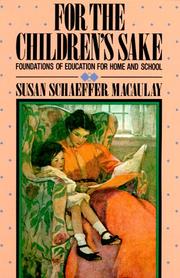
A foundational introduction to Charlotte Mason's philosophy of living books and whole-child education; widely considered the gateway text to philosophy-based homeschooling.

The definitive guide to classical education, providing a rigorous counterpoint to Charlotte Mason and giving parents a clear picture of the classical model's grammar-logic-rhetoric progression.

A research-backed argument for child-directed, play-based learning that introduces the unschooling end of the spectrum, completing the philosophical landscape before you choose your path.
The Child: Learning Styles & Individual Needs
IntermediateUnderstand how your specific child learns, processes information, and is motivated, so you can tailor curriculum choices to the individual rather than defaulting to a one-size-fits-all approach.
▸ Study plan for this stage
Pace: 4–5 weeks, ~25–30 pages/day, with 2–3 reflection days per week
- The importance of slowing down and allowing children to develop at their own pace rather than rushing through curriculum
- How to identify your child's dominant learning style (visual, auditory, kinesthetic) and secondary preferences
- The connection between learning style and motivation: children learn better when instruction matches how their brain naturally processes information
- Practical strategies for observing your child's natural strengths, interests, and learning patterns in everyday contexts
- How to adapt curriculum materials and teaching methods to align with your child's learning style rather than forcing them into a one-size-fits-all mold
- The role of rhythm, rest, and unhurried learning in preventing burnout and fostering genuine curiosity
- Using learning style assessment tools and informal observation to build a profile of your individual child's needs
- What does 'unhurried' homeschooling mean, and why might slowing down actually accelerate your child's learning?
- How do you identify whether your child is primarily a visual, auditory, or kinesthetic learner, and what are the key characteristics of each?
- How can understanding your child's learning style help you make better curriculum choices and reduce frustration in both parent and child?
- What are some practical ways to observe your child's learning patterns and preferences without formal testing?
- How do learning styles connect to motivation, and what happens when a child's learning style is mismatched with the teaching method?
- What specific adjustments can you make to your teaching approach once you've identified your child's learning style?
- Read 'The Unhurried Homeschooler' (Week 1–2) and journal about which of Wilson's ideas about pace and rhythm resonate most with your current homeschool situation; identify one area where you're rushing and brainstorm how to slow down
- Conduct a 1-week observation of your child in unstructured time (play, problem-solving, exploration) and document: What activities hold their attention? How do they approach new tasks? Do they talk through problems, visualize solutions, or need to move/manipulate objects?
- Read 'Discover Your Child's Learning Style' (Week 2–4) and complete the learning style assessment tools provided in the book for your child; note patterns across multiple observations rather than relying on a single snapshot
- Create a one-page 'Learning Profile' for your child that summarizes their dominant learning style, secondary preferences, motivators, and energy patterns (e.g., morning vs. afternoon learner, need for movement breaks)
- Select one subject or skill your child struggles with and redesign a lesson or activity to match their identified learning style; teach it and document what changes in engagement or comprehension
- Interview your child (age-appropriately) about how they prefer to learn: 'Do you like to see pictures and write things down? Do you like to talk about ideas? Do you like to build and move around?' Compare their self-perception to your observations
Next up: This stage equips you with a clear, individualized understanding of your child as a learner, which becomes the foundation for the next stage—selecting and adapting specific curriculum materials and teaching methods that actually fit your child rather than forcing them into predetermined educational paths.

A concise, practical guide to slowing down and observing your child's natural learning pace — a crucial skill before selecting any formal curriculum materials.

Provides a concrete framework for identifying how your child takes in and retains information across multiple dimensions, directly informing which curriculum formats and teaching methods will work best.
The Plan: Curriculum, Rhythms & the Long Game
IntermediateBuild a realistic, flexible homeschool plan — including daily and weekly rhythms, subject sequencing, and record-keeping — that you can actually sustain year after year.
▸ Study plan for this stage
Pace: 8–10 weeks, ~25–30 pages/day (with reflection days built in)
- Whole-hearted education: aligning your homeschool philosophy with your family's core values and long-term vision
- Designing sustainable daily and weekly rhythms that reflect your family's pace and priorities, not external pressure
- The principle of mentoring and modeling: your role as a guide who demonstrates intellectual curiosity and character
- Strategic subject sequencing and the importance of depth over breadth—knowing what to emphasize at each stage
- Record-keeping and assessment systems that track progress without becoming burdensome or test-focused
- The Thomas Jefferson model: self-education through great books, Socratic dialogue, and real-world application
- Building flexibility into your plan so it can adapt to your children's developmental stages and family circumstances
- Creating a multi-year vision that sustains motivation and prevents burnout for both parent and student
- What does 'whole-hearted' education mean, and how does it differ from conventional schooling approaches?
- How do you identify and articulate your family's educational values and vision, and why does this matter before building a curriculum?
- What are the key components of a sustainable daily and weekly rhythm, and how should they reflect your family's unique situation?
- What is the Thomas Jefferson model of education, and what role do great books and mentoring play in it?
- How should you approach subject sequencing and decide what to prioritize at different ages or stages?
- What record-keeping and assessment methods can you use that align with a whole-hearted approach rather than traditional testing?
- Write a 1–2 page family mission statement for your homeschool, identifying your core values, long-term goals, and what 'success' looks like for your family
- Map out a sample week (daily and weekly rhythm) for your homeschool, including subjects, free time, family time, and flexibility buffers—then test it for one week and revise
- Create a 4-year subject sequencing plan for one child, showing which subjects you'll emphasize at each stage and why
- Design a simple record-keeping system (portfolio, learning log, or checklist) that you could realistically maintain without overwhelm
- Read and annotate one 'great book' excerpt (provided or chosen) and practice Socratic dialogue by writing out 5–7 open-ended questions you'd ask a student about it
- Interview a homeschooling parent about their rhythms and routines, then compare their approach to the principles in the books—what resonates, what doesn't?
Next up: This stage equips you with a coherent, values-driven plan and sustainable rhythms; the next stage will deepen your execution by exploring specific subject methodologies, resource curation, and how to teach individual disciplines within the framework you've now built.

Bridges philosophy and practice by showing how to design a home learning environment and daily rhythms rooted in relationship, making it the ideal transition from theory to planning.
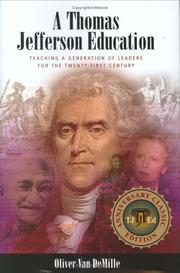
Introduces the mentor-based, classics-driven leadership education model as a long-term vision, challenging parents to think beyond grade levels and toward raising self-directed, lifelong learners.
Discussion
Keep reading
Paths that share books, cover the same subject, or open a related topic.